
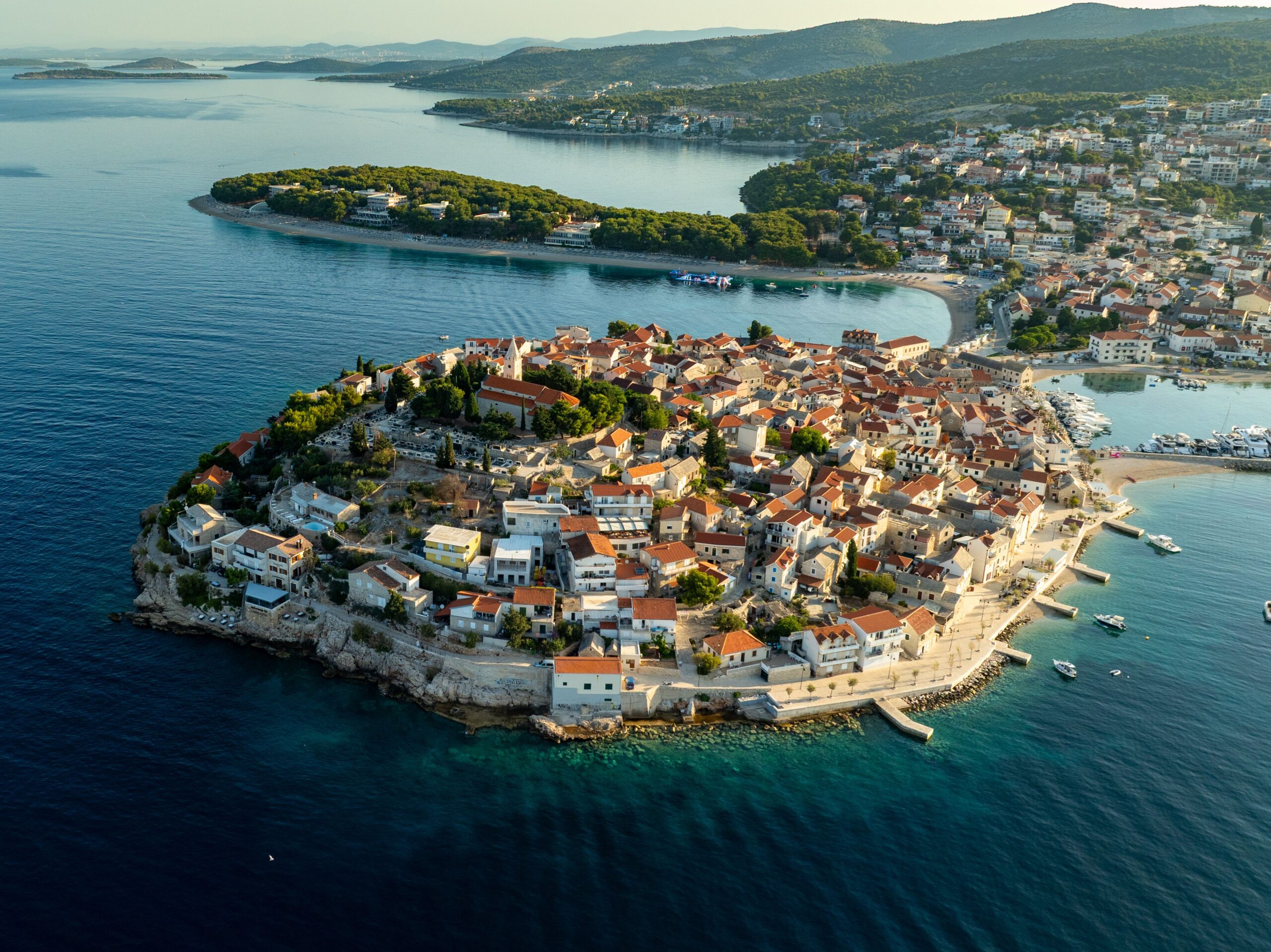
The route that gives Croatia in the depth that the one-week coastal hop doesn’t: one day in Dubrovnik for the walls at dawn, three days island-hopping (Korčula, Hvar, Brač) on the ferry network that connects the Dalmatian chain, two days in Split for the Diocletian’s Palace and the Omiš and the Cetina River canyon, and the day trip to the Plitvice Lakes that most Dubrovnik visitors skip because it is four hours by bus and then miss for the rest of their lives.
Reading time: 11 minutes | Last updated: 2026
Croatia’s Dalmatian coast is 1,777km of mainland coast and 1,246 islands, islets, and reefs. The tourist economy is concentrated in the southern section (Dubrovnik and the Pelješac Peninsula) and the central section (Split, Hvar, Brač, and Korčula). Seven days covers this central-southern circuit in enough depth to move between the islands on the public ferry network rather than the tourist catamaran.
The specific Croatian value for UK travellers: the HRK was replaced by the Euro in January 2023, eliminating the currency advantage Croatia had over its non-euro neighbours. The accommodation and food remain 20-30% cheaper than equivalent Italian or Greek tourist destinations at the same quality level — the advantage has shrunk but not disappeared.
The Route
Dubrovnik (1 night, early morning) → Korčula Island (2 nights) → Hvar Island (1 night) → Split (2 nights) → Plitvice Lakes day trip → fly home from Split
The 7 Days
DAY 1 — Arrive Dubrovnik, Walls at Dawn
The specific Dubrovnik instruction: The walls open at 8am. The catamaran to Korčula departs at 9:30am or 12:30pm. The correct Day 1 in Dubrovnik: arrive the previous evening, the walls at 8am, the catamaran at 9:30am. This is a single morning visit, not a multi-day stay — the full Dubrovnik guide is in Dubrovnik in 48 Hours, covering what the early morning gives you.
The Jadrolinija catamaran from the old port (the 9:30am departure, the fast catamaran to Korčula in 2 hours): €15-25 / £12.93-21.55 one way. Book at jadrolinija.hr.
DAYS 2-3 — Korčula Island
The Korčula Old Town:
Korčula (the small island in the channel between the Pelješac Peninsula and the Lastovo archipelago — the walled Old Town on the small peninsula, the fishbone street pattern, the Cathedral of Saint Mark, the island that claims Marco Polo as a native son): the most architecturally distinct island in the Dalmatian archipelago.
Day 2: The Town and the Wine
The Korčula Old Town morning (the Revelin Tower, the Land Gate, the Cathedral interior — the 15th-century Tintoretto painting in the chapel, the Gothic-Renaissance blend of the cathedral exterior): free access to the town, entry to specific museums €5-8 / £4.31-6.89.
The Lumbarda vineyards (the village at the eastern end of the island — the Grk grape, the white wine grape indigenous to Korčula and grown on no other island in the world, the sandy soil of the Lumbarda bay giving the wine its specific mineral character): the Bire winery or the Cebalo winery (the family wineries of Lumbarda that receive visitors without appointments for the tasting): €10-20 / £8.62-17.24 for the tasting.
The sea kayak (the kayak hire from the Korčula harbour, the paddle around the Old Town peninsula — the walls visible from the water, the Cathedral spire above, the most specifically coastal perspective on the Old Town available without a motor boat): €15-25 / £12.93-21.55 per person per 2 hours.
Day 3: The Pelješac Peninsula and Oysters
The car ferry from Korčula to Orebić (15 minutes, the ferry every 30-45 minutes) and the drive to Ston (45 minutes):
The Mali Ston oyster lunch (the full guide in 7 Days in the Balkans — the quayside oysters, the bottle of Pelješac Plavac Mali, the specific southern Dalmatian lunch): €20-35 / £17.24-30.17 per person.
The Ston salt pans (the medieval salt pans that have been producing salt since the 14th century — the specific rectangular pools visible from the Ston walls, the salt harvesting visible in August-September): free to view from the wall access.
Return to Korčula by 5pm. The evening in the Old Town (the Konoba Maslina on the old town steps, the grilled fish and the local wine): €25-40 / £21.55-34.48 per person.
Where to stay: The Lesic Dimitri Palace (the boutique hotel in the old town: £120-250/night), the Hotel Korkyra (adjacent to the old town: £60-110/night), the Marco Polo Hostel (old town: private rooms from £30-55/night).
DAY 4 — Korčula to Hvar
The ferry:
The Jadrolinija catamaran from Korčula to Hvar (the 1.5-hour crossing via the channel): €10-18 / £8.62-15.52.
Hvar Town:
Hvar (the island — the most visited island in Croatia, the party island reputation and the specific Hvar Town quality of the Venetian architecture visible simultaneously): the Hvar Town at 5pm arriving from Korčula, the evening in the Venetian Loggia, the boat taxi to the Pakleni Islands (the archipelago immediately offshore from Hvar Town, the clear-water anchorage, the nudist beach at the Palmižana): €5-10 / £4.31-8.62 per person each way.
The Hvar evening instruction: the Hvar nightlife (the Carpe Diem bar on the Pakleni and the Hvar Town bars) is the specific tourist economy of the island. The restaurant quality in the Stari Grad (the old town of Stari Grad, the inland UNESCO town of Hvar island, 20 minutes from Hvar Town by road — the Venetian town that predates Hvar Town by 2,000 years): significantly better at significantly lower prices than the Hvar Town restaurant strip.
Where to stay: The Palace Elisabeth (Hvar Town: £120-200/night), the Villa Nora (the inland island villa: £70-130/night), the Jagoda & Ante Backpackers’ Hostel (Hvar Town: private rooms from £35-65/night).
DAYS 5-6 — Split
The ferry from Hvar to Split:
The Jadrolinija catamaran (1 hour, €10-15 / £8.62-12.93): the Split arrival at the ferry terminal adjacent to the Diocletian’s Palace.
Day 5: Diocletian’s Palace
The Diocletian’s Palace (the 3rd-century Roman Emperor’s retirement residence, the palace that became the nucleus of medieval Split, the city that grew inside the palace walls and now has 3,000 residents within the original Roman structure): the most intact Roman residential palace in the world.
The morning palace walk (before 9am — the palace streets before the café tables occupy the walkways): the Peristyle (the central courtyard, the column-lined space where the Roman court was held and where the Diocletian received his subjects, now the café terrace and the street musicians’ stage), the Cathedral of Saint Domnius (the mausoleum of the Emperor Diocletian converted to a cathedral in the 7th century, the Emperor’s granite sarcophagus removed, the Christian saints’ relics installed in its place — the most specifically ironic building in the Roman world: the persecutor of Christians buried in the oldest operating cathedral): entry €10 / £8.62 for the cathedral and the Treasury.
The Jupiter’s Temple (the Roman temple inside the palace — the smallest but best-preserved Roman temple in Dalmatia, the coffered ceiling intact, the portal columns the original Roman stone): entry €5 / £4.31.
The Omiš and the Cetina Canyon:
The Omiš (27km south of Split on the coast road — the pirate town at the mouth of the Cetina River, the river gorge above the town visible from the coastal approach, the town that the Adriatic pirates used as their base for 300 years):
The rafting on the Cetina River (the guided raft from the Omiš riverbank, the canyon walls above, the Class II-III rapids, the rope swings into the river pools): €30-45 / £25.87-38.79 per person for the 2-hour guided raft. Book at active-tours-croatia.com or through the raft operators on the Omiš quay.
Day 6: The Plitvice Lakes
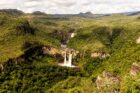
The Plitvice Lakes National Park (130km from Split, 2.5 hours by KTEL bus from the Split bus station — the UNESCO park of 16 travertine lakes connected by waterfalls in the Croatian karst interior, the turquoise water produced by the specific mineral chemistry of the karst): the bus from Split at 7am, arrive at 9:30am, the park for 4 hours (the Route C full circuit, 3-4 hours on the wooden boardwalks above and at the water level), return to Split by 7pm.
Entry: €23.50-40 / £20.26-34.48 depending on the season. Book at np-plitvicka-jezera.hr — the tickets sell out in July-August.
The specific Plitvice instruction: the waterfall that drops directly into the lower lake from the upper boardwalk — the Veliki Slap (the highest waterfall in Croatia at 78 metres) visible from the boardwalk at the point where the path approaches the canyon wall.
Where to stay in Split: The Vestibul Palace (inside Diocletian’s Palace: £150-280/night), the Heritage Hotel Antique Split (Papalićeva 4: £80-140/night), the Split Hostel Booze and Snooze (Narodni trg 8: private rooms from £30-55/night).
What It Costs
| Category | Budget | Mid-Range |
|---|---|---|
| Return flights (UK-Dubrovnik, Split-UK) | £60-200 | £80-250 |
| 7 nights accommodation | £175-420 | £420-980 |
| Ferries (Dubrovnik-Korčula, Korčula-Hvar, Hvar-Split) | £30-55 | £30-55 |
| Food (7 days) | £120-220 | £250-480 |
| Activities (kayak, raft, Plitvice, palace entries) | £80-150 | £100-200 |
| Local transport | £30-60 | £40-80 |
| Total | £495-1,105 | £920-2,045 |