
The Real Alcázar de Sevilla at 9:30am when the Mudejar plasterwork of the Patio de las Doncellas is in the morning light and the garden is quiet enough to hear the water in the channels, the Triana neighbourhood at 8pm when the tapas bars fill with the working Sevillanos rather than the tourist groups from the old town, La Cantina on San Jacinto Street where the menu is on the chalkboard and changes daily and the sherry is poured from the barrel rather than the bottle, and why Seville — the city that Spain uses as its cultural flagship — is best experienced in the specific hours before 11am and after 7pm when the tourist economy pauses.
Reading time: 8 minutes | Last updated: 2026
Seville is the capital of Andalusia and the city that contains the greatest concentration of monument and tradition available in Spain south of Madrid: the Alcázar (the Royal Palaces, the finest surviving example of Mudejar architecture in the world), the Cathedral (the largest Gothic cathedral by volume), the Giralda (the minaret-turned-belltower), the Triana neighbourhood (the barrio that gave the world flamenco in its most specific Sevillano form), and the tapas tradition (the specific Seville tapas — the manzanilla, the jamón ibérico, the cured pork cheek, the tortilla — at the bars that have been serving these things since before the word “tapas” entered international vocabularies).
Seville in July is 39°C. The city functions accordingly: morning activity before 11am, the three-hour lunch, the siesta, the evening from 7pm. This guide works with that rhythm rather than against it.
The 48 Hours
DAY ONE
9:00am — The Real Alcázar
The Real Alcázar de Sevilla (the Royal Palaces — the complex that has been the seat of the Spanish monarchy in Seville since the Reconquista, the interplay of Islamic and Christian architecture visible in every courtyard): arrive at the Puerta del León entrance for the 9:30am first entry (book at alcazarsevilla.org — the advance booking mandatory in peak season, the queue without booking reaching 60 minutes).
Entry: €14.50 / £12.50.
The specific rooms:
The Patio de las Doncellas (the Courtyard of the Maidens — the central patio of the Pedro I palace, the reflecting pool, the triple-arched arcades, the plasterwork above the arches in the Nasrid style commissioned by the Christian king Pedro I from the craftsmen who had built the Alhambra): the finest single courtyard in southern Spain.
The Salón de los Embajadores (the Ambassadors’ Hall — the gilded dome, the 360-degree mosaic tilework, the hall where Charles V married Isabella of Portugal in 1526): the most decorated single room in the Alcázar.
The gardens (the 14 interconnected gardens, the combination of the Moorish water garden tradition and the Renaissance formal garden): the last hour of the visit, the gardens in the late morning light.
12:00pm — The Cathedral and the Giralda
The Catedral de Sevilla (the largest Gothic cathedral in the world by volume — the nave visible from the entrance on the north side, the scale requiring 5 minutes of standing still before the eye can process it):
The Giralda tower (the 97.5-metre tower — the former Almohad minaret, the ramps rather than stairs inside, the 35 ramps constructed to allow the muezzin to ride to the summit by donkey, the 360-degree view from the gallery): entry to the cathedral and the tower combined: €12 / £10.34.
The specific Giralda instruction for the photographer: the gallery at the summit gives the old city roofscape, the Triana neighbourhood visible across the Guadalquivir to the west, and the cathedral interior visible from above. At 10am the light falls from the east across the old city; at noon the rooftops are in the vertical light.
2:00pm — Lunch: the El Rinconcillo
El Rinconcillo (Gerona 40 — the oldest bar in Seville, operating since 1670, the tiles, the jamón hanging from the ceiling hooks, the chalked totals on the marble counter): the spinach with the chickpeas (the espinacas con garbanzos — the specific Seville tapa, the chickpeas cooked with the garlic and the cumin and the sherry vinegar, the spinach added at the end, the paprika oil poured over the top) and the manzanilla (the dry fino sherry from Sanlúcar de Barrameda, the wine that accompanies every Sevillano tapa by the understanding that precedes convention).
€20-30 / £17.24-25.86 per person with the sherry.
4:00pm — The Metropol Parasol (Las Setas)
The Metropol Parasol (Plaza de la Encarnación — the 2011 parasol structure, the largest wooden structure in the world, the walkway above the market and the archaeological excavations below): the promenade at 28 metres (entry €5 / £4.31 with a drinks voucher — the voucher redeemable at the rooftop bar), the old city visible below in all directions.
The underground archaeological museum (the Roman Hispalis visible through the glass floor of the market level — the Roman city beneath the contemporary city, the daily visible in both directions).
7:00pm — The Triana Evening
The Triana neighbourhood (the barrio across the Puente de Isabel II — the bridge at the Arenal): the specific Seville that is not in the old city postcards.
La Cantina de Triana (San Jacinto 22 — the tapas bar with the daily-changing chalkboard, the ceramic sherry barrel from which the manzanilla is poured directly into the glass, the tables on the street, the Triana residents at every other table): the fried artichokes (alcachofas fritas), the grilled prawns (gambas a la plancha), the cured tuna belly (mojama) and the manzanilla — the most specifically Sevillano evening meal available, at the prices that the old-city equivalents charge 40% more for.
€20-35 / £17.24-30.17 per person.
9:30pm — The Flamenco
Casa de la Memoria (Calle Cuna 6, the old city — the most frequently cited intimate flamenco venue in Seville by the flamenco community rather than the tourism industry): the 90-minute performance at 7:30pm or 9pm in the old Andalusian courtyard of the 16th-century house.
The specific flamenco distinction: the tablao (the tourist performance, choreographed) versus the peña (the private social club where the aficionados gather and the artists perform for each other). The Casa de la Memoria occupies the honest middle — the performances are genuine flamenco art, the venue is designed for visitors, the combination produces the most accessible authentic flamenco in Seville. Entry: €20 / £17.24. Book at casadelamemoria.es.
DAY TWO
8:00am — The Mercado del Arenal
The Mercado del Arenal (Calle Pastor y Landero — the neighbourhood covered market serving the Arenal barrio, the Sevillano morning market before the old-city tourist circuit begins): at 8am, the fresh fish from the Atlantic coast, the Iberian pork products from the Extremadura farms, the Andalusian olive oils, and the bar at the back of the market where the Sevillanos take the morning breakfast: the tostada con tomate (the toasted bread with the grated ripe tomato and the olive oil and the salt — the Andalusian breakfast that has no meaningful equivalent outside the region) and the café con leche.
Tostada con tomate: €2-3 / £1.72-2.59. The best breakfast in Spain.
10:00am — The Archive of the Indies
The Archivo General de Indias (Avenida de la Constitución — the 16th-century Lonja de Mercaderes building containing the complete archive of the Spanish colonial administration of the Americas from 1492 to the 20th century):
The exhibited documents (the handwritten letters of Columbus and Magellan and Hernán Cortés, the maps of the Americas as the Spanish understood them in successive decades of exploration, the administrative records of the entire Spanish colonial enterprise): the most specific single archive for understanding the Spanish Empire in any public institution.
Entry: free.
12:00pm — The Barrio Santa Cruz
The Barrio Santa Cruz (the former Jewish quarter — the whitewashed lanes, the orange trees, the azulejos on the exterior walls, the courtyards visible through the open gates of the private houses): the Seville visual that the postcards reproduce.
At noon: the heat and the tourist density reach their daily peak in the Santa Cruz. The correct Santa Cruz visit is at 8am (before the tourists) or at 6pm (after the midday heat, before the evening crowds). At noon: walk through once, note the beauty, proceed to the lunch shade.
1:00pm — Lunch: Casa Robles
Casa Robles (Álvarez Quintero 58 — the Seville restaurant that the Sevillano professional class has used for 60 years, the seafood from the Cádiz coast, the oxtail stewed with the local red wine, the gazpacho from the tomatoes of the Almería greenhouses): €30-50 / £25.86-43.10 per person.
4:00pm — The Parque de María Luisa
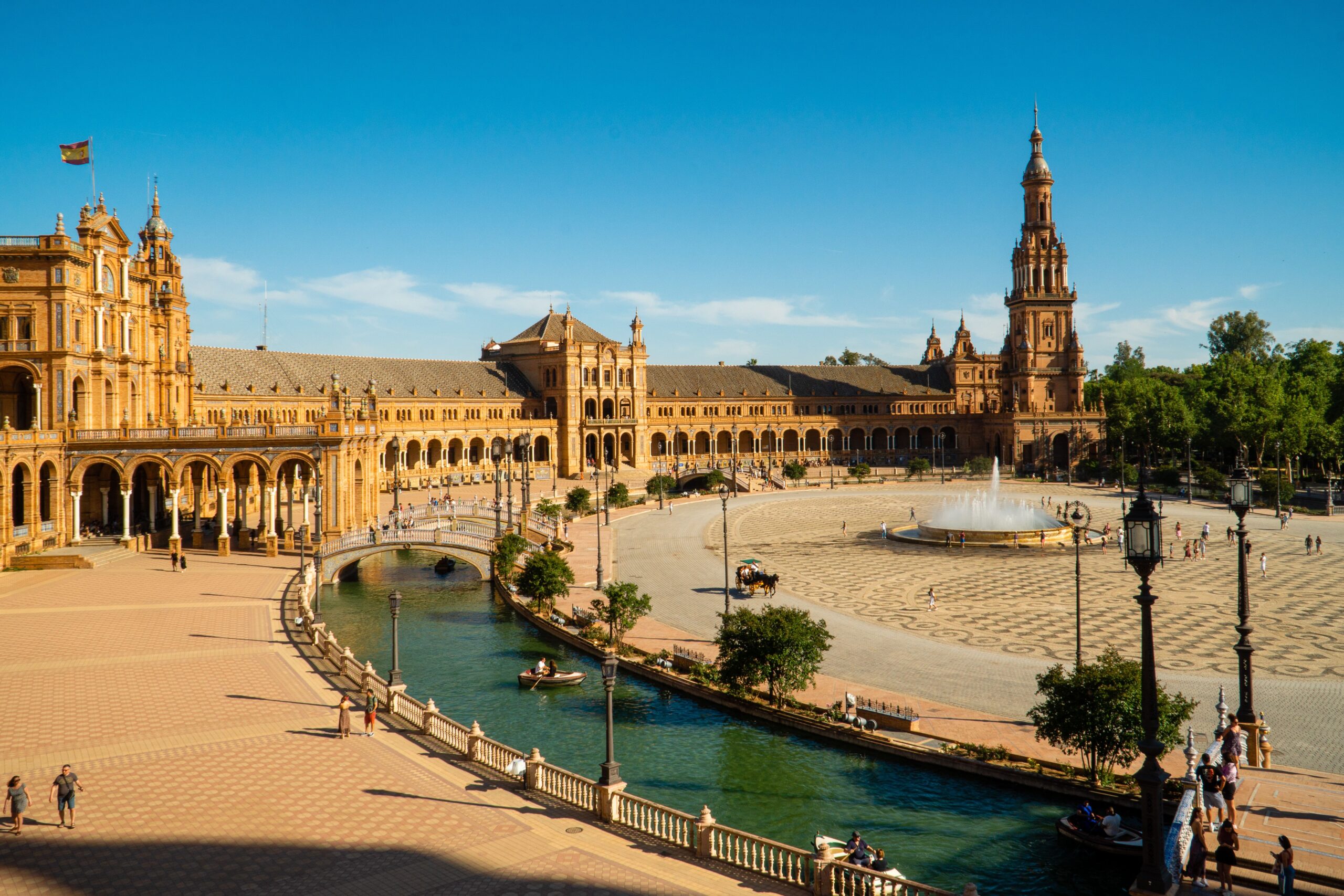
The Parque de María Luisa (the 34-hectare park established for the 1929 Ibero-American Exposition — the Plaza de España at the park’s northern entrance, the semicircular brick building with the 48 tile alcoves representing each Spanish province, the canal with the rowing boats, the most elaborate single public space in Seville): free access.
7:30pm — Final Dinner: the Macarena
The Macarena neighbourhood (the working-class barrio north of the old city, the neighbourhood that gave its name to the Los del Río song and whose Basilica houses the Virgin of Hope that the Semana Santa procession carries each Holy Week): the dinner in the neighbourhood that the Seville tourism infrastructure has not yet fully discovered.
El Patio de San Eloy (San Eloy 9 — the neighbourhood restaurant with the interior patio, the traditional Sevillano menu, the rabo de toro — the oxtail, the most specifically Andalusian main course — braised for six hours in the red wine and the vegetables): €25-40 / £21.55-34.48 per person.
The Essentials
Getting to Seville: Ryanair, British Airways, easyJet, Vueling direct from UK airports. 2.5 hours. Return: £50-160.
Getting around: Seville is a walking city — the old city, the Triana, and the Santa Cruz are all within 20 minutes’ walk of each other. The TUSSAM bus network and the Seville Metro for the distances beyond the centre. The bicycle (the SEVICI public bike hire: €13.33 / £11.49 for 7 days of unlimited 30-minute journeys) gives the fastest transport between the barrios.
The heat management (summer): The Seville summer (June-September) requires the specific rhythm: the active hours before 11am and after 7pm, the midday in the shaded bar or the hotel. The August visitor who fights this rhythm spends August in Seville unhappily. The August visitor who adopts it spends August in Seville correctly.
Where to stay: The Hotel Alfonso XIII (the most celebrated grand hotel in Andalusia: £180-380/night), the Hotel Colón (Canalejas 1: £80-150/night), the Oasis Backpackers’ Hostel (Plaza de la Encarnación — directly below Las Setas: private rooms from £30-60/night).
The Closing Moment
I was at La Cantina at 8:22pm. The Triana. The manzanilla had been poured from the ceramic barrel behind the counter. The glass was cold and the wine inside was the specific pale gold of the fino, the smell of the yeast and the ocean in the same glass.
The table beside me was occupied by two women of approximately 55 who had clearly been to this bar before. They ordered without looking at the chalkboard. The waiter brought the wine and the artichokes without being asked for anything further.
Seville is a city that has been eating and drinking in a specific way for several hundred years. The best version of that eating and drinking happens in the neighbourhoods where the tourists are outnumbered by the people who live here.
The manzanilla was correct. The artichokes were correct. The evening lasted until midnight.