



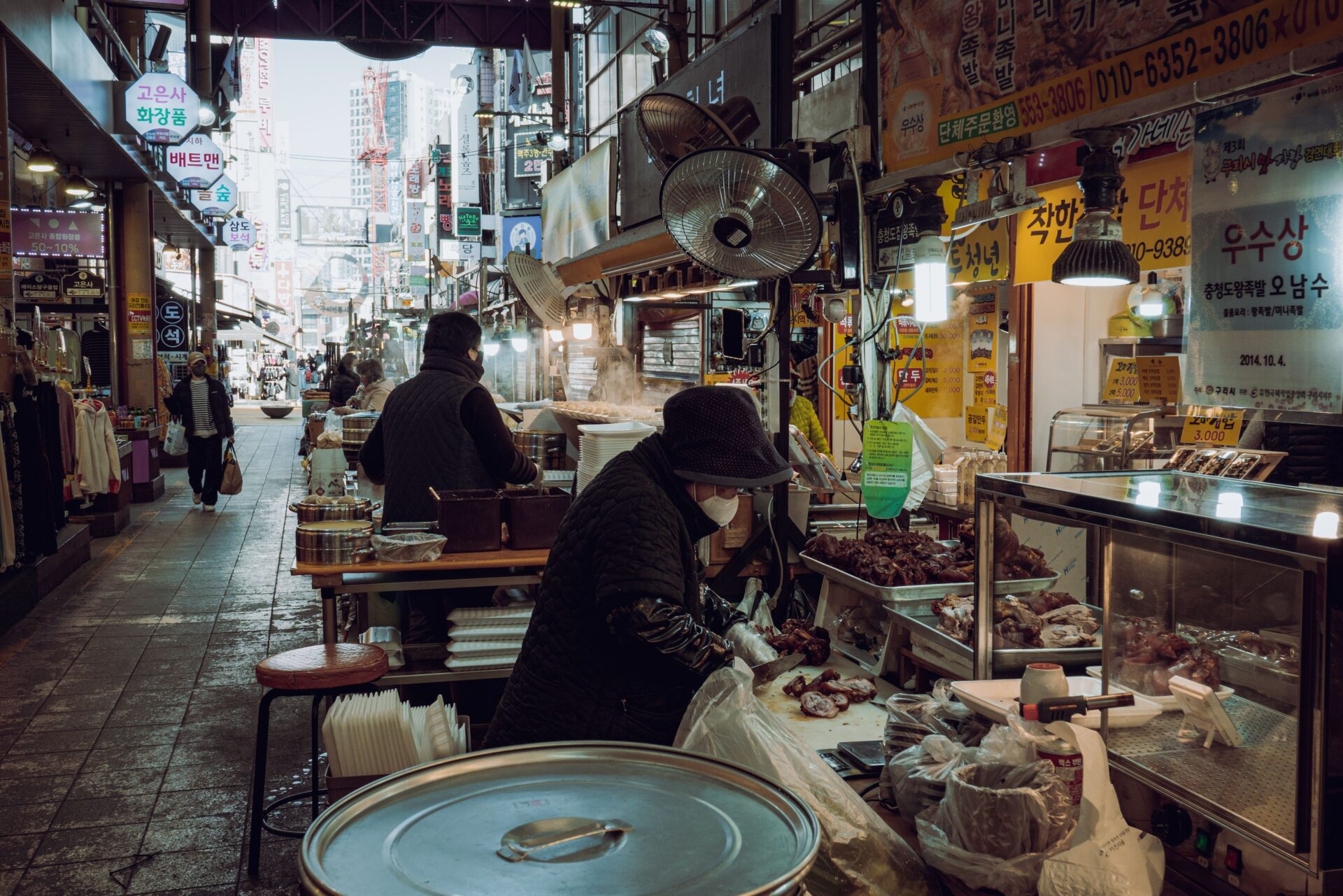
Not the most Instagrammed. Not the most written-about. The ranking by the single criterion that matters at 8pm when you’re standing at the cart with the queue behind you: how often does the food make you stop what you’re doing, put down your phone, and eat with the specific attention that the best food always demands? Bangkok for the pad kra pao. Penang for the char kway teow. Osaka for the takoyaki. Xi’an for the roujiamo. Saigon for the bánh mì. And the specific city — the one city in Asia where every dish from every cart exceeds the expectation — that this guide names at the end and defends.
Reading time: 11 minutes | Last updated: 2026
Asian street food is the greatest culinary tradition in the world available to the traveller. The claim is defensible: the technique (the wok, the charcoal, the clay pot, the tandoor), the flavour complexity (the balance of the five tastes that Southeast and East Asian kitchens achieve simultaneously in a single bowl), and the cost (the meal that requires 15 seconds of preparation and 3 minutes of eating and costs £0.88 and has been refined over 300 years of daily production) combine to produce a category of food that has no meaningful equivalent in the European tradition.
This guide ranks the cities by the quality and density of their street food, then ranks the specific dishes by the frequency with which they produce the specific eating experience described above. It is opinionated. The opinions are based on eating at these places rather than reading about them.
The City Rankings
1. Penang, Malaysia — Georgetown
The consensus of every food writer who has spent significant time in Asia: Penang is the finest street food city in the world. The ranking is not unanimous — Bangkok makes the case, Osaka makes the case — but the specific Penang quality (the heritage of the Chinese Hokkien, Teochew, Hakka, and Cantonese immigrants whose culinary traditions settled in Georgetown, combined with the Malay and Indian Tamil traditions of the peninsula) produces a street food vocabulary of extraordinary range and depth in a city of 800,000 people.
Why Penang specifically over all of Malaysia: The Georgetown hawker centre circuit (the Gurney Drive Hawker Centre, the New Lane Hawker Centre, the Chulia Street hawker stalls) gives the full Penang vocabulary in one kilometre of hawker stands — and the specific Penang dishes (the asam laksa, the char kway teow, the Hokkien mee, the oh chien) are not available in this specific quality anywhere else in the world.
The must-eat dishes in Penang:
Penang Asam Laksa (the Mackerel Laksa):
The Penang asam laksa is the most complex single-bowl street food in Asia. The dish: the thick rice noodles in the sour tamarind and mackerel broth (the mackerel cooked and flaked, the broth intensified with the asam keping — dried tamarind slices — and the bunga kantan, the torch ginger flower, and the shrimp paste), the garnish of the cucumber julienne, the pineapple, the red onion, the fresh mint, and the prawn paste swirled on top.
The sourness is the specific element — the asam laksa is the most sour major street food dish in Southeast Asia, the tamarind broth balanced by the shrimp paste umami in a specific proportion that the best stalls achieve and the mediocre stalls approximate.
The reference stall: the Air Itam Laksa (at the Ayer Itam Market, 30 minutes from Georgetown by bus — the stall at the base of the Kek Lok Si Temple road, the bowl MYR 7-9 / £1.23-1.58). The Air Itam laksa is the standard against which every Penang asam laksa is measured by the Penang food community.
Char Kway Teow (the Wok-Fried Flat Rice Noodle):
The char kway teow is the dish that shows the wok. The specific requirement: the kuali — the Chinese iron wok, seasoned over years of use, the surface temperature at the moment of cooking reaching 300°C or above. The noodles contact the wok surface for the specific second that produces the wok hei — the “breath of the wok,” the smoky, slightly charred quality that cannot be reproduced at lower temperatures.
The Penang char kway teow: the flat rice noodles, the yellow noodles, the Chinese sausage (the lap cheong), the cockles (the freshwater cockles that the inland Chinese Penangites use rather than the saltwater cockles of the coast), the beansprouts, the chives, and the egg — all wok-fried in the pork lard (the specific Penang char kway teow technique: pork lard rather than oil, the flavour contribution of the lard giving the Penang version a specific depth absent from the KL or Singapore equivalents).
The reference stall: the CKT at the Lorong Selamat hawker centre (the stall managed by the second-generation wok operator whose mother started the stall in the 1960s, the bowl MYR 8-12 / £1.41-2.11).
Penang Hokkien Mee (the Prawn and Pork Mee Soup):
The Penang Hokkien Mee (the noodle soup in the prawn and pork bone broth — the broth at the reference stalls has been simmering since before dawn, the prawn shells toasted and simmered for 6+ hours, the pork bones adding the collagen that gives the broth its specific weight): the most time-intensive street food preparation in Penang and the most specifically Penang dish in the city’s vocabulary.
The garnish: the prawns, the pork belly slices, the fish balls, the water spinach, and the fried shallots on the surface of the broth.
The reference stall: the Jalan Dato Keramat Hokkien Mee (the stall at the corner of Dato Keramat and Anson Road — the queue at 8am, the stall selling out by 11am, MYR 6-10 / £1.06-1.76).
2. Bangkok, Thailand
The scale argument: Bangkok has more individual street food vendors than any city in Asia — the 2019 estimate placed the figure at approximately 300,000 street food vendors operating at any given time in the greater Bangkok area. The density is the specific Bangkok food advantage — within any 200-metre radius in any Bangkok neighbourhood, multiple street food options of genuine quality are available.
The must-eat dishes in Bangkok:
Pad Kra Pao (the Holy Basil Stir-fry):
The most eaten dish in Thailand. The national dish by volume consumed rather than by ceremonial status. The mince (pork, chicken, or beef) wok-fried with the fresh holy basil (grapow — not the Thai basil or the Italian basil, the holy basil whose specific anise-peppery flavour gives the dish its name and its character), the oyster sauce and the fish sauce and the light soy sauce, the fresh bird’s eye chilli (from two to ten depending on the specification), and the fried egg — crispy-edged, runny-yolked — on top of the white rice.
The specific pad kra pao instruction: the freshness of the holy basil is the dish’s critical variable. The wilted basil produces a dish that is technically correct but flavourally diminished. The best pad kra pao arrives at the table with the basil still aromatic, added to the wok in the final 20 seconds.
The price: ฿60-80 / £1.32-1.77 at any street cart. The same dish at a Sukhumvit restaurant: ฿150-220 / £3.31-4.86. The street cart version is always better because the volume of production maintains the wok temperature and the basil turnover is higher.
Tom Yum Goong (the Hot and Sour Prawn Soup):
The tom yum (the hot and sour broth — the lemongrass, galangal, kaffir lime leaves, and fresh lime juice producing the aromatic base, the bird’s eye chilli and the fish sauce adding the heat and the salt, and the fresh prawn the specific protein): the distinction between the nam sai version (the clear broth — the flavour unmixed by coconut milk, the most specific tom yum) and the nam khon version (the coconut milk version, the cream softening the acidity).
The street cart tom yum (the version available at the Bangkok morning markets at ฿40-60 / £0.88-1.32 per bowl, the broth made fresh at 7am and served until sold out) has a specific freshness of the galangal and lemongrass that the restaurant version which has been simmering since lunch does not maintain.
Boat Noodles (the Kuay Teow Rua):
The Victory Monument boat noodle stalls (the cluster of stalls below and around the Victory Monument, the most concentrated boat noodle destination in Bangkok — the small bowls at ฿15-20 / £0.33-0.44 each, eaten in rapid succession, the correct order being 8-10 bowls rather than 1-2):
The blood-thickened broth (the pork blood stirred into the broth at the moment of service, the specific dark richness that the broth without the blood does not have), the pork meatballs, the pork liver, the morning glory, and the crispy pork cracklings on the surface.
The boat noodle eating instruction: the first bowl to establish the reference point, then the variations (pork, beef, the liver quantity adjusted, the chilli vinegar at each table for the acid calibration). The 10-bowl meal costs ฿150-200 / £3.31-4.41. It is the correct Bangkok lunch.
3. Osaka, Japan — Dotonbori
The Japanese approach to street food is the antithesis of the Southeast Asian approach: where the Bangkok street cart produces 50 dishes using 10 ingredients in infinite combinations, the Osaka street food specialises in the perfection of the single dish. The takoyaki (the octopus ball) produced at the Wanaka stall has been produced at that stall using the same batter, the same octopus, and the same iron mould since 1975. The okonomiyaki at the Mizuno has been produced since 1945.
The must-eat dishes in Osaka:
Takoyaki:
The dough ball (the wheat flour batter cooked in the semicircular iron mould, the octopus piece inside, the turning at the precise moment when the exterior is set and the interior remains molten, the ball completed in the second half of the iron mould) topped with the Worcestershire-based takoyaki sauce, the Japanese mayonnaise, the dried bonito flakes (the katsuobushi — the shaved dried fish that moves in the steam rising from the hot ball, the visual effect that makes the dish look alive), and the aonori (the dried green seaweed).
The correct eating temperature: burning hot. The incorrect eating temperature: cooled. The octopus ball is engineered to be eaten at the temperature that requires the specific patience of waiting 20 seconds after the purchase and the specific impatience of eating before the exterior cools.
The reference stall: Wanaka (the 1975 stall with the three locations in Dotonbori, the most cited by the Osaka street food community, ¥700-900 / £3.71-4.77 for 6).
Kushikatsu (the Skewered Breaded Fried):
The Shinsekai neighbourhood (the retro 1950s entertainment district in south Osaka — the Tsutenkaku tower, the kushikatsu restaurants lining every street): the breadcrumbed and deep-fried skewers of meat, vegetable, and seafood, the no-double-dipping rule (the communal sauce pot in which the skewer is dipped once — returning the skewer to the sauce after the first bite contaminates the communal pot and is the specific social law of the kushikatsu restaurant, enforced visually by the signs and verbally by the staff).
The skewer range: the beef, the pork, the prawn, the asparagus, the lotus root, the mochi, the cheese — the single skewer consumed in two bites, the meal assembled by the volume and variety of skewers rather than by the size of the individual serving. ¥120-250 / £0.64-1.33 per skewer.
Okonomiyaki (the Savoury Pancake):
The Osaka-style okonomiyaki (the ingredients mixed into the batter — the cabbage, the meat or seafood, the tempura bits — then cooked on the griddle): the distinction from the Hiroshima-style (the ingredients layered rather than mixed, the noodles added as a separate layer). Osaka-style at the Mizuno (Dotonbori) or the Chibo (the national chain that maintains the Osaka reference quality): ¥1,300-2,200 / £6.89-11.66.
4. Xi’an, China — the Muslim Quarter
Xi’an’s Muslim Quarter (the Huifang Market around the Great Mosque of Xi’an, the neighbourhood of the Hui Muslim community whose ancestors came to China along the Silk Road in the 7th-14th centuries): the most historically specific street food in China and the one that reflects the specific Central Asian-Chinese culinary synthesis that the Silk Road created.
The must-eat in Xi’an:
Roujiamo (the Chinese Hamburger):
The roujiamo (the bun — the flaky, unleavened bread cooked in the clay oven, the exterior crispy, the interior soft, the bread split and filled with the braised pork belly slow-cooked in the spiced sauce — the five-spice, the dark soy, the Sichuan pepper — chopped and mixed with the cooking liquid): the most satisfying single street food item in China.
The correct roujiamo: the bread made to order (the bun cooked fresh rather than the pre-made buns that lose the crispness within 10 minutes), the pork chosen from the braising pot by the customer (the belly, the skin, the lean — the mix specified by pointing at the preferred ratio), and the chopped green chilli added to the filling if the sign allows. CNY 10-15 / £1.08-1.62.
Biang Biang Mian (the Belt Noodle):
The biang biang noodles (the hand-pulled noodles of the Shaanxi tradition — the wide, flat noodle up to 30cm long and 8cm wide, the specific texture produced by the slapping method — the noodle dough pulled and slapped against the table repeatedly before being torn into the individual wide noodles, the cooking taking 45 seconds): the noodle served with the chilli oil poured over the surface, the Sichuan pepper, the dark vinegar, the sliced garlic, and the spring onion — then the tableside pouring of the smoking hot oil over the chilli and the garlic that produces the specific sizzle and fragrance.
CNY 12-20 / £1.30-2.16.
5. Hanoi, Vietnam — the Old Quarter
The full guide to Hanoi’s specific street food in Hanoi in 48 Hours. The specific Hanoi ranking entry: the city’s street food is the most morning-centric of any city in this guide — the pho and the bun cha and the banh mi are breakfast and lunch foods that are genuinely better at 7am than at 7pm, and the 7am Hanoi street food at the correct stalls is the finest combination of freshness, technique, and price in Southeast Asia.
Pho Bac (the Northern Vietnamese Pho):
The clear, slow-simmer beef broth (the marrow bones and the charred ginger and the star anise simmered from 3am), the wide rice noodles, and the thinly sliced raw beef that cooks in the broth as the bowl is assembled — the specific Hanoi pho that is differentiated from the Ho Chi Minh City version by the broth’s lack of sweetness, the noodle’s width, and the absence of the hoisin sauce and the bean sprouts that the south version provides.
Reference stall: Pho Gia Truyen (49 Bat Dan Street). VND 50,000-65,000 / £1.57-2.04. The queue before 7am. The bowl ready in 90 seconds.
Bun Cha (the Charcoal Pork Noodle):
The bun cha (the charcoal-grilled pork meatballs and pork belly served in the sweet-savoury dipping sauce — the sweet fish sauce base, the rice vinegar, the garlic, the chilli — alongside the cold vermicelli rice noodles and the fresh herb plate): the most complete single Hanoi meal.
The specific bun cha instruction: the herb plate (the perilla, the mint, the Vietnamese coriander, the green banana) is not a garnish. The herbs are torn and added to the broth bowl, the noodles dipped in the broth and eaten with the pork and the herbs simultaneously. The herb plate eaten at the end (as a garnish approach) is the incorrect method.
Reference: Bun Cha Huong Lien (24 Le Van Huu). VND 40,000-60,000 / £1.25-1.88.
The Dish Rankings — Best Single Street Food Items in Asia
| Rank | Dish | City | Why |
|---|---|---|---|
| 1 | Penang Asam Laksa | Penang, Malaysia | The most complex single-bowl preparation accessible for under £2 anywhere |
| 2 | Pad Kra Pao | Bangkok | The wok technique applied to the most eaten dish in Thailand with 40 years of daily refinement at the cart level |
| 3 | Roujiamo | Xi’an, China | The specific Silk Road food history in a single flaky bun |
| 4 | Char Kway Teow | Penang | The wok hei dish that cannot be replicated outside the specific wok and the specific kuali |
| 5 | Biang Biang Mian | Xi’an | The noodle whose width and texture require 30 minutes of hand preparation for 3 minutes of eating |
| 6 | Takoyaki | Osaka | The Japanese street food that has been perfected over 50 years at the same iron mould |
| 7 | Pho Bac | Hanoi | The broth from 3am, the noodle from the same width for 100 years, the bowl from the correct stall |
| 8 | Kushari | Cairo | The Egyptian street food (the rice, lentil, pasta, and tomato sauce with the fried onions and the vinegar) that most Asia-focused lists miss |
| 9 | Bánh Mì Phượng | Hội An | The specifically Hội An variant of the Vietnamese bánh mì, the filling combination unique to this city |
| 10 | Boat Noodles | Bangkok | The blood-thickened broth in the small bowl, the quantity and the variety giving the dish its specific depth |
The Cities That Almost Made the Top 5
Singapore: The hawker centre culture is the most democratically excellent food system in the world — the Tian Tian chicken rice at £3.17, the Newton Circus char kway teow, the Lau Pa Sat satay. Singapore misses the top 5 because the hawker centre format (the covered foodcourt with the fixed stalls) is less viscerally street food than the Bangkok cart or the Penang hawker. The food is equivalent; the experience is slightly more institutional.
Ho Chi Minh City: The cơm tấm, the ceviche, the bun bo Hue available at midnight — HCMC has extraordinary street food and misses the top 5 primarily because the Hanoi tradition is more specifically singular (the pho bac at 49 Bat Dan is a different category from excellent).
Mumbai, India: The vada pav (the spiced potato fritter in the bread roll), the pani puri (the crispy hollow sphere filled with the tamarind water — eaten in one bite, the sphere dissolving, the explosion of the sour-sweet-spicy liquid), the dabeli, and the bhel puri from Marine Drive: the strongest single argument for an Indian city in the top 5 that this guide does not make, primarily because the Mumbai street food requires the specific contextual navigation that the other cities don’t, and the quality variance between the best and the worst stall is higher.
The Practical Instructions
The queue: In every city in this guide, the queue is the primary quality indicator. The stall with no queue at 8am is not excellent. The stall with 20 people in the queue at 7:30am is the stall to join.
The plastic stool: The correct street food seating is the plastic stool at the knee-high table. The restaurant version of any street food dish is always inferior to the stall version. The plastic stool is the correct equipment.
The language: Google Translate with the camera function (the phone pointed at the handwritten menu, the translation appearing on the screen) solves every ordering situation in every city in this guide. Download the relevant offline language packs before arrival — the hawker stall in Penang does not have wifi.
The hour: Morning is always the correct street food hour. The broth is freshest, the ingredients are freshest, the cook has been at the wok for the fewest hours. The street food at noon is good. At 7am it is better.