

The Mutrah Souk at 7am when the frankincense sellers are opening the sacks and the silver vendors are arranging the Bedouin jewellery and the souk is doing its working day before the cruise ship passengers arrive at 9:30am, the Sultan Qaboos Grand Mosque in the first entry slot of the day when the largest hand-knotted carpet in the world and the single Swarovski crystal chandelier and the specific Omani architectural detail are visible without the tour group explaining them to you at volume, and why Oman — the Gulf state that has oil but has decided tourism is about heritage rather than spectacle — is the most specifically rewarding 48-hour destination in the Arabian Peninsula for the visitor who came expecting Dubai and found something completely different.
Reading time: 9 minutes | Last updated: 2026
Oman is the Gulf state that chose not to compete with Dubai. While the UAE built the world’s tallest tower and the indoor ski slope and the palm-shaped island, Oman built nothing more dramatic than the restoration of the falaj irrigation system (the UNESCO-listed ancient water channels that have supplied Omani agriculture for 3,000 years) and the Sultan Qaboos Grand Mosque (the largest mosque in Oman, built to a scale proportionate to the country’s ambitions rather than the country’s oil revenue). The specific Oman quality: the traditional Omani culture (the dishdasha, the khanjar dagger, the frankincense trade that was the foundation of the ancient Omani economy) is not performed for tourists — it is the daily life of a country that has maintained its cultural confidence while accepting the economic benefits of petroleum revenue.
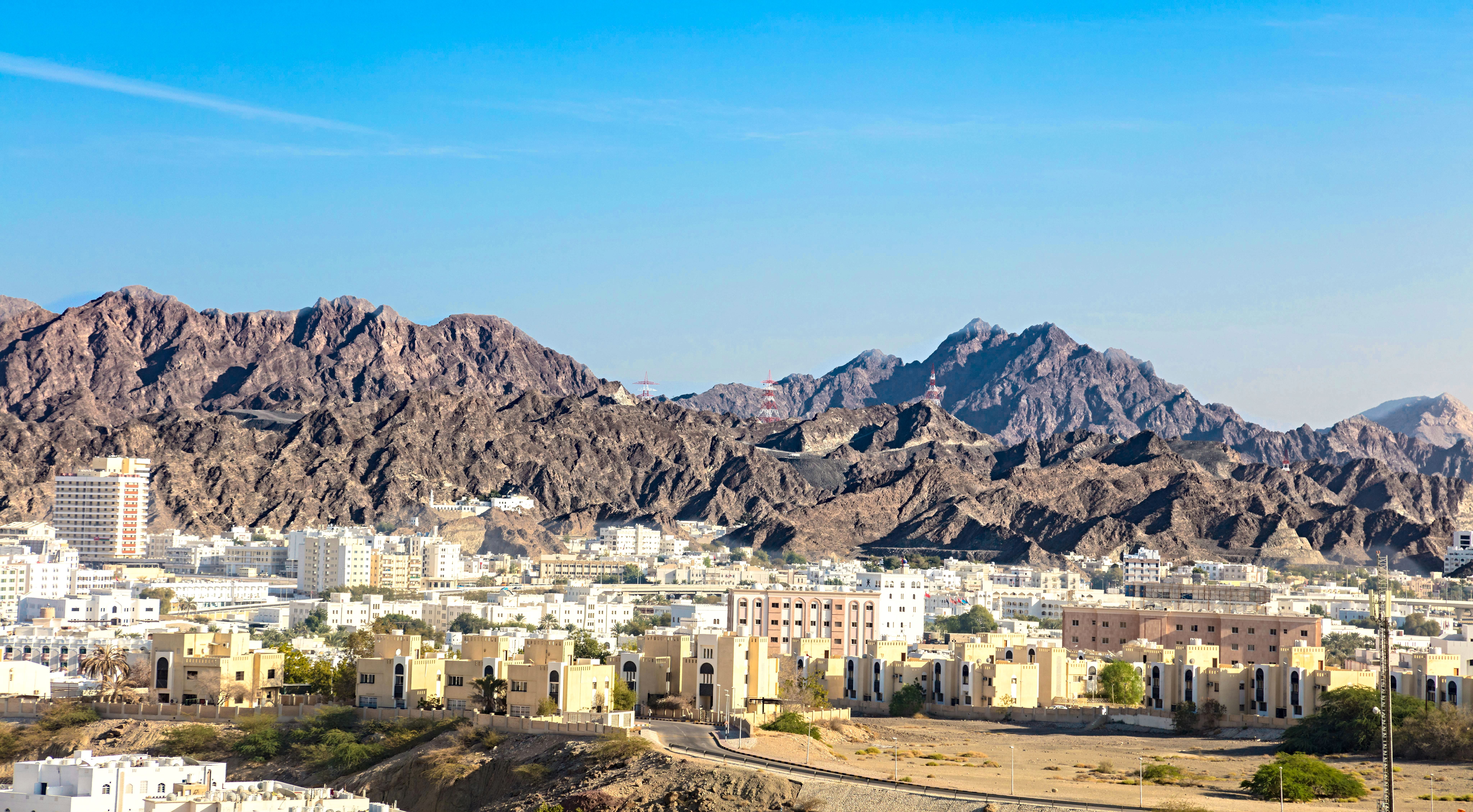
Muscat is the correct entry point — the capital on the Gulf of Oman coast, the city between the sea and the Hajar Mountains, the old city of Mutrah and the new city of Muscat connected by the Al Bahri Road along the coast.
The 48 Hours
DAY ONE
7:00am — The Sultan Qaboos Grand Mosque
The Sultan Qaboos Grand Mosque (the mosque completed in 2001 — the 20,000 worshippers the main prayer hall accommodates, the 1,700 sq metre hand-knotted carpet woven over four years by 600 Iranian weavers, the 14-metre Swarovski crystal chandelier above the carpet, the 90-metre main minaret visible from across the city): opens to non-Muslim visitors from 8:00am (Saturday to Thursday), closed Friday.
Arrive at 7:45am for the 8am opening — the mosque in the first 30 minutes before the organised tour groups arrive from the cruise ships at 9:30am.
The specific architectural details: the Omani craftsmen’s contribution to each surface (the carved stucco, the marble inlay, the teak wood panels — each craftwork tradition the specific Omani regional expertise from the different wilayat of the country), and the exterior garden (the formal garden with the Omani hardwood trees and the fountain channels — the falaj system aesthetic applied to the mosque grounds).
Dress code strictly enforced: women must wear the abaya (available for loan at the entrance), men must wear long trousers and covered shoulders. Entry: free.
9:00am — The Mutrah Souk
The Mutrah Souk (the oldest souk in Oman — the covered market in the Mutrah district of Muscat, the frankincense stalls at the souk’s western entrance, the silver and gold vendors in the interior lanes, the textile merchants with the Omani fabric):
At 9am: the souk in its working state, the cruise ship passengers not yet arrived (the ships dock at the Mutrah port from 9:30am, the passengers reaching the souk by 10:15am — the 9am visit gives the souk in its neighbourhood version rather than its tourist version).
The frankincense (the dried resin from the Boswellia sacra tree, the Dhofar region of southern Oman the global centre of the finest frankincense — the Hojari frankincense, the pale green resin, the most expensive grade, prized since antiquity): the souk vendors sell the frankincense by the bag, the prices varying by grade and origin.
The silver (the Omani silver jewellery — the bedl (the traditional Omani pendant), the khanjar (the curved dagger in the silver scabbard, the national symbol of Oman visible on the flag), the bracelets and the anklets from the Bedouin tradition): the souk price is the wholesale price — the same silver khanjar that costs OMR 800 / £1,563.10 in the hotel gift shop costs OMR 150-300 / £293.07-586.15 in the Mutrah Souk.
12:00pm — The Corniche Walk
The Mutrah Corniche (the waterfront promenade from the Mutrah port to the Al Riyam Park — the dhow harbour visible from the promenade, the traditional wooden boats that have been the Omani trade vessel for 2,000 years visible in various states of use and repair, the Hajar Mountains rising behind the city as the backdrop):
The dhow (the traditional lateen-rigged wooden sailing vessel — the Omani dhow is the specific Arabian Sea trading vessel that connected Oman to India, East Africa, and the Persian Gulf for three millennia, the frankincense and the fish and the dates the specific Omani trade goods): the Museum of the Frankincense Land in Salalah gives the context, but the working dhow visible in the Mutrah harbour gives the reality.
2:00pm — The National Museum of Oman
The National Museum of Oman (Muscat Street, Al Murtafa’a — the 2016 museum in the new Muscat district, the most modern museum in the Gulf and the one with the most complete account of Omani history and culture):
The specific collections: the seafaring gallery (the Omani maritime tradition — the navigation instruments, the dhow construction, the specific Omani position in the Indian Ocean trade network from antiquity to the present), the land and people gallery (the falaj irrigation system in miniature, the Bedouin culture, the specific regional variations of Omani culture across the country’s 11 governorates), and the frankincense trail (the 2,000-year-old Omani trade route, the frankincense in the ancient trade economy from southern Arabia to Rome and beyond).
Entry: OMR 5 / £9.77.
5:00pm — Al Bustan Beach
The Al Bustan coast (the bay south of Mutrah — the beach accessible from the Muscat Expressway south, the Gulf of Oman at 28-30°C in the October-April season): the beach that the Muscat residents use rather than the tourist beach, accessible by taxi (OMR 3-5 / £5.86-9.77).
The Al Bustan Palace (the circular domed hotel on the bay — the most celebrated hotel in Oman, the lobby visible from the bay road, the afternoon tea from the hotel: OMR 15-25 / £29.31-48.85 per person): the specific Muscat hotel experience without the overnight commitment.
7:30pm — Dinner: the Old Muscat Gate Area
The Al Alam Palace (the Sultan’s ceremonial palace at the Old Muscat area — not accessible inside, but the illuminated facade visible in the evening, the formal gardens, the Portuguese-era forts of Mirani and Jalali on either side): free to view.
The dinner in the Old Muscat restaurants:
The Mumtaz Mahal (the Indian restaurant in the Old Muscat area — the Indian subcontinent community in Oman dating from the long mercantile relationship between Oman and India, the specific Muscat Indian-Omani food culture visible in the restaurant): OMR 8-15 / £15.63-29.31 per main.
The Al Angham (the Omani restaurant at the Royal Opera House — the traditional Omani cuisine in the formal setting, the shuwa (the marinated lamb slow-cooked underground in a sealed clay pot for 24-48 hours, the most specifically Omani preparation, served on the festival days) and the harees (the slow-cooked wheat and meat porridge — the Ramadan and Eid dish, the comfort food of the Omani domestic kitchen): OMR 15-25 / £29.31-48.85 per person.
DAY TWO
8:00am — The Nizwa Day Trip
Nizwa (160km from Muscat — the ancient capital of Oman, the most significant inland city, the Friday livestock market):
The Nizwa Fort (the 17th-century fort, the largest single tower in Arabia, the circular tower 36 metres in diameter and 30 metres tall — the most impressive defensive structure in Oman): entry OMR 3 / £5.86.
The Nizwa Souk (the daily souk adjacent to the fort — the Omani silver vendors, the pottery from the Bahla workshops, the Omani halwa (the confectionery — the gelatinous sweet made from rose water and saffron and nuts, the specific Omani sweet served with the Omani coffee at any formal occasion), and the Friday livestock market (the goats and the cattle and the camels traded in the market at the fort’s base — the most authentic single market experience in Oman): free.
The Wadi Ghul (the “Grand Canyon of Arabia” — 100km from Nizwa, the limestone gorge that drops 1,000 metres from the Jebel Shams plateau to the wadi floor visible from the village of Ghul on the gorge rim): the view from the Ghul viewpoint — the most dramatic single natural landscape in Oman and one of the most dramatic in the Arabian Peninsula.
Hire a car from Muscat for the day trip: OMR 20-35 / £39.07-68.37 per day. The drive from Muscat to Nizwa on the excellent Omani expressway: 1.5 hours. The Nizwa-Wadi Ghul extension: a further 100km on the mountain road.
The Essentials
Getting to Muscat: British Airways direct from Heathrow (7 hours), Oman Air direct. Return: £350-600.
The visa: Oman e-Visa required for UK citizens. Apply at evisa.rop.gov.om — OMR 20 / £39.07 for 30 days. Processed within minutes. Free visa for stays under 14 days for UK citizens with the correct passport validity.
Getting around: Taxis (the metered taxis in Muscat, the Mwasalat app for the public bus) for the city. The hire car for the Nizwa day trip. The Careem and Uber apps both operate in Muscat.
The heat: Muscat in June-September reaches 40-42°C with high humidity. The October-April window is the correct visiting season: October-February at 22-30°C. The summer visitor who plans around the air-conditioned car and the early morning outdoor activity can manage but the experience is limited.
Where to stay: The W Muscat (the Shatti Al Qurum beachfront: £120-250/night), the Aloft Muscat (the Al Khuwair district: £70-120/night), the Centro Muscat by Rotana (the Ghubrah district: £45-80/night).
The Closing Moment
I was at the Sultan Qaboos Grand Mosque at 8:09am. The main prayer hall. The carpet — 1,700 square metres, hand-knotted, the largest single carpet in the world — and above it the 14-metre chandelier.
I stood on the carpet. Nine other visitors were in the hall. The space had the acoustic quality of a significant enclosed volume — a slight reverb, the sound of footsteps absorbed before reaching the far wall.
Oman is the Gulf state that built a mosque to the scale of its aspirations rather than to the scale of its oil revenue. The Sultan Qaboos Grand Mosque could accommodate 20,000 worshippers in a city of 1.5 million. The Dubai Frame is 150 metres tall. The Burj Khalifa is 828 metres. Both are about the thing that can be measured.
The carpet is not measurable in the same terms. It was woven by 600 people over four years. It is 1,700 square metres.
I stood on it. Nine other people were in the hall.
That is the Muscat experience.