


The Torvehallerne market at 8am for the open-faced smørrebrød and the coffee that justifies Scandinavia’s reputation for taking coffee seriously, the Louisiana Museum of Modern Art 35 minutes from the city where the Henry Moore sculptures are positioned above the Øresund and the Giacometti room has natural light from the Sound, the Nørrebro neighbourhood that contains the real Copenhagen and receives 3% of Strøget’s foot traffic, and why Copenhagen — the most expensive city in this guide — earns its price through a specific quality of design in everything from the bus shelters to the pastries.
Reading time: 10 minutes | Last updated: 2026
Copenhagen is the most expensive city in the guide. A beer costs €9-12 / £7.76-10.34 at most bars. A restaurant dinner is €40-70 / £34.48-60.35 per person. The hotel is expensive. The transport is expensive. The pastry at the corner bakery is expensive.
What Copenhagen delivers for this cost: the finest public design in Europe (the street furniture, the cycling infrastructure, the waterfront architecture — all of a coherent quality that Scandinavia achieves and most of Europe doesn’t), the most specific food culture on the continent (the New Nordic movement that Noma started and that has since transformed every restaurant in the city), and a city whose relationship with its own public space — the harbours for swimming, the parks for picnicking, the bike lanes for living — makes the cost feel differently distributed than in any other European capital.
The 48 Hours
DAY ONE
7:30am — The Nørrebro Morning
The Nørrebro neighbourhood (the inner-city area northwest of the city centre, the most ethnically diverse and the most artistically active neighbourhood in Copenhagen) at 7:30am: the bakeries opening, the cyclists on the Nørrebrogade, the coffee at the corner café that serves the neighbourhood’s working population rather than the tourist circuit.
The specific Nørrebro morning: the Assistens Cemetery (Kapelvej 4 — the cemetery where Hans Christian Andersen and Søren Kierkegaard are buried, the cemetery used by the Nørrebro residents as a park — the Copenhageners sunbathing on the graves in summer, the cemetery maintained as a living public space alongside its function). Entry: free.
9:00am — Torvehallerne Market
The Torvehallerne (Israel’s Plads — the covered glass market halls adjacent to the Nørreport station, the finest food market in Copenhagen): the smørrebrød (the open-faced Danish sandwiches — the specific Copenhagen tradition of the ryebread base with the toppings: the pickled herring, the roast beef with remoulade, the shrimp with egg and dill), the coffee from the Market Coffee roaster (the third-wave Copenhagen coffee, the pour-over or the flat white at €5-6 / £4.31-5.17), and the Grød (the porridge counter — the Danish oatmeal with the toppings, the most unexpectedly good breakfast in the market).
The smørrebrød at 9am: €12-18 / £10.34-15.52 per portion. Expensive. Worth it.
10:30am — The National Museum of Denmark
The Nationalmuseet (Ny Vestergade 10 — the national museum in a former royal palace, free entry): the collection covering Danish and Scandinavian prehistory, the Viking Age, and the Danish cultural history.
The specific rooms:
The Sun Chariot (Solvognen): The Bronze Age cult object found in a Jutland field in 1902 — a wheeled cart carrying a gold-covered bronze disc (the sun), pulled by a bronze horse. Made approximately 1400 BCE. One of the most important prehistoric artefacts in Europe, the most significant object in the National Museum.
The Viking Room: The runestones, the Viking-age jewellery, the specific material culture of the 9th-11th century Norse world. The Hiddensee treasure (the gold jewellery from the Danish island, dated to the 10th century) — the finest Viking gold in any collection outside Scandinavia.
Entry: free.
1:00pm — Lunch: Aamanns Deli
Aamanns (Øster Farimagsgade 10 — the restaurant that transformed smørrebrød from an old-fashioned lunch tradition into a contemporary culinary art form). The two-piece smørrebrød lunch (the herring on the potato and the roast beef with the pickled walnut): €28-35 / £24.14-30.17 per person. More expensive than the market version. The presentation is the difference.
2:30pm — The Rosenborg Castle and the Crown Jewels
The Rosenborg Castle (Øster Voldgade 4A — the 17th-century Renaissance castle of Christian IV, the most visited historical monument in Copenhagen): the collection covering 400 years of Danish royal history. The Crown Jewels in the Treasury (the underground vaults beneath the castle, the regalia used for Danish coronations): the Christian IV’s table fountain (the silver lobster fountain, a masterpiece of Renaissance silversmithing), and the crown of Christian V (1670 — the closed crown of absolute monarchy, the gold with the table-cut precious stones).
Entry: €20 / £17.24. The castle grounds (the King’s Garden — Kongens Have, the oldest royal garden in Denmark, laid out in the 17th century): free.
4:00pm — Nyhavn and the Harbour
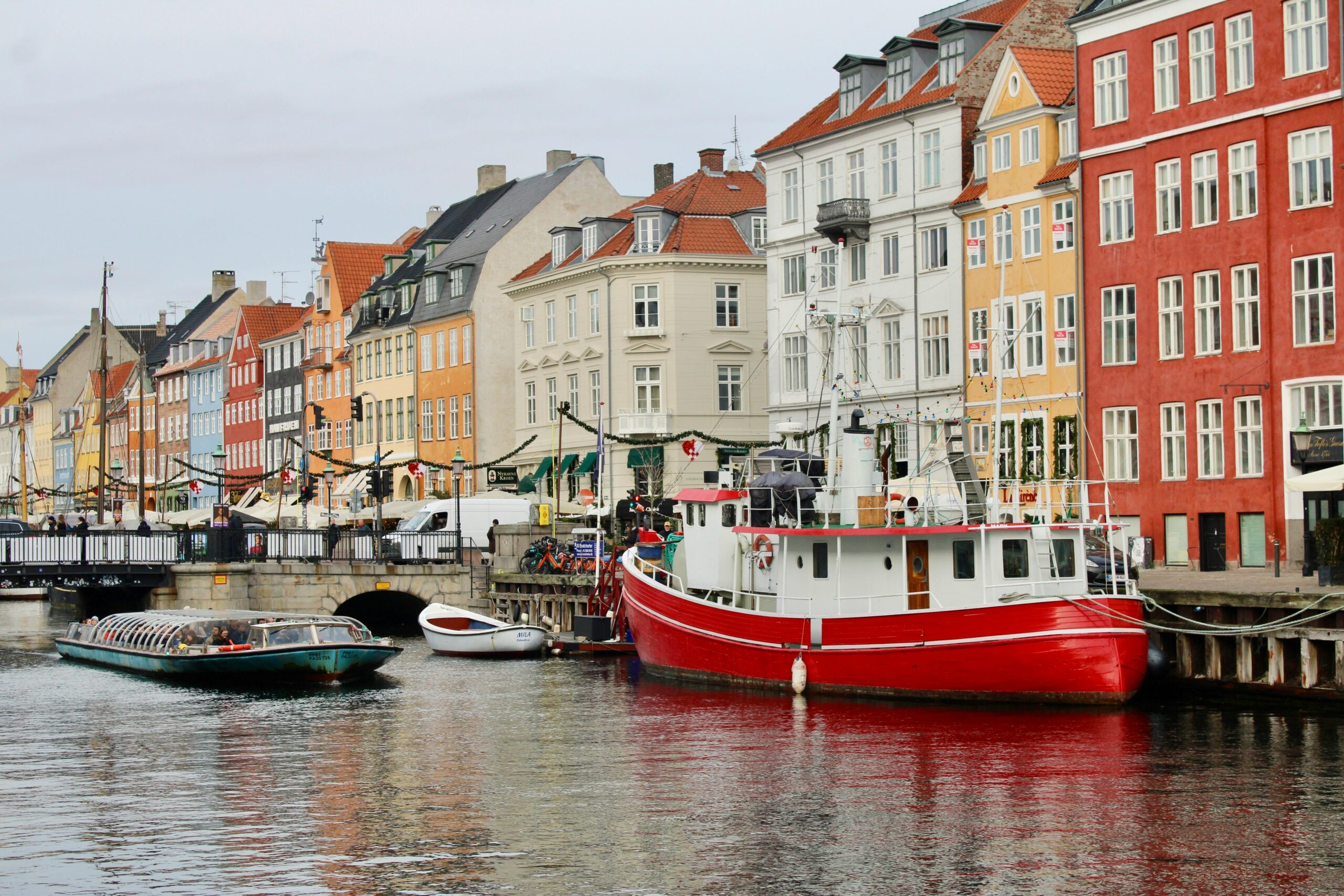
Nyhavn (the New Harbour — the 17th-century waterfront, the coloured warehouses that are the most photographed single image in Copenhagen). At 4pm: the tourist economy at full operation (the tour boats, the restaurants with the outdoor terraces, the selfie positions occupied by a queue). This is unavoidable. The Nyhavn at this hour is genuinely beautiful and genuinely crowded simultaneously.
The correct Nyhavn approach: walk the length of the canal (500 metres, 5 minutes), find the least crowded bench on the south side (the boats visible, the warehouses reflected), and sit for 15 minutes. Then leave. Don’t eat here — the restaurants are overpriced by 30-40% for the view.
5:30pm — The Harbour Bath
The Islands Brygge Harbour Bath (Islands Brygge — the outdoor swimming facility on the harbour, 15 minutes by bike or by Metro from Nyhavn) — the Copenhagen institution that defines what public space can be. The harbour pools (the five pools, including the children’s pool, the dive pool with the 5-metre tower, and the lap pool, all filled with the harbour water that has been clean enough to swim in since the 1990s) at 5:30pm: the after-work swim.
Open from May to September. Entry: free. The specific Copenhagen instruction: swimming in the harbour after work on a Tuesday in August is entirely normal. The presence of a tourist swimming alongside the commuters is not unusual.
8:00pm — Dinner: the Nørrebro Restaurants
The Nørrebro food scene has in the past decade produced the restaurants that the Copenhagen press discusses while the tourist guide recommends the New Nordic restaurants of the city centre:
Bæst (Guldbergsgade 29 — the restaurant by Christian Puglisi, the natural wine and the house-made charcuterie and the wood-fired pizza that is the finest in Scandinavia): book at baest.dk. €40-60 / £34.48-51.72 per person with wine.
The alternative for the budget-conscious: Jæger (Nørrebrogade 1 — the bar and restaurant at the entry point to Nørrebro, the burgers that the Copenhagen food press declared the best in the city, the local beer selection): €20-30 / £17.24-25.86 per person.
10:30pm — Christiania
The Freetown Christiania (Prinsessegade — the self-governing alternative community established in 1971 on a former military base in the Christianshavn neighbourhood): the specific Copenhagen experience that no other European city has an equivalent for. The 850 residents who have maintained the community’s semi-autonomous status for 50+ years. The Pusher Street (the cannabis trade, open and visible — illegal under Danish law and tolerated by Copenhagen authorities in a specific and ongoing policy tension). The music venues (the Loppen, the Nemoland) and the community restaurants (the Morgenstedet — the vegetarian restaurant that has been feeding the community since 1972).
The Christiania instruction: enter through the main gate at Prinsessegade. Walk Pusher Street, then the residential streets beyond. The community has a no photography rule on Pusher Street (enforced). Respect it. The photography rule exists because photographs create police evidence. Walk past, look, and understand that this specific negotiation between a counter-cultural community and the Danish state is ongoing and fragile.
Entry to Christiania: free.
DAY TWO
8:00am — Cycling
Copenhagen has 390km of dedicated cycling infrastructure — the most comprehensive in any European capital. The majority of Copenhageners cycle to work. The tourist cycle hire (the Donkey Republic app: €12-18 / £10.34-15.52 per day) gives access to the network.
The morning cycle circuit: the Nørrebro → the Lakes (the three artificial lakes running through the centre of Copenhagen, the path around them is the standard morning exercise route for the city’s residents) → the Frederiksberg Garden (the royal garden of Frederiksberg Palace, the most beautiful garden in Copenhagen after Rosenborg: free) → back through Vesterbro.
10:00am — The Louisiana Museum of Modern Art
The Louisiana Museum of Modern Art (Gammel Strandvej 13, Humlebæk — 35km north of Copenhagen, accessible by direct train from Copenhagen Central to Humlebæk station, 35 minutes, then 10 minutes walk). This is the day trip that most Copenhagen guidebooks mention and most Copenhagen visitors don’t take. It is a mistake to miss it.
The Louisiana is one of the finest modern art museums in the world — not because of the collection alone (though the collection, which includes Giacometti, Calder, Henry Moore, Asger Jorn, and the permanent exhibition of Danish and international contemporary art, is genuinely distinguished) but because of the integration of building, collection, and landscape. The museum extends into the garden above the Øresund (the strait between Denmark and Sweden, the Øresund Bridge visible in the distance), the Henry Moore bronzes positioned on the grass above the water, the Giacometti room with the tall figures in the natural light from the Sound.
Entry: €24 / £20.69. Open from 11am. Allow 3 hours.
2:00pm — Return to Copenhagen: Smørrebrød at the Train Station
The Central Station smørrebrød (the food counter in the main hall of Copenhagen Central Station): the €4-6 / £3.45-5.17 open sandwich served as the commuter lunch. The lowest-price smørrebrød available in Copenhagen at the correct quality. This is the version that the Copenhageners eat when they need to eat quickly, not when they want to perform Danish food culture.
3:30pm — Tivoli Gardens
The Tivoli Gardens (Vesterbrogade 3 — adjacent to the Central Station, the amusement park founded in 1843 that inspired Walt Disney, the pleasure garden that has been the most visited attraction in Denmark for 180 years): the gardens (the illuminated lanterns, the flowerbeds, the fountains), the rides (the Demon roller coaster, the Vertigo — the ride that inverts above the garden), and the Pantomime Theatre (the 19th-century Chinese pavilion, the commedia dell’arte performances in summer).
Entry: €18 / £15.52. Open seasonally — check current dates at tivoli.dk. The Tivoli at dusk (the lights coming on, the gardens illuminated): the most specifically Tivoli experience, neither the day version nor the night version but the transition between them.
6:00pm — Vesterbro: the Meatpacking District
The Kødbyen (the Meatpacking District) — the working meatpacking district of Vesterbro that has been progressively colonised by restaurants, bars, and galleries since the 2000s. The meatpacking operations still functioning alongside the food culture creates the specific Kødbyen atmosphere — the refrigerated trucks beside the cocktail bars, the butchers’ installations above the restaurant terraces.
The best evening start: the Mikkeller Bar (Viktoriagade 8 — the Copenhagen craft beer pioneer, the bar that started the Mikkeller brewing empire from a kitchen in 2006): the draft beer selection at €8-12 / £6.89-10.34 per pint.
8:00pm — Final Dinner: the Vesterbro Selection
Relæ (Jægersborggade 41, Nørrebro — the Michelin-starred restaurant that was the training ground for a generation of Copenhagen chefs, the vegetables-first tasting menu): book at restaurant-relae.dk. Tasting menu from €95 / £81.90.
The budget alternative: Jagger (Frederiksberg Allé 7 — the burger restaurant, the truffle burger, the truffle fries, the natural wine by the glass): €25-35 / £21.55-30.17 per person.
The Essentials
Getting to Copenhagen from the UK: British Airways, easyJet, Norwegian, SAS direct from London, Manchester, and Edinburgh. 2 hours. Return: £60-180.
Airport to city: The Metro (from Copenhagen Airport to the City Centre — Nørreport or Kongens Nytorv: 15 minutes, €5 / £4.31 on the Metro card). The Copenhagen Card (€89 / £76.73 for 24 hours, €119 / £102.59 for 48 hours) covers all public transport including the airport Metro and entry to 89 museums including Louisiana, Rosenborg, and the National Museum — genuinely worth the cost for 48 hours if visiting 4+ museums.
The cycling reality: Copenhagen is designed for cyclists. The bike lanes are on every major road. The cyclists have right of way in their lanes. Pay attention to the bike lanes when walking — pedestrians in Copenhagen have been trained to check for cyclists before stepping into the lane.
Where to stay: The Hotel SP34 (Sankt Peders Stræde 34, Latin Quarter: £130-200/night), the Absalon Hotel (Helgolandsgade 15, Vesterbro: £90-150/night), the Generator Copenhagen (Adelgade 5-7, private rooms from £45-75/night).
The Closing Moment
I was in the Giacometti room at the Louisiana at 12:40pm. The room is designed so that the tall, impossibly thin bronze figures stand in the natural light from the Øresund visible through the glass behind them. The water and the Swedish coast beyond as the backdrop for the figures that Alberto Giacometti made to capture the existential experience of a human being in space.
The figures are alone in space. They are always alone in the Giacometti sculpture — the space around them is as important as the material. The natural light from the Danish coast in the middle of a Wednesday afternoon gave the room the specific quality that makes the Louisiana worth the 35-minute train journey.
Six other people were in the room. One of them was a child of about 8 who stood very still in front of the tallest figure for about two minutes and then turned to her father and said something in Danish.
The father laughed. The Giacometti held its position.
Copenhagen costs more than other places. It gives more specific experiences per euro than most. That’s the trade. It is a reasonable trade.