
The Pantheon at 7:15am when the oculus sends a beam of light across the empty interior before the first tourist arrives, the Ostia Antica that has the same archaeological scale as Pompeii and receives 2% of Pompeii’s visitors, the supplì from the Trastevere counter eaten standing outside before the neighbourhood wakes up, the specific sequence of Vatican-Colosseum-Pantheon that eliminates queuing if timed correctly, and the one Roman instruction that overrides all others: the 6am alarm.
Reading time: 10 minutes | Last updated: 2026
Rome receives 30+ million tourists per year. The Colosseum alone gets 7.6 million — approximately 20,000 per day at peak. The Vatican Museums receive 6 million. This is not a city where the question is “what to see.” The question is how to see it without spending the majority of your 48 hours in queues.
The answer is the same in Rome as everywhere in this guide: the 6am alarm. The sites that are magical at 8am are processing lines at 11am. The arithmetic of early rising in Rome is more valuable here than anywhere else in Europe.
The 48 Hours
DAY ONE
6:15am — The Pantheon Before Opening
The Pantheon opens at 9am. This is not when to arrive.
At 6:15am, the Pantheon piazza (the Piazza della Rotonda) is empty except for the cats that sleep under the fountain and the occasional early runner. The building’s exterior — the portico columns, the ancient Roman inscription (M·AGRIPPA·L·F·COS·TERTIVM·FECIT — Marcus Agrippa, son of Lucius, consul for the third time, made this), the massive bronze doors closed and dark — is accessible without entry. Stand at the columns in the early light. The building was completed in 125 CE. The porphyry and granite columns of the portico were quarried in Egypt and transported to Rome. The mathematics of the interior dome (the diameter equals the height — 43.3 metres each — meaning a perfect sphere would fit exactly inside the building) were worked out without calculus, without computer modelling, without any tool we would recognise as engineering.
At 9am, when the Pantheon opens: be at the doors. Entry now requires booking at pantheonroma.com: €5 / £4.31. The oculus (the 8.7-metre circular opening at the dome’s apex — the building’s only light source, open to the rain, which drains through holes in the ancient marble floor) produces a beam of light that crosses the interior in real time as the earth rotates. At 9:15am, on a clear morning, the beam is specific and dramatic.
By 11am: 800 people inside simultaneously. Go at 9am.
8:00am — Breakfast at Sant’Eustachio il Caffè
Sant’Eustachio il Caffè (Piazza di Sant’Eustachio, 82) — the café that Romans cite most consistently as serving the finest coffee in Rome. The Gran Caffè (the signature drink — the coffee pre-sweetened by the barista using a technique that aërates the sugar into the first drops of espresso before adding the rest: you cannot order it without sugar, it is refused) at the marble counter. €1.30 / £1.12 standing at the bar. The cornetto (the Italian croissant, less buttery and more yeast-forward than the French version): €1.20 / £1.03.
The specific instruction: stand at the bar. Sitting at a Roman café table costs 2-3× the standing price. The bar price is the Roman price.
9:00am — The Pantheon
As above. Allow 45 minutes inside for the dome, the marble floor, the tombs (Raphael is buried here — the tomb with “Ille hic est Raphael” above it; Vittorio Emanuele II and Umberto I are in the right transept). Walk slowly around the interior perimeter. Look up.
10:00am — The Piazza Navona
Five minutes walk from the Pantheon — the elongated piazza built on the site of the Stadio di Domiziano (the 1st-century athletic stadium whose outline determined the piazza shape). The Fountain of the Four Rivers (Bernini, 1651 — the travertine fountain with the personifications of the Nile, the Rio de la Plata, the Danube, and the Ganges, the obelisk above) at 10am: the piazza quiet enough to approach the fountain. By noon: the portrait artists, the tourist restaurants, the crowd.
The Church of Sant’Agnese in Agone (the Borromini church opposite the Bernini fountain — the architectural rivalry between the two is the animating myth of the baroque Roman piazza, though the specific detail that Bernini’s Plata figure raises his hand as if to shield his eyes from Borromini’s facade has been embellished over time). Free entry.
11:30am — The Campo de’ Fiori and the Ghetto
The Campo de’ Fiori (the morning market — the vegetable and fruit stalls, the spice vendors, the flower sellers, the statue of Giordano Bruno in the centre, burned here for heresy in 1600). At 11:30am the market is winding down; the lowest prices for the remains of the morning produce are negotiated in the last 30 minutes.
The Jewish Ghetto (five minutes walk southeast) — the neighbourhood where Rome’s Jewish community was confined from 1555 to 1870, the longest continuous Jewish community in Europe. The Portico d’Ottavia (the 2nd-century BCE portico, now the facade of the Sant’Angelo in Pescheria church, the Roman columns visible beside the medieval structure), the Jewish bakeries (the torta di ricotta e visciole — the ricotta and sour cherry tart, specific to Rome’s Jewish-Roman baking tradition), and the Great Synagogue (the largest in Italy, the museum covering the history of Roman Jews: entry €12 / £10.34).
1:00pm — Lunch: the Testaccio Market
The Mercato Testaccio (Via Beniamino Franklin, 10-15 minutes south of the Ghetto by Uber or 30 minutes on foot) — the finest neighbourhood market in Rome, less tourist-facing than the Campo de’ Fiori, the produce and prepared food stalls serving the Testaccio residential population. The supplì from the stall in the market interior (the fried rice ball: €2.50 / £2.16), the arancini, the pizza al taglio from the market’s pizza counter. Lunch for €8-12 / £6.89-10.34.
3:00pm — The Baths of Caracalla
The Terme di Caracalla (Viale delle Terme di Caracalla, 52) — built 212-216 CE, the largest public baths in the ancient world, accommodating 1,600 bathers simultaneously. The ruins give the scale of the original structure: the hot room (calidarium), the tepid room (tepidarium), and the cold room (frigidarium), each in sequence, the heating system (the hypocaust — the raised floor with the furnace space below) visible in the excavated sections.
The Baths receive approximately 3% of the Colosseum’s visitors. They are larger. They are less crowded. Entry: €12 / £10.34. From the Testaccio market: 15 minutes walk south.
5:00pm — The Aventine Hill and the Knights of Malta Keyhole
The Aventine Hill — one of Rome’s seven hills, with two specific discoveries:
The Giardino degli Aranci (the Orange Garden) — the public garden on the Aventine hillside, the orange trees (the bitter Seville orange, the oranges of Rome), and the view over the city from the garden’s edge. One of the finest free viewpoints in Rome.
The Piazza dei Cavalieri di Malta (five minutes from the garden): the square designed by Piranesi, at the centre of which is a keyhole in the gate of the Priory of the Knights of Malta. Looking through the keyhole: the perfectly framed view of St. Peter’s Basilica dome at the end of a tunnel of clipped hedges, the dome appearing to float. It is the most specifically Roman visual experience available at zero cost. Queue: sometimes 10 people, sometimes none. Worth it.
7:30pm — Dinner in Trastevere
The Trastevere neighbourhood (cross the Tiber from the Aventine) — the medieval neighbourhood with the most characterful evening atmosphere in Rome. The restaurants open at 7:30pm.
Da Enzo al 29 (Via dei Vascellari, 29): the Roman trattoria at its most specific — the cacio e pepe (the pasta with pecorino romano and black pepper, the pepper toasted in the pan before the pasta water emulsifies it into a sauce), the coda alla vaccinara (the oxtail braised with tomato, celery, and the soffritto, the dish that Roman butchers developed to use the cuts nobody else wanted), the tiramisu made that morning. Reserve at least 3-4 days ahead at daenzotrastevere.com. €30-40 / £25.87-34.48 per person with wine.
10:00pm — The Trastevere Evening
The Trastevere piazza (the Piazza di Santa Maria in Trastevere) at 10pm: the basilica lit from within (the Santa Maria in Trastevere, the 12th-century mosaics in the apse — the golden apse mosaic visible through the open doors in the evening), the tables in the piazza, the specific Roman October evening. Walk the Trastevere lanes from the piazza toward the Piazza Trilussa. Buy the supplì from the counter at Supplì Roma (Via di San Francesco a Ripa, 137) for the evening snack.
DAY TWO
7:30am — The Vatican Museums at Opening
The Vatican Museums open at 9am but the online ticket allows entry from 9am with pre-selected slots. Book at museivaticani.va — 2-4 weeks ahead in peak season, 1 week in shoulder season. Select the first entry slot (9am).
At 8:50am: be at the Vatican Museums entrance (the Viale Vaticano entrance, not the St. Peter’s Square entrance — these are separate). The queue for the 9am slot with a pre-booked ticket: 10-15 minutes. By 10am: the queue for non-pre-booked is 90 minutes.
The Vatican Museums route to the Sistine Chapel: the museums are arranged so that the Sistine Chapel is at the end of a specific sequence. The direct route (following the crowds) takes 45-60 minutes through the Gallery of Maps, the Gallery of Tapestries, and the Raphael Rooms to the Sistine Chapel. At 9:15am: the Sistine Chapel with approximately 200 people inside. By 11am: 2,000.
The Sistine Chapel: The ceiling frescoes (Michelangelo, 1508-1512 — the nine scenes from Genesis, the Creation of Adam at the centre, the figure of God reaching toward Adam’s finger) and the Last Judgement on the altar wall (Michelangelo, 1536-1541, painted 23 years after the ceiling). The ceiling is at 18 metres — binoculars or a camera with zoom helps. The room requires looking directly up for extended periods. The neck pain is real. It is worth it.
Entry: €20 / £17.24 (includes the full museums) + €4 / £3.45 online booking fee.
11:30am — St. Peter’s Basilica and the Dome
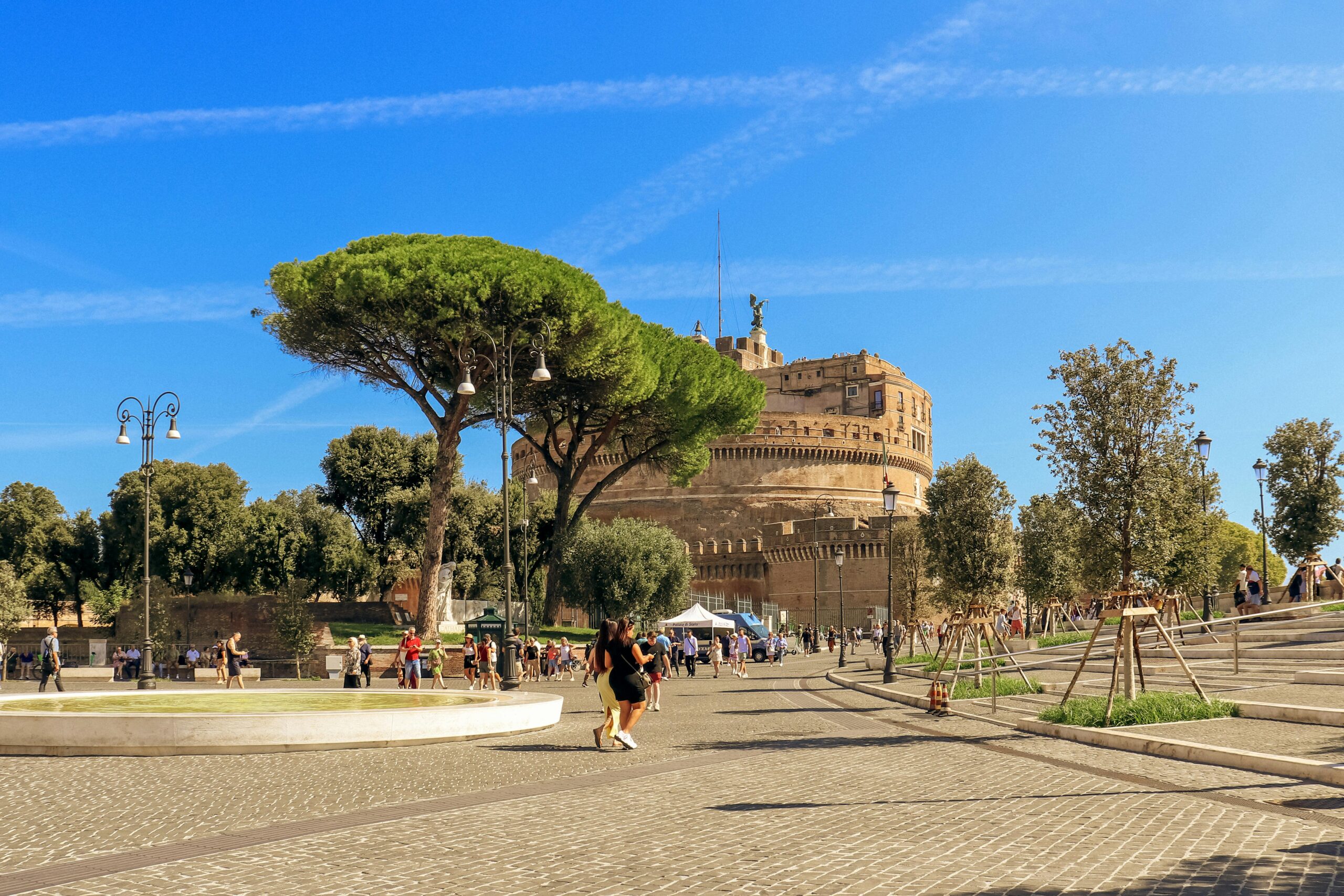
St. Peter’s Square and Basilica: free entry. The basilica contains Michelangelo’s Pietà (the marble sculpture of Mary holding the dead Christ — behind glass since 1972 when a geologist with a hammer attacked it — at the first right chapel after the entrance), Bernini’s baldachin (the 29-metre bronze canopy above the papal altar), and the dome (Michelangelo’s design, completed after his death). The dome is climbable: 551 steps or the first 231 by lift (€6 / £5.17 by lift + stairs, €5 / £4.31 stairs only). The view from the dome: the Vatican Gardens, the Castel Sant’Angelo, and Rome in all directions.
St. Peter’s Square: the oval colonnade by Bernini (284 columns, 140 saints on top) is the finest single piece of baroque urban design in Europe. Stand at either of the two focus points marked in the pavement (the markers are circles of stone at the point where all four rows of columns align into a single row) to see the colonnade at its designed perspective.
1:30pm — Lunch near the Vatican: Il Sorpasso
Il Sorpasso (Via Properzio, 31-33, five minutes from the Vatican): the wine bar and restaurant serving the working Roman professional class of the Prati neighbourhood — not a tourist restaurant. The schiacciatine (the flat Tuscan bread with toppings), the charcuterie, the daily pasta specials, the excellent wine list by the glass. €20-30 / £17.24-25.86 per person.
3:00pm — Ostia Antica
This is the instruction most Rome guides don’t give: take the train to Ostia Antica.
From the Roma-Lido train line (from the Porta San Paolo station adjacent to the Piramide Metro station — Metro B): 25 minutes, €3.50 / £3.02 return. The Ostia Antica archaeological site is ancient Rome’s port city — the city that was Rome’s commercial gateway for 700 years, now excavated to reveal the insulae (the multi-storey apartment blocks of the Roman working class), the thermopolia (the ancient fast-food restaurants, the food containers set into the stone counter still visible), the temples, the theatre (still used for summer performances), and the mosaics.
Scale: the same as Pompeii. Visitors: 2% of Pompeii’s numbers on the same day. The site requires 2-3 hours to walk properly.
Entry: €12 / £10.34. Open until 7pm in summer, 4:30pm in winter.
6:00pm — The Capitoline Hill at Sunset
Return from Ostia Antica to the Piramide Metro, take Line B to the Colosseo stop. The Capitoline Hill (the Campidoglio) above the Roman Forum: Michelangelo designed the piazza (the trapezoidal plaza, the geometric pavement, the equestrian statue of Marcus Aurelius — the original in the Capitoline Museum, the piazza statue a copy). The Tabularium terrace (within the Capitoline Museums — entry €15 / £12.93, including the Capitoline Wolf bronze and the original Marcus Aurelius): the view over the Roman Forum at sunset.
The Forum at sunset visible from above: the columns of the Temple of Saturn, the Arch of Septimius Severus, the Via Sacra — the ancient processional street — in the late light.
8:00pm — Final Dinner: Flavio al Velavevodetto (Testaccio)
The cucina romana at its most committed: the rigatoni alla pajata (the pasta with the intestine of an unweaned calf, the milk still in the intestine giving the sauce its specific creaminess — the most specifically Roman dish on any menu, available only here and at a handful of other restaurants), the carciofi alla giudia (the fried whole artichoke, the Jewish-Roman preparation, the leaves opened like a flower), the supplì as the starter.
Via di Monte Testaccio, 97. Reserve at velavevodetto.it. €30-45 / £25.87-38.79 per person.
The Essentials
Getting to Rome from the UK: British Airways, easyJet, Ryanair, ITA direct to Fiumicino (FCO). 2.5 hours. Return: £60-150.
Getting from Fiumicino Airport: The Leonardo Express train (FCO to Roma Termini, 32 minutes, €14 / £12.07 — the correct option). Or the FL1 regional train (€8 / £6.89, 45 minutes, requires a change at Tiburtina). Uber: €35-50 / £30.17-43.10 but variable with traffic.
The Roma Pass: €52 / £44.83 for 72 hours — covers the Metro and buses, includes free entry to 2 museums (use it for the Borghese Gallery and the Capitoline Museums), discounts at other sites. Worth purchasing for 48 hours of city-wide transport.
Where to stay: The Crossing Condotti (Via Mario de’ Fiori, 28, Spanish Steps area: £100-180/night), the Delfine e Creatura B&B (Via del Pellegrino, Campo de’ Fiori: £80-130/night), the Alessandro Palace Hostel (near Termini, private rooms from £30-50/night).
The Borghese Gallery: The finest collection of Baroque sculpture in the world — the Bernini sculptures (Apollo and Daphne, the Rape of Proserpina, the David) in the intimate villa setting. Entry requires booking at galleriaborghese.it (mandatory, 2-hour timed slots, maximum 360 visitors at a time). €15 / £12.93 + €2 booking fee. Not scheduled in the 48 hours above — substitute for the Baths of Caracalla if sculpture is the priority.
The Closing Moment
I was in the Sistine Chapel at 9:22am. There were perhaps 150 people in the room.
The ceiling is at 18 metres. The Creation of Adam: the space between the two index fingers that the art history books discuss — the space that Michelangelo left between God’s finger and Adam’s finger as the place where the divine spark might travel. The space is approximately 12 centimetres in the original fresco. At 18 metres, viewed from below: infinitesimal.
I stood looking up for 17 minutes. My neck hurt before the 10-minute mark. I kept looking.
By 9:45am there were 600 people in the room.
The specific Rome instruction: the things that justify the journey require being seen in the right condition. The Sistine Chapel at 9:22am and the Sistine Chapel at 11:30am are two different experiences in the same room. The ceiling doesn’t change. Everything else does.
The 6am alarm. Always.