

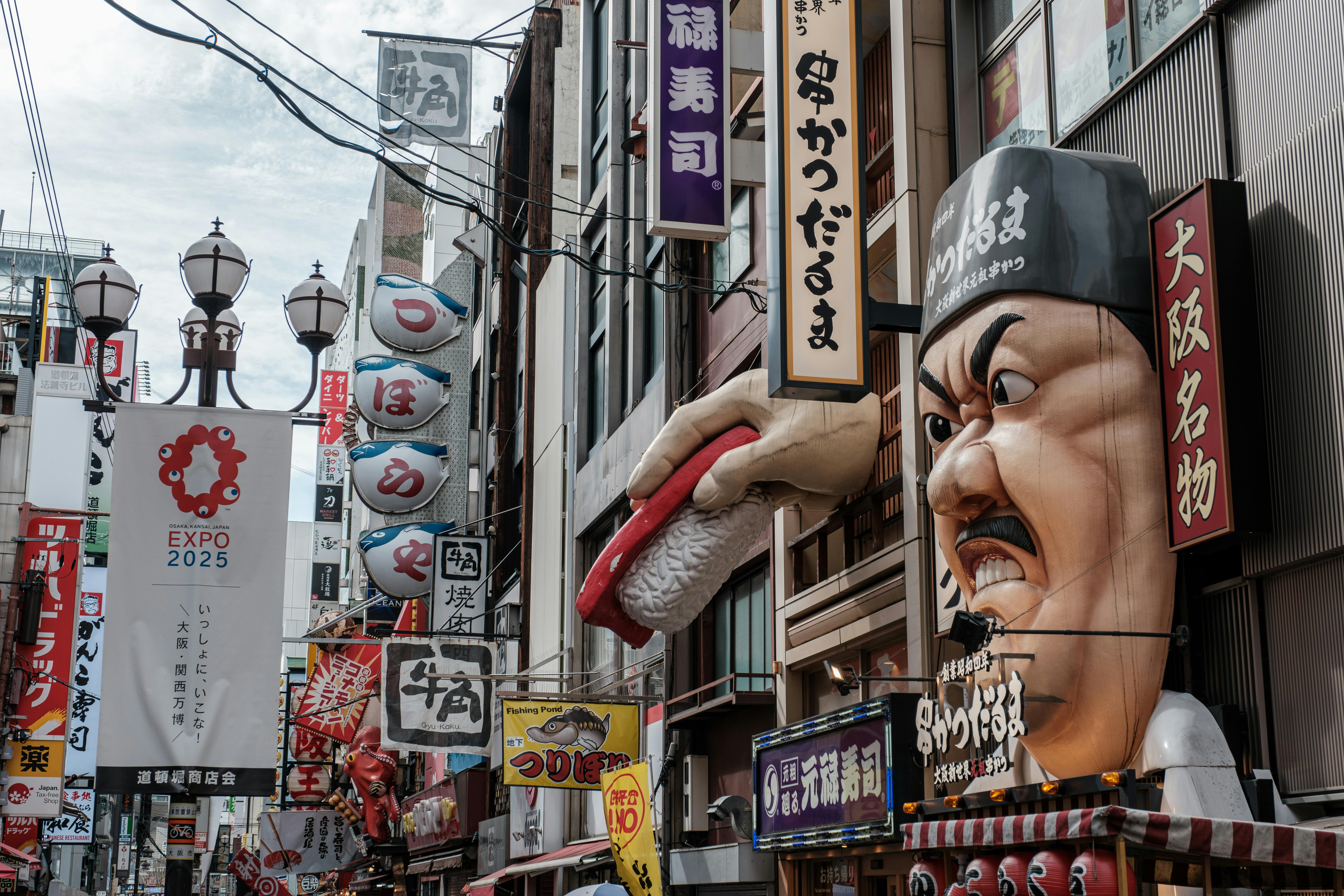
Dotonbori is the centre. Move outward from it.
1. TAKOYAKI JUHACHIBAN (Dotonbori) Dotonbori Canal area, Chuo Order: 6 pieces of takoyaki — the octopus balls with the thinner batter and the more liquid interior that Osaka residents describe as the technically superior version. The Juhachiban preparation emphasises the interior texture; the exterior is less crisp than some versions. The Osaka instruction: eat immediately. The optimal temperature window is 90 seconds. Price: 700-900 JPY / £3.71-4.77
2. MIZUNO (Okonomiyaki) 1-4-15 Dotonbori, Chuo Open: 11:30am-10pm (closed Tuesday) Order: the mixed okonomiyaki (the Osaka style — everything mixed in the batter rather than layered as in the Hiroshima version) with the standard toppings: okonomiyaki sauce, Japanese mayonnaise, dried bonito flakes, aonori. Price: 1,300-2,200 JPY / £6.89-11.66 Queue: arrives at opening (11:30am opening typically has a queue by 11:15am on weekends).
3. HARUKOMA SUSHI (Kuromon Market) 2-3-2 Nipponbashi, Namba Access: Osaka Metro Sennichimae Line to Nipponbashi Open: 8am-6pm Note: The counter sushi stall adjacent to the Kuromon market fish section — the fish purchased that morning from the market, the sushi made at the counter, the price 30-50% below any equivalent Osaka restaurant. Price: 2,500-4,500 JPY / £13.25-23.85 for a satisfying sushi lunch
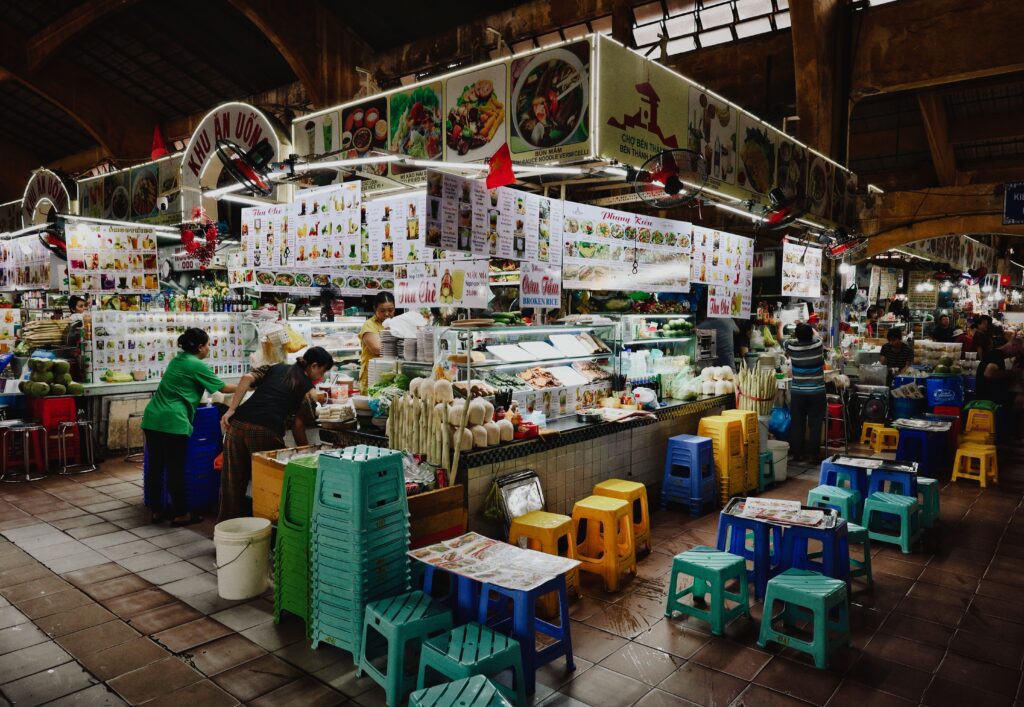
4. KUROMON ICHIBA MARKET (General) 2-3-x Nipponbashi, Namba Open: 9am-6pm daily (most stalls) Note: The kitchen market that supplies the Osaka restaurant industry — the wagyu vendors (the skewer prepared and grilled in front of the customer: 600-1,200 JPY / £3.18-6.36), the sea urchin on ice (the Hokkaido uni, served in a cup with a small spoon: 600-1,500 JPY / £3.18-7.95), and the produce market.
5. YOSHINO SUSHI (Osaka-style Pressed Sushi) 3-4-14 Awajimachi, Chuo Open: Tuesday-Sunday 11am-3pm Note: The pressed sushi (oshizushi) specialist — the Osaka tradition of pressing the sushi into wooden moulds to form a block, then cutting into pieces. The mackerel oshizushi is the signature. The building dates to the Meiji era. Price: 1,200-2,000 JPY / £6.36-10.60
6. NISHIYA (Kushikatsu) 2-12-4 Namba, Chuo Open: 11am-10pm Order: the kushikatsu (the deep-fried skewers unique to Osaka — the meat, vegetable, or seafood items coated in breadcrumbs and fried, dipped once into the communal sauce). The Osaka rule: no double dipping (the sauce is shared between the table). The shrimp, the quail egg, the asparagus. Price: 120-250 JPY / £0.64-1.33 per skewer (eat 8-12 for a satisfying meal)
7. WANAKA (Takoyaki, the Consensus Best) Multiple Osaka locations Note: The takoyaki vendor that appears most consistently in the Osaka locals’ ranking — the specific batter consistency and the proportion of octopus to batter that the Juhachiban crowd may or may not agree with. The Osaka takoyaki debate (which counter is the definitive version) is a genuine ongoing civic conversation.
8. IMAI HONTEN (Osaka Udon) 1-7-22 Dotonbori, Chuo Open: 11am-10pm Note: The Dotonbori udon institution — the kitsune udon (the udon with the fried tofu, the sweet dashi broth) in the Osaka preparation that differs from the Tokyo version in broth colour (lighter dashi rather than the darker Tokyo soy) and sweetness (the Osaka broth is sweeter by convention). Price: 750-1,400 JPY / £3.97-7.42
9. OSAKA PUBLIC MARKET, TENJINBASHISUJI (Longest Shopping Street) Tenjinbashisuji, Kita Access: Osaka Metro Tanimachi Line to Tenjinbashi-suji 6-chome Note: The longest covered shopping street in Japan (2.6km) — the shotengai serving the local residential population of the Kita ward. The food section has the neighbourhood specificity that the Dotonbori tourist strip lacks: the okonomiyaki from the neighbourhood shop, the bentō from the stall that serves the office workers, the coffee from the shop that has been on this street since 1968.
10. SHIN-UMEDA SHOKUDOGAI (Underground Food Town) B1, Osaka Station City, Umeda Access: JR Osaka Station or Hankyu Umeda Note: The underground food restaurant complex beneath Osaka Station — the most accessible concentration of different Japanese food categories in one location: ramen, soba, yakitori, teppanyaki, and the specific Osaka additions (the kushikatsu counter, the takoyaki stall).
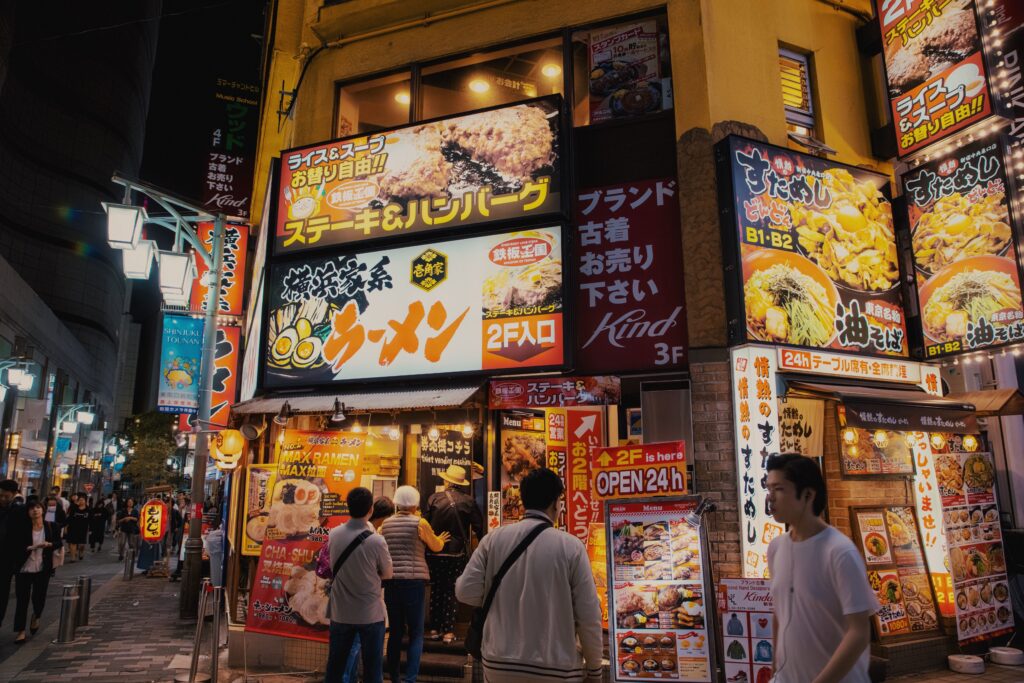
11. AMERICA-MURA AREA (Shinsaibashi — Evening) Shinsaibashi, Chuo Access: Osaka Metro Midosuji Line to Shinsaibashi Note: The American Village area south of Shinsaibashi with the second-hand clothing market (independent of the food guide but adjacent) — the evening food is at the small izakaya and ramen counters in the lanes off the main Shinsaibashi street.
12. DOTOMBORI DESSERT CIRCUIT Dotonbori main street Note: For the sake of completeness — the Glico Running Man sign, the Dotonbori bridge, the Ferris wheel: the tourist Osaka that is genuinely photogenic but that this food guide instructs you to treat as the dessert rather than the main course. After Kuromon market and after Mizuno and after the kushikatsu: walk Dotonbori as the 10pm post-dinner circuit. The experience is correct in that order.