
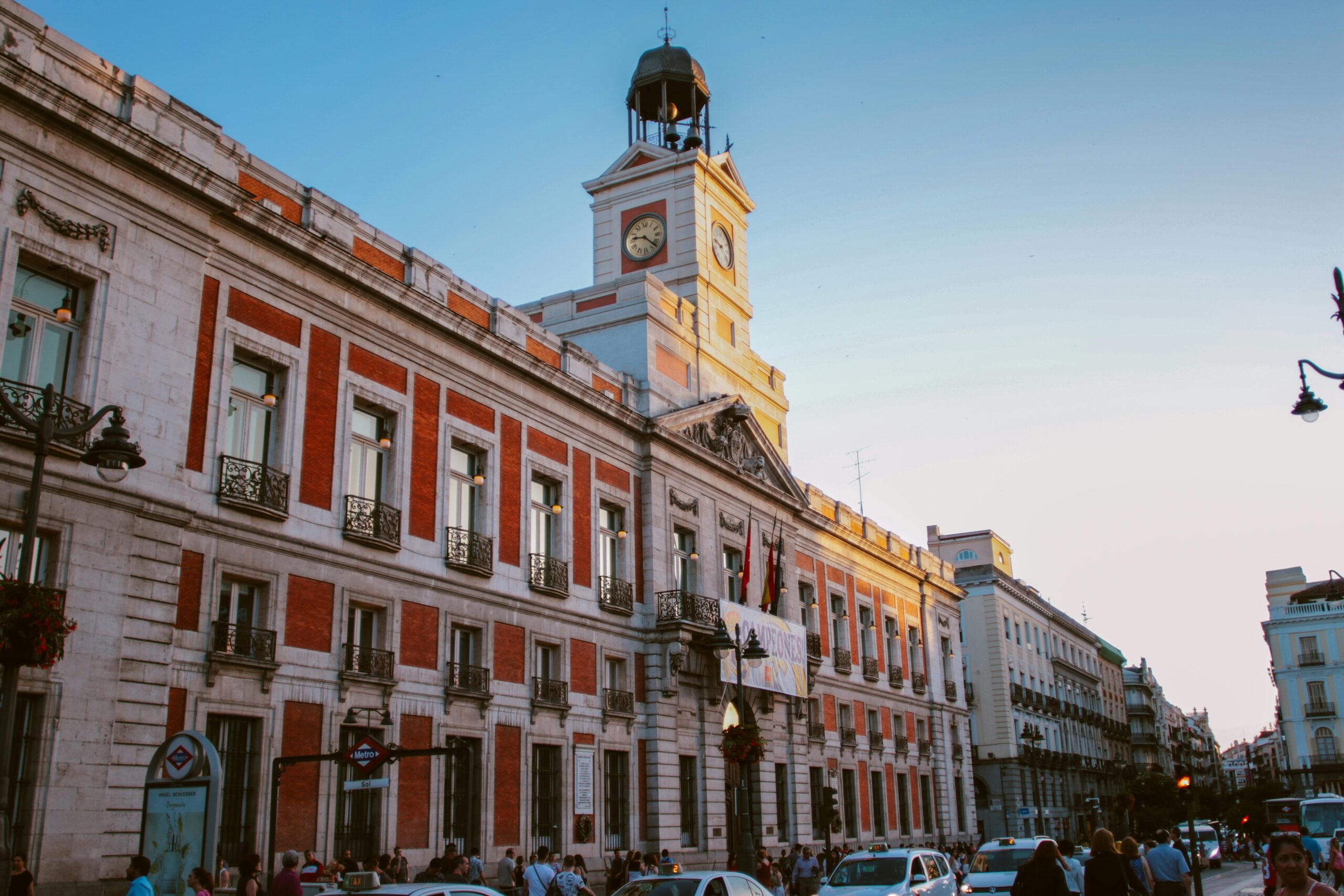
The Prado at 10am opening when Velázquez’s Las Meninas is visible without the crowd that surrounds it by noon, the Mercado de San Miguel for the breakfast vermouth that Madrileños drink at 11am without any explanation required, the Barrio de las Letras where Cervantes and Lope de Vega lived on the same street and where the literary quarter still functions as a literary quarter rather than a tourist version of one, the Retiro Park at 7am when the city’s runners have the paths and you have the Crystal Palace reflection to yourself, and why Madrid — the city most UK travellers fly over on the way to Barcelona — deserves its own trip entirely.
Reading time: 10 minutes | Last updated: 2026
Madrid is the highest capital city in the European Union (667 metres above sea level), the city with the most bars per capita of any in the world, and the city that contains three of the finest art museums in Europe within 800 metres of each other — the Prado, the Thyssen-Bornemisza, and the Reina Sofía. It is also the city that most UK travellers treat as a connection rather than a destination, flying through Barajas on the way to Barcelona or Seville or South America.
This is a mistake that 48 hours corrects permanently.
The 48 Hours
DAY ONE
7:00am — The Retiro Park
The Parque del Buen Retiro (the park of the Pleasant Retreat) — the 350-acre park that was the private pleasure ground of the Spanish royal family until 1868, when it was opened to the public. At 7am on a weekday: the Madrileño runners on the Paseo de Rondas (the circular perimeter path, 4km), the rowers on the Estanque Grande (the large rectangular lake at the park’s centre, the rowing boats available for hire from 10am), and the Palacio de Cristal (the 1887 cast-iron and glass exhibition hall on the Retiro lake, the most beautiful single building in the park) with its reflection in the adjacent pond in the morning light.
The Retiro at 7am requires no entry fee and no booking. The Crystal Palace interior is used for exhibitions by the Reina Sofía museum (entry free). The specific morning instruction: the path from the Puerta de Alcalá entrance (the 18th-century triumphal arch at the park’s eastern boundary, visible from the park gate) through the formal gardens to the Crystal Palace. 45 minutes without rushing.
8:30am — Breakfast: Chocolatería San Ginés
The Chocolatería San Ginés (Pasadizo de San Ginés, 5 — the alleyway between Calle del Arenal and Calle Mayor, a 10-minute walk from the Prado or 20 minutes from the Retiro) has been serving churros con chocolate since 1894. The specific instruction: the churros (the fried dough sticks, thicker than the Catalan version, the porras — the thicker, hollow version also available) with the thick hot chocolate (the specific Spanish consistency, somewhere between a drinking chocolate and a chocolate sauce, designed for dipping). €4-6 / £3.45-5.17 for churros and chocolate.
At 8:30am on a weekday: the chocolatería at half capacity. By 10am: the tourist groups from the nearby hotels. By midnight: the Madrileños returning from the night out (the chocolatería operates 24 hours and has done so for 130 years — the 3am churros after the clubs is the specific Madrileño tradition).
10:00am — The Prado Museum
The Museo Nacional del Prado (Calle de Ruiz de Alarcón, 23) — one of the three finest art museums in the world, the collection representing the Spanish royal family’s five centuries of acquisition and the output of the painters they employed. The collection priority:
Las Meninas (Velázquez, 1656): The painting in Room 12 — the 3.2 × 2.76 metre canvas depicting the Infanta Margarita with her ladies-in-waiting, her dwarf attendants, and the painter himself (visible in the painting’s background at an easel, looking out at the viewer). The ambiguity of who is looking at whom — the painter, the viewer, the Infanta, the royal couple whose reflection is visible in the mirror — has generated more art historical analysis than any other single canvas. At 10am: Room 12 with 30-50 people. By noon: 200.
The Third of May 1808 (Goya, 1814): The painting in Room 64 — the execution of Madrid citizens by Napoleon’s forces, the man in the white shirt with his arms raised the specific image of defiance and terror that made Goya the first modern war painter. Manet’s Execution of Maximilian, Picasso’s Guernica — both draw directly from this canvas.
The Garden of Earthly Delights (Hieronymus Bosch, c.1490-1510): The triptych in Room 56A — the left panel (the Garden of Eden), the central panel (the garden of earthly pleasures — the human figures and the hybrid creatures and the fruits, the most detailed visual imagination in Western art), and the right panel (Hell — the musical instruments used as instruments of torture, the ears with the knife between them, the figure whose body is a broken egg). Spend 20 minutes with this painting.
Entry: €15 / £12.93. Free Tuesday-Saturday 6-8pm and Sunday 5-7pm. Book at entradas.museodelprado.es for the morning slots. Open from 10am.
1:00pm — The Barrio de las Letras
The Barrio de las Letras (the Literary Quarter) — the neighbourhood south of the Prado where Cervantes (Don Quixote, 1605) and Lope de Vega (the most prolific playwright in history, 1,500+ plays) lived on the same street (Calle de Cervantes and Calle de Lope de Vega, which the city named after each writer after their deaths — Cervantes died in the house on the street now named after Lope de Vega, and Lope de Vega died in the house on the street now named after Cervantes, which the city noticed only after the naming). The Casa de Lope de Vega (the playwright’s house, preserved as a museum — the garden, the private chapel, the study: entry €2 / £1.72, closed Monday).
The Barrio at 1pm: the vermouth hour (the vermut, the pre-lunch aperitivo tradition — a glass of red vermouth with an olive at one of the traditional bars of the Letras neighbourhood: El Callejón, La Dolores, Taberna de Ángel Sierra). At €3-5 / £2.59-4.31 per glass, the vermouth represents the Madrileño midday at its most specific.
2:00pm — Lunch: Mercado de San Miguel
The Mercado de San Miguel (Plaza de San Miguel, 1 — adjacent to the Plaza Mayor) — the 1916 cast-iron market building converted to a gourmet food market. The stalls operate as individual restaurants: the seafood (the oysters, the boquerones en vinagre — the fresh anchovies marinated in vinegar, the most specifically Madrid bar food), the jamón (the Ibérico de bellota — the acorn-fed black Iberian pig cured for minimum 24 months), the tortilla española (the potato omelette, the specifically Madrileño version — the question of whether the centre should be runny or set is a genuine civic debate), and the croquetas.
The Mercado at 11am is the vermouth market — the Madrileños who come for the stand-up drinks and the pincho. At 2pm it is lunch. At 4pm it empties. At 8pm it reopens for the evening pintxos and the wines.
Budget: €15-25 / £12.93-21.55 per person for a full lunch standing at the stalls.
4:00pm — The Reina Sofía
The Museo Nacional Centro de Arte Reina Sofía (Calle de Santa Isabel, 52 — directly south of the Prado on the same boulevard) — the collection of 20th-century Spanish and international art. The specific reason to go:
Guernica (Picasso, 1937): The 3.49 × 7.76 metre canvas painted in response to the Nazi and Fascist bombing of the Basque town of Guernica during the Spanish Civil War. The painting (the bull, the horse, the screaming women, the lamp, the fragments of bodies in grey and black and white) was painted in six weeks and is the most politically significant single canvas of the 20th century. Picasso refused to allow the painting to return to Spain while Franco was in power; it arrived from MoMA in New York in 1981, six years after Franco’s death.
Room 206, second floor. At 4pm: manageable. At noon: the school groups.
Entry: €12 / £10.34. Free Monday and Wednesday-Saturday 7-9pm, Sunday 1:30-7pm.
7:00pm — The Rooftop at the Círculo de Bellas Artes
The Círculo de Bellas Artes rooftop (Calle de Alcalá, 42 — the 1926 cultural centre, the cat statue on the facade) — the finest free-access rooftop view of Madrid available without a hotel room. The view: the Gran Vía (Madrid’s main commercial boulevard, the “Spanish Broadway” of the early 20th century), the Metropolis Building, the communication towers of the Casa de América. Entry to the rooftop: €5 / £4.31. Open until midnight.
9:00pm — The Tapas Route
The specific Madrileño tapas route that the guidebooks describe but rarely sequence correctly:
First stop (9pm): Taberna de la Daniela (Calle del General Pardiñas, 21, Salamanca) — the cocido madrileño (the Madrid chickpea stew, the most specifically Madrileño single dish — the three-course format: first the broth, then the chickpeas and vegetables, then the meats — served only at lunch but the taberna’s tapas version available in the evening).
Second stop (10pm): Casa Revuelta (Calle de Latoneros, 3, near the Mercado de San Miguel) — the bacalao frito (the deep-fried salt cod) that is the specific Casa Revuelta speciality, served at the stand-up bar since 1966. €2.50-3.50 / £2.16-3.02 per tapa.
Third stop (11pm): El Tigre (Calle de las Infantas, 30, Chueca) — the bar famous for its free tapas with every drink. Order a beer (€2.50-3 / £2.16-2.59), receive a plate of food (the plate changes — jamón, croquetas, patatas bravas, calamari — but it arrives without being requested). The Chueca neighbourhood at 11pm: the Madrid LGBTQ+ district in full evening activity, the bars opening, the Madrileños beginning their night.
Fourth stop (midnight, optional): Chocolatería San Ginés. The night ends where the day began.
DAY TWO
7:30am — The Rastro (Sunday Only) or the Malasaña Morning
The El Rastro (Ribera de Curtidores, La Latina — Sunday only, 9am-3pm): the largest outdoor flea market in Spain, 3,500 stalls covering the streets of La Latina from the Glorieta de Embajadores northward. The leather goods (the specific Rastro leather — the belts, the jackets, the bags at prices below any comparable market in Europe), the vintage clothing, the antiques, the books. At 9am: the serious buyers. At noon: the casual browsers. At 3pm: the market ends.
On non-Sunday days: the Malasaña neighbourhood (the creative district north of the Gran Vía) at 7:30am — the corner cafés serving the working population, the bookshops opening at 10am, and the Mercado de San Ildefonso (Calle de Fuencarral, 57 — the three-storey food market with the rooftop terrace) for the morning pincho.
10:00am — The Thyssen-Bornemisza Museum
The Museo Nacional Thyssen-Bornemisza (Paseo del Prado, 8 — directly between the Prado and the Reina Sofía, completing the “Golden Triangle of Art”) — the collection of the Thyssen-Bornemisza family, one of the greatest private art collections ever assembled, covering the full arc of Western art from the 13th century to the 20th. The specific rooms: the Italian Primitives (the Duccio, the Ghirlandaio, the Carpaccio), the Dutch Golden Age (the Hals, the Rembrandt, the de Hooch), the American paintings (the Hopper — Hotel Room, the most specific Edward Hopper in any European collection — the woman on the bed, the letter, the window), and the 20th-century (the Mondrian, the Kandinsky, the Dalí).
Entry: €13 / £11.21. Mondays free. Open from 10am.
12:30pm — Lunch: Bocadillo de Calamares
The bocadillo de calamares (the calamari sandwich) — the most specifically Madrileño street food, the deep-fried squid rings in the crusty white roll with nothing else (no sauce, no lettuce, no tomato — calamari in bread, the purity of the preparation). Available from the bars around the Plaza Mayor and the Calle de Botoneras: €3-4 / £2.59-3.45. This is the Madrileño worker’s lunch, the sandwich that has been eaten at these stands since the 19th century.
The Plaza Mayor (the 17th-century rectangular plaza, the 237 balconied apartments, the Casa de la Panadería at the northern end with the painted facade) — the correct context for the bocadillo: buy it at the stand, eat it standing in the plaza.
2:00pm — The Royal Palace (Palacio Real)
The Palacio Real de Madrid (Calle de Bailén — the largest royal palace in Western Europe by floor area: 135,000 square metres, 3,418 rooms) — the current working palace of the Spanish royal family (they live at the smaller Zarzuela Palace; the Palacio Real is used for state ceremonies). The State Rooms: the Throne Room (the scarlet silk walls, the ceiling fresco by Tiepolo, the crystal chandeliers), the Royal Armoury (the finest collection of royal armour in the world — the suits made for Charles V and Philip II), and the Stradivarius Collection (the five Stradivarius instruments still maintained in playable condition — concerts are held in the palace using them).
Entry: €14 / £12.07. The Sabatini Gardens (the formal gardens north of the palace) are free and give the palace’s exterior from the correct angle.
4:30pm — The Almudena Cathedral and the Vistas de Madrid
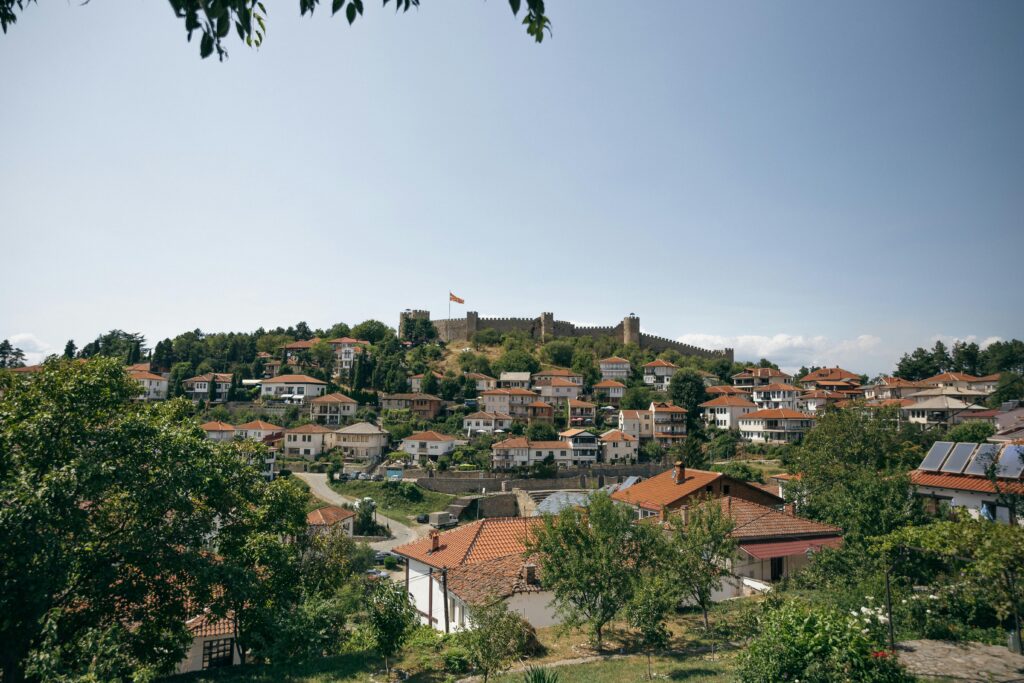
The Catedral de Santa María la Real de la Almudena (adjacent to the Palacio Real, consecrated 1993 — the newest cathedral in Spain and the most debated aesthetically) for the rooftop tour: the Cúpula de la Almudena (the dome museum and rooftop access): €6 / £5.17. The view from the dome: the Casa de Campo park to the west, the Guadarrama mountains visible on clear days, and the specific Madrid skyline — the CTBA towers (the four towers to the north), the older Gran Vía buildings, the palace below.
7:00pm — The Mercado de Antón Martín (Barrio de las Letras)
The Mercado de Antón Martín (Calle de Santa Isabel, 5 — the neighbourhood market serving the Letras and Lavapiés neighbourhoods) — the alternative to the tourist-facing Mercado de San Miguel. The food vendors who serve the neighbourhood: the Thai restaurant that has been in the market for 15 years (the most consistently cited Thai in Madrid by the Madrileño food press), the natural wine bar, the jamón specialist.
9:30pm — Final Dinner: the Lavapiés Neighbourhood
The Lavapiés neighbourhood (south of the Barrio de las Letras) — the most multicultural barrio in Madrid, the Indian and Bangladeshi restaurants on the Calle del Ave María, the African and Latin American community along the Calle de Embajadores. The specific dinner: the Bar Santurce (Calle de Silva, 10, near Malasaña) for the grilled anchovies (the Cantabrian anchovies, fresh and whole, the most specific northern Spanish seafood preparation at a Madrid price), or the Taberna Pedraza (Calle de Ibiza, 25, Retiro) for the pincho moruno (the Moorish skewer — the pork marinated in the North African spice blend, the Andalusian heritage in Madrid’s most specific tapa).
The Essentials
Getting to Madrid: British Airways, Iberia, easyJet, Ryanair, Vueling direct from UK airports. 2.5 hours. Return: £50-130. Madrid Barajas Terminal 4 is the most efficiently designed airport terminal in Europe for transit — the Zaha Hadid-esque roof, the long moving walkways, the specific bamboo forest in the central atrium.
Airport to city: The Metro Line 8 from T4 or T1-T2-T3 to Nuevos Ministerios (25 minutes), then Line 10 or Line 6 to anywhere in the city centre. €5 / £4.31 including the airport supplement, using the public transit card. The Renfe Cercanías train (from T4 to Atocha, 25 minutes): €2.60 / £2.24.
Getting around: The Madrid Metro (the BTP Tourist Travel Pass: 10 journeys for €12.20 / £10.52 or unlimited for 1-7 days from €8.40-35.40 / £7.24-30.52) is the standard. The city is walkable between the Prado, Retiro, Sol, and the Barrio de las Letras.
Where to stay: The Only YOU Hotel Atocha (Paseo de la Infanta Isabel, 13, Retiro area: £100-180/night), the Petit Palace Mayor Sol (Calle Mayor, 86: £70-120/night), the Cats Hostel (Calle de Cañizares, 6, Barrio de las Letras, private rooms from £30-50/night).
The Closing Moment
I was in Room 12 at the Prado at 10:17am. There were 31 people in the room (I counted). Las Meninas was in front of me.
The painting’s central puzzle: Velázquez has painted himself into the painting, at work on a large canvas whose face we cannot see. The Infanta and her attendants are in the foreground. In the background, a mirror reflects the king and queen — the subjects of the painting Velázquez is apparently painting. But where are they standing? Behind us, in the position of the viewer. Which means the viewer stands where the king and queen stand.
This is what the painting is about: the relationship between the artist, the subject, and the viewer. The mirror that reflects what we would see if we were standing there. The painting that puts us inside the royal court.
I stood looking at it for 14 minutes.
By 10:31am there were 74 people in the room. By 11am there were 180.
The 10am alarm is the entire Prado strategy. The painting doesn’t change. Everything around it does.