

The exact route that makes Japan work in a week: three cities, the one Shinkansen that changes everything, the ryokan night that earns its place, the specific timing for the Fushimi Inari gates, and why the itinerary that most people attempt in 14 days is actually better in 7 if you build it correctly.
Reading time: 12 minutes | Last updated: 2026
Seven days is genuinely enough for a first Japan trip if the 7 days are organised correctly. The mistake most people make is trying to cover too much geography — adding Hiroshima, Nara, Hakone, and the Japanese Alps to a 7-day itinerary and ending up moving every day with no depth anywhere.
The correct 7-day Japan: Tokyo (3 nights), Kyoto (3 nights), one night in Osaka before the flight. Six locations to see in genuine depth, zero days lost to logistics decisions, the Shinkansen once each direction.
This is that itinerary.
Before You Leave — The Booking Sequence
8-10 weeks before travel:
- Buy the JR Pass — 7-day pass from £258 at jrpass.com. Covers all Shinkansen (except the Nozomi) and all JR trains. Pays for itself with two Tokyo-Kyoto return journeys.
- Book the ryokan — the Kyoto or Hakone ryokan sells out 6-8 weeks ahead in peak season. The Kyoto ryokan night is on Day 4 in this itinerary.
- Book the teamLab Planets (Tokyo) — at teamlab.art, 2-3 weeks ahead.
- Download Google Maps offline for Tokyo and Kyoto.
- Add Suica to iPhone/Google Pay — or pick up a card at the airport on arrival.
The JR Pass activation: At the JR East Travel Service Centre in Narita or Haneda arrivals. Do this on arrival day before leaving the airport.
The 7 Days
DAY 1 — Arrive Tokyo
Afternoon: Shinjuku Orientation
Most UK flights arrive in the afternoon. The Narita Express (N’EX) from the airport to Shinjuku: 85 minutes, covered by JR Pass with seat reservation (reserve at the JR counter in arrivals).
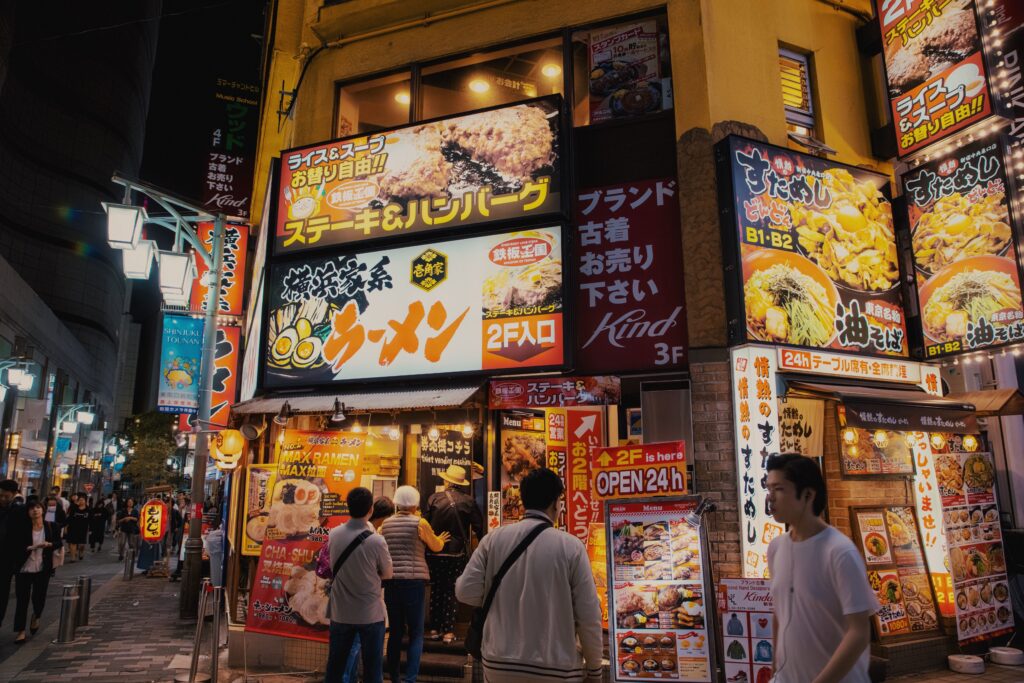
Check in. Drop the bags. Walk to the Omoide Yokocho (Memory Lane) behind Shinjuku Station’s west exit — the narrow alley of tiny yakitori bars, the charcoal smoke, the salary men at 5pm. Order a beer and three yakitori skewers at whatever counter has a stool free. ¥1,500-2,000 / £7.95-10.60.
The first evening in Tokyo instruction: don’t try to see anything. Walk, eat, adjust. The jet lag will have you awake at 4am anyway — plan for it.
Where to eat: Ramen at Fuunji (the tsukemen counter, 10 minutes walk from Shinjuku Station). ¥990-1,200 / £5.25-6.36.
DAY 2 — Tokyo: Ancient and Modern
6:00am — Tsukiji Outer Market
The jet lag wake-up serves a purpose: Tsukiji Outer Market opens at 5am. The Hibiya Metro Line from Shinjuku to Tsukiji: 20 minutes. The tamagoyaki (the rectangular grilled egg), the fresh tuna sashimi, the grilled scallop in shell. The market at 6am: the working version. By 9am: the tourist crowd.
9:00am — Senso-ji Temple (Asakusa)
The Senso-ji — Tokyo’s oldest and most significant temple, founded 628 CE. The Kaminarimon Gate (the Thunder Gate, the 4-metre red paper lantern, the most photographed single object in Tokyo), the Nakamise-dori shopping street (the 200-metre approach lined with traditional shops — the ningyo-yaki fish-shaped cakes, the traditional combs, the fans), and the main hall.
At 9am: the temple busy but manageable. At noon: difficult. Metro: Asakusa Line to Asakusa.
11:30am — teamLab Planets (Toyosu)
The immersive digital art installation — book the timed entry. The Yurikamome Line from Shimbashi to Shin-Toyosu: 12 minutes. Allow 90 minutes inside.
2:00pm — Shibuya and the Crossing
Metro to Shibuya. The Shibuya Scramble Crossing (the busiest pedestrian crossing in the world — 3,000 people simultaneously at peak, the specific spectacle best viewed from the Starbucks second-floor window above the crossing or from the Shibuya Sky observation deck). Walk through the crossing once — the experience from inside the crowd. Then the Shibuya Sky rooftop (book at shibuya-scramble-square.com/sky): the 360-degree view at 230 metres. ¥2,000 / £10.60.
Evening: Shinjuku Golden Gai
The 6 lanes of miniature bars (2-8 seats each) — the Albatross bar for the first drink (the multi-level interior, the English-speaking barman). Cover charge: ¥500-1,000 / £2.65-5.30.
DAY 3 — Tokyo: Museums and Neighbourhoods
8:00am — Yanaka Neighbourhood
The most preserved pre-war Tokyo neighbourhood — the cemetery (the cats, the last Tokugawa shogun’s grave), the Yanaka Ginza shopping street (the shotengai, the working neighbourhood commerce). Metro: JR Yamanote Line to Nippori.
10:00am — The Tokyo National Museum (Ueno)
The largest art museum in Japan — the Japanese art collection (the room of Buddhist sculpture, the samurai armour and weapons, the ukiyo-e woodblock prints). Entry: ¥1,000 / £5.30. The specific room: the Horyuji Treasures gallery (the 7th-8th century CE Buddhist objects from the Horyuji Temple, the finest pre-Nara period art accessible to a visitor in Tokyo).
1:00pm — Akihabara
The electronics and anime district — 10 minutes walk from Ueno. The specific Akihabara instruction: the multi-story electronics stores (Yodobashi Camera, the 8-floor electronics cathedral) and the second-hand goods market (the Akihabara Radio Kaikan building, the vintage electronics, the vintage games).
Evening: Depachika
The basement food hall of the Isetan Shinjuku (B1-B2 level) — the wagyu beef counter, the bento boxes, the wagashi confections. The correct dinner: the bento box from the depachika eaten in the hotel room or in the Shinjuku Gyoen (the garden adjacent to the station — closes at 4:30pm).
DAY 4 — Shinkansen to Kyoto, Check in to the Ryokan
Morning: Depart Tokyo
JR Shinkansen from Tokyo Station (Hikari service, JR Pass covered) to Kyoto: 2 hours 15 minutes. Reserve seats at the JR ticket counter (free with JR Pass, required on Shinkansen).
The Mount Fuji view: right side of the train (facing forward), between Shin-Fuji and Mishima stations. Approximately 40 minutes from Tokyo. The mountain is visible on clear days (clear days for Fuji: roughly 1 in 3 on average — more frequent in winter, less in summer).
Afternoon: Fushimi Inari at Dusk
From Kyoto Station: JR Nara Line to Inari Station (5 minutes, ¥150 / £0.80). The Fushimi Inari Taisha — the 10,000 torii gates climbing the Inari mountain. The gates at 4:30pm: the day-tour groups have largely departed (most organised tours leave by 4pm), the gate tunnels in the late afternoon light. Walk to the first summit plateau (45 minutes from the base), return.
At dawn or at dusk. Not between 10am and 3pm.
Evening: The Ryokan
The ryokan check-in. The specific Kyoto ryokan instruction: book through the ryokan directly rather than Booking.com (the ryokan’s own website gives the correct room type and the correct understanding of what the price includes — dinner, breakfast, the onsen access, the yukata).
Budget ryokan recommendation: the Sawanoya Ryokan equivalent in Kyoto — the Kyomachiya guest houses (the renovated machiya townhouses available through Machiya Inn at machiya-inn-kyoto.com: from £60-90/person/night including dinner and breakfast). Mid-range: the Hiiragiya Annex (from £130-200/person/night).
The ryokan dinner: the kaiseki (the multi-course Japanese seasonal meal, served in the room — the arrival of the dishes, the tofu, the grilled fish, the sashimi, the rice at the end). The onsen: before dinner or before sleep.
DAY 5 — Kyoto: The Essential Day
5:45am — Arashiyama Bamboo Grove
JR Sagano Line from Kyoto Station to Saga-Arashiyama (15 minutes, ¥240 / £1.27). The bamboo grove at 6am: empty. The 10-minute walk through the bamboo — the specific sound (the wind in the upper stalks), the light through the culms. At 8am: the first tourist groups. At 10am: unnavigable.
The Tenryu-ji Garden (opens at 8:30am — ¥500 / £2.65): the finest garden composition in Arashiyama, the raked gravel and the pond and the Arashiyama mountains as the borrowed scenery visible above the garden wall.
9:00am — Nishiki Market
Return to Kyoto central by train. Nishiki Market — “Kyoto’s Kitchen”: the tamagoyaki from Tamagotei (the egg specialist, the rectangular grilled egg made to order, ¥350 / £1.86), the grilled octopus ball (tako dango, ¥200 / £1.06), the Nishiki pickles from the specialist shop at the market’s western end.
11:00am — Kinkaku-ji (the Golden Pavilion)
Bus from Nishiki Market area to Kinkaku-ji: 30 minutes. The gold-leaf pavilion above the reflecting pond — at 11am, after the 9:30am Ryoan-ji visit (see below), the crowd is building but still manageable on weekdays. Entry: ¥500 / £2.65.
The correct order: Ryoan-ji first (opens at 8am, the dry garden most atmospheric in the early morning), then Kinkaku-ji (the 9:30-11am window before the tour buses peak).
1:00pm — Lunch: Ramen in Kyoto
The Kyoto ramen (the lighter chicken-based shoyu broth, distinct from Tokyo’s style) at Tenkaichi near Nishiki Market. ¥1,000-1,500 / £5.30-7.95.
3:00pm — Philosopher’s Path and Nanzen-ji
The Tetsugaku no Michi (Philosopher’s Path) — the 2km canal-side path through the eastern hills. The Nanzen-ji temple complex: the Sanmon gate (¥600 / £3.18 to climb), the Hojo garden (¥600 / £3.18), and the aqueduct (the red brick Meiji-era aqueduct running through the temple grounds — the most unexpected single structure in Kyoto).
Evening: Gion
The Hanamikoji Street at 6pm — the geiko and maiko most visible in the early evening moving between appointments. Observe respectfully. No flash. Dinner at a Gion side-street restaurant.
DAY 6 — Kyoto to Osaka (via Nara Optional)
Optional morning: Nara
JR Nara Line from Kyoto to Nara (45 minutes, ¥720 / £3.82, JR Pass covered). The Nara deer (the 1,200 wild sika deer that roam the Nara Park freely, the deer crackers available from vendors for ¥200 / £1.06), the Todai-ji (the great bronze Buddha — the largest bronze Buddha in Japan, the 15-metre figure in the world’s largest wooden building, entry ¥1,000 / £5.30), and the Kasuga Taisha shrine (the forest lanterns). Return to Kyoto by noon.
Afternoon: Check out, train to Osaka
Shinkansen Kyoto to Shin-Osaka: 15 minutes, ¥1,420 / £7.53 (JR Pass covered). Metro from Shin-Osaka to Namba: 15 minutes. Check in to Osaka accommodation.
Evening: Dotonbori
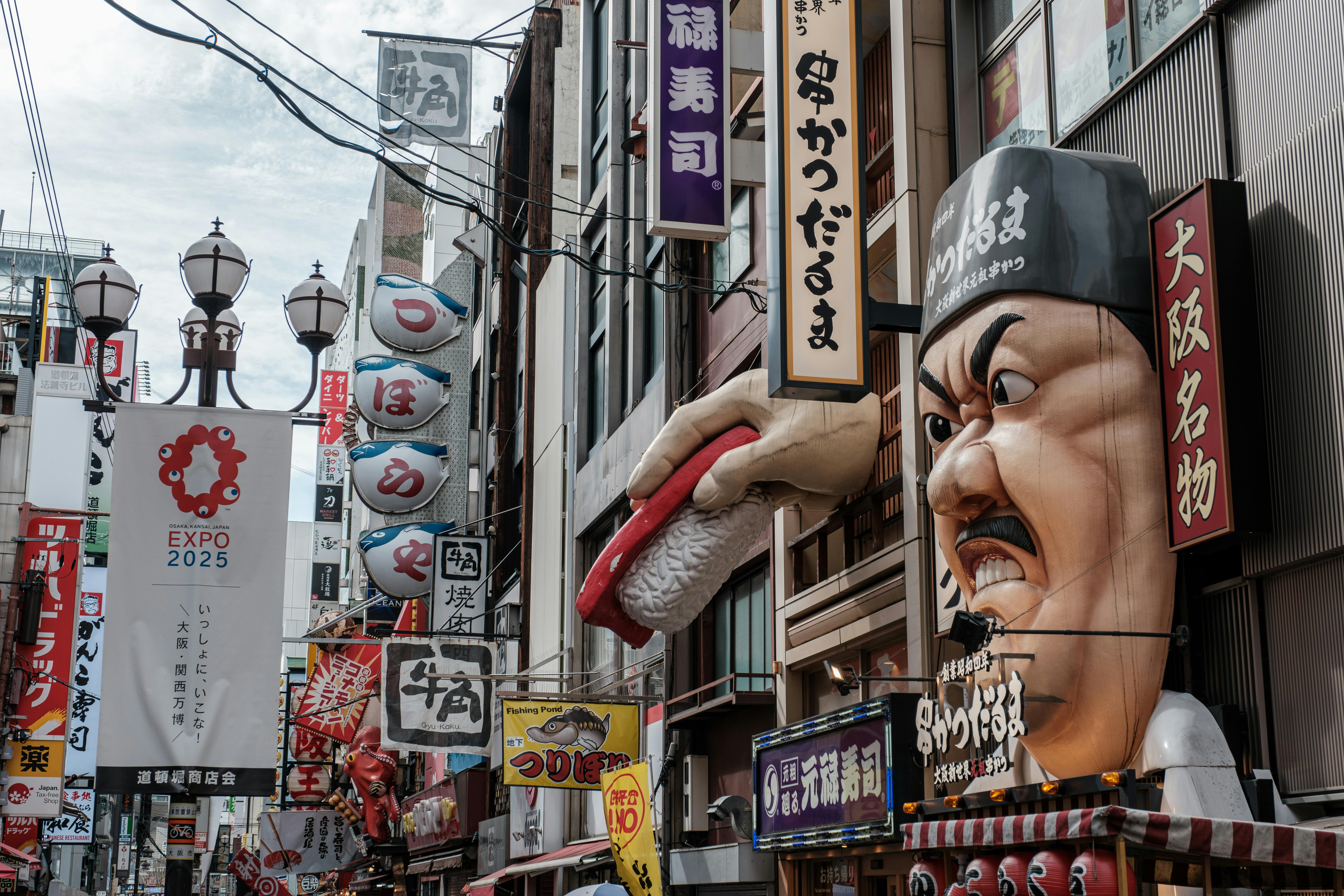
The Dotonbori canal and entertainment district. The takoyaki at Takoyaki Juhachiban (6 pieces for ¥700 / £3.71). The kushikatsu at Daruma — no double dipping. The Glico Running Man sign. Walk the canal in both directions.
DAY 7 — Osaka and Departure
Morning: Kuromon Ichiba Market
The morning market (opens 9am) — the wagyu skewers, the sea urchin, the fresh sushi at the Harukoma counter. Allow 90 minutes.
The rest of the day:
Depends on the flight departure time from Kansai International Airport (KIX) or Osaka Itami (ITM):
Flight after 4pm: The Osaka Castle (¥600 / £3.18 entry, the Osaka-jo Park free), the Shinsekai neighbourhood (the retro district with the kushikatsu and the Tsutenkaku Tower), or the Abeno Harukas observation deck (the tallest building in Osaka, ¥2,000 / £10.60, the view over the city and toward the bay).
Flight before 2pm: Market in the morning, airport by 11am.
Airport:
Kansai International Airport (KIX): the Haruka Express from Shin-Osaka (75 minutes, JR Pass covered) or from Tennoji (60 minutes). The JR Pass covers the Haruka Express — reserve seats at any JR station.
What It Costs
| Category | Budget | Mid-Range |
|---|---|---|
| Return flights (UK-Tokyo, open jaw Tokyo in/Osaka out) | £500-700 | £650-900 |
| 7-night accommodation | £280-490 | £630-1,050 |
| JR Pass (7-day) | £258 | £258 |
| Food (7 days) | £150-250 | £280-490 |
| Site entries | £50-80 | £70-100 |
| Local transport (Suica card) | £30-50 | £40-60 |
| Total | £1,268-1,828 | £1,928-2,858 |
The Key Decisions
Tokyo vs Kyoto first: The itinerary above goes Tokyo first because UK flights typically land at Narita or Haneda (Tokyo airports). If flying into Kansai International (rare but possible), reverse the itinerary: Osaka night 1, Kyoto nights 2-4, Tokyo nights 5-7.
Which Kyoto temple: The itinerary includes Arashiyama, Fushimi Inari, Kinkaku-ji, Ryoan-ji, Nanzen-ji. That’s 5 temple complexes in 1.5 days. If one must go: Fushimi Inari (the gates are specific to Japan and specific to Kyoto — no equivalent exists).
The ryokan: Night 4 in Kyoto is the ryokan night. If budget is the constraint, the machiya guesthouse (the converted townhouse) gives the tatami and the Japanese breakfast without the full kaiseki dinner and the premium pricing.
Nara: Worth including if the 9am-noon slot is available on Day 6. Can be skipped entirely if two days in Kyoto is the priority.