

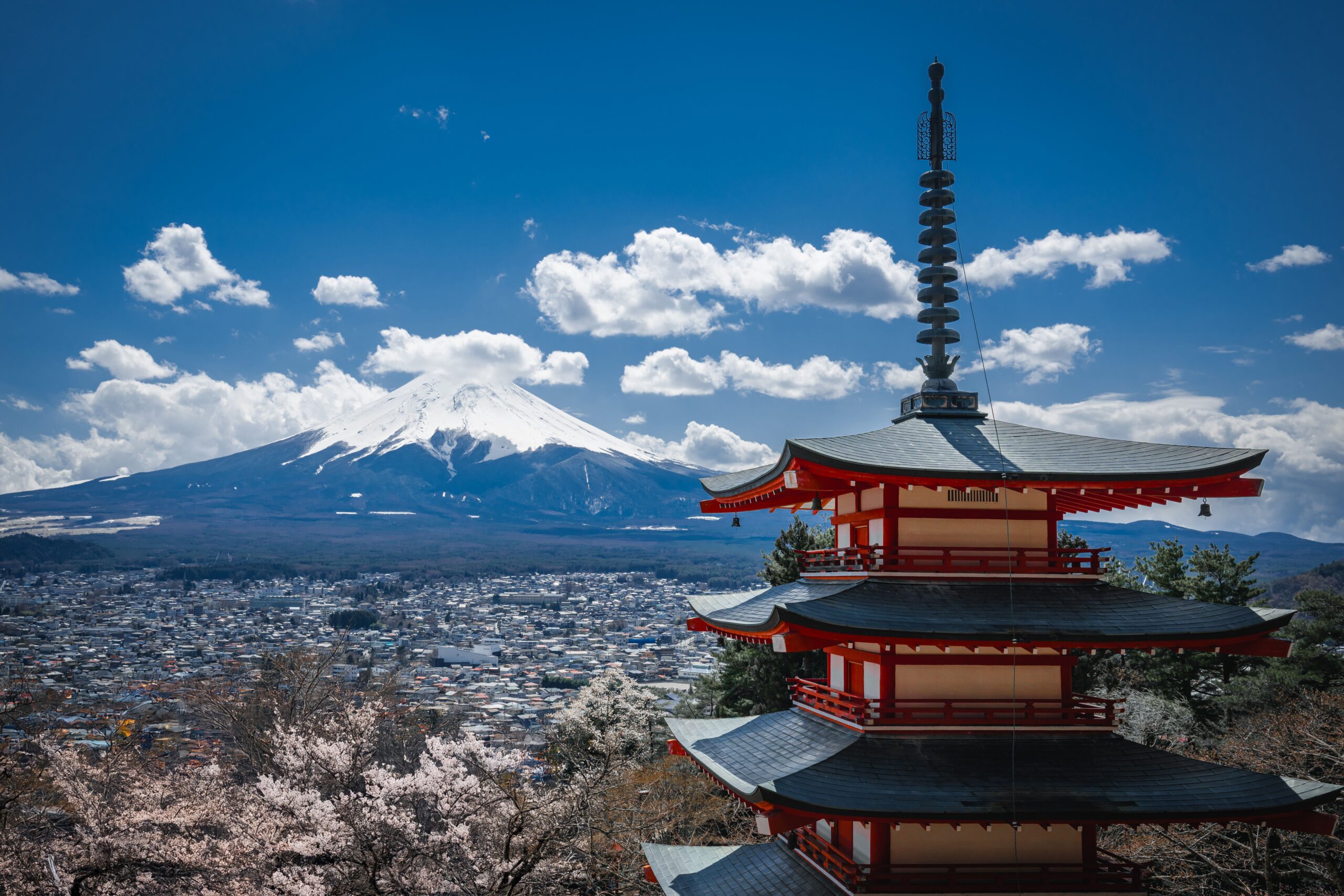
The comparison that the UK traveller with 10 days faces before their first East Asia trip: Japan or South Korea? The honest answer: Japan gives the oldest continuous cultural tradition in the developed world and the specific Japanese aesthetic (the wabi-sabi, the ryokan, the kaiseki, the cherry blossom that is genuinely as beautiful as the photographs suggest) and South Korea gives the most technologically advanced urban culture on Earth combined with the Confucian temple and the bibimbap and the specific Korean bbq that the UK’s Korean restaurant scene has been approximating since 2010. They are not substitutes. This guide makes the choice explicit.
Reading time: 8 minutes | Last updated: 2026
The Core Distinction
Japan is the country of the old — the Edo period wooden townhouse that has survived the earthquakes and the firebombing, the Buddhist temple that predates the Norman Conquest, the tea ceremony that has been conducted in the same form since the 15th century. The Japanese relationship with tradition (the mono no aware — the aesthetic of the transient, the appreciation of the moment precisely because it passes) gives the country its specific melancholy beauty.
South Korea is the country of the new — the nation that went from one of the world’s poorest in 1960 to one of the wealthiest per capita by 2000, the country that produced Samsung and Hyundai and K-pop and Korean cinema (the Parasite Oscar, the Squid Game global moment) from a culture that the Japanese colonisation had attempted to erase. The Korean cultural confidence of the 21st century is the confidence of the country that built the present rapidly and is now recovering the past deliberately.
Category by Category
The Food
Japan wins on technique, Korea wins on communality:
The Japanese food tradition (the ramen, the sushi, the kaiseki, the yakitori, the izakaya, the conveyor belt and the high-counter — all described in 48 Hours Eating in Osaka and 7 Days in Japan) is the most technically precise food culture in the world. The Japanese chef who has spent 10 years learning to slice fish for sashimi is a practitioner of a specific tradition that has been refined over centuries.
The Korean food tradition (the Korean BBQ — the table grill, the samgyeopsal (the thick-cut pork belly), the galbi (the short rib), the banchan (the small dishes — the kimchi, the japchae, the spinach namul) surrounding the grill, the soju in the shot glass, the specific Korean communal meal that requires 2-4 people to be meaningful) is the most communal food culture in East Asia. The Korean meal is not a solo experience — it is a social architecture.
The specific comparison: The solo traveller eats better in Japan (the ramen shop counter, the sushi conveyor, the izakaya solo seat). The group of 4 eats better in Korea (the table grill, the banchan, the soju, the shared pork belly).
Verdict: Draw — for different settings and different social configurations.
The Culture and Aesthetics
Japan wins for the traditional:
The Kyoto temple circuit (Fushimi Inari at dawn, the Kinkaku-ji, the Arashiyama bamboo grove), the Nara deer park, the Hiroshima Peace Memorial, the Nikko shrines — the Japanese cultural heritage is the most accessible and the most intact ancient culture in the developed world.
The specific Japanese aesthetic available in Kyoto: the kare-sansui (the dry garden — the raked gravel and the placed rock, the garden at Ryoan-ji whose 15 stones are arranged so that no more than 14 can be seen from any single viewpoint), the wabi-sabi interior (the tea room, the tokonoma alcove with the single hanging scroll and the single flower in the ikebana arrangement). These are not quaint — they are the result of 600 years of aesthetic refinement.
South Korea wins for the contemporary:
The Seoul contemporary arts scene (the MMCA (National Museum of Modern and Contemporary Art), the Leeum Samsung Museum of Art, the DDP (Dongdaemun Design Plaza — the Zaha Hadid-designed irregular surface building, the most architecturally ambitious single structure in Seoul)), and the K-pop culture (the HYBE Insight Museum, the SM Entertainment tour, the specific Korean export culture that is the most globally influential single cultural export since American rock and roll).
The Korean hanbok experience (the traditional Korean court dress, rental available throughout the Gyeongbokgung palace area for KRW 15,000-30,000 / £8.62-17.24 — the most accessible single traditional cultural experience in Seoul, the hanbok-wearing visitors photographed in the palace courtyard throughout the day):
Verdict: Japan for the ancient. South Korea for the contemporary. Both for the complete East Asia picture.
The Practical Comparison
| Factor | Japan | South Korea |
|---|---|---|
| Language accessibility | Limited English outside tourist areas | Better English in Seoul |
| Transport | JR Pass, excellent | T-money card, excellent |
| Daily budget (mid-range) | £100-160/day | £70-120/day |
| Visa | Visa-free 90 days (UK) | Visa-free 90 days (UK) |
| Flight time (UK) | 12-13 hours | 11.5-12 hours |
| Best season | March-May (cherry blossom), Oct-Nov (autumn) | March-May, Sept-Nov |
South Korea is 25-35% cheaper than Japan across accommodation, food, and transport. This is the specific practical advantage for the budget-conscious traveller who wants the East Asia experience.
The Practical Routing
The open-jaw option: Fly London-Tokyo (or Osaka), travel Japan for 7-10 days, take the ferry or the short flight from Fukuoka to Busan (South Korea’s second city, the gateway to the country from Japan), travel South Korea for 5-7 days, fly home from Seoul (Incheon). The combined Japan-South Korea circuit gives the full East Asia argument in 2 weeks — the flight into Japan and out of South Korea (or vice versa) is typically the same price as the return to either city.
The BGGD Verdict
Choose Japan first if: The ancient culture, the ryokan, the cherry blossom, and the specific Japanese aesthetic are the primary motivation.
Choose South Korea first if: The contemporary culture, the food (the Korean BBQ with friends), the budget, and the K-culture are the motivation.
Do both (the correct answer for the 2-week traveller): The open-jaw gives the full East Asia argument at the price of a return to either city. 7 Days in Japan + the South Korea extension is the correct first East Asia trip.