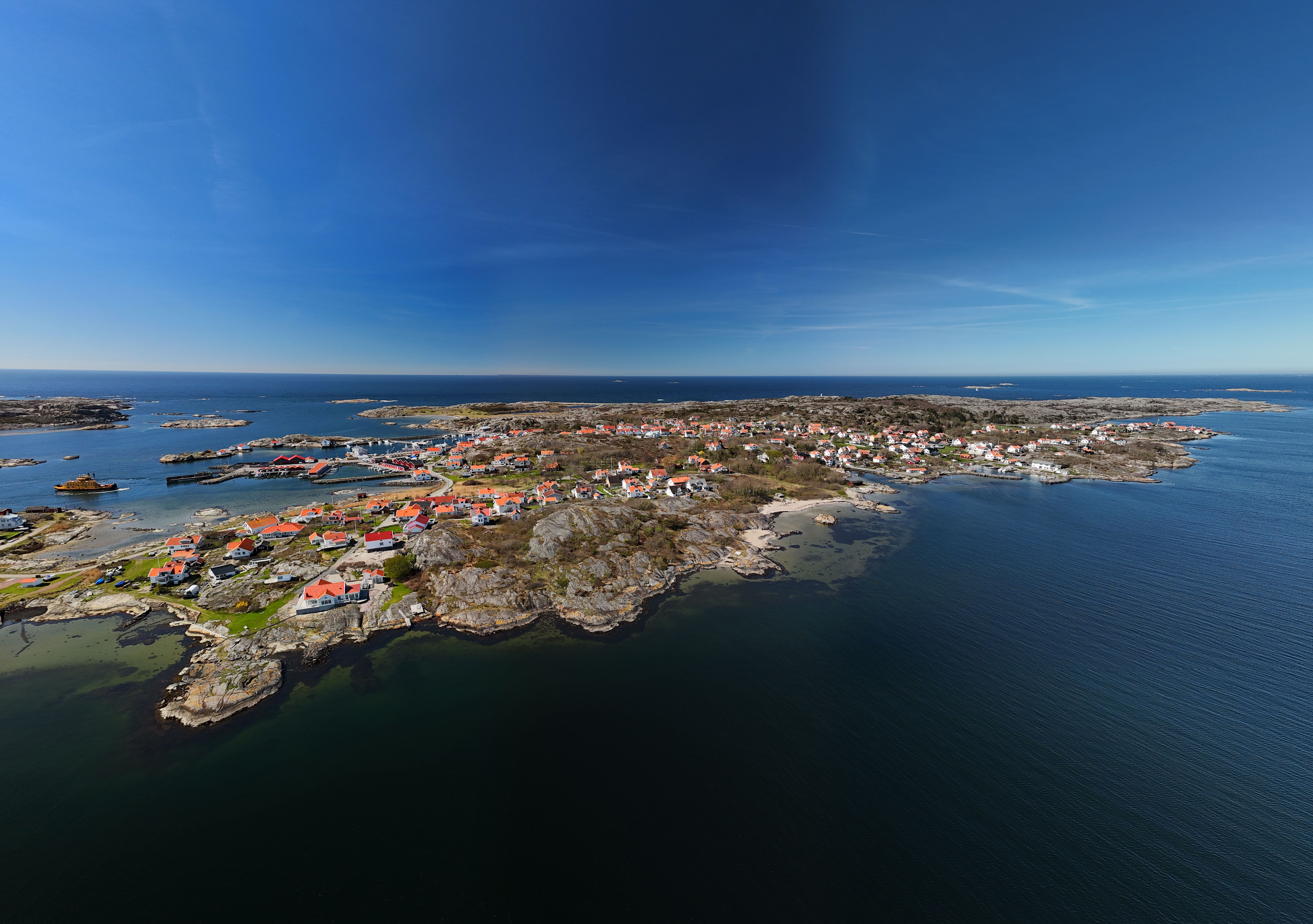

The complete guide for UK travellers: Athens done properly, the honest Santorini verdict, the islands that actually deliver what Santorini promises, how the ferry system works, what it costs, and the month that changes everything.
Reading time: 17 minutes | Last updated: 2025
Greece is the most photogenic country in Europe and one of the most misunderstood by the UK travellers who visit it most.
The misunderstanding runs like this: Santorini delivers what the photos suggest, Mykonos is worth the money, the Greek islands are broadly similar to each other, and the thing to do is lie on a sun lounger for a week and consider the trip done.
Some of that is technically true. Most of it misses the point.
Greece has 6,000 islands. Only 227 are inhabited. Most of the 30 million annual visitors see four of them — and specifically the two most expensive, most crowded, and most photoshopped versions of what the Greek islands actually are. The other 223 inhabited islands contain better beaches, cheaper tavernas, more intact village culture, and the thing that made people romanticise Greece in the first place: the feeling of being somewhere that exists for itself rather than for tourism.
This guide is for the Greece that exists in the other 223 islands. It’s also for Athens, which almost everyone uses as a transit hub and almost no one gives a proper day to. It’s honest about Santorini — genuinely, not performatively — and it tells you what the September sweet spot actually feels like.
Quick Navigation
- The Case for Greece — And the Honest Caveats
- When to Go — The Month That Changes Everything
- Athens — Two Days, Done Properly
- The Ferry System — How It Actually Works
- The Cyclades — The Islands Everyone Knows and the Ones They Should
- Santorini — The Honest Verdict
- Milos — The Island That Does Santorini Better
- Naxos — The Self-Sufficient Island
- Folegandros — The Last Traditional Cycladic Island
- Paros — The Reliable Middle Ground
- The Dodecanese — Symi, Rhodes, and the Aegean Southeast
- The Ionian Islands — A Different Greece Entirely
- Crete — Big Enough to Be Its Own Country
- Ikaria — The Island Where People Forget to Die
- What It Costs — Real Numbers
- Eating in Greece — What’s Worth Ordering
- Practical Notes
- The 10-Day Itinerary — Athens + Two Islands
The Case for Greece — And the Honest Caveats
The case is simple. Greece is the most beginner-friendly long-haul experience available from the UK that still feels like genuine travel. Direct flights from London to Athens take 3.5 hours. The ferry network is extensive, reliable, and cheap. The food is extraordinary at every price point. The landscape is unlike anything in northern Europe — volcanic geology, marble ruins, water that shifts from deep blue to turquoise depending on the depth and angle of light.
The honest caveats are fewer than you’d expect.
Seasonal pricing is the main one. The Greek islands in July and August operate at European resort prices in the most tourist-dense areas. A room in Santorini in August costs £250–500/night. The same quality room on Milos in October costs £60–100. The islands are the same islands. The light in October is, if anything, better than in August. The crowds are a fraction. The prices are dramatically lower.
The Santorini question needs its own section (it gets one) but the short version is: Santorini is genuinely beautiful and genuinely not what most people expect when they arrive. If you go expecting a private infinity pool moment and find 3,000 cruise ship passengers doing the same thing, that’s a mismatch between expectation and reality that can be avoided with a little preparation.
The ferry logistics seem complicated and aren’t. The section below demystifies it in about 300 words.
Everything else in Greece — the food, the hospitality, the landscape, the historical depth — delivers without qualification.
When to Go — The Month That Changes Everything
May to June — The First Sweet Spot
Warm enough to swim comfortably (the sea reaches 22–24°C by June). Wildflowers on the hillsides through May. The poppies on the Cycladic islands in late April and early May are extraordinary. Crowds are at 40–60% of peak. Accommodation prices are 30–40% lower than July–August. Most guesthouses and tavernas are open. The best months for combining swimming, hiking, and village culture.
July to August — Peak Season
The islands are at capacity. Flights from the UK are at peak price. Accommodation in popular islands must be booked months in advance. The Meltemi wind — a strong northerly that blows across the Aegean from late July through August — makes some beaches uncomfortable and ferries occasionally rough. The heat is intense (35–38°C on the islands, hotter in Athens).
Peak season is not a reason to avoid Greece — it’s a reason to choose wisely. The less-visited islands (Folegandros, Ikaria, Symi) feel entirely different from Santorini and Mykonos in the same month.
September to October — The Second Sweet Spot and the Better One
The sea is at its warmest (25–26°C in September, still 23–24°C in October). The crowds drop by 60% from the August peak. Prices fall. The light shifts to something lower and more golden that photographers know as the best light in the Mediterranean. The restaurants are full of Greek families on their own autumn holidays — the tourist season is winding down and the local season is at its finest.
October is the month that most experienced Greece travellers choose. Guesthouses start closing in mid-October on the smaller islands — check before you book anything beyond that window.
November to March — Off Season
Most island guesthouses and restaurants close. Ferry services reduce significantly. Athens is perfectly functional year-round and significantly cheaper. Some larger islands (Crete, Rhodes, Corfu) maintain services year-round. The weather is mild (15–20°C in Athens) but unpredictable.
The BGGD recommendation: September for the islands. May if you want wildflowers and hiking. Avoid August unless you’ve specifically booked a less-visited island.
Athens — Two Days, Done Properly
Athens is the city most people pass through on their way to the islands and almost no one gives the time it deserves. Two days is enough to change your understanding of what you’re standing in the middle of.
The Acropolis
The non-negotiable. The Parthenon, Erechtheion, Temple of Athena Nike, and Propylaea — five 5th-century BC buildings on a rocky outcrop above the city that have defined Western architecture for 2,500 years.
Arrive at opening time (8am in summer). The light in the morning is better than at midday. The crowds, while never absent, are thinner before 10am. Entry: £18 (a combined ticket covers most Acropolis-area sites — buy this, not just the Acropolis entry). Budget 2–3 hours.
The Acropolis Museum at the base of the hill (entry £8, open until 10pm on Friday and Saturday) houses the original sculptural fragments from the Parthenon that weren’t taken by Lord Elgin. The building is built over an archaeological excavation visible through glass floors in the entrance. It is one of the finest museum buildings in Europe and the exhibits are extraordinary.
The view of the Acropolis at night from Monastiraki Square or from the Filopappou Hill viewpoint is the image that doesn’t fully appear in any photograph. The floodlit white marble against the dark sky, with the city spread below it — go on the first evening, before you’ve visited the site itself, and let it recalibrate your sense of where you are.
The Plaka and Monastiraki
The historic neighbourhood directly below the Acropolis. Narrow lanes, neoclassical houses, the ruins of Hadrian’s Library in the middle of a small square. The Monastiraki flea market (Sunday mornings at its best) sprawls through the surrounding streets. Eat souvlaki at Kostas or Thanasis on Mitropoleos Street (5-minute walk from Monastiraki Metro) — open since the 1950s, queue out the door at lunch, worth every minute of the wait.
The National Archaeological Museum
90 minutes on foot north of the Acropolis or two stops on the metro. The finest collection of ancient Greek artefacts in the world. The Antikythera Mechanism (an ancient analogue computer, recovered from a shipwreck, predating similar devices by 1,400 years), the Mask of Agamemnon (debatably not Agamemnon’s, but extraordinary), the marble kouros statues, the room of Minoan frescoes. Entry: £12. Budget 3 hours minimum.
Exarcheia and Gazi
The neighbourhood beyond the tourist corridor. Exarcheia is the historically anarchist quarter — bookshops, cafes, street art, a square surrounded by tables where elderly Greek men play backgammon in the morning and students drink Mythos in the evening. Gazi is the former gasworks turned arts district — galleries, restaurants, the nightlife area that starts around midnight. Neither requires a specific destination — just walk and find things.
Piraeus — The Port
If you’re taking a ferry, you’ll pass through Piraeus — the port of Athens, 30 minutes from the city centre by metro (£1.20). The ferries leave from several different terminal areas depending on destination — check your boarding pass carefully. Terminal E2 covers Cyclades ferries; don’t assume the port is a single location.
The Ferry System — How It Actually Works
The Greek ferry system looks complicated in advance and is straightforward in practice.
The booking platform: ferryscanner.com is the best comparison site for Greek ferries. It aggregates routes across Blue Star Ferries, SeaJets, Hellenic Seaways, and others. Booking 2–4 weeks ahead is sufficient for most islands outside peak season. In July and August, book 4–8 weeks ahead for popular routes.
Ferry types: There are two. Fast ferries (SeaJets, Highspeed services) are catamarans or high-speed craft — twice the speed, twice the price, and significantly rougher in wind. Slow ferries (Blue Star, ANEK) are large car ferries that take longer but are stable in most conditions, have better onboard facilities (cafes, outdoor decks), and cost 30–50% less. For any journey under 4 hours, the fast ferry is worth the premium. For longer crossings, the slow ferry is more comfortable.
Seat class: Most tickets list “deck class” (standing/sitting in common areas), “aircraft-style seat,” or “cabin.” For overnight crossings, a cabin (small but with beds and a door) is worth the upgrade. For day crossings of any length, deck class is fine — the outdoor decks of Greek ferries are some of the finest places to be in Europe.
Key routes from Piraeus:
- Milos: 3.5 hours (fast) / 6.5 hours (slow) — from £22/£15
- Naxos: 3.5 hours (fast) / 5.5 hours (slow) — from £20/£13
- Santorini: 5 hours (fast) / 8 hours (slow) — from £35/£22
- Paros: 3 hours (fast) / 4.5 hours (slow) — from £18/£12
- Folegandros: 4.5 hours (fast) — from £28
Island to island: Once on the islands, shorter inter-island ferries connect within the Cyclades. Paros is the transit hub — ferries to Naxos, Milos, Folegandros, and Santorini all route through or near it.
The Cyclades — The Islands Everyone Knows and the Ones They Should
The Cyclades are the island group that occupies most travel content about Greece — the white cubic architecture, the blue-domed churches, the volcanic geology that creates the dramatic landscapes. They sit in the central Aegean and include approximately 220 islands and islets, of which roughly 24 are inhabited.
The famous ones: Santorini (Thira), Mykonos, Paros, Naxos, Milos. The less-known ones that deliver more: Folegandros, Sifnos, Serifos, Kimolos, Anafi, Amorgos. All accessible by ferry from Piraeus.
Santorini — The Honest Verdict
Santorini is the most visited Greek island and the most discussed in terms of whether it’s worth visiting. Here’s the honest position.
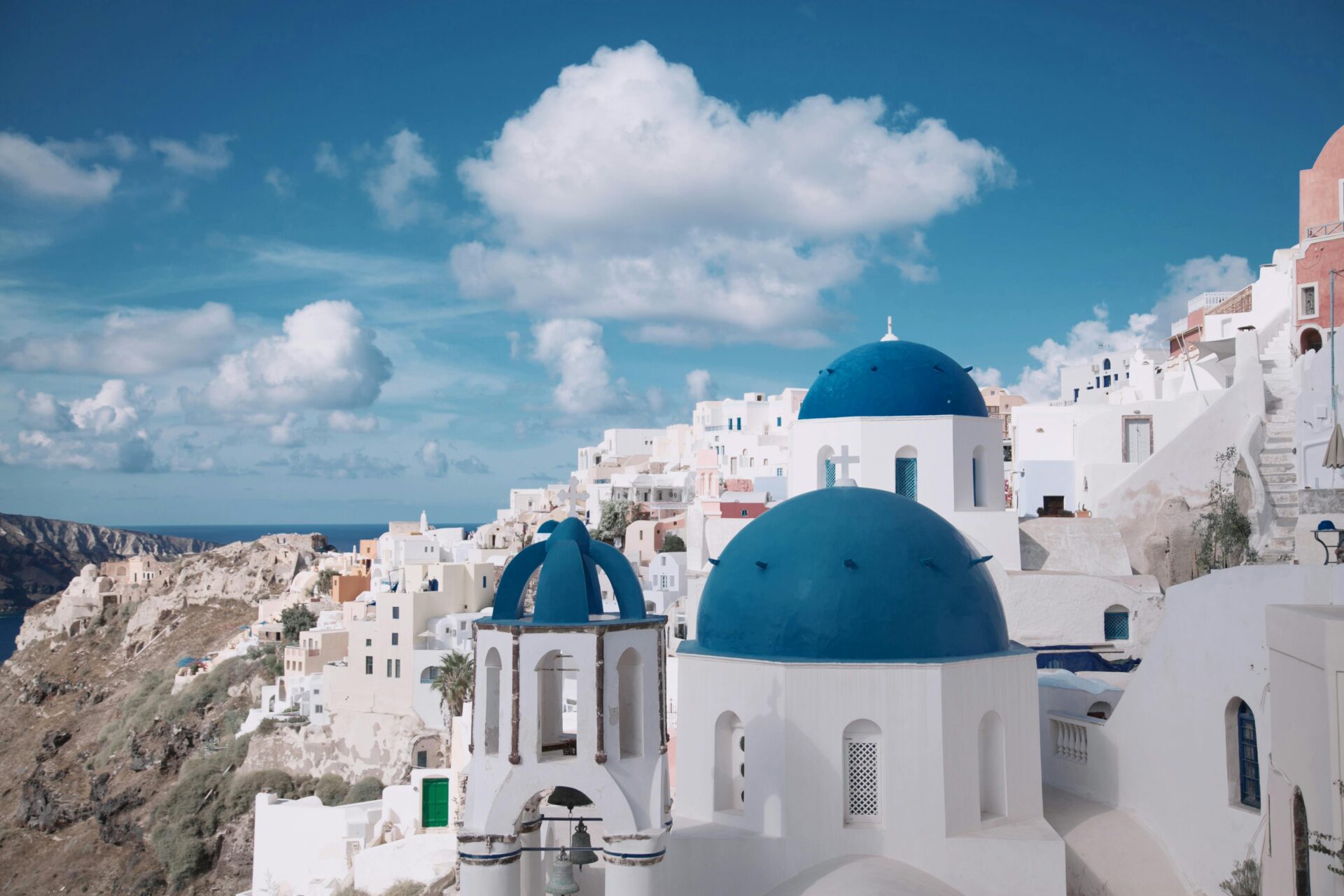
What Santorini actually is: A volcanic caldera — the rim of a collapsed ancient volcano — with white cubic villages built along the clifftop edge. The famous view (white buildings, blue domes, the caldera below, the volcano in the centre of the bay) is real and genuinely extraordinary. The sunset from Oia, when the sun drops behind the Thirassia island into the caldera, lights the entire village pink and is one of the great natural spectacles of Europe.
What Santorini is at peak season: 3 cruise ships per day. 10,000–15,000 cruise passengers ashore simultaneously. The narrow lane in Oia where the famous blue domes are: 200 people trying to take the same photo at the same time. Dinner in a caldera-view restaurant: £60–100 per person. A hotel room with caldera view: £300–600/night. The black sand beach at Perissa: busy. The famous sunset: watched by approximately 4,000 people from the same viewpoint.
The honest verdict: Santorini is worth visiting once. Go in May or October. Stay 2 nights — long enough to see the sunset, walk the caldera path from Fira to Oia at dawn, and swim at the red beach. Don’t stay a week and don’t go in August expecting a private moment.
The islands below deliver what Santorini promises at a fraction of the cost and with a fraction of the company.
Milos — The Island That Does Santorini Better
Milos is a volcanic island in the southwestern Cyclades with 70+ beaches — more than any other Greek island — and water that rivals anything in the Mediterranean.
The island’s geology is what makes it: volcanic activity has created rock formations in every colour — white chalk cliffs, orange pumice, grey volcanic tufa, red and black lava outcrops — dropping into water that shifts from green to turquoise to deep blue within a few hundred metres.
Sarakiniko: The most photographed beach in Greece that isn’t Santorini. White volcanic formations eroded into rounded curves and hollows above a sheltered cove. The formations look like snow. The water looks like nothing else. At dawn, before the boats arrive from the main port, you’ll have it almost entirely to yourself. By 10am, it’s busy. By noon, it’s genuinely crowded. Get there early.
Kleftiko: Sea caves and rock arches accessible only by boat. The water inside the cave system is the clearest on the island. Boat trips from Adamas (the main port) run daily: £25–35/person, half day, includes swimming stops. Worth booking the day before you want to go.
Firopotamos and Mandrakia: Two fishing villages on the north coast where the fishermen’s boathouses (syrmata) are built directly into the rock face. Small, quiet, genuinely photogenic without being set up for photography. Walk there from Pollonia on the east coast (2 hours) or take a local bus.
The food: Milos is known for its cheese pies (tiropita), the local pitarakia (small cheese pastries from the traditional wood-fired bakeries), and the freshest fish on any of the Cyclades — the fishing fleet is still active. Tavernas in Pollonia serve grilled octopus and whole sea bream at prices 30% lower than Santorini.
Getting to Milos: 3.5 hours from Piraeus by fast ferry, 6.5 hours by slow ferry. From Santorini: 3 hours by fast ferry. The two islands make a natural combination — the contrast could not be more complete.
Naxos — The Self-Sufficient Island
Naxos is the largest island in the Cyclades and the most self-sufficient — it produces its own food, its own wine, its own marble, and its own olive oil. This is not a small thing. Most Cycladic islands import almost everything from the mainland. Naxos has farms and vineyards in the interior, mountain villages that have been continuously inhabited for thousands of years, and a taverna culture that exists because Naxiot people eat there, not because tourists need to.
Agios Prokopios beach: 2km of white sand on the western coast, consistent clear water, easily reached from Naxos town by bus or scooter. One of the finest beaches in the Cyclades. Somehow less famous than it deserves to be.
The Portara: A marble doorway standing alone on a small peninsula connected to Naxos town by a causeway. The entrance gate of a temple to Apollo begun in 530 BC and never completed. The remains of two marble pillars and a lintel. At sunset, when it frames the sky above the sea, it’s the most romantic ruin in Greece. Always open. Always free.
The Interior Villages: Rent a car or scooter (£20–25/day) and drive into the Naxos interior. The Tragaea plateau: Byzantine churches hidden in olive groves, the village of Halki with a 10th-century tower at its centre and a distillery producing kitron (a liqueur made from citron, found nowhere else in Greece). Apiranthos: a marble village above 600m altitude where the dialect still contains Venetian and Cretan words. The roads are good. The villages are empty of tourists even in peak season.
Where to stay: Naxos town (Chora) has the best range of accommodation — walk to the old town, ferry connection, beach 10 minutes south. Budget from £25/night at studios on the edge of town. Mid-range: £55–80/night for a hotel with pool, 10 minutes from the beach.
Folegandros — The Last Traditional Cycladic Island
Folegandros has a population of 700 people and receives approximately 30,000 visitors per year. Santorini has a population of 15,000 and receives 2 million. The difference in experience is proportional.
There is no cruise ship port on Folegandros. The ferry dock is at Karavostasi, a small port on the eastern coast. From there, the local bus climbs 4km to Chora — the main village, perched 300m above the sea on a ridge between two sheer drops to the Aegean.
Chora is one of the finest villages in Greece. The kastro (medieval fortress) at its centre is a labyrinth of arched lanes and whitewashed houses with wooden balconies painted in every colour. The church of Panagia above the village — a 20-minute hike up from the main square — has the view over the Aegean that Santorini charges £400/night to approximate.
There is no nightlife on Folegandros. There are tavernas, a few bars, and a remarkable quiet. The island is for people who want to sit with a glass of wine and watch the sun go down over the Aegean without 4,000 other people doing it simultaneously.
Beaches: Angali beach (west coast, accessible by bus or 40-minute hike) is the main swimming beach — a sheltered pebble and sand cove with one taverna. Livadaki (south coast, 20-minute boat trip or 1-hour hike) is more remote and more spectacular. Both are clean, clear, and uncrowded.
Getting to Folegandros: 4.5 hours from Piraeus by fast ferry, via Milos or direct. From Santorini: 2 hours. From Naxos: 3 hours. It makes a natural end point to a Cyclades island-hop.
Paros — The Reliable Middle Ground
Paros is the transit hub of the Cyclades and a better destination than its functional reputation suggests. It’s the busiest after Santorini and Mykonos but maintains more of a local character than either — there are still Parian families at the tavernas in September, still fishermen selling the morning catch from the quay.
Naoussa: The northern fishing village that has retained character despite significant tourist development. The harbour is beautiful, the restaurants are good, the beach of Kolymbithres (15 minutes by boat from the harbour) has granite rock formations creating sheltered coves that look entirely out of place in the Cyclades.
Parikia: The main port town. The Panagia Ekatontapiliani (the Church of 100 Doors) — a 4th-century Byzantine church, one of the oldest in Greece — sits behind the waterfront. The old town behind the port has a kastro built from marble fragments of an ancient temple.
The West Coast: The road from Parikia south along the west coast passes beaches that get emptier the further south you go. Aliki at the far south: a quiet village with a salt flat, a good taverna, and almost nobody there outside August.
Paros is the right choice for first-time Cyclades visitors who want island atmosphere without the extremes of Santorini’s prices or Folegandros’s isolation.
The Dodecanese — Symi, Rhodes, and the Aegean Southeast
The Dodecanese islands — along the Turkish coast in the southeastern Aegean — are a different Greece to the Cyclades. The Italian occupation (1912–1943) left neoclassical architecture on many of them. The Ottoman period before that left mosques and hammams. The Byzantine period before that left monasteries. The Hellenistic period before that left everything else.
Symi: The most beautiful harbour town in the Dodecanese and, arguably, in Greece. Neoclassical mansions in yellow, ochre, and terracotta stacked up a hillside above a natural harbour. The population: 2,600 people. Day trippers from Rhodes: significant. Overnight visitors who watch the harbour at dawn: a fraction of those.
Stay one night in Symi. Take the last ferry from Rhodes (20 minutes by hydrofoil, £8). Walk from the harbour up to Chorio (the upper village) at dusk. Sit in the square with a glass of wine. Watch the lights come on across the hillside. Wake at 6am before the day trippers arrive. That’s the version of Symi that stays with you.
The monastery of Taxiarchis Mihail Panormitis on the southern tip of the island: one of the most important Orthodox monasteries in the Aegean, accessible by a 1-hour walk through pine forest or by boat from the harbour. The interior courtyard, with its mosaic floor and tower of votive offerings, is unlike anything else in the Dodecanese.
Rhodes: The largest Dodecanese island. The medieval old city of Rhodes — the best-preserved medieval city in Europe, still inhabited — is UNESCO-listed and extraordinary. The Street of the Knights, the Palace of the Grand Master, the Archaeological Museum in the former Knights’ Hospital. All within the old walls. The beaches (Tsambika, Lindos, Prasonisi) are excellent. The resort strip of Faliraki: avoid.
The Ionian Islands — A Different Greece Entirely
The Ionian Islands — off the western coast of Greece — have a completely different character from the Aegean islands. The Venetian occupation (400+ years) left architecture, culture, and a cuisine that blends Greek and Italian in ways the Cyclades don’t.
Kefalonia: Myrtos beach — a white pebble bay between sheer white cliffs — is consistently rated among the finest beaches in Europe. The interior: Mount Ainos (1,628m), the highest peak in the Ionians, covered in Kefalonian fir trees found nowhere else in the world. The Melissani Cave — a collapsed sea cave with a lake illuminated by a hole in the ceiling — is one of the more extraordinary natural sites in Greece.
Lefkada: Connected to the mainland by a causeway. The west coast beaches (Porto Katsiki, Egremni) are sheer white cliffs dropping to turquoise water that looks tropical. The most dramatic beach coastline in Greece. Windsurfing at Vassiliki: world-class conditions.
Corfu: The most visited Ionian island. Corfu town (the Spianada — the largest square in the Balkans, Venetian arcades, French-built colonnades, two Venetian fortresses) is genuinely beautiful and genuinely crowded. The north coast (Sidari, Paleokastritsa) less so.
Crete — Big Enough to Be Its Own Country
Crete is the largest Greek island — 260km from east to west — and comprehensively enough different from the other islands that most travel guides treat it separately. It should be.
The Minoan civilisation (the oldest in Europe) was centred on Crete. The Palace of Knossos (30 minutes east of Heraklion) was occupied from 2700 BC. The palace as it stands was partially reconstructed by Arthur Evans in the early 20th century in a way that remains controversial — the vivid colours and concrete restoration are either helpful or misleading depending on your view of archaeological interpretation. The site is extraordinary either way. Entry: £12.
The Samaria Gorge (16km, 5–6 hours) in the White Mountains of western Crete is the longest gorge in Europe and one of the finest hikes in Greece. The gorge runs through a National Park from Omalos (1,200m altitude) down to the coast at Agia Roumeli. The ferry from Agia Roumeli east to Hora Sfakion completes the day. Open May–October. Entry: £5.
Chania in the west: a Venetian harbour city with a lighthouse, an Ottoman mosque, and a network of lanes that the tourist industry hasn’t entirely absorbed. The covered market (Agora) sells Cretan olive oil, thyme honey, and graviera cheese — the island’s most significant exports.
The east of the island (Sitia, Vai, the Lasithi plateau): a different Crete from the tourist-heavy north coast. The Lasithi plateau — a high basin at 830m altitude, ringed by mountains, covered in windmills — is one of the most characteristic Cretan landscapes and almost entirely unvisited.
Ikaria — The Island Where People Forget to Die
Ikaria is a Blue Zone — one of five regions in the world with dramatically elevated longevity, where people routinely live to 90, 100, and beyond. The island appears in multiple academic studies on ageing and lifestyle. The reasons given include diet, social connection, daily physical activity (walking on steep terrain), afternoon naps, and a relationship to time that is essentially unbothered by any schedule.
Restaurants on Ikaria open when the owner decides they’re ready. This is not a figure of speech. A taverna listed as opening at 7pm may open at 9pm because the catch came in late or the owner’s cousin stayed for lunch. The island operates on a different relationship to time than the rest of Greece, which already has a complicated relationship with clocks.
The beaches are excellent — Nas (a river mouth beach surrounded by ancient plane trees), Seychelles beach (accessible only on foot or by boat), Mesakti (the main beach, reliably windy, good surf). The mountain villages are extraordinary — Christos Raches holds its market at midnight, when the whole village comes alive.
Ikaria is for travellers who have enough flexibility to enjoy a place that doesn’t operate on a schedule. It rewards patience and punishes planning.
What It Costs — Real Numbers
Daily Budgets
Budget (£45–65/day)
- Studios or small guesthouses: £25–40/night
- Gyros or supermarket picnic lunches, one taverna dinner: £10–15/day
- Ferry tickets and local buses
- Scooter hire: £12–18/day (amortised)
Mid-range (£80–110/day)
- Mid-range rooms with pool or sea view: £55–80/night
- Taverna lunches, good restaurant dinners: £25–35/day
- Ferry tickets, occasional taxi
- Boat trips and activity days: £20–35
Comfortable (£130–180/day)
- Boutique hotels and upmarket guesthouses: £80–130/night
- Quality restaurants every evening: £35–55/day
- Private boat hire, premium activities
What 10 Days in Greece Actually Costs from the UK
| Category | Budget | Mid-Range |
|---|---|---|
| Return flights (Athens, booked 6 weeks ahead) | £60–120 | £100–180 |
| 10 nights accommodation (Athens 2 nights + 2 islands 4 nights each) | £280–430 | £550–780 |
| Ferries (Athens → island 1 → island 2 → Athens) | £60–90 | £90–130 |
| Food (10 days) | £120–160 | £250–340 |
| Activities (scooter hire, boat trip, site entries) | £60–100 | £100–160 |
| Total | £580–900 | £1,090–1,590 |
Peak season premium (July–August): Add 25–40% to the accommodation figures above. The flights and ferries also spike. This is why September and May are the correct months.
Eating in Greece — What’s Worth Ordering
Greek food is better than its international reputation and far better than anything served under its name in the UK. The building blocks are simple — olive oil, lemon, herbs, the freshest vegetables and fish — and the results are exceptional when those building blocks are actually good.
The rule that matters most: eat where the menus aren’t in English. The moment a menu appears in four languages with photographs, the prices have increased 30–50% and the quality has decreased proportionally. The best tavernas in Greece are the ones that assume you’ll read Greek, ask what’s good, or point at someone else’s plate.
The dishes worth seeking:
Grilled octopus — hung to dry in the sun outside the taverna, then charcoal-grilled, dressed with olive oil and lemon. The best is always near where it was caught. Any taverna near a fishing harbour.
Horta — wild greens, boiled and dressed with olive oil and lemon. Available everywhere, ordered by almost no tourist, the most nutritionally dense thing on any Greek menu. Ask for it by name.
Saganaki — fried cheese, usually kefalograviera or kasseri, served in the pan with lemon. Order as a starter everywhere. Quality varies enormously; the good versions are worth ordering again.
Taramasalata (the real version) — fish roe mixed with olive oil, lemon, and bread. Pink when commercially made (food colouring), off-white or pale beige when made from actual roe. The pale version is dramatically better.
Dakos (Crete and some islands) — a barley rusk soaked in olive oil and tomato juice, topped with grated tomato, crumbled mizithra cheese, capers, and oregano. The best light lunch in Greece. Not available everywhere — find it and order it whenever you do.
The catch of the day — in any island taverna near the harbour, ask what came in that morning. Point at the fish in the refrigerator case. Ask how much (priced by the kilo). Have it grilled whole with olive oil and lemon. This is the meal that makes every other fish seem disappointing for a while.
House wine (krasí hýma) — most Greek tavernas serve house wine from the barrel (hýma means “in bulk”). Order it by the carafe. It costs £2–4 for a half-litre and is almost always drinkable, frequently excellent. Never order from the wine list in a basic taverna — you’re paying for a label.
Practical Notes
Getting there: Direct flights London → Athens from £60–120 return on easyJet, Ryanair, and British Airways. Multiple UK airports serve Athens. Also: direct flights to Santorini, Mykonos, Heraklion (Crete), Rhodes, Corfu, and Kos from various UK airports in summer — useful if you want to skip Athens, though Athens deserves more than a skip.
Visa: No visa required for UK passport holders. Passport valid at time of travel.
Currency: Euro. Greece uses cash more than most Western European countries — tavernas and small shops often don’t take card, especially on smaller islands. ATMs are available on all inhabited islands. Bring cash from an ATM rather than converting at the airport.
Getting a SIM: Buy a Greek SIM on arrival — Cosmote and Vodafone Greece both have airport kiosks. A 30-day tourist SIM with data costs £10–15. Alternatively, Airalo eSIMs work on Greek networks before you land.
Ferries: Booked via ferryscanner.com. Print your boarding pass or have it on your phone. Arrive at the port 30 minutes before departure — Greek ferries leave on time. The Piraeus port is large: check your terminal in advance.
Scooters: Available for hire on every island. Technically require a full licence (including Category A for engine size over 50cc). In practice, most hire shops ask only for an ID and a deposit. Ride within your competence — Greek island roads include steep gradients, loose gravel, and narrow lanes that occasionally share space with trucks.
Tipping: Not obligatory but appreciated. Round up the bill or leave 5–10% at restaurants where you’ve been looked after. Leave nothing where service was perfunctory — tip based on service, not guilt.
The 10-Day Itinerary — Athens + Two Islands
This is the structure that most experienced Greece travellers recommend for a first visit: two full days in Athens, then two islands connected by ferry.
Days 1–2: Athens
Day 1: Land, check in, walk to Monastiraki Square in the evening. Souvlaki at Thanasis. The Acropolis lit up from the square below. Early night.
Day 2: Acropolis at 8am opening. Acropolis Museum after. Lunch in Plaka. National Archaeological Museum in the afternoon (allow 3 hours). Dinner in Exarcheia.
Day 3 morning: Piraeus port. Ferry to first island.
Days 3–6: Island One (recommendation: Milos or Naxos)
Milos if you want the most dramatic beaches in the Cyclades and are happy with fewer dining options.
Naxos if you want more variety — better food culture, the interior villages, longer beaches, more to do over 4 days.
Rent a scooter on arrival. Explore methodically. Eat at the taverna furthest from the ferry port on any given day.
Day 7: Ferry to Island Two
Days 7–10: Island Two (recommendation: Folegandros or Symi)
Folegandros if you want traditional village character, relative quiet, and a Cycladic experience that predates mass tourism.
Symi if you’re willing to position from Rhodes (an additional ferry) for arguably the most beautiful harbour town in Greece.
Day 10: Return to Athens
Ferry back to Piraeus. One night in Athens (book near the port or near the Acropolis — the contrast between the port hotel and the city hotel is marked). Early flight home.
Final Thought
The thing about Greece that takes multiple visits to fully understand is that the country keeps revealing itself in layers.
The first visit is the Acropolis and Santorini and the realisation that the Mediterranean genuinely looks like the photographs. The second visit is Folegandros and the discovery that quieter is better. The third is Ikaria — a place that exists on its own terms and doesn’t particularly care about yours, in the most affectionate possible way.
Most people who go to Greece once say they want to go back and do it differently. Most people who go back do go back again.
The islands keep calling. That’s not a travel cliché. It’s just what happens.