
The complete guide for UK travellers: where to go beyond Marrakech, navigating the medinas without losing your mind, the Sahara in honest detail, the food nobody tells you about, what it actually costs, and how to get the most from 10 days in a country that rewards the curious and frustrates the passive.
Reading time: 18 minutes | Last updated: 2025
Morocco doesn’t ease you in. It arrives all at once.
The flight from London Gatwick to Marrakech is three and a half hours. You board in grey British drizzle and step off into heat, noise, the smell of cumin and exhaust and orange blossom, and a taxi driver who wants to take you somewhere you didn’t ask to go. By the time you’re standing in the Djemaa el-Fna square at dusk watching snake charmers and food stalls and acrobats operating simultaneously in the same fifty-metre radius, whatever you expected from this trip has already been revised.
That revision is the whole point.
Morocco is one of the most misunderstood destinations available from the UK. Most people do Marrakech for four days and leave thinking they’ve seen it. They’ve seen one city of four, one corner of a country that spans Saharan desert, Atlantic coastline, Mediterranean coast, the highest mountain range in Africa, and medieval cities that were significant centres of trade and scholarship when London was still mostly fields.
This guide is for the trip that goes further. It’s also honest about the parts that require mental preparation — because Morocco is not a passive destination, and the traveller who arrives expecting to drift through it will find it more exhausting than the one who arrives ready to engage.
Quick Navigation
- The Case for Morocco — 3.5 Hours from London
- When to Go — The Seasons Explained
- The Cities — Where to Start and Why
- Marrakech — Djemaa el-Fna and Everything Around It
- Fes — The Medina That Changes Everything
- Chefchaouen — The Blue City (Honestly)
- Essaouira — The Atlantic Antidote
- The Sahara — Merzouga and Why It’s Worth the Journey
- The Atlas Mountains — Beyond the Day Trip
- Hidden Morocco — The Places Worth the Detour
- The Food — What to Eat and Where
- What It Costs — Real Numbers
- The Touts and Hustlers — The Honest Preparation
- Practical Notes
- The 10-Day Itinerary
The Case for Morocco — 3.5 Hours from London
The proximity is the first thing worth saying clearly. Morocco is closer to London than most UK cities are to Edinburgh. Three and a half hours on a direct flight. easyJet, Ryanair, and British Airways serve Marrakech, Fes, Casablanca, and Agadir year-round from multiple UK airports. You can be in the Sahara within 24 hours of leaving a British office.
The cultural distance is significantly larger than the geographical one. This is the thing that makes Morocco worth going — the disorientation that accompanies a country that operates by fundamentally different rules, rhythms, and aesthetics from the one you left. The medinas are genuinely ancient (Fes was founded in 789 AD and its old city has been continuously inhabited ever since). The Sahara is genuinely enormous and genuinely silent. The food is regional and complex in ways that bear no resemblance to the Moroccan restaurant down the road from where you live.
Morocco is also one of the best-value travel destinations accessible from the UK. A mid-range 10-day trip — riad accommodation, restaurant dinners, guided Fes medina tour, a Sahara camp — costs £700–1,000 all in from the UK including flights. At budget level: £500–700. Morocco is not cheap by local standards — the tourist economy has driven prices up significantly in Marrakech in particular — but by UK comparison it’s extraordinary value.
One honest caveat before we go further: Morocco requires mental energy in a way that Thailand or Portugal do not. The hustle culture in tourist areas is real. Navigating it confidently is learnable and the guide below will help, but it’s worth knowing before you arrive that the first hour in a Moroccan medina is more disorienting than the first hour almost anywhere else in this price bracket.
When to Go — The Seasons Explained
March to May — The Best Window
Wildflowers in the Atlas Mountains. The Sahara is warm but not brutal (daytime temperatures 25–30°C). The cities are comfortable. Spring is peak travel season for good reason — Morocco in March and April is exceptional. Book accommodation 4–6 weeks ahead.
September to November — The Second Best Window
The summer heat has broken. The Sahara is cooling. The Atlantic coast (Essaouira, Agadir) has warmth without the ferocity of August. The Chefchaouen alleyways are less overwhelmingly crowded. October and November are the months that most experienced Morocco travellers choose.
June to August — Proceed With Awareness
Marrakech in July reaches 40°C. The Sahara at Merzouga reaches 48°C. Both are survivable and visited by significant numbers of people every year. The medina explorations are best done before 9am and after 5pm. The coastline (Essaouira, Agadir) benefits from the Atlantic breeze and is the right destination during this window.
December to February — Cold and Quiet
The mountains can have snow. The Sahara at night drops to near-freezing (the desert temperature swing is severe — 30°C in midday sun, 5°C at 3am). Marrakech and Fes are cool rather than cold. This is low season — accommodation prices drop 20–40%, crowds thin significantly, and the cities feel more like themselves.
Ramadan — The Complicated Month
Ramadan falls on a different calendar date each year. During Ramadan, most Moroccans fast from dawn to dusk. Restaurants may be closed during the day (though tourist restaurants remain open). The cities slow during the day and come intensely alive at night. Experiencing the iftar (sunset meal breaking the fast) — the dates, the harira, the chebakia pastry, the surge of life in the squares — is one of the most extraordinary things available in Morocco. It requires planning and cultural sensitivity but it’s worth it.
The Cities — Where to Start and Why
Morocco has four imperial cities — Marrakech, Fes, Meknes, and Rabat — each with a medina (old city) that is a UNESCO World Heritage site. Most first-time visitors see Marrakech. Most returning visitors go to Fes. Both of these are correct decisions.
The overall structure of a good Morocco trip looks like this:
For 7 days: Marrakech (3 nights) + Fes (2 nights) + Chefchaouen (2 nights). Fly in and out of the same city, or do Marrakech in, Fes out (open jaw, often same price).
For 10 days: Add the Sahara (2 nights) or Essaouira (2 nights) to the above. The Sahara requires a full day of driving each way — it’s worth every hour.
For 14 days: The grand circuit. Marrakech → Essaouira → Atlas Mountains → Sahara → Fes → Chefchaouen → back to Marrakech or fly from Fes.
Marrakech — Djemaa el-Fna and Everything Around It
Marrakech is the most visited city in Africa and one of the most visited in the world. Its international profile is vast and partly responsible for pricing that has edged toward European levels in the tourist areas. None of this makes it less extraordinary.
Djemaa el-Fna
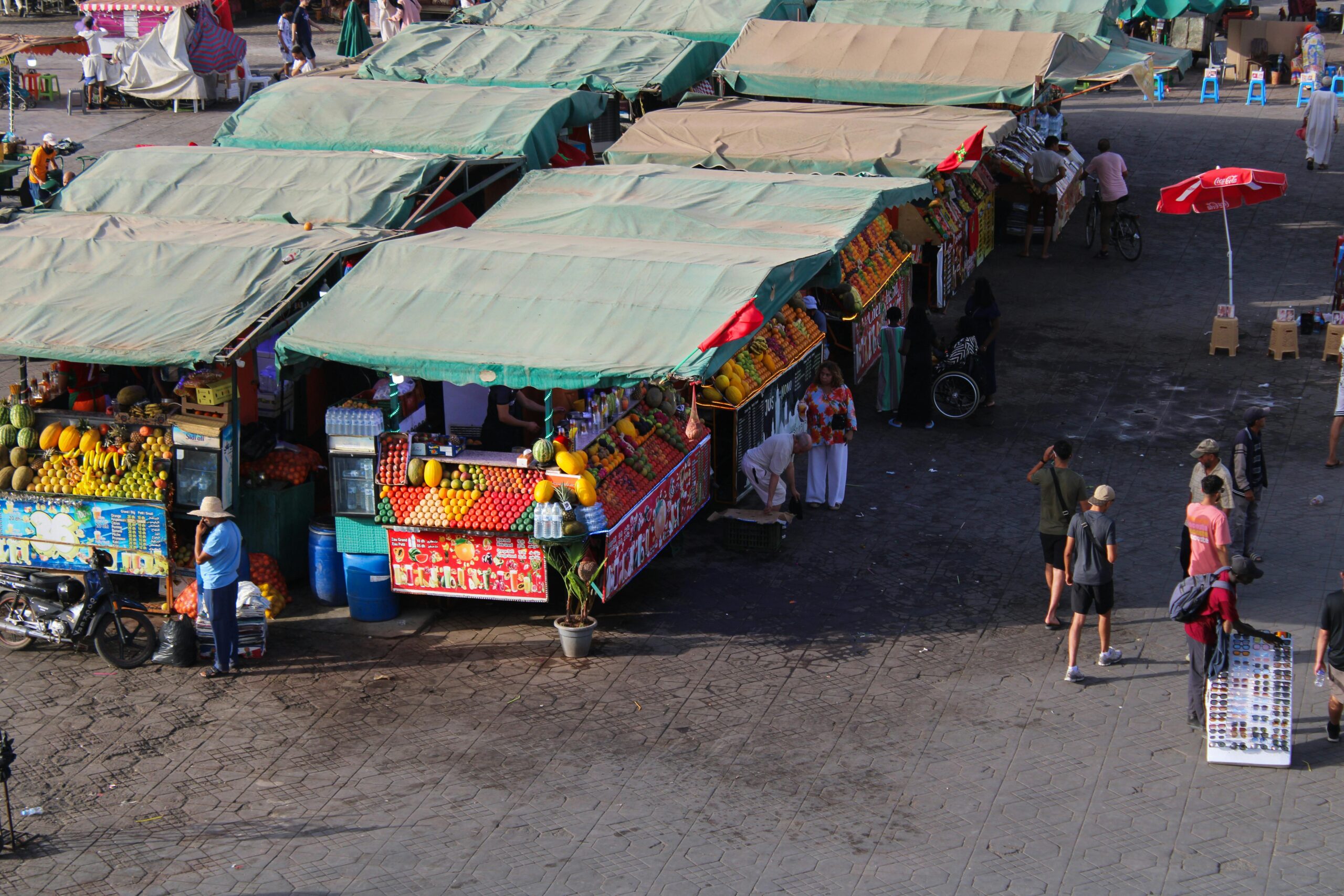
The square. At noon: snake charmers, Gnawa musicians, men with trained monkeys (the monkeys are not having a good time — do not pay for photos with them), orange juice stalls, and a quantity of tourists that makes the whole thing feel slightly performative.
At midnight: food stalls stretching across the entire square, steam rising from tagines and grilled meats and snail soup, and the feeling that you’ve arrived somewhere that is genuinely alive in a way that most city centres aren’t at this hour.
Both versions are real. The midnight version is the better one.
The rooftop cafes around the square — particularly on the northern and eastern edges — give the aerial view that makes the scale comprehensible. Order mint tea (at the tourist price, which is unavoidable here) and watch the square organise itself below you.
The Souks
Behind the north side of the Djemaa el-Fna, the souks extend through a labyrinth of covered lanes that are arranged, roughly, by trade — textiles in one area, spices in another, leather goods in another, lamps in another. Getting lost is inevitable and intentional — this is the medina, not a mall. The quality of everything varies enormously. The price of everything is negotiable.
A rough framework: the first price named is approximately twice what will be accepted. Counter at 40% of the first price. Meet somewhere in the middle. This is expected and is not considered rude — it’s the system. Feeling pressured to buy something is more uncomfortable if you don’t have a clear internal rule about when you’ll leave. The rule is: if you want it and can agree a price you’re happy with, buy it. If you’re uncertain, walk away. You can always come back.
The Tanneries of Marrakech
Less famous than the Fes tanneries but worth seeing. The Chouara and Souk des Teinturiers areas dye fabrics in large stone vats — the same process used for centuries, the colours vivid against the pale stone. The riad guesthouses in the surrounding lanes often have rooftop access to view the vats from above. No entry fee for the view; a small tip for the access.
The Mellah — The Jewish Quarter
The historic Jewish quarter adjacent to the royal palace. The Ben Youssef synagogue is still standing and accessible. The Mellah gives a different texture to the city than the main souk — quieter, slightly melancholy in the way of places where a community once thrived and largely left. The covered market at its heart sells spices, preserved lemons, and olives at prices significantly lower than the main souks.
Where to Stay in Marrakech
A riad — a traditional Moroccan house built around a central courtyard, usually with a rooftop terrace — is the correct answer and not necessarily an expensive one. Budget riads from £25–40/night. Mid-range (en suite, plunge pool, breakfast): £50–90/night. The Medina is where you want to be; the Gueliz (new city) has better restaurants but less atmosphere.
Booking.com has the most comprehensive riad listings. Filter by 8.5+ rating and read the reviews for “location” specifically — some riads are deep in the medina and the 20-minute walk from the taxi drop-off with luggage is more challenging than it sounds after a long flight.
Fes — The Medina That Changes Everything
If Marrakech is Morocco for tourists, Fes is Morocco for people who want to understand what they’re standing in the middle of.
Fes el-Bali — the old city — is the world’s largest car-free urban area. 9,400 streets and lanes within its walls. Population: approximately 156,000 people, living and working as they have for centuries. It was founded in 789 AD by Idriss I and reached the height of its influence in the 14th century, when it was one of the greatest cities in the Islamic world — a centre of scholarship, trade, craft, and religious authority. The University of al-Qarawiyyin, founded in 859 AD, is the oldest continuously operating university in the world.
All of this continues. The leather tanneries still tan leather by hand using the same pigeon dung and plant dyes they’ve used for a thousand years. The coppersmiths still hammer copper in the same souk they’ve occupied for generations. The medina is a UNESCO World Heritage site that is, critically, not a museum — it’s a city.
The Guide Question
Here is the only genuinely non-negotiable advice in this guide: hire a local guide for Fes medina, at least for the first half-day.
This is not said to generate a commission. It’s said because the Fes medina without a guide is, for most people, genuinely disorienting to the point of distress. I’ve been multiple times and I still get lost in ways that feel unresolvable. The streets don’t run in any grid. The lane you came in on doesn’t lead back where you expect. The landmarks — a mosque, a fountain, a particularly ornate door — repeat.
A guide costs £15–25 for 3 hours and gives you: the tannery rooftop access that isn’t visible from the street, the Koranic school (Medersa Bou Inania) interior that’s closed to those who arrive without someone who knows the system, the working foundry where brass lamps are made by hand, the spice market with its saffron and dried rose petals and kif, the 14th-century Nejjarine fountain that most visitors walk past without noticing.
Book through your riad directly or at the main medina gate (Bab Bou Jeloud). Avoid guides who approach you on the street — these invariably include mandatory stops at shops that pay them commission.
The Tanneries of Fes
The Chouara Tannery is one of the most photographed working sites in Africa. The view from the leather goods shops and riads overlooking the tannery — which provide access to their terraces and then expect you to buy something, which is a reasonable exchange — shows the circular stone vats in their primary colours: white (pigeon dung, used as a softener), red (poppy), yellow (saffron and pomegranate), blue (indigo), green (mint). The smell is intense. This is not metaphor — hold the sprig of mint they give you at the entrance and use it.
Go in the morning when the workers are active and the light is best. Afternoons are often less productive in the vats.
Medersa Bou Inania
A 14th-century Islamic school in the heart of the medina. The courtyard: three storeys of carved cedar and stucco, an octagonal marble fountain, the afternoon light falling through a rectangular opening above. Entry £2.50. One of the finest interiors in Morocco.
Fes el-Jedid — The New City (That Isn’t)
Adjacent to the old medina: the “new” Fes, built in the 13th century. The Royal Palace is not open to the public but the golden gates (Bab Bou Jeloud) are photographed from outside by everyone who visits. The Mellah (Jewish quarter) here is intact and largely intact — the synagogues still standing, the distinctive architecture still visible.
Chefchaouen — The Blue City (Honestly)
Chefchaouen is the most photographed city in Morocco and the most discussed among travellers in the context of whether it’s worth visiting. The answer is yes, with some honest context.
The medina of Chefchaouen is painted blue — pale blue, vivid blue, blue-grey, cobalt — in every shade, on every wall, step, and flowerpot. The origin of the blue: it was traditionally painted blue by the Jewish community that settled here in the 15th century after fleeing the Spanish Inquisition. The colour remained after most of the community emigrated to Israel in the 1940s. The city continues to repaint its medina blue, and has leaned into the photographic appeal of the result.
It is genuinely beautiful. It is also genuinely crowded in July and August — the alleyways are narrow and fill quickly. The honest timing: early morning in any month, or any time between October and May.
Getting there: 4 hours from Fes by CTM bus (£8), 4 hours from Tangier (£8). No train connection. Day-tripping from Fes is possible but doesn’t do it justice — stay one or two nights.
The plaza (Plaza Uta el-Hammam): the main square, with a 15th-century kasbah at one end and cafes on the other. Eat kefta (minced meat brochettes) from the stalls that set up in the evening. Order Berber omelette (eggs, tomatoes, onion, cumin) for breakfast at any of the small cafes on the surrounding streets.
The hike to the Spanish Mosque: 20 minutes above the medina, the old mosque gives the view over the blue city from above. Go at sunset. The blue roofs and white walls catch the evening light in a way that justifies the climb.
Essaouira — The Atlantic Antidote
Three hours from Marrakech by CTM bus (£7), Essaouira is the antidote to Marrakech’s intensity. A fortified coastal city on the Atlantic — blue and white, windswept, smelling of salt and fish — with a medina that is relaxed in a way that Marrakech and Fes are not.
The winds are the defining feature. Essaouira is one of the premier kitesurfing and windsurfing destinations in the world because the Atlantic reliably delivers significant wind off the coast. If you kitesurf, this is a destination in itself. If you don’t, the wind keeps the summer heat bearable and gives the city an energy that’s specific to Atlantic coasts.
The Ramparts
The 18th-century sea walls, built under French architect Théodore Cornut, run the length of the city’s ocean-facing side. Walk them in the late afternoon as the waves come in and the light goes amber. Free. One of the finest walks in Morocco.
The Medina Market
Less aggressive than Marrakech or Fes. The argan oil cooperatives — where Berber women process argan fruit by hand into oil — are accessible from the souks. Buy argan oil here rather than at tourist shops in Marrakech: the quality is better, the price is lower, and the money goes more directly to the people doing the work.
The seafood stalls near the port: grilled sardines, whole sea bass, prawns, all priced by the kilo. Point at what you want, watch it cooked, eat it at a plastic table with harissa and bread. The fresher the fish, the more obvious its origin — the port is 200 metres away.
Where Jimi Hendrix Didn’t Stay
Essaouira has a legendary and largely invented association with Jimi Hendrix, who visited in 1969 and is claimed by approximately four different guesthouses to have stayed there. He probably slept in Diabat, a village a few kilometres south. The legend has become part of the city’s identity regardless.
The Sahara — Merzouga and Why It’s Worth the Journey
This is the section most people underestimate.
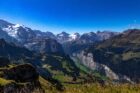
The drive from Marrakech to Merzouga takes 7–8 hours, crossing the High Atlas mountains through the Tizi n’Tichka pass (2,260m), down through the Draa Valley, past the ancient kasbahs of Aït Benhaddou, and into the pre-Saharan desert before the dunes begin.
Every hour of that journey is worth making. The landscape shifts so completely through each climate zone — mountain pass snow, valley oasis palms, mud-brick fortresses, red desert — that the journey itself is the experience, not merely the means of getting to the dunes.
Merzouga is the small town at the base of the Erg Chebbi dune system. The dunes reach 150 metres. They are, in person, larger than photographs prepare you for. At dawn, from the top of the nearest high dune, the colour shifts from deep orange to pale gold as the sun rises over Algeria and the silence is total in a way that silence in cities never quite is.
The Desert Camp
Stay in a camp in the dunes for at least one night. The camps range from basic (£20/night including dinner, sleeping in goat-hair tents on thin mattresses) to luxury (£120/night, proper beds, private bathrooms, a pool that seems absurd and makes complete sense the moment you use it).
The experience the camp provides that the hotel in Merzouga town doesn’t: waking at 4am to climb the dune for sunrise before anyone else has arrived at the top. The stars, unobstructed by any light pollution for a hundred kilometres in any direction. The camel trek at dusk that is, despite its tourist-infrastructure nature, genuinely affecting when the dunes change colour in the last light.
Book a camp that includes transport from Merzouga — the walk into the dunes in sand with luggage is not the experience anyone wants.
Organised Tour vs Self-Drive
The Marrakech → Sahara → Fes route is the most popular structure for 10-day Morocco trips. It can be done:
By organised tour: 3-day group tours from Marrakech to the Sahara and back, or the 3-day Marrakech → Sahara → Fes version. Cost: £150–250/person including accommodation and transport. Suitable for solo travellers who want company and don’t want to manage logistics.
By private driver/shared transfer: More flexible. A private driver for the Marrakech → Merzouga → Fes route costs £200–350 for the vehicle (split between passengers). Allows stops at Aït Benhaddou, the Draa Valley gorges, and wherever else interests you.
By CTM bus and local connections: Possible but slow and requires careful logistics. Marrakech → Ouarzazate by bus, Ouarzazate → Merzouga by shared taxi, Merzouga → Fes by bus via Errachidia. Budget: £30–40 for the transport. Time: 2 days minimum each way.
Driving yourself: Possible with a rental car. Roads in Morocco are generally good to reasonable. The mountain roads require care. International driving licence required in addition to UK licence.
The Atlas Mountains — Beyond the Day Trip
The Atlas Mountains run across Morocco from the Atlantic coast to the Algerian border — 2,400 kilometres of mountain range. The High Atlas peaks above Marrakech reach 4,167m at Jebel Toubkal, the highest mountain in North Africa.
Most visitors to Marrakech take a half-day trip to a nearby Berber village and consider the mountains done. The mountains reward more than that.
Imlil and the Toubkal Trek
Imlil village, 70km south of Marrakech (2 hours by shared taxi, £6 per seat), is the base for the Toubkal ascent. The hike to the summit is 2 days: Day 1 to Toubkal Refuge (3,207m), Day 2 summit attempt (4,167m) and return to Imlil. No technical climbing equipment required outside of winter (crampons and ice axe are needed January–April). A guide is recommended but not mandatory.
The view from the summit: the Atlas range in every direction, the Sahara visible on the clearest days to the south, the Atlantic to the west.
For non-summit trekkers: the day hike from Imlil to the Toubkal base camp gives most of the landscape without the final ascent. 5–6 hours return. Extraordinary.
The Draa Valley
The road south from the Atlas toward the Sahara runs through the Draa Valley — a river oasis flanked by date palms, kasbahs, and Berber villages. The contrasting landscape (water and green vegetation in the middle of desert rock) is one of the most striking natural features in Morocco. The valley is best appreciated slowly, stopping in the small market towns rather than driving through.
Aït Benhaddou
A UNESCO-listed ksar (fortified village) on the Draa Valley route between Ouarzazate and Marrakech. One of the best-preserved examples of southern Moroccan mud-brick architecture — it’s been used as a film set for Gladiator, Lawrence of Arabia, and Game of Thrones among others. Entry: £3. The climb to the top of the ksar takes 30 minutes and the view over the river and the surrounding desert is worth every step.
Hidden Morocco — The Places Worth the Detour
Sefrou
50km south of Fes. A small Berber market town with a medina that sees a fraction of Fes’s visitors and retains a character that feels genuinely local rather than tourist-oriented. The cherry moussem (festival) in June draws the whole region. The covered market sells produce rather than souvenirs.
Ouarzazate
“The door to the desert” — the staging post between the Atlas mountains and the Sahara. Most people pass through. It’s worth a night — the Atlas Film Studios (used for Gladiator, Kingdom of Heaven, Jewel of the Nile) run tours, the kasbah of Taourirt is one of the finest intact examples in the country, and the surrounding landscape at dawn is extraordinary.
Moulay Idriss
A sacred pilgrimage city in northern Morocco built around the tomb of the founder of the first Moroccan dynasty — Moulay Idriss I. Non-Muslims were barred from spending the night here until 2005. The city climbs two hills above a river valley. Almost no other tourists. The view of the Roman ruins of Volubilis from the hillside is the finest context for understanding those ruins that exists.
Volubilis
The most complete Roman ruins in North Africa. A city of 20,000 people at the height of the empire, abandoned in the 3rd century. The mosaic floors are extraordinary — intact animals and mythological scenes, partially covered to protect them, partially uncovered and visible underfoot. 30 minutes from Meknes. Entry: £6. Almost nobody is here.
The Food — What to Eat and Where
Moroccan food is one of the great cuisines of the world and is radically underrepresented by what gets exported. The tagine in a British Moroccan restaurant bears a similar relationship to the actual food as a chicken tikka masala bears to a Hyderabadi biryani.
Here’s what you actually want to be eating.
Pastilla
A warqa pastry pie — layers thinner than filo, filled with pigeon or chicken, almonds, eggs, and spices, then dusted with cinnamon and icing sugar. Sweet and savoury simultaneously. There is nothing else in the world that tastes exactly like this. Order it everywhere you see it and benchmark the versions.
Harira
A thick soup of tomatoes, lentils, chickpeas, and lamb, seasoned with coriander, lemon, and ginger. The soup of Ramadan — broken fast with harira and dates at sunset across the entire country — but available year-round. Available from the large communal pots at small medina cafes, usually for £0.80–1.50. Always accompanied by chebakia (honey pastry) and dates.
Mechoui
A whole lamb slow-roasted in an underground clay oven (mechoui) until the meat falls from the bone. In Marrakech, the mechoui alley near the Djemaa el-Fna souk sells it by weight from around 11am. Served with cumin and salt. The best cuts go first — be there before 1pm.
Kefta Tagine with Egg
Spiced minced lamb formed into small meatballs (kefta) cooked in tomato and cumin sauce, eggs cracked in and set on top. Eaten with khobz bread. The most satisfying midday meal available in Morocco. Available everywhere; quality varies — the smaller the restaurant, the better the odds.
Couscous on Friday
Couscous is the Friday dish across Morocco — served after midday prayers as a communal family meal with seven vegetables, chicken or lamb, and smen (fermented butter). Tourist restaurants serve it daily. Local family restaurants serve it on Fridays only, and the Friday version is categorically different. Ask your riad owner which local restaurant does the best Friday couscous.
Msemen
A layered Berber flatbread, pan-fried until flaky on the outside and chewy within, served with argan oil and honey for breakfast. Available from any bakery or street stall before 9am for £0.20–0.40. This is the first thing you should eat on the first morning. It will set the standard.
Mint Tea
Moroccan mint tea is poured from a height — the pour aerates and slightly cools the tea, creating a light froth — into small glasses, and is served sweet, with fresh spearmint. The pouring is a performance and a hospitality ritual. Accepting mint tea offered in a shop or medina is not an obligation to buy anything; it’s a greeting. Refusing it is more awkward than accepting it.
Never pay more than £0.50–1 for mint tea at a café. Tourist areas charge £2–3. Leave and find a local place.
What It Costs — Real Numbers
Daily Budgets
Budget (£20–30/day)
- Accommodation: budget guesthouse or basic riad (£10–15/night)
- Food: street food, small cafes, medina restaurants (£5–8/day)
- Transport: CTM buses and shared taxis between cities
- Activities: medina walking (free), most entry fees under £3
Mid-range (£40–60/day)
- Accommodation: characterful mid-range riad (£25–45/night)
- Food: mix of local restaurants and one decent sit-down dinner (£12–18/day)
- Transport: combination of buses and occasional taxi/transfer
- Activities: guided medina tour (£15–25), Sahara camp (amortised)
Comfortable (£80–120/day)
- Accommodation: boutique riad with pool (£50–90/night)
- Food: better restaurants, occasional splurge (£25–40/day)
- Transport: private driver for key sections
- Activities: full-service desert camp, guide throughout
What 10 Days in Morocco Actually Costs from the UK
| Category | Budget | Mid-Range |
|---|---|---|
| Return flights (UK → Marrakech or Fes, 6 weeks ahead) | £80–150 | £120–200 |
| 10 nights accommodation | £100–180 | £250–400 |
| Food (10 days) | £70–100 | £130–200 |
| Internal transport (buses, shared taxis, 1 private transfer) | £60–100 | £100–180 |
| Sahara desert camp (2 nights) | £50–90 | £90–200 |
| Activities and entry fees | £30–50 | £60–100 |
| Total | £390–670 | £750–1,280 |
The flights are the most variable element. Ryanair and easyJet regularly offer Marrakech from £30–60 one way in shoulder season. The budget totals above assume standard prices; during a sale, the all-in cost drops further.
The Touts and Hustlers — The Honest Preparation
This section exists because not addressing it would be dishonest, and not knowing what to expect makes the experience significantly more stressful than it needs to be.
In the tourist areas of Marrakech and Fes — around Djemaa el-Fna, at the main medina gates, near the tanneries — a proportion of people who approach you will be trying to take you to a shop, a carpet merchant, or a restaurant in exchange for a commission. This is the standard tourist economy of busy medinas and it operates across Morocco’s main tourist cities.
What actually works:
Walk with purpose. People who appear to know where they’re going are approached far less than people who are standing still with a confused expression and an open map. This is true even if you have absolutely no idea where you’re going — the appearance of direction is enough.
“La shukran” (No, thank you) is the phrase. Said clearly, once, without stopping. Following it up with continued eye contact or engagement — even to decline again — opens a negotiation. One clear decline and keep walking.
Inside the medinas: if someone offers to show you something, accompanies you voluntarily, and then asks for a tip at the end, you don’t owe them one unless you explicitly asked for their assistance. If you did explicitly ask for directions and they walked you somewhere, 10–20 dirhams (£0.80–1.60) is reasonable.
The worst of the hustler culture is in Marrakech and around the main Fes medina gate. Chefchaouen is significantly more relaxed. Essaouira more relaxed still.
What not to do: Engage extensively with offers you’re not interested in, follow someone to “just look” at a shop you have no intention of buying from, or feel guilty for declining. The guilt response is specifically cultivated. The word no, said without apology, is complete.
None of this is said to demonise Moroccan people — the vast majority of interactions throughout this country are warm, genuine, and not transactional. This is a specific subset of the tourist economy in specific zones. The rest of Morocco doesn’t operate this way.
Practical Notes
Visa: UK passport holders receive a 90-day visa exemption on arrival. No application required. Stamp in passport at immigration.
Getting there: Direct flights from London Gatwick, Heathrow, Stansted, and multiple regional UK airports. Ryanair, easyJet, British Airways, Royal Air Maroc. Marrakech Menara airport is 6km from the city centre (petit taxi: £5–8, not negotiable — fix the price before departure). Fes-Saïss airport is 15km from the medina.
Currency: Moroccan Dirham (MAD). £1 ≈ 50 dirhams at time of writing. Dirhams cannot be imported or exported — convert at the airport or at banks in the medina. ATMs widely available. Many restaurants and riads accept card; markets and street food are cash only. Bring small notes.
Getting around: CTM is the national bus company — reliable, air-conditioned, reasonably priced (Marrakech → Fes: £18–22, 7 hours). Supratours (affiliated with ONCF railways) covers some routes. Shared taxis (grand taxi) cover shorter inter-city routes and are faster than buses for routes like Fes → Chefchaouen (40 dirhams / £0.80 per seat in a shared taxi of 6). Petit taxis cover city trips.
Language: Arabic (Darija dialect) and Tamazight (Berber) are the primary languages. French is widely spoken and understood, especially in tourist areas. Spanish in the north. English is improving rapidly in the main tourist cities but is not universal. Learning “shukran” (thank you), “bismillah” (said before meals, meaning “in the name of God”), and “la shukran” (no thank you) covers most situations.
Dress code: Morocco is a Muslim country. In medinas and at religious sites, covered shoulders and knees are appropriate. This is more relevant for women than men but applies to both. At beach resorts (Agadir) and in Essaouira, more relaxed dress is standard. Topless bathing at public beaches is not culturally appropriate.
Tipping: Small tips are expected and appreciated. £1–2 for restaurant service. 10–20 dirhams for taxi journeys where you’ve negotiated a fixed price rather than used the meter. Riad cleaners: 20–30 dirhams per night, left on the pillow.
Safety: Morocco is generally safe for travellers. The main risks are: pickpocketing in crowded tourist areas (standard precautions apply — no visible expensive items, bag in front), the hustle culture described above (manageable), and road safety (be cautious in taxis and grand taxis where speed limits are treated as suggestions).
The 10-Day Itinerary
This is the route that covers the essential Morocco without rushing any part of it. It requires a hire car or private driver for the Sahara section — the logistics are manageable and covered below.
Days 1–3: Marrakech
Day 1: Land. Get to the riad. Walk to Djemaa el-Fna at dusk. Eat from the square stalls. Back by midnight.
Day 2: Koutoubia Mosque exterior (the minaret is the finest in Morocco), Saadian Tombs (16th century royal tombs, open 8:30am–5pm, entry £2.50), Bahia Palace (19th century vizier’s palace, extraordinary tilework, entry £2). Evening: the souks — no agenda, just walk.
Day 3: Mellah and the Jewish Quarter in the morning. Majorelle Garden (designed by Jacques Majorelle, later owned by Yves Saint Laurent — the cobalt blue buildings and exotic plantings are extraordinary; entry £10, worth it) in the afternoon. Day trip to the Atlas foothills or cooking class.
Day 4: Aït Benhaddou + Transfer toward Merzouga
Early start. Drive or transfer over the Tizi n’Tichka pass. Stop at Aït Benhaddou (2 hours). Continue to Ouarzazate for the night (or push toward Merzouga if energy allows — 5 more hours).
Days 5–6: Sahara (Merzouga)
Day 5: Arrive Merzouga. Camel trek into dunes at dusk. Night in desert camp.
Day 6: Sunrise from the dunes. Breakfast. Explore the dune base by quad bike or on foot. Lunch in Merzouga. Depart toward Fes (8-hour drive — break overnight in Midelt or push through if energy allows).
Days 7–8: Fes
Day 7: Guided medina tour (half day — book through riad). Medersa Bou Inania. Tanneries. Lunch at a local medina restaurant recommended by guide.
Day 8: Fes el-Jedid (Royal Palace gates, Mellah). University of al-Qarawiyyin (exterior and courtyard, non-Muslims cannot enter the main sanctuary). Afternoon free in the medina or day trip to Meknes (45 minutes by train, £2) and Volubilis.
Days 9–10: Chefchaouen
Day 9: CTM bus Fes → Chefchaouen (4 hours, £8). Arrive afternoon. Walk the medina at golden hour. Plaza Uta el-Hammam for dinner.
Day 10: Spanish Mosque hike at dawn. Morning in the medina. CTM bus to Fes airport (4 hours) for flights home, or north to Tangier for connection.
Final Thought
The thing about Morocco that takes multiple visits to fully understand is that the difficulty is part of the offer.
The medina that disorients you is doing it because it was designed to confuse invaders, not tourists — the narrow lanes and dead ends were a defensive feature, not a planning failure. The negotiation that exhausts you is a cultural practice that functions as the price tag in a system that didn’t develop price tags. The intensity of the Djemaa el-Fna at midnight is the city doing what it has always done, indifferent to whether you’re there to watch it or not.
Morocco is not a passive destination. It’s the most rewarding trip available from the UK for travellers who bring curiosity and patience in approximately equal measure.
The first evening in the square, disoriented and overwhelmed, is not the start of a bad trip. It’s the start of the best one you’ve had in years.
Have a question about Morocco this guide doesn’t answer? Drop it in the comments.