



The specific difference between the beach that will have you standing on a board in two days and the beach that will have you swallowing saltwater for a week, the surf school infrastructure of the Algarve versus the Moroccan Atlantic versus the Bali beginner breaks, the board sizes that matter and the wax that everyone forgets to mention, and why learning to surf is the most accessible adventure sport available to a UK traveller with one week and no previous experience.
Reading time: 10 minutes | Last updated: 2026
Surfing is the adventure sport with the lowest technical barrier to a first standing experience and the highest skill ceiling of any water sport — you can be on your feet on a 9-foot foam board in two days of lessons; you can spend 30 years trying to surf a 20-foot Jaws wave and not get there. The space between those two endpoints is the entire surfing experience, and the first standing moment — the specific second when the wave pushes the board and you push up to your feet and the board is moving under you and you are surfing — is available to any adult in reasonable physical condition within 48 hours of entering the water for the first time.
This guide covers where to have that experience most efficiently from the UK, and where to progress beyond it.
The Non-Negotiable Basics
The board size: The beginner board is a minimum 8-foot foam board (the “foamie” — the foam construction that is forgiving of falls, doesn’t injure when it hits you, and floats high in the water). The 9-foot and 10-foot foamie is even better for the first week. Any instructor who puts a beginner on a 6-foot fibreglass shortboard is more interested in looking cool than in teaching surfing.
The wave size: The learning wave is 1-2 feet (knee-high to waist-high). The learning wave is not the wave in the surfing photographs. The learning wave is small, regular, and slow enough to give you time to stand up. Find a beach with consistent small waves and you will progress. Find a beach with impressive big waves and you will not get to your feet.
The tide: Beginner surfing is most accessible at low tide when the sandbank waves break predictably on a shallow sandbank in shallow water. Check the tide table (Windguru or Magicseaweed — the two tide and swell forecasting apps: free, accurate to within a few minutes) before your lesson and before any self-practice.
The Best Beginner Surf Destinations From the UK
1. The Algarve, Portugal — The Easiest Entry
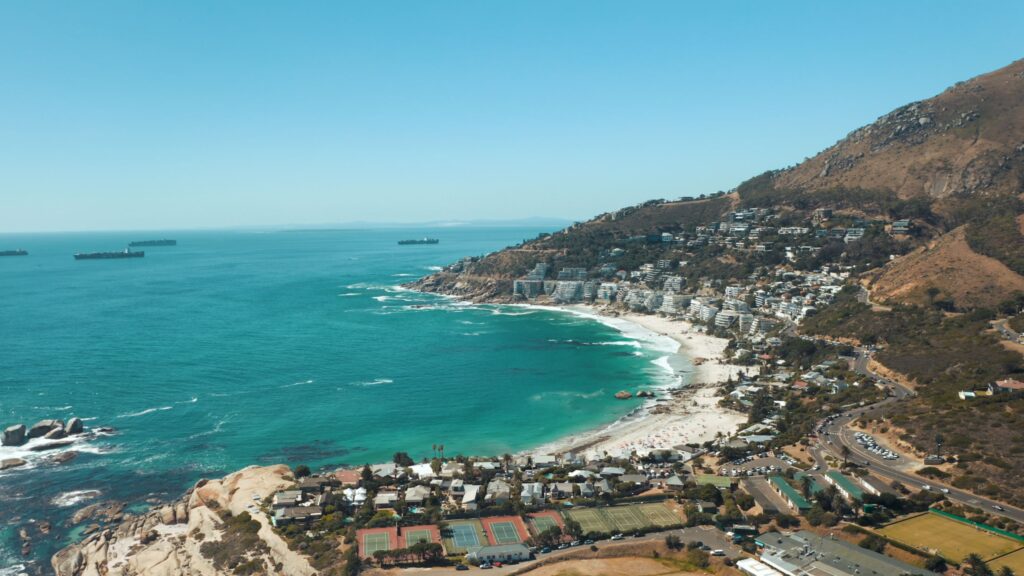
Why it’s first: The Algarve’s Atlantic-facing beaches (Arrifana, Carrapateira, Amado on the Vicentine Coast — the wild coast north of Sagres) have the most consistent beginner-suitable waves in Southern Europe: the 1-2 foot Atlantic swell, the warm water (19-23°C in summer), and the surf school infrastructure that has been teaching beginners since the 1990s.
The specific beach: Praia de Amado (Carrapateira) is the BGGD recommendation for first-timers — the left and right-breaking waves on the main beach, the sandbank that produces the consistent waist-high wave, the wide beach that gives space for beginners to fall without injury, and the surf schools (the Surf Clube de Portugal and the local schools in the Carrapateira village) with the equipment rental and the lesson packages.
The lesson price: €35-50 / £30.17-43.10 per 2-hour group lesson. Equipment included. Wetsuit included (4/3mm required — the Atlantic even in summer is not warm).
The flight: Faro Airport (2.5 hours from the UK) is the entry point — the Carrapateira beaches are 2 hours from Faro by hire car. The Algarve combines the surf trip with the general Portugal travel.
The progression: After the first week in the Algarve, the next level (the consistent overhead waves, the steeper beach breaks of the Ericeira coast north of Lisbon — the World Surfing Reserve, the first in Europe) is 3.5 hours north. The Portugal surf progression is structured.
2. Morocco (Taghazout) — The Winter Surf Trip
Why it’s second: Taghazout (the surfing village 20km north of Agadir on Morocco’s Atlantic coast) gives the UK traveller the winter surf option that the Algarve doesn’t — the Moroccan Atlantic surf season runs October-April, the direct flight from UK airports to Agadir takes 3.5 hours, and the accommodation and lesson prices are 40-50% below the equivalent Portuguese options.
The specific setup: Taghazout has been a surf village since the 1960s when the first generation of Moroccan surf travellers established the break hierarchy (the Panorama Point, the Anchor Point, the Hash Point — named in the specific tradition of surfing’s earliest international travellers). The beginner infrastructure has been formalised around the village: 15+ surf schools, the foam board rental from every shop on the main street (20-40 MAD / £0.40-0.80 per hour), and the consistent winter swell (the Atlantic groundswell from the North Atlantic storms arrives clean at Taghazout’s facing beaches with 5-7 days of travel distance, the swell organised into lines rather than wind chop).
The beginner beach: The Anchor Point beginner section (the inside section of the break, the white water between the breaking wave and the beach) is the teaching area used by every Taghazout school. The wave: consistent, 1-2 feet in the inside section, the longer ride possible as skills develop.
The lesson price: MAD 250-400 / £5-8 per 2-hour group lesson.
The surf camp option: Taghazout has 10+ dedicated surf camps that include accommodation, lessons, equipment, and meals at €400-700 / £344.83-603.45 per week — the most efficient beginner surf trip structure available from the UK in winter.
3. Bali (Kuta, Seminyak, Canggu) — The Warm Water Option
Why it’s third: Bali’s Indian Ocean waves (the reef breaks of the south coast and the beach breaks of Kuta and Seminyak) give the warm-water beginner surf experience — 28-30°C, no wetsuit required, the specific sensory pleasure of learning to surf in tropical water.
The specific beginner beach: Kuta Beach (the most consistent beginner-friendly beach in Bali — the slow, crumbling waves on the sand bottom, the wave that breaks over 50-80 metres giving time to stand up and ride, the 200+ surf instructors available on the beach from 7am): the most accessible beginner surf environment in Asia. The instruction quality varies — the IMB (the Indonesian Lifesaving and Surfing Association) certification is the quality indicator for the Kuta instructors.
The Lesson price: USD 25-40 / £19.69-31.50 per 2-hour private lesson.
The progression beach: After Kuta, the Canggu area (Batu Bolong, Echo Beach) gives the next level — the faster beach break, the longer ride, the beginning of the transition from the beginner 9-foot board to the intermediate 7-foot board.
The BGGD Bali surf note: The Balinese reef breaks (the Padang Padang, the Uluwatu, the Bingin) are intermediate to advanced — the reef bottom, the hollow wave, the specific danger of falling on coral. These breaks are NOT for beginners. Kuta and the Canggu beach breaks are the correct beginner progression.
4. Cornwall — The Home Option
Why it’s included: The UK surfer’s training ground. The Fistral Beach in Newquay (the most consistent beginner beach in the UK — the sandbar that produces the learner-wave, the surf school infrastructure going back to the 1960s, the National Surf Centre training programmes), the Croyde in North Devon (the beach break that produces the most consistent waves in England), and the north coast of Cornwall (Gwithian, Perranporth, Polzeath).
The specific Cornwall advantage: no flight required, the lesson prices are comparable to Portugal (£40-55 / £40-55 per 2-hour group lesson), and the UK surf community is genuinely welcoming to beginners.
The specific Cornwall disadvantage: the Atlantic is cold (10-15°C in summer — the 5/4mm or 4/3mm wetsuit is required throughout the year), the waves are more powerful than the Algarve beginner waves (the Cornwall Atlantic swell comes from the North Atlantic with less organisation than the Moroccan Atlantic), and the weather is the Atlantic UK weather.
The recommendation: Learn in Portugal or Morocco for the first time — the warm water and the consistent small waves accelerate progression. Return to Cornwall once you can stand up reliably.
The Progression Map
| Level | Experience | Correct Location |
|---|---|---|
| Total beginner | Never stood on a board | Kuta (Bali), Amado (Portugal), Taghazout beginner section |
| 2-5 days of lessons | Can stand but inconsistent | Canggu (Bali), Carrapateira (Portugal), Taghazout Panorama |
| 1-2 weeks consistent | Riding green waves | Ericeira (Portugal), Essaouira (Morocco), Croyde (UK) |
| 1 month intermediate | Reading waves | Hossegor (France), Las Palmas (Gran Canaria), Trestles (if you’ve made it to California) |
| 6 months+ | Surfing competently | Sri Lanka (Arugam Bay), Indonesia (Lombok), Madeira (Paul do Mar) |
What to Bring
The essentials:
| Item | Notes |
|---|---|
| Rash vest (lycra) | Under the wetsuit — prevents wetsuit rash on the chest and underarms from paddling. The surf schools don’t always provide this. £10-20 from any surf shop. |
| Reef shoes (if surfing reef) | Not required for sand-bottom beginner beaches. Required for any reef break. |
| Zinc oxide sunscreen | The water-resistant SPF50+ sunscreen. The standard sunscreen washes off in the water within 10 minutes. Zinc oxide (the white stick, the surfer’s nose application) stays on. |
| Board shorts or swim leggings | The boardshort is the standard surfing legwear — the specific length (below the knee) prevents the rash from the board’s wax contact with the inner thigh. |
| Ear plugs (silicone) | Optional but recommended — the repeated cold water impact on the ears produces Surfer’s Ear (exostosis — the bony growths in the ear canal that reduce hearing over years) in cold water surfers. £5-10 per pair. |
What the school provides: The foam board, the leash, the wetsuit, the surfboard wax. Everything else is the surfer’s responsibility.
The Mental Barrier
The most common reason people don’t progress in the first surf lesson is the duck dive failure — the technique for pushing the board underwater to get through the breaking wave rather than being pushed back to the beach by it.
The duck dive requires the board to go underwater: the foam beginner board doesn’t go underwater. It floats. This is a design feature (the buoyancy is why beginners can stand on it) and a technical limitation (the board that catches waves easily also catches breaking waves easily).
The technique for the foam board: the turtle roll (rolling the board upside down as the wave arrives and holding on while the wave passes over, then rolling back and continuing paddling). Every surf school teaches this. Practice it in the first lesson.
The surfer who masters the paddle-out and the turtle roll can reach the break reliably. The surfer who hasn’t mastered it spends the entire lesson in the white water between the break and the beach. Both have valid experiences. The paddle-out mastery is the specific skill that changes the experience from “being dragged by waves” to “choosing waves.”
Surf Schools Worth Booking
Portugal:
- Surf Clube de Portugal (Carrapateira) — the reference Algarve surf school
- Ricochet Surf School (Ericeira) — the World Surfing Reserve local school
- Geo Surf (Lagos) — the most organisationally consistent of the Algarve schools
Morocco:
- Surf Berbère (Taghazout) — the most established surf camp, English-speaking instructors
- Surf Maroc (Taghazout) — the premium camp option, the accommodation included packages
Bali:
- Odysseys Surf School (Kuta) — the IMB-certified instructors, the longboard and shortboard progression
- Bali Learn to Surf (Seminyak) — the private lesson specialisation
UK:
- Escape Surf School (Newquay, Fistral Beach) — the most organised beginner programme in the UK
- Saunton Sands Surf School (North Devon) — the lower-crowd alternative to Fistral