
The itinerary that goes beyond the Tokyo-Kyoto-Osaka triangle: Tokyo (4 nights) for the full depth, the Nikko day trip that most 7-day itineraries miss, Hakone for the Mount Fuji view and the ryokan, Kyoto (3 nights) with the Nara day trip, Osaka (2 nights) with the Hiroshima day trip, and Kanazawa (1 night) on the way back to Tokyo — and why 14 days gives you the Japan that the 7-day visitor is told about but cannot access.
Reading time: 12 minutes | Last updated: 2026
The 7-day Japan itinerary (the Tokyo-Kyoto-Osaka circuit) is the correct Japan for the first visit under time pressure. The 14-day Japan is the correct Japan for the first visit that wants to be complete — the depth of Tokyo that 3 nights doesn’t give, the Hiroshima that requires a full day, the Hakone ryokan night that the 7-day schedule eliminates, and Kanazawa, the city that calls itself the “little Kyoto” and is correct in a way that the marketing doesn’t usually earn.
This itinerary is for 14 nights. The pace is deliberate — the 7-day Japan moves too fast for the country it’s trying to show. The 14-day Japan moves at the speed Japan asks of the visitor who wants to understand it.
Before You Leave
Book 8-12 weeks ahead:
- JR Pass (14-day): £465 at jrpass.com. Covers all Shinkansen (except Nozomi), all JR lines, the Nikko Tobu line from Nikko station, and the Hakone area JR services.
- The Ghibli Museum (Mitaka): Book at ghibli-museum.jp via the Lawson ticketing system — the museum sells out 4 months ahead for the popular time slots. Mid-week morning is the most available.
- The Hakone ryokan: The Hakone ryokan with the Mount Fuji view (the Gora Kadan, the Fujiya Hotel, or the Tenzan Tohji-kyo — the mid-range options) books 6-8 weeks ahead for weekends, 3-4 weeks for weekdays.
- The Fushimi Inari 6am instruction: No booking required. Just the alarm.
- The Hiroshima Atomic Bomb Dome and Peace Museum: No booking required. The Peace Museum opens at 8:30am.
The JR Pass activation: At the JR East Travel Service Centre in Narita or Haneda on arrival. Do this before leaving the airport.
The 14 Days
DAYS 1-4 — Tokyo
Day 1: Arrival and Shinjuku
The jet lag instruction: do not sleep on Day 1 until 10pm local time. The body clock adjustment that eliminates the second day’s jet lag requires staying awake until the local evening. The Omoide Yokocho (Memory Lane) at 6pm with the yakitori and the beer is the correct Day 1 evening activity — small bites, social, time passes without effort.
Day 2: Depth Tokyo (East)
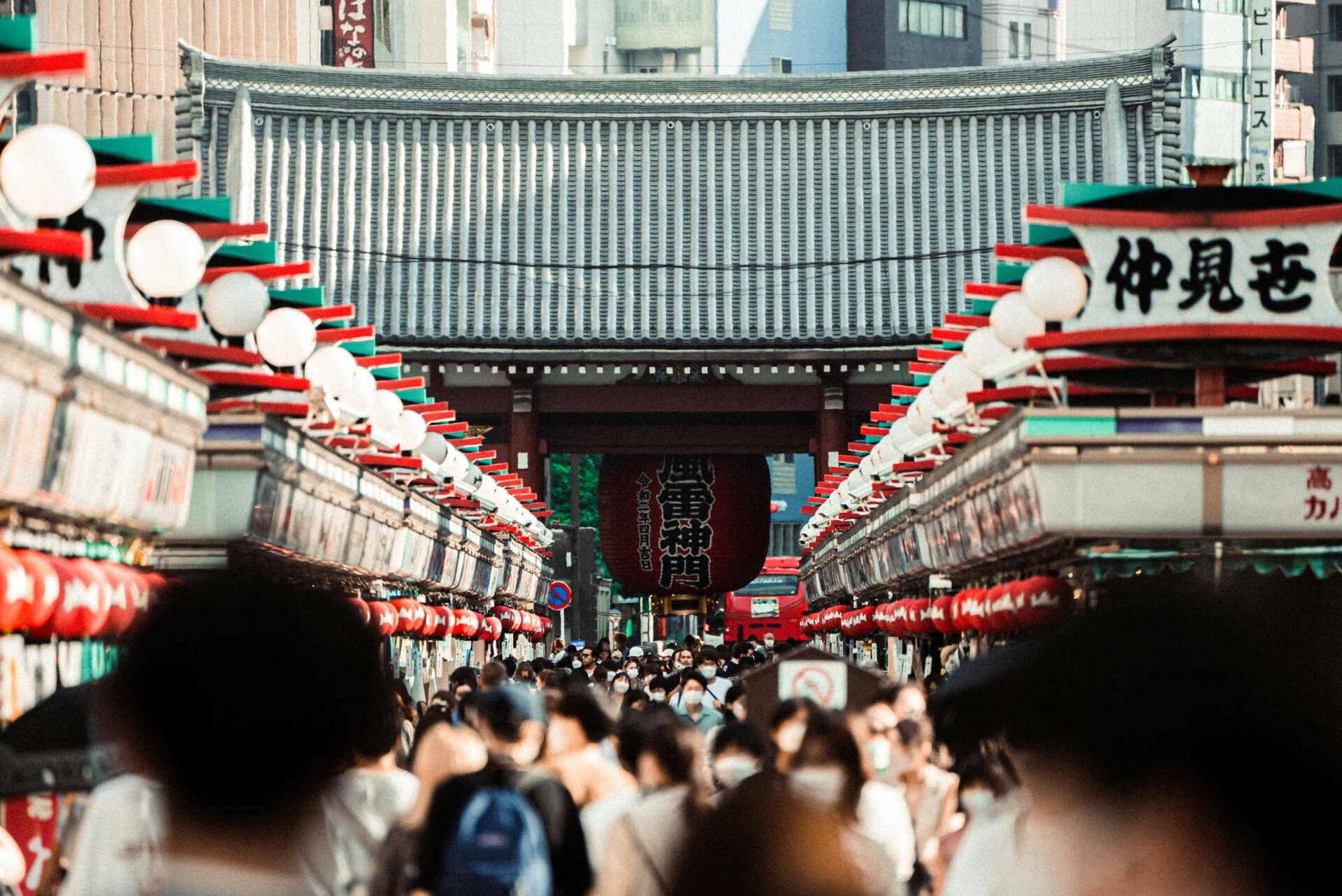
Tsukiji Outer Market at 6am (the morning fish and the tamagoyaki), the Senso-ji Temple at 9am (Asakusa), teamLab Planets at 11:30am (Toyosu, book ahead), the Shibuya Crossing and Shibuya Sky at 4pm, Shinjuku Golden Gai at 9pm. The full Day 2 itinerary in Tokyo in 48 Hours and 7 Days in Japan.
Day 3: The Ghibli Museum + Yanaka
The Yanaka neighbourhood at 8am (the most preserved pre-war Tokyo, the cemetery, the shotengai shopping street, the shitamachi atmosphere): 2 hours. Then the Metro to Mitaka, the Ghibli Museum at the booked time slot. Return to Shinjuku by 4pm.
The Shinjuku Gyoen National Garden at 5pm (the 58-hectare national garden, the French formal section and the Japanese garden section, the greenhouse — the correct late-afternoon urban escape): entry ¥500 / £2.65.
Day 4: Nikko Day Trip
The Nikko Tōshō-gū shrine complex (the mountain town 2 hours north of Tokyo on the JR Nikko Line from Ueno — ¥1,110 / £5.89, JR Pass covered from Utsunomiya connecting): the UNESCO-listed Tokugawa Ieyasu shrine, the Yōmeimon Gate (the “Twilight Gate” — the elaborately carved wooden gate that took 2 years to build, the 508 carved figures on every surface), the Sleeping Cat, the sacred stables.
The specific Nikko instruction: the Rinnō-ji Temple (the 766 CE temple with the three giant gold lacquer Buddha statues — less visited than the Tōshō-gū, more atmospherically Buddhist): entry ¥900 / £4.77.
Return to Tokyo by 7pm.
DAYS 5-6 — Hakone
Day 5: Tokyo to Hakone
The Odakyu Romance Car from Shinjuku to Hakone-Yumoto (the direct limited express train, 90 minutes, ¥2,360 / £12.50 — not covered by JR Pass, purchase separately): the mountain train journey that is itself a transport experience worth having.
The Hakone circuit:
The Hakone Ropeway (the aerial cableway from Sounzan to Togendai across the volcanic Owakudani valley — the sulphur vents, the black eggs cooked in the sulphur springs at 7 minutes each adding 7 years to the life according to the specific Hakone mythology): the ropeway at 10am gives the Mount Fuji view on clear days (the probability of clear weather at Hakone is approximately 40% — check the Fuji webcam at fujisan-climb.jp the evening before).
The Lake Ashi boat crossing (the ferry from Togendai to Moto-Hakone, the Mount Fuji visible above the far shoreline on clear days): ¥1,200 / £6.36, JR Pass covered.
Day 5 Evening: the Ryokan
The ryokan check-in at 3pm. The kaiseki dinner at 6pm. The onsen at 9pm. The specific instruction: the outdoor rotenburo (the outdoor hot spring bath) at night if the ryokan has one — the combination of the volcanic water, the mountain air, and the stars above the Hakone caldera is the most specifically Japanese moment available in a 2-week Japan trip.
Day 6: Hakone to Kyoto
Morning onsen at 7am. The kaiseki breakfast at 8am (the Japanese breakfast — the grilled fish, the miso soup, the pickled vegetables, the tamagoyaki, the tofu). Checkout at 11am.
The Shinkansen from Odawara (25 minutes by local train from Hakone-Yumoto, then Shinkansen Hikari from Odawara to Kyoto — 90 minutes, JR Pass covered): Mount Fuji visible from the right side of the train between Shin-Fuji and Mishima stations.
Kyoto afternoon arrival: Check in, evening in the Gion district.
DAYS 7-9 — Kyoto
Day 7: The Morning Temples
5:45am: Fushimi Inari (the 10,000 gates at dawn — the gates with nobody in them, the bird calls, the mountain air). 9am: Ryoan-ji (the dry garden — the 15 stones arranged so that no matter where the viewer stands, one stone is hidden: the specific Zen koan made architectural). 11am: Kinkaku-ji (the Golden Pavilion).
Day 8: The Eastern Hills
7am: Arashiyama Bamboo Grove (the bamboo at dawn, the tourists arriving at 8:30am — the 6am-7:30am window is the correct Arashiyama timing). 9am: Tenryu-ji Garden (the finest Zen garden composition in Japan). 11am: the Philosopher’s Path walk (the 2km canal-side path from Nanzen-ji to Ginkaku-ji). Afternoon: Nanzen-ji (the aqueduct through the temple grounds, the hojo garden). Evening: the Gion Hanamikoji (the geiko hour — 6-7pm).
Day 9: Nara Day Trip
The Kintetsu Nara Line from Kintetsu-Kyoto to Nara (45 minutes, ¥640 / £3.39): the Nara deer, the Todai-ji (the great bronze Buddha, the world’s largest wooden building), the Kasuga Taisha shrine (the 3,000 bronze and stone lanterns). Return to Kyoto by 5pm.
Evening: the Pontocho (the narrow alley between Shijo and Sanjo, the traditional Kyoto dining alley — the kaiseki restaurants visible through the machikomachi sliding doors, the prices visible in the illuminated menus in the corridor). The Pontocho at 7pm: the evening Kyoto.
DAYS 10-11 — Osaka
Day 10: Kyoto to Osaka, Osaka Depth
Shinkansen Kyoto to Osaka (15 minutes, JR Pass covered). Check in.
The Kuromon Ichiba Market (the morning market — the wagyu skewer, the sea urchin in a cup, the Harukoma sushi counter). The Dotonbori afternoon (the takoyaki, the okonomiyaki, the Glico sign). The Shinsekai evening (the kushikatsu, the Tsutenkaku Tower): full itinerary in Osaka in 48 Hours.
Day 11: Hiroshima Day Trip
The Shinkansen from Osaka Shin-Osaka to Hiroshima (55 minutes, ¥10,340 / £54.80, JR Pass covered): the Peace Memorial Museum (the most important single museum in Japan — the 8:15am of August 6th 1945 documented in full, the shadow of the person vaporised on the bank steps visible, the warped and fused objects from the epicentre, the photographs of the city before and after and of the survivors in the months that followed): entry ¥200 / £1.06. Open from 8:30am.
The Atomic Bomb Dome (the Genbaku Dome — the Hiroshima Prefectural Industrial Promotion Hall, the only building left standing near the epicentre, preserved as it was immediately after the blast as the most specific evidence of the bomb’s power): free access, the 90-metre proximity to the hypocenter visible in the structure.
The Miyajima Island ferry (from the Hiroshima ferry terminal or the JR Miyajimaguchi station — 10 minutes, JR Pass covers the JR ferry): the Itsukushima Shrine (the torii gate in the sea, the shrine that appears to float at high tide): entry ¥300 / £1.59.
Return to Osaka by 7pm.
DAY 12 — Kanazawa
Osaka to Kanazawa:
The Thunderbird limited express from Osaka to Kanazawa (2.5 hours, ¥6,690 / £35.45, JR Pass covered): the Japan Sea coast visible from the train in the final hour.
Kanazawa (the former castle town on the Japan Sea coast, the Kenroku-en Garden, the Higashi Chaya geisha district, the 21st Century Museum of Contemporary Art):
The Kenroku-en (the Garden): One of the “Three Great Gardens of Japan” — the 11.4 hectare garden that the Maeda clan created over 180 years, the specific seasonal quality (the snow-viewing lanterns in winter, the cherry blossom in spring, the moss and the water in summer): entry ¥320 / £1.70.
The Higashi Chaya district: The preserved geisha entertainment district of the Edo period — the ochaya teahouses, the goldleaf workshops (the Kanazawa goldleaf that covers 99% of Japan’s domestic gold leaf production, the goldleaf craft workshops offering experience sessions at ¥1,500-3,000 / £7.95-15.90), and the specific Kanazawa quality of a preserved historic district that does not perform its preservation.
The 21st Century Museum of Contemporary Art: The Kazuyo Sejima and Ryue Nishizawa glass disc building, the collection covering the permanent works (the James Turrell “Blue Planet Sky” — the room with the circular skylight, the sky visible as a painting from below, the light changing through the day): entry ¥450 / £2.39 for the permanent collection.
Evening in Kanazawa: the Omicho Market (the fresh seafood from the Japan Sea, the snow crab in season from November-March, the butadon — the pork bowl — at the market food stalls): dinner at the market or at the Yasuke ryokan restaurant if staying in Kanazawa.
DAYS 13-14 — Return to Tokyo, Departure
Day 13: Kanazawa to Tokyo
The Hokuriku Shinkansen from Kanazawa to Tokyo (2.5 hours, JR Pass covered from the 2024 extension that now includes Kanazawa on the Hokuriku line): the Japan Sea crossing visible, then the tunnel through the central mountains, then the Kanto plain.
Tokyo final afternoon: the Akihabara (the electronics and the anime), the Harajuku Takeshita-dori (the youth fashion street), or the Mori Art Museum at the top of the Roppongi Hills (the contemporary art, the Tokyo Midtown view from the City View observation deck at 250 metres): ¥1,800 / £9.54.
Day 14: Departure
Narita or Haneda. The Narita Express (N’EX) from Shinjuku: 85 minutes, JR Pass covered.
The last morning instruction: the convenience store breakfast at the airport 7-Eleven (the onigiri, the coffee from the machine, the specific Japan farewell that asks nothing of you and costs £2.50 and is genuinely good).
What It Costs
| Category | Budget | Mid-Range |
|---|---|---|
| Return flights (direct Heathrow-Tokyo) | £550-800 | £700-1,000 |
| 14 nights accommodation | £560-980 | £980-2,100 |
| JR Pass (14-day) | £465 | £465 |
| Hakone ryokan (1 night, dinner + breakfast) | £120-200 | £200-400 |
| Food (14 days) | £280-490 | £490-840 |
| Activities (Ghibli, teamLab, museums, etc.) | £80-140 | £120-200 |
| Local transport (Suica, Odakyu, etc.) | £60-100 | £80-140 |
| Total | £2,115-3,210 | £3,035-5,145 |
The Three Decisions That Change the Trip
1. The ryokan night (Hakone vs Kyoto vs Kanazawa): One ryokan night is the correct 2-week Japan allocation. Hakone gives the Mount Fuji view (weather-dependent) and the volcanic onsen. Kyoto gives the most architecturally correct ryokan context. Kanazawa gives the Japan Sea seafood dinner. The Hakone ryokan is the BGGD recommendation because the outdoor rotenburo at night in the volcanic mountain context is the specific Japan moment that no other option replicates.
2. Kanazawa (yes or no): Kanazawa requires one night and half a day. It gives the Three Great Gardens, the goldleaf craft tradition, the best contemporary art museum in Japan, and the Japan Sea seafood. In 14 days, Kanazawa is correct. In 7 days, it isn’t on the circuit.
3. Hiroshima (day trip from Osaka vs overnight): The day trip from Osaka gives Hiroshima and Miyajima in one long day. The overnight gives Miyajima at dawn (the torii gate in the morning light, the deer on the island, the shrine before the ferry day-trippers arrive) and requires one fewer night in Osaka. The overnight Hiroshima/Miyajima is the BGGD recommendation for anyone who can adjust the schedule.