


The honest camera guide that starts where most end: the iPhone Pro Max takes better photographs than a £400 compact camera in 95% of travel situations, and the person who upgrades from a smartphone to a mirrorless camera for travel photography will be disappointed unless they understand what the mirrorless does differently. What it does differently, specifically, is the 400mm wildlife shot, the low-light interior, the raw file that survives a 4-stop recovery, and the shallow depth-of-field portrait. Everything else: the phone wins on weight, convenience, and social sharing speed.
Reading time: 9 minutes | Last updated: 2026
The travel camera market has undergone the most significant restructuring in its history over the past five years. The smartphone camera quality has reached a level where the point-and-shoot compact camera category has been effectively eliminated for most travel use cases. The mirrorless camera has replaced the DSLR as the professional and serious enthusiast camera. And the choice for the traveller is now genuinely binary: phone or mirrorless, with nothing meaningful in between.
This guide gives the specific recommendations for each use case and the honest assessment of when the upgrade from phone to dedicated camera is worth the weight, the cost, and the learning curve.
The Honest Assessment by Use Case
Use Case 1: The Casual Traveller (95% of Readers)
The recommendation: current-generation smartphone camera.
The latest iPhone Pro Max, the Samsung Galaxy S Ultra, or the Google Pixel Pro take photographs that are indistinguishable from compact camera output in daylight and better than compact camera output in artificial light (the computational photography in the phone’s night mode outperforms the optical performance of a compact camera sensor in many conditions).
What the phone does better than a compact camera:
- The computational photography stack (the HDR processing, the night mode, the portrait mode depth simulation)
- The social sharing speed (the immediate edit and share workflow)
- The weight (200g including the case vs 350-500g for the smallest compact)
- The convenience (the camera is always in your pocket)
What the phone does worse than any dedicated camera:
- The optical zoom beyond 5× (the phone’s digital zoom above 5× is pixel-interpolation, not optical reach)
- The manual control access (the phone camera app is designed for automatic operation)
- The raw file quality (the phone’s raw files contain less recoverable shadow and highlight detail than a dedicated camera sensor of equivalent cost)
The verdict: If you don’t have a specific photographic ambition beyond documenting the trip and sharing the photographs, the phone is the correct answer. Spending £400-600 on a compact camera when you already own a current-generation smartphone is spending money to carry more weight.
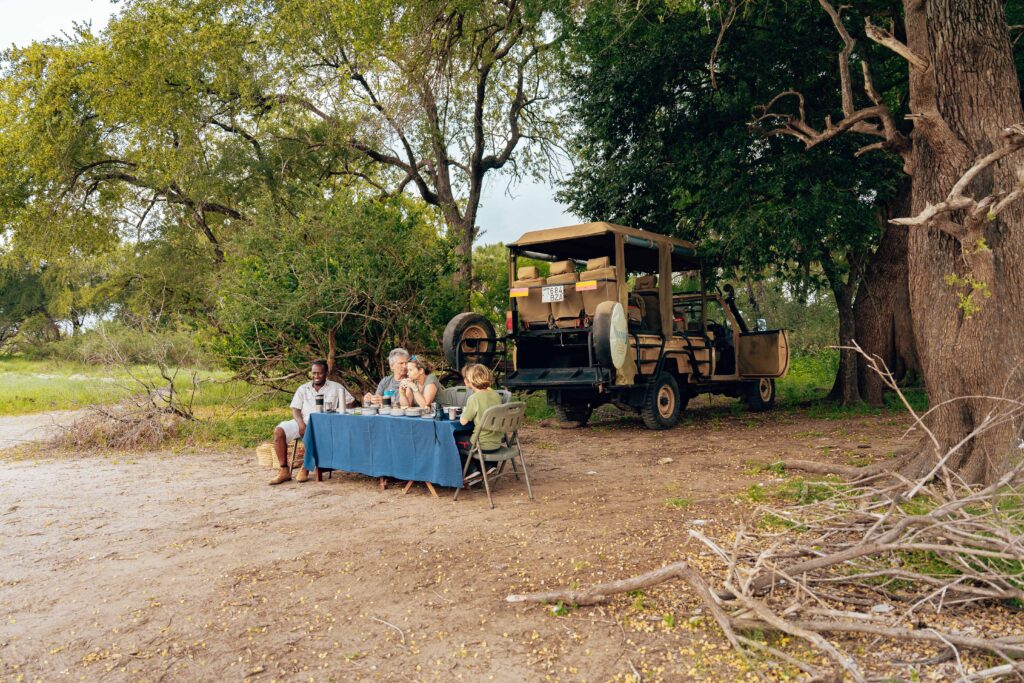
Use Case 2: The Wildlife Photographer (Safari, Birdwatching)
The recommendation: Sony A7 IV with the 100-400mm f/4.5-5.6 G Master lens.
Wildlife photography requires optical reach. The lion at 50 metres, the bird in the tree, the gorilla in the Bwindi undergrowth — these subjects require 300-600mm of optical focal length to fill the frame. No phone, no compact, and no mirrorless camera with a short lens achieves this.
The safari camera kit:
| Item | Approximate Cost | Notes |
|---|---|---|
| Sony A7 IV body | £2,200-2,600 | The full-frame sensor, 33MP, the subject tracking autofocus that stays on the moving animal |
| Sony 100-400mm f/4.5-5.6 GM | £2,000-2,400 | The 400mm reach for the standard 20-50m game drive distance |
| Sony 70-200mm f/2.8 GM II (optional) | £2,200-2,600 | The faster aperture for the dawn and dusk game drive low-light conditions |
| Sony 600mm f/4 GM (aspirational) | £10,000+ | The reach required for the distant wildlife shot — the professional wildlife photographer’s primary lens |
The realistic safari kit for the serious enthusiast: The A7 IV with the 100-400mm. Total cost: £4,200-5,000. The weight: 2.1kg with the 100-400mm attached — manageable in the game drive vehicle, significant on the bushwalk.
The beanbag: The beanbag placed on the vehicle window sill is the correct camera support for wildlife photography from a game drive vehicle. A tripod cannot be deployed in a moving vehicle. The beanbag absorbs vibration and allows the camera to be positioned at the window height where the wildlife is visible. Cost: £10-20. Weight: 300g (filled with lentils or rice at the destination). Non-negotiable.
Use Case 3: The Architecture and Landscape Photographer
The recommendation: Sony A7R V or Fujifilm GFX 50S II.
The architecture and landscape photographer needs: high megapixel count (the ability to crop aggressively or print large), dynamic range (the ability to recover shadow detail in the dark interior and highlight detail in the bright window simultaneously), and the tilt-shift correction for vertical lines.
The honest megapixel assessment:
The Sony A7R V at 61MP gives the ability to print at 60cm × 90cm at 300 DPI without upscaling. For the photographer whose images will be displayed on a screen (Instagram, the travel blog, the photography exhibition up to A2 size), the 33MP of the Sony A7 IV is identical in output. The megapixel investment pays off only in the specific use cases of:
- Large print production
- Significant crop (photographing a building wide and cropping to one window)
- The tightest possible detail in architectural documentation
The Fujifilm alternative:
The Fujifilm X-T5 (40MP, APS-C sensor, the Fujifilm film simulations — the in-camera JPEG rendering that replicates the colour profiles of Fujifilm’s photographic films): the camera recommended for the traveller who wants excellent image quality in a significantly smaller package than the full-frame Sony system. The X-T5 with the Fujifilm 18-55mm f/2.8-4 kit lens: £1,500-1,800, weighing 557g without the lens.
Use Case 4: The Street Photographer
The recommendation: Fujifilm X100VI or Ricoh GR IIIx.
The street photographer needs: the small physical size that doesn’t signal “professional photographer” and deters natural subject behavior, the fast focusing that doesn’t require lens changes, and the image quality sufficient for the web and moderate print.
The Fujifilm X100VI:
The 40MP APS-C sensor in the fixed 35mm equivalent lens body — the camera that is genuinely pocketable (though large pockets required), the rangefinder-style shooting position that is less intrusive than a DSLR or mirrorless with a large lens, and the Fujifilm film simulations that give the in-camera JPEG the specific colour rendering that the travel photographer is seeking.
Cost: £1,399. Weight: 521g.
The Ricoh GR IIIx:
The 26.1MP APS-C sensor in the 40mm equivalent fixed lens body — the smallest APS-C camera available. The camera fits in a jeans pocket. The image quality is excellent. The autofocus is slower than the Fujifilm and the Sony. The ergonomics require adjustment.
Cost: £999. Weight: 262g.
For pure street photography at the minimum cost and weight: The Ricoh GR IIIx. For the street photographer who also wants the flexibility of portrait and landscape work: the Fujifilm X100VI.
Use Case 5: The First Camera Upgrade from Smartphone
The recommendation: Sony A6700 with the 18-135mm f/3.5-5.6 kit lens.
The first mirrorless camera should be: good enough to justify the cost, light enough to carry without regret, versatile enough not to require immediate additional lens purchases, and user-friendly enough to produce excellent results without a steep learning curve.
The Sony A6700 (the APS-C sensor, the AI-based subject recognition autofocus, the 26.1MP, the 4K 120fps video): the best-performing APS-C sensor available in 2026 at the price point. The 18-135mm kit lens covers the range from wide-angle landscape to portrait to moderate zoom without a lens change.
Cost (body + 18-135mm kit lens): £1,600-1,900. Weight: 492g body only, 1,050g with the 18-135mm.
What the A6700 gives over the phone:
- True optical zoom to 200mm equivalent (the wildlife at closer range, the architecture detail, the portrait with natural compression)
- The raw file: the 26.1MP raw file with 15 stops of dynamic range — recoverable from underexposure and overexposure in post-processing to a degree the phone cannot match
- Manual control: the aperture, shutter speed, and ISO accessible immediately from the physical dials
- The shallow depth of field: the background separation at f/1.8 or f/2.8 that gives the portrait its specific quality
The Camera Decision Framework
Ask these questions in sequence:
1. Do you already own a current-generation smartphone? Yes → the phone is the default answer unless question 2 applies.
2. Do you need optical reach beyond 10×? Yes → a mirrorless with a zoom lens (the Sony A6700 or A7 IV with the 100-400mm).
3. Do you primarily shoot wildlife on safari or in national parks? Yes → the Sony A7 IV with the 100-400mm. No other option provides the combination of autofocus speed and optical reach required.
4. Do you primarily shoot street, architecture, or documentary travel? Yes → the Fujifilm X100VI (the discrete, high-quality, film-simulation option) or the Ricoh GR IIIx (the smallest possible).
5. Are you upgrading for the first time from a smartphone? Yes → the Sony A6700 with the 18-135mm kit.
The Accessories That Actually Matter
| Accessory | Cost | Notes |
|---|---|---|
| Extra batteries × 2 | £25-60 | The Sony NP-FZ100 compatible third-party batteries (Neewer, RAVPOWER) are reliable at 40% of the Sony price. The cold morning on safari drains batteries faster than room temperature use. Always have two charged. |
| 64GB SD card × 2 | £15-30 | The Sony V60 or Lexar Gold series. Never shoot a significant trip with a single SD card. |
| The camera rain cover | £10-20 | The OpTech Rainsleeve. The monsoon in Hội An, the mist in Bwindi, the afternoon squall in the Masai Mara — all predictable weather events requiring waterproofing that most mirrorless cameras don’t provide by default. |
| The peak design clip | £50-70 | The camera attached to the bag strap, accessible in 2 seconds. The alternative to the neck strap that causes neck strain over a full day of walking. |
| The Lenspen + sensor blower | £20-30 | The desert dust (Morocco, Wadi Rum, Wahiba Sands), the salt spray (any coast), and the general atmospheric grit of travel accumulate on the sensor when lenses are changed outdoors. Clean weekly. |
What Not to Buy
The mirrorless kit with the kit lens that caps at 55mm: The kit lens (the 16-50mm or 18-55mm) is the correct starting lens — but if wildlife photography is the specific goal, the kit lens covers nothing beyond the landscape and the portrait. Buy the 100-400mm from the start if the safari is the purpose.
The GoPro or action camera as the primary travel camera: The GoPro is the correct camera for the underwater shot, the bike helmet mount, and the white water kayak recording. It is not a replacement for a mirrorless camera — the image quality is significantly below any of the options above in anything other than action contexts.
The used DSLR to save money: The DSLR is heavy, the mirror mechanism adds weight and mechanical complexity, and the mirrorless autofocus system is significantly better in every parameter. The used mirrorless (a Sony A6400, a Fujifilm X-T30 II) is the correct budget option — not the used DSLR.