
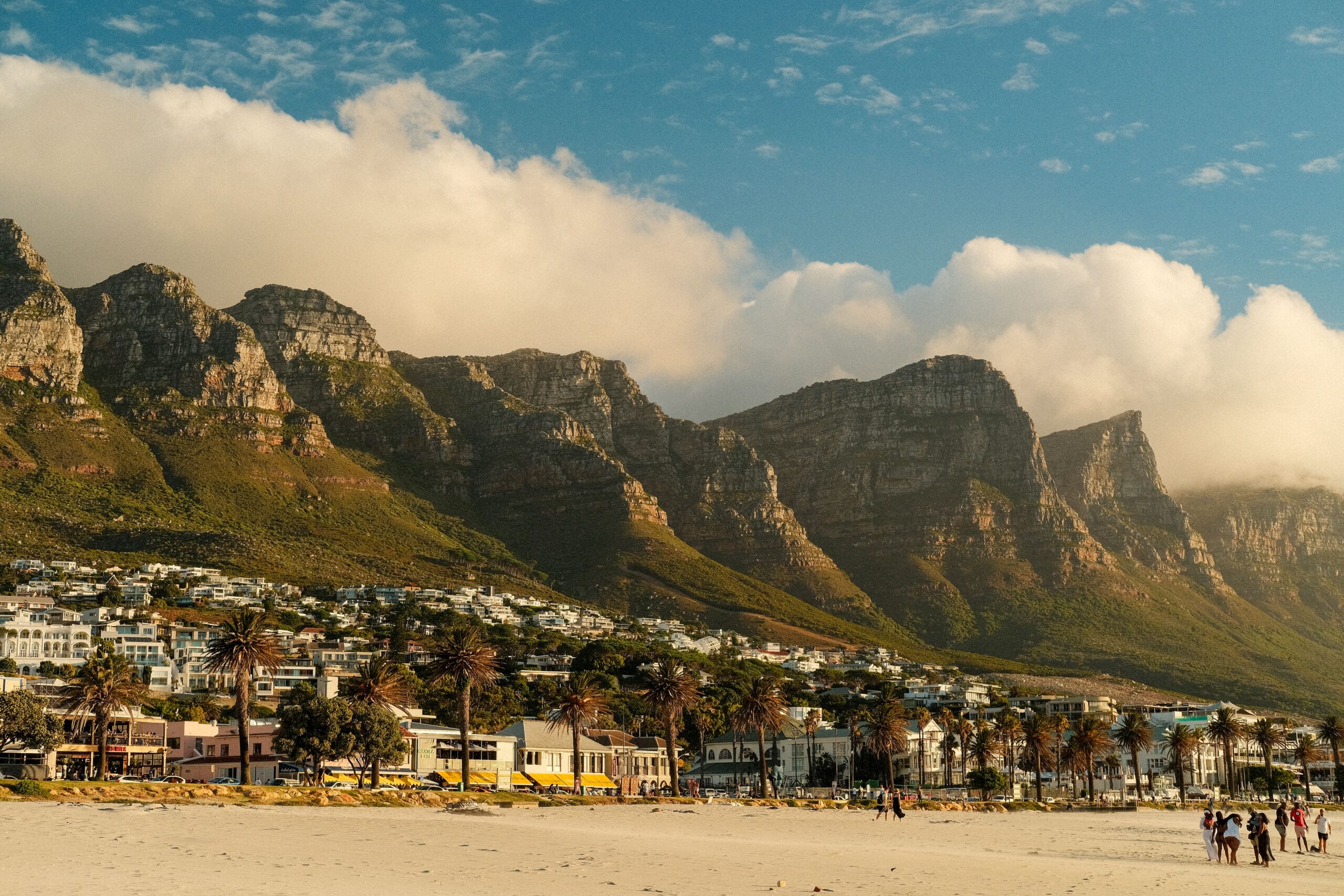
The route that gives South Africa in its most accessible and most varied form: two days in Cape Town for Table Mountain and the Bo-Kaap and the V&A Waterfront, one day in the Winelands for the Stellenbosch estates and the specific Cape Dutch farmhouse wine country that most visitors bypass in favour of a third Cape Town afternoon, and four days driving the Garden Route to Port Elizabeth — the Tsitsikamma forest, the Knysna Heads, the ostrich farms of Oudtshoorn, and the specific South African road trip that the N2 coastal highway enables when you’re going one direction rather than back.
Reading time: 11 minutes | Last updated: 2026
South Africa is the most geographically and culturally diverse country accessible from the UK within a direct flight — the Cape Floristic Region (the most biodiverse temperate region on Earth), the Winelands (Stellenbosch, Franschhoek, and Paarl producing some of the finest wine in the southern hemisphere), and the Garden Route (the 300km stretch of the N2 coastal highway between Cape Town and Port Elizabeth that passes through fynbos, old-growth forest, mountain passes, and the Indian Ocean coastline).
Seven days covers the Cape and the Garden Route in enough depth to give the country its full coastal range. It does not give you the Kruger Safari (add 5 days) or the Drakensberg Mountains (add 3 days) or the KwaZulu-Natal coast. It gives you the south, which is where most first-time South Africa visitors should start.
Before You Leave
The car hire: Essential. Pick up in Cape Town, return in Port Elizabeth (the one-way hire — check with Avis, Budget, or Europcar for the one-way fee, typically R1,500-3,000 / £63.83-127.66). Driving on the left, the roads are well-maintained, the N2 is a quality tarmac highway throughout.
The season: The Cape and the Garden Route are best November-April (the South African summer). The winter (June-August) brings cold fronts from the Atlantic — the rain, the wind, and the clouds that close the Table Mountain cable car. The Garden Route in winter is quieter and cheaper but the beaches are cold (14-17°C sea temperature).
The safety reality: Driving is safe on the major routes (the N1, N2 between Cape Town and Port Elizabeth). The specific driving safety instruction: do not stop on the roadside at night, the farm stops visible from the road are the correct fuel and food options, and lock the car when parked in cities. The Cape Town city centre and the tourist areas (the V&A Waterfront, the Bo-Kaap, Stellenbosch town) are safe with standard urban awareness.
The Route
Cape Town (2 nights) → Stellenbosch/Franschhoek (1 night) → Knysna (2 nights) → Tsitsikamma (1 night) → Port Elizabeth for the flight home (fly PE-Cape Town or PE-Johannesburg, then home)
The 7 Days
DAYS 1-2 — Cape Town
The full Cape Town circuit — Table Mountain, the Bo-Kaap, Boulders Beach penguins, the V&A Waterfront, the Robben Island ferry, the Cape of Good Hope day trip. Full detail in Cape Town in 48 Hours.
The specific Days 1-2 instruction: the Table Mountain cable car at 8:30am on Day 1 (the first run, the plateau before the crowd), the Bo-Kaap at 7am on Day 2 (the painted houses in the morning light, the residents walking to the mosque). Do not attempt both in the same morning — the two experiences require different starting times and different directions from any central Cape Town accommodation.
Where to stay: The Cape Grace Hotel (the V&A Waterfront location, the harbour view: R3,500-6,000 / £149.06-255.53/night), the Ellerman House (Bantry Bay, the clifftop: R4,000-8,000 / £170.36-340.71/night), the Ashanti Lodge (the Green Point hostel, the reliable budget choice: R800-1,400 / £34.07-59.63/night).
DAY 3 — The Winelands
Morning: Stellenbosch
The drive from Cape Town to Stellenbosch (50km, 45 minutes on the N2 then the R310): the Winelands begin as the road crosses the Hottentots Holland Mountains into the Eerste River valley.
Stellenbosch at 9am: the oak-lined streets (the oaks planted by the Dutch settlers in the late 17th century, giving Stellenbosch its Afrikaans nickname “Eikestad” — the town of oaks), the Cape Dutch architecture (the whitewashed gable facades that are the most distinctive domestic architecture in the Cape), and the Rupert Museum (the collection of South African art in the Rupert family foundation building — the most significant private art museum in the Cape Winelands: entry R50 / £2.13).
Wine tasting: Rust en Vrede
Rust en Vrede (the Stellenbosch Helderberg ward — the estate that produces consistently the most celebrated Cabernet-based wines in the Winelands, the single-variety Cabernet and the Estate blend that are the reference standards for Cape red wine): the tasting room on the 1780s estate, the mountain backdrop, the tasting of the Estate, the Rust en Vrede 1694, and the Syrah. R200-350 / £8.52-14.90 for the flight.
Afternoon: Franschhoek
The Franschhoek Valley (the 30km drive from Stellenbosch via the Helshoogte Pass — the mountain pass above the valley, the descent into the French Huguenot settlement of 1688): the wine and food village, the most restaurant-dense small town in South Africa.
The Franschhoek Motor Museum (the classic car collection in the barn buildings of the L’Ormarins estate — the most unexpected single museum experience in the Winelands, the cars from the 1898 Benz to the 1980s racing cars in the restored estate barns): R200 / £8.52 entry.
Dinner: Franschhoek
The La Petite Colombe (the Franschhoek restaurant — the most celebrated fine dining in the Winelands, the tasting menu using the Cape produce at its seasonal best): book at lapetitecolombe.com. From R2,200 / £93.70 per person.
The accessible alternative: the Bread & Wine (the Môreson estate restaurant, the shared plates, the estate wine): R350-600 / £14.90-25.56 per person.
Where to stay: The Grande Provence (Franschhoek — the estate guesthouse: R3,000-5,500 / £127.77-234.22/night), the Le Quartier Français (Franschhoek village: R2,500-4,500 / £106.47-191.64/night), the Akademie Street Guesthouses (Franschhoek, the most affordable quality option: R1,200-2,000 / £51.11-85.18/night).
DAY 4 — Drive to Knysna via the Overberg
Morning: Drive the N2 East
The drive from Franschhoek to Knysna (450km, 5-6 hours direct — the correct Garden Route approach is to leave early and stop twice rather than drive direct):
The Hermanus detour (80km south on the R43 from the N2 at Bot River): The southern right whale nursery — the Walker Bay (the whales visible from the clifftop path from June to December, the calves born in this sheltered bay each year): the most accessible whale-watching point in the world (the whales visible without a boat, from the cliff path, from June to December, the Hermanus whale crier — the town’s official whale spotter who sounds a kelp horn when whales are visible from specific points). If travelling in the whale season: a 2-hour Hermanus detour is correct.
The Wilderness stretch: The Outeniqua Pass (the mountain pass above George, the descent from the Outeniqua Mountains into the coastal strip — the views over the Garden Route before the road drops to sea level).
Afternoon: Arrive Knysna
Knysna (the lagoon town — the estuary between the Indian Ocean and the forested mountain interior, the Knysna Heads, the oyster beds): the Knysna Heads (the sandstone cliffs at the lagoon entrance, the viewpoint accessible by car — the Indian Ocean visible through the gap, the swell breaking on the rocks below, the boats navigating the narrow channel): free access.
The Knysna Quays (the waterfront market): the Knysna oysters (the most celebrated shellfish in South Africa, the lagoon oysters from the farms visible in the estuary — the platter of 12 oysters with the mignonette: R180-250 / £7.66-10.65 at the quayside restaurants).
Where to stay: The Turbine Hotel (the converted power station on the Knysna Quays: R2,000-3,500 / £85.18-149.06/night), the Rex Hotel (the long-standing Knysna institution: R1,200-2,000 / £51.11-85.18/night), the Woodbourne Resort (the self-catering chalets in the forest above Knysna: R800-1,400 / £34.07-59.63/night).
DAY 5 — Knysna: The Forest and the Heads
Morning: The Knysna Elephants and the Forest
The Garden Route National Park — Knysna section (the Diepwalle Forest, 40km east of Knysna): the indigenous forest that gives the Garden Route its character — the yellowwood trees (Podocarpus latifolius, the national tree of South Africa, the trees reaching 30+ metres in the old-growth section), the Outeniqua elephants (the remnant population of the Cape Elephant that once ranged the entire southern coast, now reduced to approximately 7 individuals living wild in the Knysna forest — the rarest and most isolated elephant population on Earth, rarely seen but traceable by the path damage and the dung).
The Diepwalle Forest walk (the circular path through the old-growth section, 7km, 2.5 hours): the specific Garden Route forest experience — the silence, the cathedral height of the canopy, the fern understorey, the possibility (not the certainty) of elephant sign.
Afternoon: The Featherbed Nature Reserve
The Featherbed Nature Reserve (the western Knysna Head, accessible only by the Featherbed Company ferry and guided tour — the most ecologically significant section of the Knysna Heads, the Cape clawless otter visible on the rocks): R850-1,100 / £36.20-46.84 per person for the full tour. Book at knysnafeatherbed.com.
Evening: The Knysna Lagoon
The sunset cruise on the Knysna Lagoon (the flat-bottomed boat, the lagoon at golden hour, the Heads visible at the entrance): R350-500 / £14.90-21.30 per person.
DAY 6 — Tsitsikamma
Drive from Knysna to Tsitsikamma (80km, 1 hour):
The Tsitsikamma National Park (the coastal park east of Knysna — the ancient forest meeting the Indian Ocean, the Otter Hiking Trail, the suspension bridge over the Storms River mouth):
The Storms River Mouth (the point where the Tsitsikamma National Park meets the Indian Ocean — the steep gorge, the Indian Ocean swell entering the river mouth, the suspension bridge 5 metres above the water, the specific Tsitsikamma landscape at its most dramatic): entry R248 / £10.56 per person, included in the national park fee.
The Boomslang Canopy Tour (the zipline through the Tsitsikamma forest canopy — 10 slides, the 30+ metre height, the forest visible at canopy level from a perspective available by no other means): R895-1,200 / £38.12-51.11 per person. Book at canopytour.co.za.
Where to stay: The Tsitsikamma Storms River Village (the SANParks rest camp at the park entrance — the chalets and the camping, the most atmospheric location at R800-1,500 / £34.07-63.90/night for a chalet), the Storms River Guest House (in the Storms River village: R700-1,200 / £29.82-51.11/night).
DAY 7 — Tsitsikamma to Port Elizabeth, Fly Home
Morning: The Otter Trail (Section)
The Otter Hiking Trail (the 5-day trail from Storms River Mouth to Nature’s Valley — the most celebrated hiking trail in South Africa): the Day 7 morning gives 2-3 hours for the first section of the trail before the Port Elizabeth departure.
The first 5km from Storms River Mouth (the section that gives the coastal forest, the cliff-top path above the Indian Ocean, the rock pool sections): the specific Tsitsikamma coast quality available without the full 5-day commitment.
The Port Elizabeth flight:
The drive from Tsitsikamma to Port Elizabeth (230km, 2.5 hours). The Nelson Mandela Bay Airport (PLZ) — fly to Cape Town for the UK connection (South African Airways or FlySafair, 1.5 hours) or directly to Johannesburg (1.5 hours) for the British Airways or Virgin Atlantic direct to London.
What It Costs
| Category | Budget | Mid-Range |
|---|---|---|
| Return flights (UK-Cape Town, PE-UK via Johannesburg) | £550-850 | £700-1,100 |
| Car hire (7 days, one-way PE drop) | £150-280 | £200-380 |
| 7 nights accommodation | £240-490 | £595-1,190 |
| Food + wine tastings (7 days) | £150-280 | £280-560 |
| Activities (cable car, penguin, canopy tour, whale) | £80-150 | £100-200 |
| Total | £1,170-2,050 | £1,875-3,430 |