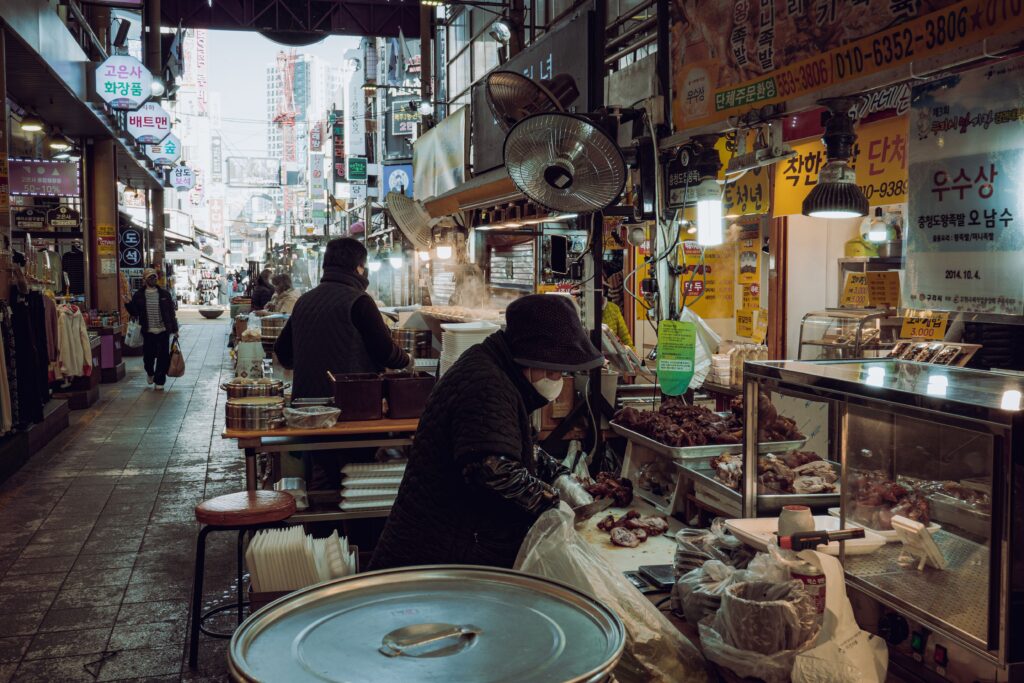

The Moore Street Market at 8am when the Dub-lining traders are selling the vegetables and the fruit and the fish in the same accents that have been selling from these stalls since 1908, the National Museum of Ireland at opening when the Ardagh Chalice and the Tara Brooch and the bog bodies are in the morning quiet, the Kehoe’s pub on South Anne Street at 11am when the snug is empty and the Guinness is the one you compare everything else to, and why Dublin — the city most UK travellers write off as a weekend stag destination — rewards the visitor who goes before noon and stays until after midnight more than almost any city this close to home.
Reading time: 9 minutes | Last updated: 2026
Dublin is a small capital — 1.2 million people in the greater city, 544 square kilometres, the Georgian terraces and the Viking foundations and the literary tradition all compressed into a city you can walk across in 45 minutes. The city that produced Swift, Wilde, Shaw, Beckett, Yeats, Joyce, and Heaney in successive generations has a specific relationship with language that is visible in how the Dubliners talk — the wit, the indirection, the specific Irish talent for the sentence that says two things simultaneously.
The city is also 90 minutes from London by Ryanair and has been the UK stag weekend destination of choice for 25 years, a fact that is simultaneously the most accurate thing you can say about Temple Bar and the least accurate thing you can say about the actual Dublin.
The 48 Hours
DAY ONE
7:30am — The Moore Street Market
The Moore Street Market (the covered market street running north from Henry Street — the market that has been operating on this site since 1908, the street traders with the fixed metal display tables, the fruit and vegetable vendors in the specific Dublin street trader tradition): at 7:30am, the market in its working state.
The Dublin street trader accent (the flat vowels, the specific pronunciation of “strawberries” and “flowers” that has been the Moore Street sound for four generations): the most specifically Dublin sound available and the one that disappears when the tourist infrastructure replaces it.
The Moore Street breakfast: the Dublin coddle ingredients visible at the butcher stalls (the pork sausage, the rashers, the back bacon — the Dublin breakfast specification that differs from the Full English in its specific Irish pork), and the fresh bread from the Bretzel Bakery counter (the Jewish-origin bakery established 1870 in the Portobello neighbourhood, the kosher sourdough now distributed to the Moore Street stalls).
9:00am — The National Museum of Ireland — Archaeology
The National Museum of Ireland at Kildare Street (the Archaeology branch — the former Royal College of Science building, the most significant collection of prehistoric and medieval Irish artefacts in the world):
The Treasury: The Ardagh Chalice (the 8th-century silver chalice found in a Limerick field in 1868 — the most technically accomplished piece of medieval metalwork in Europe, the repousée silver panels, the gold filigree, the amber and enamel applied with a precision that requires a magnifying glass to appreciate in full at the standard viewing distance): the finest single object in any Irish museum.
The Tara Brooch (the 8th-century penannular brooch — the silver and gold and enamel and amber construction of a clasp that was never practical, that was made entirely as an expression of craft at its peak, the specific Celtic ornament that defines the international image of Irish metalwork):
The Bog Bodies: Clonycavan Man (the Iron Age man whose body was preserved for 2,300 years in a Meath bog — the hair still visible, the hair gel (the pine resin pomade) still in the hair, the specific cause of death visible in the preserved remains): the oldest cosmetics visible in any museum in the world, in the hair of a man who died around 392-201 BCE.
Entry: free.
11:00am — The Trinity College Library and the Book of Kells
The Book of Kells Exhibition (Trinity College Dublin — the illuminated manuscript Gospel book created by Celtic monks around 800 CE, the most celebrated medieval manuscript in the world): the exhibition gives the context before the manuscript; the manuscript itself is displayed open to a specific page (the page changes daily). The Long Room (the 65-metre library above the exhibition, the barrel-vaulted ceiling, the 200,000 oldest books in the Trinity collection, the busts of scholars along the shelves): the most frequently photographed library interior in Europe.
Book at bookofkells.ie — the advance booking essential in peak season (the queues without booking reach 90 minutes in July-August). Entry: €18 / £15.52 including both the exhibition and the Long Room.
1:00pm — Lunch: Kehoe’s and the Grafton Street Area
The Kehoe’s pub (9 South Anne Street — the Victorian pub interior unchanged since the 1900s, the mahogany bar, the snug at the right of the entrance — the small enclosed rooms originally used for private conversations and specifically for women to drink without public exposure in the Victorian period): the lunchtime Guinness and the pub sandwich.
The Guinness in Dublin: the specific argument about whether the Guinness tastes better in Ireland than in the UK. The answer is yes, for a specific reason — the kegs travel from the St. James’s Gate Brewery 10 minutes by lorry to the city-centre pubs rather than the UK transit time, and the quality of the serving (the two-part pour, the 119.5-second rest, the dome finish) at the correctly run Dublin pub gives the Guinness at its best.
Pint: €6.50-8 / £5.60-6.90. The South Anne Street area (the specific Dublin lunchtime geography — the restaurants and pubs in the streets south of Grafton Street, the Kehoe’s, the Neary’s on Chatham Street, the Mulligan’s in Poolbeg Street): the pub lunch at the pub that the Dubliners use rather than the tourist geography.
2:30pm — The National Gallery of Ireland
The National Gallery of Ireland (Merrion Square West — the collection of Irish and European art, the Jack B. Yeats rooms the specific reason to visit): the Caravaggio (the Taking of Christ — the 1602 painting discovered in a Dublin Jesuit dining room in 1990, confirmed as the original by the National Gallery of Ireland’s restorer, the painting that was missing for 300 years and that is now one of the finest accessible Caravaggio outside Italy): entry free.
The Jack B. Yeats rooms (the work of W.B. Yeats’s brother, the painter of the late 19th and early 20th century Irish life — the Sligo landscapes, the horse race paintings, the specific vivid colour of the late period): the most important Irish artist in any collection.
5:00pm — The Georgian Dublin Walk
Merrion Square (the Georgian square — the well-preserved Georgian terraces, the Oscar Wilde statue in the southwest corner of the park, the statue’s specific pose and expression a specific Dublin joke about the Wildean pose, the house at 1 Merrion Square where Wilde was born across the square from the statue): the Georgian Dublin visible at the quality of its best.
Fitzwilliam Street (the longest uninterrupted Georgian streetscape in Europe — the terrace of Georgian houses running from Merrion Square south to the Grand Canal): the specific Dublin architectural achievement, the proportions of the 18th-century streetscape visible at the full street level.
7:00pm — Dinner: the Liberties or Ranelagh
The Liberties (the old weavers’ quarter southwest of the city centre): The Bull & Castle (Lord Edward Street — the gastropub, the Irish beef burger from the Glenmar Farm beef, the Guinness from the tap above the cellar): €25-40 / £21.55-34.48 per person.
Ranelagh (the inner suburb, the most restaurant-dense neighbourhood in Dublin): The Brother Hubbard South (the all-day restaurant, the Middle Eastern-Irish food, the shakshuka with the Wicklow eggs): €20-35 / £17.24-30.17 per person.
9:30pm — The Trad Session
The traditional Irish music session (the trad session — the musicians gathering at a specific pub at a specific time, the music not performed but played, the distinction meaningful: the trad session is the musicians playing for themselves and the audience listening in): the correct pubs and times:
The Cobblestone (North King Street, Smithfield — the most cited trad session pub in Dublin by the Dublin musicians): Tuesday, Wednesday, Thursday from 9:30pm. The pub interior (the unmodernised Victorian interior, the small stage, the posters) unchanged. The session quality: the highest consistency in Dublin.
O’Donoghue’s (Merrion Row — the pub where the Dubliners formed in the 1960s, the connection to the folk revival that gave Dublin its international music reputation): The session nightly from 9pm.
DAY TWO
8:00am — The Howth Head Cliff Walk (Day Trip)
The DART (the Dublin Area Rapid Transit, the coastal rail line) from Connolly Station to Howth: 30 minutes, €4.20 / £3.62. The Howth Head cliff walk (the 8km circular walk around the headland, the cliff path above the Irish Sea, the Lambay Island visible to the north, the Dublin Bay visible to the south, the specific Dublin morning on the sea):
At 8am: the walk before the midday walkers arrive. The cliff section (the path above the 100-metre drop to the sea, the nesting seabirds — the guillemots and the razorbills and the kittiwakes on the cliff ledges visible from the path above) and the Howth harbour (the fishing boats visible from the pier, the lobster pots on the quayside, the freshest seafood in Dublin visible in the morning catch).
The Howth Market (the Harbour Market, weekends — the artisan food stalls, the fresh fish from the morning boats, the sourdough, the Irish cheese): the correct alternative morning if the Moore Street is done on the first day.
Lunch: the Beshoff Fish and Chips (Howth)
The Beshoff Fish and Chips (The Harbour, Howth — the fish and chip shop at the harbourside, the fresh haddock battered and fried, the chips from the Wicklow potatoes): €12-18 / £10.34-15.52 per portion, eaten on the harbour wall. The most specifically Irish fish and chips accessible from Dublin.
2:30pm — The IMMA and Kilmainham Gaol
The Kilmainham Gaol (Inchicore Road — the prison where the leaders of the 1916 Easter Rising were executed, the most significant single building in Irish political history): the guided tour (mandatory — the prison is only accessible by tour, the guide giving the specific narrative of each execution and each cell): €12 / £10.34. Book at kilmainhamgaolmuseum.ie — the tours sell out weeks ahead in peak season.
The specific Kilmainham instruction: the stonebreakers’ yard (the yard where the 1916 leaders were shot by British Army firing squad over 10 days in May 1916, the executions that turned moderate Irish opinion toward independence): the most affecting single space in any Irish museum.
5:30pm — Final Evening: the Docklands and the Famine Memorial
The Custom House Quay (the north Liffey bank — the Famine Memorial sculptures: the bronze figures of the 1845-1852 Famine emigrants, the gaunt forms walking toward the ships, the specific weight of the 1.5 million deaths and 1 million emigrations that reduced the Irish population by 25% in 7 years): the most artistically significant public memorial in Ireland.
8:00pm — Final Dinner: Clanbrassil Street
The Clanbrassil Street (the emerging restaurant street south of the Liberties — the most discussed new food address in Dublin in 2024-2025, the small restaurants serving the contemporary Irish-international cuisine): the Uno Mas (31 Clanbrassil Street — the tapas and natural wine at the restaurant that opened in 2018 and that the Dublin food press has cited as the reference for the Irish natural wine movement): €30-50 / £25.87-43.10 per person.
The Essentials
Getting to Dublin from the UK: Ryanair, Aer Lingus, British Airways, easyJet from London (Stansted, Heathrow, Gatwick, Luton) and all major UK regional airports. 1.25-1.5 hours. Return: £20-120.
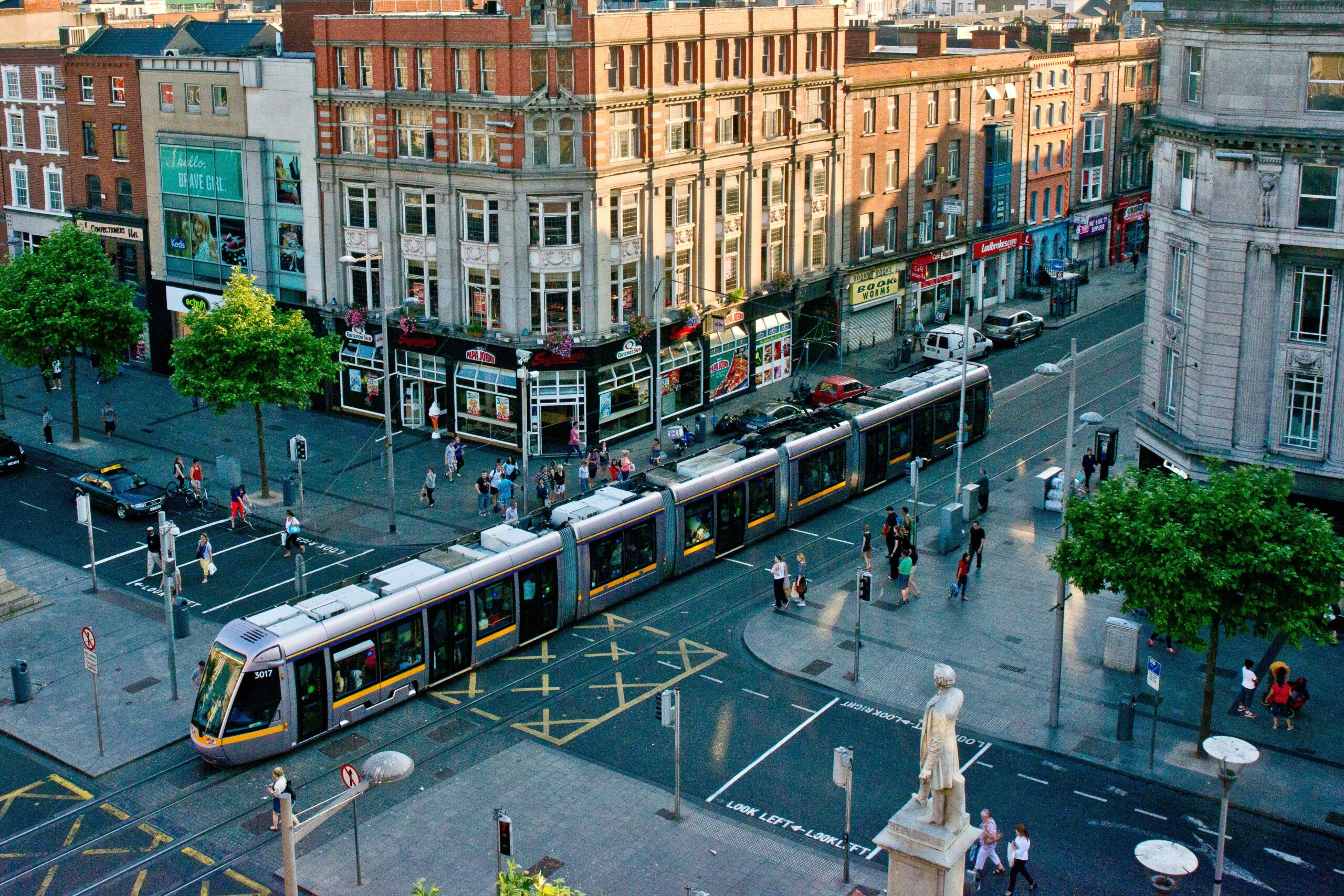
Getting around: The Leap Card (the Dublin transit card — the bus, the DART, the Luas tram network: €4.50 / £3.88 card, top up at any shop or station). Dublin is walkable between the Georgian core, the Liberties, and the Docklands — the 2km radius covers most Day 1 activity on foot.
The pub timing: The Dublin pub culture operates on the session schedule rather than the restaurant schedule. The trad session starts at 9:30pm and runs until midnight. The pub closes at 11:30pm Monday-Thursday, 12:30am Friday-Saturday. The pub that is empty at 6pm is correct; the pub that is at capacity at 10pm is also correct.
Where to stay: The Merrion Hotel (Merrion Street — the finest hotel in Dublin, the Georgian townhouses: £180-350/night), the Number 31 (Leeson Close — the boutique guesthouse in the Georgian townhouse: £110-180/night), the Abigail’s Hostel (Aston Quay — the design hostel on the Liffey: private rooms from £35-65/night).
The Closing Moment
I was in the National Museum at 9:22am. The Ardagh Chalice case. The room was quiet — four other visitors, two of them moving on to the Tara Brooch.
The chalice was made sometime in the 8th century by a craftsperson whose name is not recorded. The silver repousée panels, the gold filigree, the amber and enamel — the level of craft required for the construction of this object was not exceeded in Europe for 600 years.
It was found in a field in Limerick in 1868 by a boy digging potatoes.
The object was made 1,200 years before it was found. The craft was of the highest possible standard. The craftsperson’s name is lost. The chalice is in a case in Kildare Street and is free to look at.
Dublin is the city where the extraordinary is accessible and understated. The Book of Kells costs €18. The Ardagh Chalice costs nothing. The trad session at the Cobblestone costs the price of the Guinness.
That is the Dublin proposition. The cultural density is real. The scale of it is human.