
The route that gives the UAE more than the mall and the tower that the duty-free layover delivers: two days in Dubai for the Deira Gold Souk at 7am and the Al Fahidi Historical Neighbourhood (the only surviving traditional Arabian wind-tower district in Dubai, the specific pre-oil Dubai visible in the coral-and-gypsum courtyard houses) and the Burj Khalifa at dusk (the 828-metre tower, the observation deck at 452 metres, the Dubai grid visible from the height that makes the scale of the ambition comprehensible — 30 years of construction, 10 million people, the specific contemporary Arab urbanism that divides opinion and earns the visit regardless), and two days in Abu Dhabi for the Sheikh Zayed Grand Mosque (the largest mosque in the UAE, the 82 domes, the 1,000 columns, the marble and the gold leaf and the specific Islamic architecture at the modern scale that the Saudi and the Iranian mosque tradition gives differently) and the Louvre Abu Dhabi (the Jean Nouvel building on the Saadiyat Island — the perforated dome giving the specific pattern of light called the “rain of light” visible at noon when the sun passes through the 7,850 stars in the dome at the angles that produce the effect), and three days in the Liwa and the Rub’ al Khali (the Empty Quarter — the largest continuous sand desert on Earth, the dunes at 300 metres giving the specific scale of the Arabian Peninsula geology that the Dubai skyscraper does not suggest exists within 300 kilometres).
Reading time: 11 minutes | Last updated: 2026
The UAE is 83,600 square kilometres of the Arabian Peninsula — a country that existed in its current form since 1971 (the year the British protectorate ended and the 7 emirates united), that built the world’s tallest building in 22 years, and that maintains the world’s 7th largest oil reserve while simultaneously being the global aviation hub (the Dubai International Airport, the busiest international airport in the world by passenger count). The specific UAE proposition: the most ambitious contemporary urbanism available for the UK visitor at 6 hours and a direct flight.
Before You Leave
Getting there: Fly London-Dubai direct (Emirates, Etihad, British Airways, Virgin Atlantic — 7 hours). UK citizens visa-free 30 days (the UAE extended the visa-free period for UK passport holders in 2023).
The dress code: The shopping mall and the hotel pool permit Western swimwear; the mosque and the souk and the historical district require the covered shoulders and the covered knees for both men and women. The abaya is not required for non-Muslim women.
The alcohol: Legal in the UAE (the licensed hotel bar and restaurant, the liquor store (the MMI and the African + Eastern chains)). Not available at the mosque, the souk, or outside the licensed premises.
The Route
Dubai (2 nights) → Abu Dhabi (2 nights, 1.5 hours by road) → Liwa Oasis and the Empty Quarter (3 nights)
DAYS 1-2 — Dubai
Day 1: The Al Fahidi District and the Deira Souk
7am — The Deira Gold Souk:
The Deira Gold Souk (the 400+ jewellery shops in the Deira district — the 10-tonne display of gold visible in the souk windows (the specific Dubai gold display that the Guinness World Records has documented), the 22-karat and 24-karat gold at the Dubai spot price plus the workmanship markup):
At 7am: the souk before the tourist pressure begins (the shop opening hour is 9am for the majority; the few early-opening shops give the souk at its non-air-conditioned, non-crowded, specific Arabian market morning):
The abra (the traditional wooden water taxi — the crossing of the Dubai Creek from the Deira side to the Bur Dubai side, the abra giving the Dubai at the specific water level): AED 1 / £0.21 per crossing. The most cost-efficient Dubai transport and the most specifically Dubai urban experience.
The Al Fahidi Historical Neighbourhood:
The Al Fahidi Historical Neighbourhood (the Bastakiya district — the 50 wind-tower houses built by the Persian and Indian merchants in the early 20th century, the barajeel (the wind tower — the specific Emirati ventilation system, the four-sided tower channelling the wind into the courtyard house, the specific pre-electricity air-conditioning):
The Dubai Museum (the Al Fahidi Fort converted to the museum — the Dubai before the oil, the pearl diving economy, the specific Emirate at the historical moment before the discovery that changed everything): AED 3 / £0.63.
Day 2: The Burj Khalifa and the Desert
The Burj Khalifa:
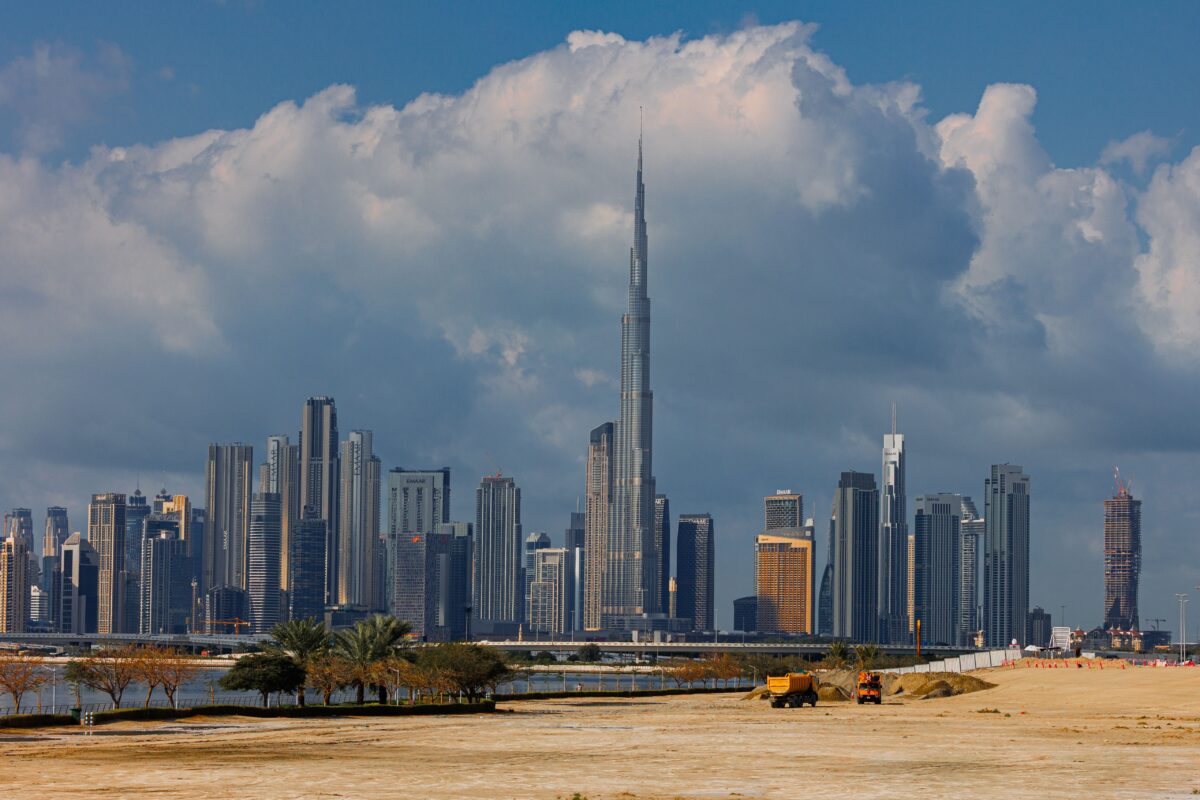
The Burj Khalifa (the 828-metre tower — the tallest building in the world, the observation deck at Level 124 (452 metres), the Level 148 (555 metres) for the premium ticket):
At dusk (the hour before sunset, the desert visible to the west, the Dubai grid visible to the north and south, the specific Dubai scale comprehensible from the height): AED 149-599 / £30.75-123.55 depending on the level and the timing.
The Al Qudra Desert:
The Al Qudra (the desert 40km south of Dubai — the conservation area, the love lake (the heart-shaped lakes visible from the road, the specific Dubai desert amenity), the flamingo (Phoenicopterus roseus) visible at the lake edge, the specific Dubai nature that the tower does not suggest is 40km away):
DAYS 3-4 — Abu Dhabi
The Sheikh Zayed Grand Mosque:
The Sheikh Zayed Grand Mosque (the mosque completed in 2007 for the Abu Dhabi founder — the largest mosque in the UAE, the 7,000-tonne Italian Carrara marble exterior, the 24-karat gold chandelier (the world’s largest mosque chandelier at 15 tonnes and 10 metres in diameter), and the world’s largest hand-knotted carpet (the 5,627 square metres, 2,268 weavers, 2 years in production)):
At 9am (the non-prayer visiting hours — 9am-10pm, closed Friday mornings): the marble in the morning light, the reflection pools surrounding the mosque giving the specific mirror image before the noon heat distorts the surface. Free entry; abaya loaners at the entrance.
The Louvre Abu Dhabi:
The Louvre Abu Dhabi (the Jean Nouvel building — the 180-metre perforated dome over the museum island, the rain of light effect (the 7,850 individual stars in the dome geometry producing the dappled light pattern on the water at noon), the permanent collection (the universal history of art from the paleolithic to the present — the intentionally cross-civilisational curation that places the 7th-century Quran alongside the medieval Bible alongside the pre-Columbian jade figure)):
AED 63 / £13.00 entry.
DAYS 5-7 — The Liwa Oasis and the Empty Quarter
The drive from Abu Dhabi:
The E11 highway south from Abu Dhabi (250km, 2.5 hours) to Liwa Oasis (the oasis at the northern edge of the Rub’ al Khali).
The Rub’ al Khali (Empty Quarter):
The Rub’ al Khali (the Quarter of Emptiness — the 650,000 square kilometre sand sea covering southern Saudi Arabia and extending into the UAE, Oman, and Yemen, the largest continuous sand desert on Earth):
The dunes at Moreeb (the 300-metre dune visible from the Liwa road — the specific scale of the Empty Quarter dunes, the sand-slope giving the specific descent view):
The 4WD safari (the dune bashing — the guided 4WD circuit through the mega-dunes in the Liwa area, the specific Arabian desert experience): AED 200-400 / £41.27-82.54 per person for the half-day guided circuit.
The Liwa Oasis:
The Liwa Oasis (the oasis where the Al Nahyan family — the Abu Dhabi ruling dynasty — originated, the date palm plantation giving the specific desert-edge agriculture visible from the road, the Mezairaa Fort visible at the oasis centre):
The Liwa Dates: the Liwa date (khlas variety — the specific UAE soft-sweet date, available fresh from the palm in September-October, dried year-round at the Liwa market at AED 20-50 / £4.13-10.32/kg for the premium grade).
What It Costs
| Category | Budget | Mid-Range |
|---|---|---|
| Return flights (UK-Dubai) | £100-300 | £200-500 |
| 7 nights accommodation | £105-350 | £350-1,050 |
| Burj Khalifa entry | £31 | £54 |
| Sheikh Zayed Mosque + Louvre | £13 | £13 |
| 4WD desert safari (2 days) | £82-165 | £165-330 |
| Abu Dhabi car hire (3 days) | £45-90 | £70-150 |
| Food (7 days) | £50-150 | £150-400 |
| Total | £426-1,068 | £1,188-2,497 |