
The route that gives Lebanon the honesty it deserves: three days in Beirut for the Hamra Street food circuit and the Sursock Museum and the specific Beirut that is simultaneously the most damaged capital city in the Middle East (the August 4, 2020 Beirut port explosion that destroyed 85% of the Gemmayze and the Mar Mikhael neighbourhoods) and the most resilient (the same streets rebuilt by the same community that was in them when they were destroyed) and that the visitor who arrives in 2025 finds in the specific state of the ongoing recovery that the 2018 visitor could not have predicted and that the 2023 visitor is still describing, two days in the Bekaa Valley for the Baalbek (the largest Roman temple complex ever built — the Temple of Jupiter, the 54 columns of the original 58 still standing, the specific Roman engineering in the megalith blocks, each weighing 800 tonnes, transported 900 metres from the quarry by the method that engineers still debate), and two days in the north for the Cedars of God (the UNESCO grove of the Cedrus libani — the cedar tree that the Phoenicians used for the shipbuilding and the palace construction that gave Solomon the timber for the First Temple, the grove of 375 trees remaining from the forest that covered the Lebanon Mountains).
Reading time: 10 minutes | Last updated: 2026
The current situation: Lebanon in 2025 is in the specific state of the country that has experienced the Beirut port explosion (August 2020), the concurrent economic collapse (the Lebanese pound at 90% depreciation from its 2019 value), and the 2024 Hezbollah-Israel conflict that significantly affected the south. Check the current FCDO advisory at gov.uk/foreign-travel-advice/lebanon before planning. The north (Baalbek, the Cedars) and the Beirut city centre have generally been accessible during non-conflict periods. The south (the Tyre, the Sidon coastal road below the Litani River) requires the current advisory verification.
This guide covers the circuit that has been accessible during the most recent stable periods. The specific Lebanon quality — the food, the Roman heritage, the hospitality — justifies the engagement with the advisory process rather than the avoidance of it.
Before You Leave
Visa: UK citizens require a Lebanese visa. Apply at the Lebanese Embassy in London or obtain on arrival at Beirut Rafic Hariri International Airport — USD 50 / £39.37 for the 1-month tourist visa.
Currency: The Lebanese situation requires the specific understanding: the official Lebanese pound rate and the market rate differ significantly. Transactions in USD are the norm; bring USD cash (not the Lebanese pound). ATMs dispense limited amounts.
The Route
Beirut (3 nights) → Bekaa Valley / Baalbek (2 nights) → The Cedars / Bcharre (2 nights)
DAYS 1-3 — Beirut
Day 1: The Gemmayze and the Sursock
The Gemmayze neighbourhood:
The Gemmayze (the neighbourhood east of the Beirut Central District — the traditional residential quarter, the 2020 port explosion damage visible in the specific buildings that the community fundraising has partially restored and that the UNHCR and the international NGO have assisted at the infrastructure level):
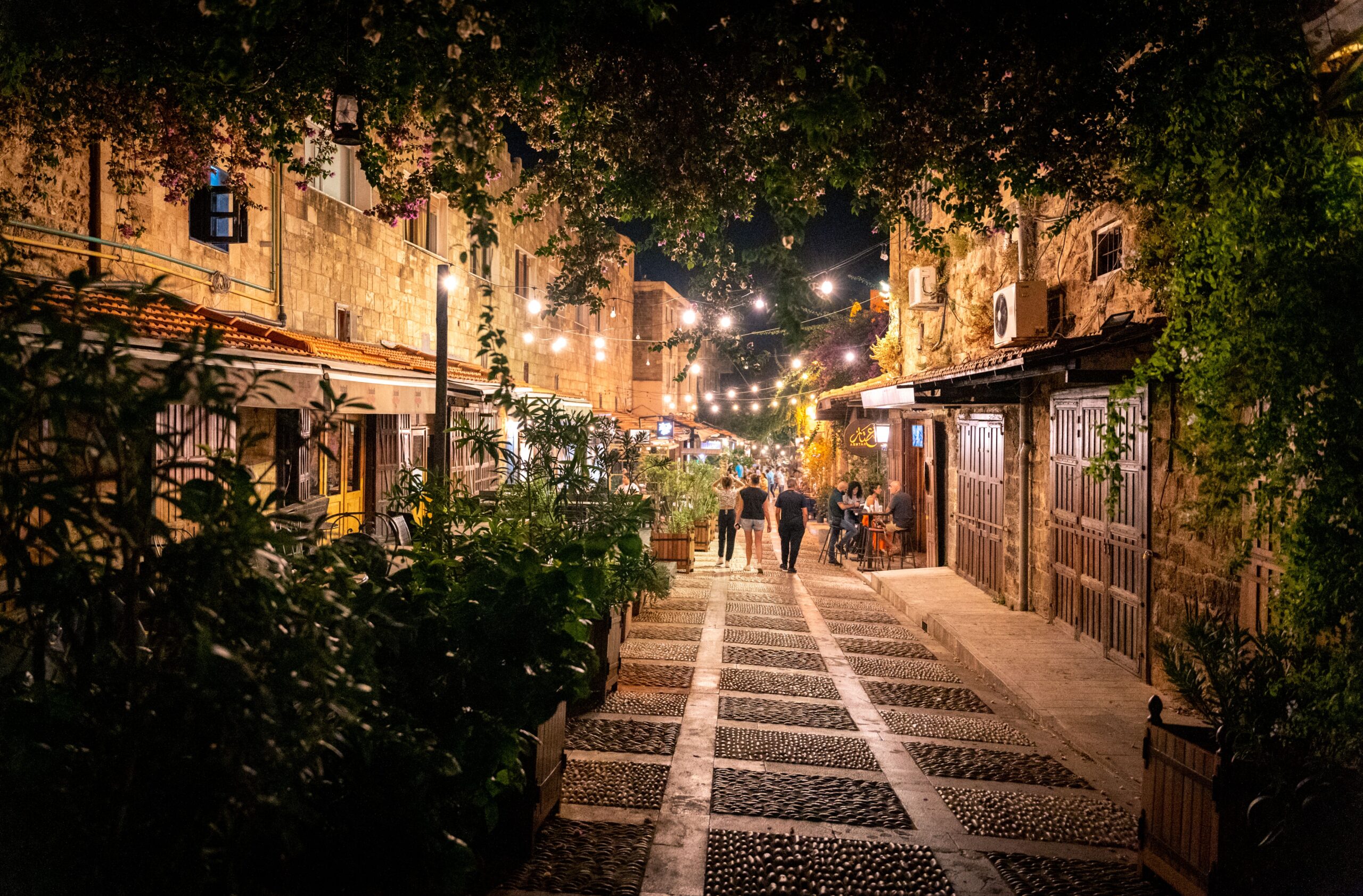
The Gemmayze afternoon (the specific Beirut moment — the café on the repaired street, the vine-covered building visible next to the still-collapsed facade, the specific Beirut coexistence of the restoration and the ruin that the visitor who understands the 2020 explosion receives as the ongoing process rather than the permanent state):
The kaak vendor (the Beirut street bread — the oval sesame-seed bread ring sold from the cart on the Gemmayze Street at LBP 50,000 / £0.83): the specific Beirut morning bread.
The Sursock Museum:
The Sursock Museum (the 1961 museum in the Sursock Palace — the contemporary Lebanese art, the permanent collection including works by Saliba Douaihy and Paul Guiragossian visible as the specific Lebanese modern art tradition):
The 2020 explosion damage to the Sursock was significant (the neoclassical palace suffered structural damage in the blast). Verify the current opening status before the visit.
Day 2: The Hummus Circuit
The Lebanon hummus argument:
Lebanon and Israel each claim the hummus origin — the argument is geopolitically complicated and gastronomically irrelevant to the quality of the specific Beirut hummus available at:
The Barbar (the 24-hour restaurant on the Hamra Street — the hummus bi tahini (the hummus with the raw tahini pool and the olive oil and the paprika), the ful medames (the spiced fava bean), and the manakish (the thyme and olive oil flatbread) available at 3am with the same efficiency as at 3pm): LBP 50,000-100,000 / £0.83-1.67 per plate.
The Falafel Sahyoun (the Burj Hammoud area — the falafel sandwich that the Beirut food community consistently cites as the reference, the chickpea and the fava bean falafel in the markouk (the thin Arabic bread) with the tahini and the tomato and the herb): LBP 40,000 / £0.67.
Day 3: The National Museum and the Corniche
The National Museum of Lebanon (the museum covering Lebanese archaeology — the Phoenician, the Roman, the Byzantine, the Crusader artefacts, the sarcophagi from the Tyre and Byblos excavations):
The Corniche (the Beirut seafront promenade — the 4km Corniche giving the Mediterranean from the Rawche (the Pigeon Rock, the natural rock arch visible from the Corniche café terrace) to the Saint George Bay):
DAYS 4-5 — Baalbek
The Baalbek Temple Complex:
The Baalbek (the UNESCO World Heritage Site — the Temple of Jupiter (the original 54 columns from the 58 erected in the 2nd century CE, the six remaining columns visible as the Baalbek skyline from the road approaching the town), the Temple of Bacchus (the best-preserved of the three temples, the carved interior visible in detail, the specific Roman decorative programme at the Baalbek scale)):
The trilithon (the three specific limestone blocks at the western retaining wall of the Jupiter temple — each weighing approximately 800 tonnes (the largest hewn stones in the ancient world), transported 900 metres from the Hajar al-Hibla quarry by the method that the engineering community disputes (the ramps? the sledges? the specific Ancient engineering that the blocks’ size makes implausible under any single theory)):
Entry: USD 8 / £6.30.
DAYS 6-7 — The Cedars
The Cedars of God:
The Arz el-Rab (the “Cedars of God” — the UNESCO ancient grove in the Bsharri district of North Lebanon at 2,000 metres altitude, the 375 trees remaining from the ancient forest that covered the Lebanon Mountains and that the Phoenician, Egyptian, Assyrian, and Roman civilisations logged to near-extinction):
The oldest trees (the Lamartine Tree, the tree that the French poet Alphonse de Lamartine visited in 1832 and that the dendrochronologists date to approximately 2,000-3,000 years old — the tree that was a sapling when Christ was born):
Entry: LBP 50,000 / £0.83.
The ski resort (the Mzaar ski resort adjacent to the Cedars area — the Lebanon skiing, the specific Middle East absurdity of the skiing with the Bekaa Valley visible and the Mediterranean visible from the ski lift on the same run): the Lebanon skiing season December-March.
What It Costs
| Category | Budget | Mid-Range |
|---|---|---|
| Return flights (UK-Beirut) | £150-350 | £250-550 |
| Visa on arrival | £39 | £39 |
| 7 nights accommodation | £70-175 | £175-525 |
| Food (7 days — Lebanon at market exchange rate is very affordable) | £20-60 | £60-160 |
| Baalbek entry and transport | £20-50 | £30-80 |
| Activities | £20-50 | £40-100 |
| Total | £319-724 | £594-1,454 |