
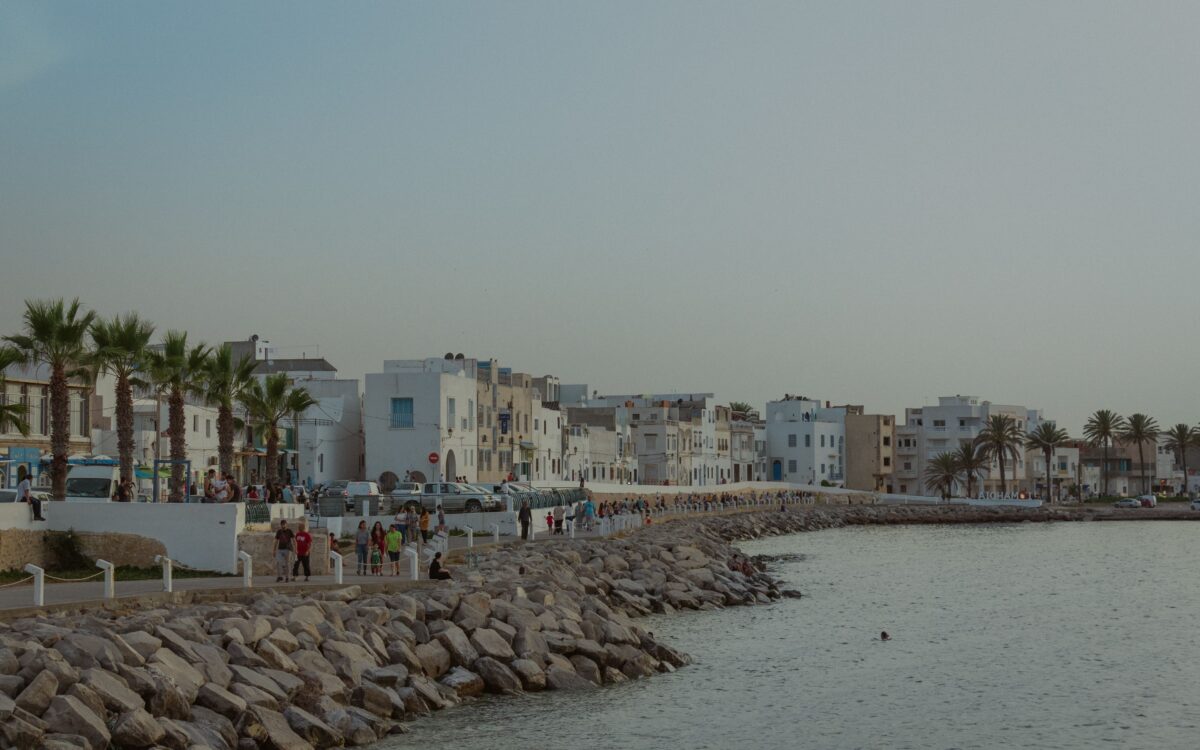
The route that gives Tunisia its complete argument at the moment before the travel market fully arrives: two days in Tunis for the Medina of Tunis (the UNESCO walled city, the specific Tunisian-Arab medina that differs from the Marrakech medina in the specific ways that the 1,300 years of distinct Tunisian history produce — less performative, less tourist-indexed, more genuinely inhabited) and the Bardo Museum (the finest collection of Roman mosaics in the world, the 3,000 square metres of ancient floor visible at eye level in the display cases, the specific Tunisian Roman heritage that the guidebooks underserve) and the Carthage ruins (the site of the city that Rome destroyed and salted in 146 BCE and that the subsequent 2,000 years have left as the suburban archaeological site visible between the modern villas), and five days in the south for the Dougga (the best-preserved Roman city in Africa, the 2nd-century theatre visible with the olive trees beyond, the city on the hill that the Romans built when North Africa was the grain basket of the empire) and the Matmata troglodyte villages and the edge of the Grand Erg Oriental (the Tunisian Sahara, the sand sea visible at Douz, the specific North Africa desert at the accessible price that the Moroccan Sahara charges more for).
Reading time: 10 minutes | Last updated: 2026
Tunisia is the most accessible North Africa destination from the UK — the 2.5-hour flight, the Euro-adjacent currency (the Tunisian Dinar, the UK purchasing power giving one of the best value ratios in the Mediterranean), and the specific Tunisian quality of the country that has the Roman ruins of Dougga and Sbeitla at levels of preservation that Italy’s tourist economy has not equalled because Tunisia’s tourist economy has not yet indexed them fully.
The FCDO advisory: Check the current status at gov.uk/foreign-travel-advice/tunisia before travel. The southern border regions require the current advisory verification — the Tunis-Sousse-Dougga-Matmata-Douz circuit has been accessible without restriction during most recent periods, but this changes.
Before You Leave
Getting there: Fly London-Tunis (TunisAir, Nouvelair, Transavia — 2.5 hours from various UK airports). UK citizens visa-free 3 months.
The currency: Tunisian Dinar (TND). 1 GBP ≈ 3.85 TND at 2025 rates — the UK visitor has approximately 40% more purchasing power than in the Euro zone. The Tunisian Dinar is not exportable — change TND back to GBP before departure; the exchange at the airport departure is required.
The Route
Tunis (2 nights) → Dougga and the north (1 night: El Kef or Testour) → Matmata (1 night) → Douz/Sahara edge (3 nights)
DAYS 1-2 — Tunis
Day 1: The Medina and the Bardo
7am — The Medina of Tunis:
The Medina of Tunis (the UNESCO walled city — the Great Mosque of the Uqba (the 7th-century mosque, the oldest in North Africa still in continuous use), the covered souk streets (souks by speciality: the Souk des Chéchias (the red Tunisian hat souk), the Souk el Attarine (the perfume souk), the Souk el Trouk (the tailors’ souk)):
At 7am: the medina at the working hour before the tourist presence dominates, the chéchia hat workshop (the felt hat specific to Tunisia, produced in the medina workshops since the 16th century, the specific Tunisian craft visible in production).
The lablabi (the Tunisian chickpea soup — the lablabi stall at the medina entrance serving the dawn breakfast of the medina workers: the chickpea broth with the broken bread, the harissa, the olive oil, the tuna (optional), the egg (optional), the cumin): TND 3-6 / £0.78-1.56.
The Bardo Museum:
The Musée National du Bardo (the Bardo Palace converted to the national museum — the world’s most significant collection of Roman mosaics: the 3,000 square metres of ancient floor visible in the museum rooms at close range):
The specific Bardo quality: the Virgil mosaic (the 3rd-century CE portrait of the poet Virgil between the muses — the most celebrated single mosaic in the Bardo), the Odyssey mosaics (the narrative panels from the Sousse villa, the specific Roman literary illustration in the polychrome marble tesserae): entry TND 11 / £2.86.
Day 2: Carthage and Sidi Bou Said
The Carthage ruins:
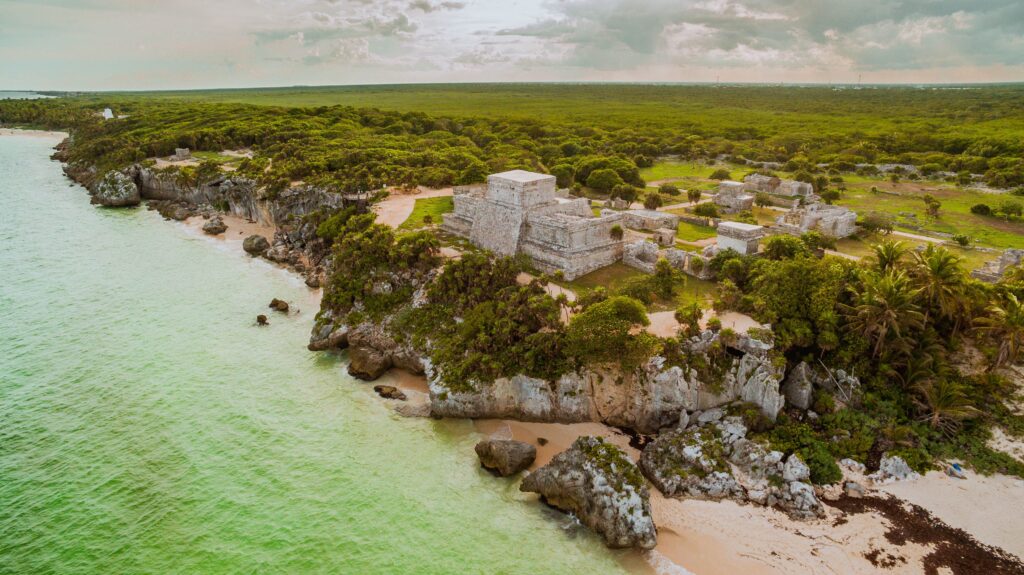
The Carthage (the archaeological site on the Tunis Bay coast — the Punic ruins (the circular harbour visible as the circular lagoon, the ancient Punic military harbour now a suburban lake), the Roman Antonine Baths (the 2nd-century thermal complex, the columns at the bath edge visible above the Mediterranean)):
Entry to the Carthage archaeological zone: TND 12 / £3.12.
The Sidi Bou Said:
The Sidi Bou Said (the cliff village above the Tunis Bay — the white-and-blue architecture (the whitewashed walls, the specific Tunisian blue of the doors and the windows, the colour regulation protecting the village’s architectural unity), the specific Tunisia postcard):
At 8am (before the tourist coaches from the Tunis hotels): the village lanes before the crowds, the café where the thé à la menthe (the mint tea) with the pine nuts (thé aux pignons) costs TND 4 / £1.04.
DAYS 3-7 — The South
Day 3: Dougga
The Dougga Roman City:
The Dougga (the UNESCO Roman city — the 2nd-century city at 580 metres above the Oued Khalled valley, the 25,000-seat theatre (the best-preserved Roman theatre in North Africa, the stage visible against the olive-covered hillside), the Capitol (the temple of Jupiter, Juno, and Minerva with the 35-metre Corinthian columns)):
At 9am (before the guided tours arrive at 10:30am): the theatre with the olive trees beyond the stage, the specific Dougga morning in the specific Tunisia light that the North Africa noon loses. Entry: TND 10 / £2.60.
Day 4: Matmata
The troglodyte houses:
The Matmata (the Berber village of underground houses — the ghorfas (the dwelling rooms) excavated downward into the soft rock, the central courtyard below the ground level giving the specific underground domestic architecture that the Star Wars location scout used for the Lars Homestead on Tatooine):
The Hotel Sidi Driss (the hotel in the original cave complex used in the Star Wars filming — the rooms still in the cave configuration, the courtyard where Luke Skywalker’s home scenes were filmed): TND 60-100 / £15.58-25.97/night.
Days 5-7: Douz and the Grand Erg Oriental
The Sahara sunset:
The Douz (the gateway to the Tunisian Sahara — the Grand Erg Oriental visible from the Douz road as the dune horizon):
The camel trek (the sunset camel from the Douz edge into the Grand Erg Oriental — the dune at 100-150 metres, the sunset visible from the dune crest, the specific North Africa desert experience at TND 30-60 / £7.79-15.58 per person for the 2-hour sunset trek).
The bivouac (the Sahara overnight camp in the Nefzaoua desert — the Berber tent, the dinner (couscous à l’agneau — the lamb couscous, the specific Tunisian desert dinner), the desert at midnight (the stars at 33° North latitude without light pollution — the Milky Way visible from the bivouac)):
TND 80-150 / £20.78-38.96 per person for the overnight with dinner and breakfast.
What It Costs
| Category | Budget | Mid-Range |
|---|---|---|
| Return flights (UK-Tunis) | £50-150 | £80-250 |
| 7 nights accommodation | £50-150 | £150-450 |
| Car hire (southern circuit, 4 days) | £40-80 | £60-120 |
| Food (7 days — Tunisia is very affordable) | £20-55 | £55-130 |
| Entries (Bardo, Carthage, Dougga) | £9 | £9 |
| Sahara tour (camel + bivouac, 2 nights) | £42-78 | £78-160 |
| Total | £211-522 | £432-1,119 |
Tunisia is the most affordable 7-day itinerary in this guide — the £50-150 flights, the £7/day accommodation at the budget end, and the food cost that is 60-70% below Morocco’s equivalent gives the North Africa cultural and Saharan experience at the price that no other guide entry matches.