



The Japanese breakfast guide for the visitor who has been told that the Japanese hotel breakfast is extraordinary and who arrives at the breakfast room at 9am to find the buffet half-cleared and the best components gone: the tamagoyaki (the layered sweet omelette, cooked in the rectangular pan in the single rolling motion, the specific Japanese egg technique that requires the 5-minute demonstration and the 3-week practice), the natto (the fermented soybeans — the smell and the texture that separates the Japan visitor into the two camps, the camp that tries and converts and the camp that tries and does not convert, both having tried the most specifically Japanese fermented protein available), the miso soup (the shiro miso (the white miso, the sweet), the aka miso (the red miso, the more intense) — the bowl that begins every Japanese meal including the breakfast), and the grilled salmon (yaki zakana) that the Japanese breakfast places alongside the rice and the pickles as the protein counterpart to the sweet elements. Why the Japanese breakfast is the correct reason to book the ryokan and why the breakfast-included hotel room is worth the additional cost in Japan specifically.
Reading time: 7 minutes | Last updated: 2026
The Japanese Breakfast Philosophy
The Japanese breakfast (朝食 / chōshoku) is not the simplified Western version of a meal. It is the full meal in the morning — the ichiju sansai (one soup, three sides: the miso soup as the soup, the grilled fish, the vegetable side, and the pickled vegetable as the three sides, alongside the white rice) that gives the day’s nutritional balance at the day’s beginning.
The specific Japanese morning logic: the heavy meal in the morning (the protein, the fermented vegetables, the carbohydrate) gives the sustained energy that the Japanese work schedule requires. The light ramen or the soba at noon supplements. The dinner is social and celebratory rather than caloric.
The Components
The rice (gohan):
The Japanese short-grain rice (Japonica — the Koshihikari variety, the specific grain that the premium ryokan and the Japanese supermarket treat as a distinct product category) at the correct temperature (hot, the specific steam visible from the bowl at service): the specific Japanese breakfast is about the quality of the rice as much as the components alongside it.
The miso soup (miso shiru):
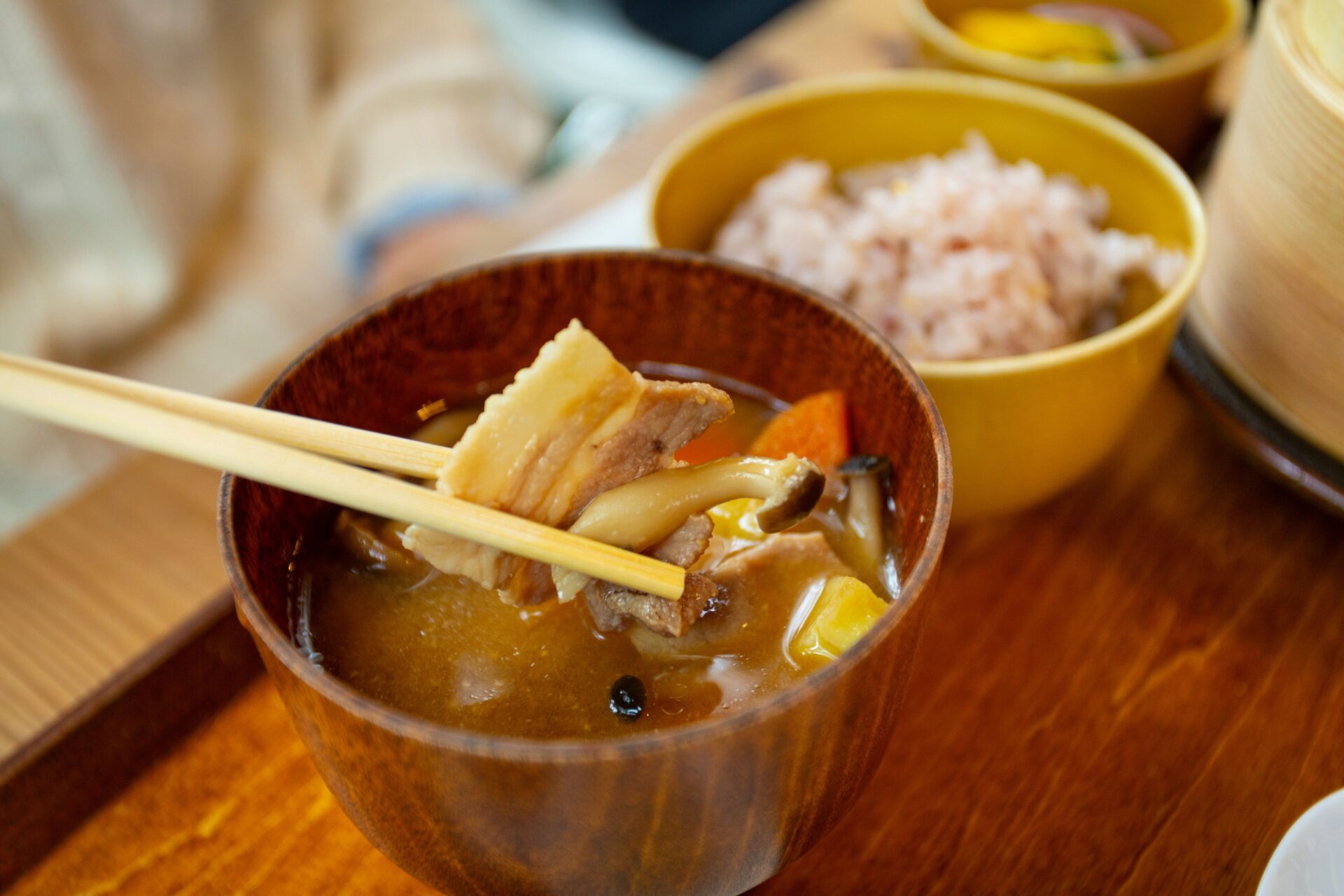
The soup made at the ryokan from the scratch dashi (the kombu and the katsuobushi (the bonito flake) stock) with the tofu, the wakame (the seaweed), and the fu (the wheat gluten cake) — versus the hotel restaurant instant miso sachet in the hot water. The two are the same dish in the way that the stock cube and the 4-hour bone broth are the same dish.
The tamagoyaki:
The tamagoyaki (the rolled Japanese omelette — the egg beaten with the dashi, the mirin, and the soy, poured in three to four layers into the makiyakinabe (the rectangular pan), each layer rolled over the previous before the next is added, the resulting cylinder pressed in the bamboo mat to the rectangular form, sliced at the table):
The making: the specific technique visible at the breakfast station of the better ryokan where the breakfast cook prepares the tamagoyaki to order — the rolling motion in the rectangular pan, the 3-minute preparation, the specific kitchen encounter.
The natto:
The natto (納豆 — the fermented soybeans: the soybeans fermented with the Bacillus subtilis var. natto, the specific fermentation giving the texture (sticky, stretchy — the strands visible at 10cm from the bean surface when the stirred bean is lifted with the chopstick), the smell (ammoniac, specific, the smell that warns before the taste delivers), and the flavour (the fermented protein, the specific umami, the specific acquired taste)):
The natto instruction: stir 50 times before eating (the specific Japanese natto preparation instruction — the stirring increases the ammonia release and the flavour development). Mix with the tare (the seasoning sachet) and the karashi (the Japanese mustard) before spooning onto the rice. The visitor who tries the natto without the preparation misses the specific natto.
The grilled fish (yaki zakana):
The salt-grilled salmon (shio yaki — the salmon fillet sprinkled with the coarse salt and grilled over the shichirin (the ceramic charcoal grill) or under the grill of the toaster oven in the simpler ryokan): the specific Japanese breakfast protein.
The pickles (tsukemono):
The Japanese pickle plate (the takuan (the yellow daikon radish pickle, the bran-fermented, the crunch), the umeboshi (the pickled plum — the sour, the intensely salty, the mouth-puckering, the specific Japanese palate-cleanser that the first-time visitor finds difficult and the regular visitor misses in every breakfast outside Japan), and the kyuri no shiomomi (the salted cucumber)):
Where to Experience the Correct Japanese Breakfast
The ryokan breakfast (the correct): The Nishimuraya Kinosaki, the Fuji Hakone Guest House (full detail in Budget Ryokans in Japan): the breakfast served in the tatami dining room, the tamagoyaki prepared fresh, the miso from the scratch dashi.
The kissaten (the coffee shop): The specific Tokyo kissaten (the old-style coffee shop — the Café Bach in Minami-Senju, the Coffee Mos in Shimokitazawa): the morning set (mōningu setto) of the toast, the boiled egg, and the salad for the price of the coffee. The Western breakfast at the Japanese coffee shop price (¥500-700 / £2.65-3.71).
The conbini breakfast (the democratic): The 7-Eleven or the FamilyMart onigiri (the rice ball, the dried seaweed wrapper, the filling visible through the clear plastic window — the salmon, the tuna mayo, the umeboshi) at ¥120-180 / £0.64-0.95 plus the hot canned ojiya (the rice porridge) from the hot drinks machine: the specific Tokyo working-morning breakfast at the lowest possible price.