
The National Museum of Ireland at 10am when the Bog Bodies room is yours and the Bronze Age gold collection is lit in the morning light, the Kehoe’s pub on South Anne Street that has been serving stout since 1803 and where the correct order is a pint and a seat and nothing else, the Howth Head coastal walk that gives the finest cliff scenery within 30 minutes of a European capital and receives almost none of the visitors it deserves, and why Dublin — the city most UK travellers treat as a stag weekend destination — is genuinely one of the finest 48-hour cities in Europe when approached correctly.
Reading time: 10 minutes | Last updated: 2026
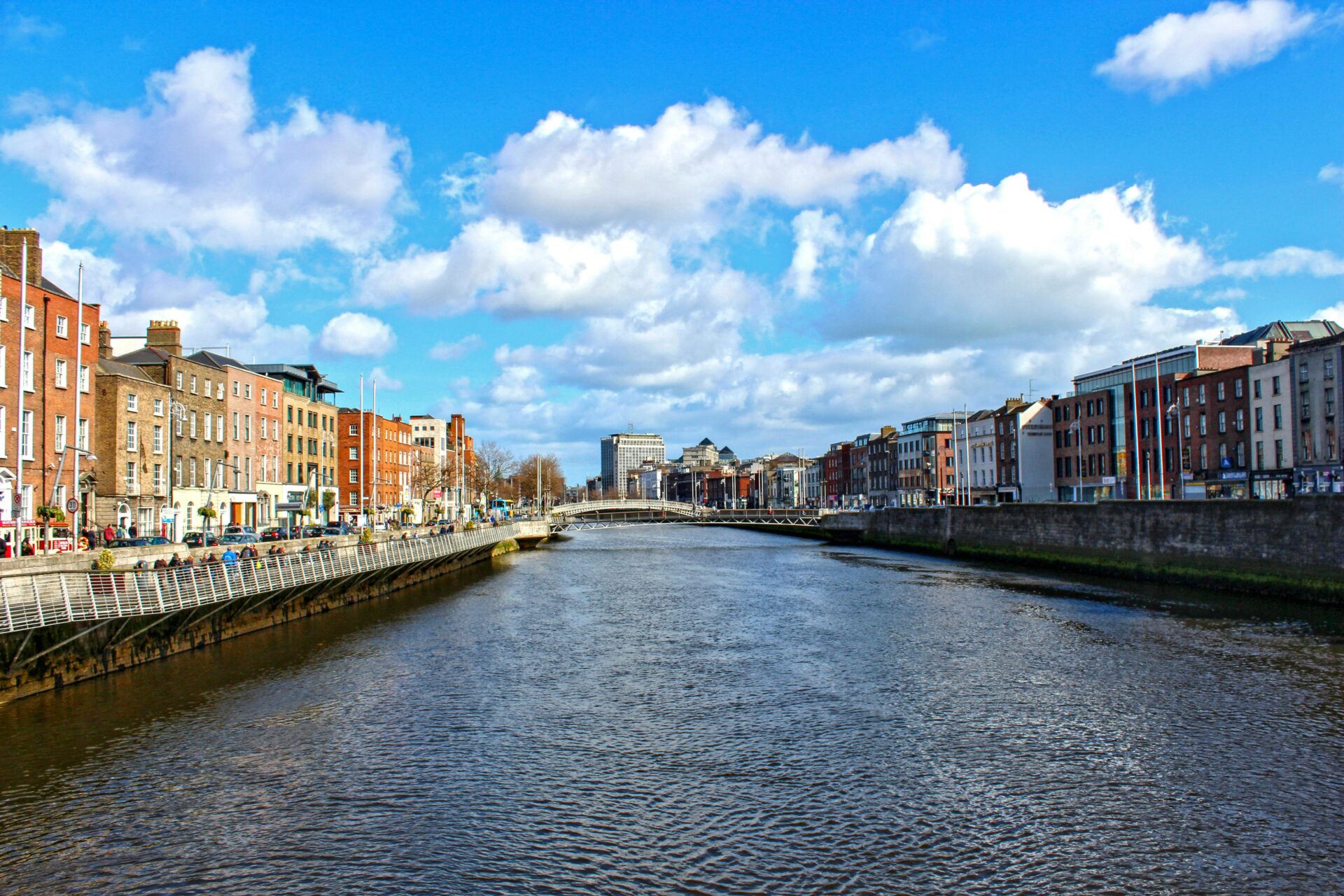
Dublin is the capital of Ireland, a city of 1.4 million people on the Liffey estuary, and the city that produced more Nobel Prize-winning writers per capita than any other city in the world — Yeats, Shaw, Beckett, Heaney. It is also, for most UK visitors, a destination associated with Temple Bar, the Guinness Storehouse, and the stag party. These things exist. They are not Dublin.
The Dublin worth 48 hours is the one that contains the finest collection of early medieval art in the world, the coast at Howth, and the most consistently good pub culture in Europe. This guide covers that Dublin.
The 48 Hours
DAY ONE
7:00am — The Grand Canal at Dawn
The Grand Canal (the 18th-century waterway connecting Dublin to the Shannon River, running through the southern city) at dawn — the specific stretch between Baggot Street Bridge and Leeson Street Bridge, the canal banks where Patrick Kavanagh’s poem “Lines Written on a Seat on the Grand Canal” is set and where a bronze of Kavanagh himself sits on the bench at the Baggot Street lock.
The canal at 7am: the swans on the water, the joggers on the towpath, the light on the surface. Kavanagh wrote the poem about sitting here after his recovery from lung cancer surgery in 1955 — the specific gratitude of returning to an ordinary place after illness. The bronze is on the south bank. He is looking at the water. Sit beside him for a few minutes before the city wakes.
8:30am — Breakfast: Bewley’s Oriental Café
Bewley’s Oriental Café (Grafton Street, 78-79) — the Dublin institution that opened in 1927, the Harry Clarke stained glass windows (six windows depicting Japanese scenes, the finest Art Deco stained glass in Ireland, installed 1925 and restored 2017), the Egyptian Hall interior (the Egyptomania decorative style of the 1920s), and the Irish breakfast served at the marble-topped tables.
The full Irish breakfast: the rashers (the back bacon, the specifically Irish cut — wider and less fatty than the British streaky), the white and black pudding (the pork and cereal sausage, the blood pudding — the Clonakilty brand the reference standard), the sausage, the fried egg, the soda bread. €12-16 / £10.34-13.79.
10:00am — The National Museum of Ireland (Archaeology)
The National Museum of Ireland (Kildare Street, adjacent to the National Library and Leinster House) — the finest collection of early medieval art in the world. Free entry.
The specific rooms:
The Bog Bodies room: Clonycavan Man and Old Croghan Man — two Iron Age men found preserved in Irish bogs, their bodies maintained by the acidic bog environment for 2,000 years. The skin still visible. Clonycavan Man still has his hair (the archaeological evidence of Iron Age hair product — he used a pine resin imported from France to style it). The violence of their deaths (the ritual killing evident in the wounds) and the intimacy of their preservation are simultaneously disturbing and extraordinarily moving.
The Bronze Age gold collection: Ireland during the Bronze Age (2500-500 BCE) was the largest gold-producing region in northwest Europe — the National Museum collection is the largest collection of prehistoric gold in the world. The lunulae (the crescent-shaped gold necklaces), the gorgets (the large collar pieces), the lock rings (the hair rings). All found in Irish fields, rivers, and bogs. The most beautiful objects in any Irish museum.
The Treasury: The Ardagh Chalice (the 8th-century silver chalice, the finest piece of early medieval metalwork in the world — the gold filigree, the enamel, the rock crystal), the Tara Brooch (the 8th-century ornamental cloak pin, the gold filigree work that was the technical peak of insular metalwork), and the Book of Kells facsimile (the original is at Trinity — more on that below).
Allow 2 hours. The museum is free.
12:30pm — Lunch: the Iveagh Gardens
The Iveagh Gardens (Clonmel Street, behind the National Concert Hall — one of Dublin’s most beautiful public gardens, entirely unknown to most visitors) at 12:30pm: the sunken lawn, the cascade fountain, the yew maze, the archery range visible behind the hedges. Buy lunch from the Fallon & Byrne food hall (Exchequer Street, 11-17 — the finest food hall in Dublin: the deli counter, the artisan sandwiches, the Irish cheese selection) and eat it on the lawn.
The Iveagh Gardens receive approximately 2% of St. Stephen’s Green’s visitors. They are better.
2:00pm — Trinity College and the Book of Kells
Trinity College Dublin (the university founded by Queen Elizabeth I in 1592, the oldest university in Ireland, the college whose Long Room library is the most photographed library interior in Europe) — the Book of Kells exhibition. The Book of Kells is an illuminated manuscript of the four Gospels produced by Celtic monks around 800 CE — the most complex and the most beautiful book produced in the medieval world. The chi-rho page (the monogram of Christ, the most ornate single page in the manuscript) and the portrait pages of the four Evangelists are the specific drawings to find.
Entry to the Book of Kells and the Long Room: €16 / £13.79. Book at tcd.ie/visitors — the timed entry slots sell out in peak season. The Long Room (the 65-metre barrel-vaulted library housing 200,000 books, the marble busts of scholars along the central aisle, the Brian Boru harp — the oldest surviving harp in Ireland, the model for the national symbol): the most imposing single interior in Dublin.
4:00pm — The Merrion Square Walk
The Merrion Square — the Georgian square whose four sides contain the former homes of Daniel O’Connell (number 58), Daniel Webster (number 24), W.B. Yeats (number 82), and Oscar Wilde (number 1, the Wilde family home now the American College Dublin). The Oscar Wilde statue in the park (the reclining figure in the multi-coloured stone, the quotations on the podium — “I can resist anything except temptation”) — the statue that most successfully captures the wit rather than the tragedy.
The National Gallery of Ireland (on the Merrion Square West — the Caravaggio: The Taking of Christ, 1602, the painting discovered in a Dublin Jesuit dining room in 1990 after 70 years of being attributed to a minor Dutch painter, now confirmed as the Caravaggio original and one of the great art discoveries of the 20th century). Entry: free.
6:30pm — Kehoe’s Pub
Kehoe’s (South Anne Street, 9 — behind Grafton Street, the blue-painted Victorian pub interior) — the pub that most clearly demonstrates what Irish pubs were before the Tiger economy stripped the interiors and replaced them with laminate. The snugs (the small enclosed booths with their own service hatches), the dark wood, the bar itself (the specific Victorian bar design — the shelves behind, the pull handles, the mirror). Open since 1803.
The order: a pint of Guinness. The Guinness is poured in two stages (the initial 3/4 pour, the rest after it settles — typically 119.5 seconds, the specific time Guinness recommends). Drink it at the bar or in a snug. Talk to whoever is beside you. This is the pub instruction that overrides all others.
8:30pm — Dinner: the Liberties
The Liberties neighbourhood (the oldest suburb of Dublin, the area immediately west of Christ Church Cathedral, the area associated with Dublin’s industrial history — the Guinness Brewery is here) — the restaurant that represents the Liberties’ current character rather than its tourist surface:
Bastible (South Circular Road, 111) — the neighbourhood restaurant that has been transforming Irish seasonal cooking for a decade, the tasting menu using Irish farmhouse produce, the natural wine list. Book at bastible.com. Tasting menu from €75 / £64.66 per person.
The alternative: The Legal Eagle (Chancery Place, 1 — opposite the Four Courts) for the Irish gastropub at its most accomplished: the corned beef hash, the soda bread, the Irish stew at working-pub prices. €25-35 / £21.55-30.17 per person.
10:30pm — The Late Nights of Mulligan’s
Mulligan’s (Poolbeg Street, 8 — behind the Irish Times building on Tara Street) — the pub established 1782, the pub where John F. Kennedy drank during his 1947 visit to Dublin, the pub that was described by James Joyce as serving “the best pint of plain in Dublin.” The pint of Guinness at Mulligan’s after 10pm: the specific Dublin night in its correct form.
DAY TWO
8:00am — DART to Howth
The DART (the Dublin Area Rapid Transit — the coastal commuter rail running from Greystones in the south to Howth in the north): from Connolly Station or Tara Street to Howth. 25 minutes. €3.90 / £3.36 return. The coastal train — the Killiney Bay section, where the track runs above the Irish Sea and the Wicklow Mountains are visible to the south, is one of the finest commuter train views in Europe.
8:30am — Howth Head Cliff Walk
The Howth Head cliff walk (the circular route around the Howth Peninsula, 6-8km, 2-3 hours) begins from Howth Harbour and follows the cliff edge south around the headland before returning through the heathland of the peninsula interior.
The specific cliff walk quality: the cliffs of Howth Head are predominantly composed of a purple quartzite that gives the rock face its specific colour — unusual in Ireland, extraordinary in the morning light. The Irish Sea visible on all sides at the headland, the Baily Lighthouse below, the Wicklow Mountains to the south, the Mourne Mountains visible on a clear day 80km to the north.
The puffin colony: from May to August, puffins nest on the cliff faces of the East Pier section — the most accessible puffin viewing in Ireland.
Free. No booking. Open access.
11:00am — Howth Harbour and the Seafood
Howth is Dublin’s fishing harbour — the DART journey brings you to the end of a peninsula that has been supplying Dublin with fish since the Vikings settled here in 900 CE. The morning fish market is open until noon.
The seafood at the harbour stalls: the Dublin Bay prawn (the langoustine — the finest crustacean from Irish waters, the prawns served cold with the brown bread and the mayonnaise at the wooden stalls on the East Pier). €10-15 / £8.62-12.93 per portion.
The Aqua Restaurant (West Pier, Howth) for the sit-down version: the Dublin Bay prawns, the oysters from the Carlingford Lough, the crab claws. €30-45 / £25.87-38.79 per person with wine.
1:00pm — Return to Dublin: Glasnevin Cemetery
The DART back to Dublin (Connolly or Tara Street). 25 minutes. The Glasnevin Cemetery (Finglas Road, 1) — the national cemetery of Ireland, the burial place of Daniel O’Connell (the 19th-century politician who achieved Catholic Emancipation), Éamon de Valera (the first President of Ireland), Michael Collins (the IRA military leader during the War of Independence, assassinated 1922), and Countess Markievicz (the first woman elected to the UK Parliament, 1918). Entry to the museum: €10 / £8.62. The cemetery itself: free.
The Collins/de Valera proximity (the two Civil War adversaries buried in the same cemetery, Collins killed on de Valera’s side during the conflict) gives Glasnevin its specific Irish political weight.
3:00pm — Christ Church Cathedral and the Viking Triangle
Christ Church Cathedral (Christchurch Place — the 12th-century cathedral, the oldest building in Dublin, the crypt dating to 1030 CE and the largest cathedral crypt in Britain or Ireland): entry €7.50 / £6.46. The crypt: the mediaeval stocks, the tomb of Strongbow (the Norman lord who invaded Ireland in 1170 — the effigy may not be Strongbow but has been in the cathedral for 800 years), and the mummified cat and rat found in the organ pipes in the 1860s.
The Viking Triangle (the area between Christ Church and St. Patrick’s Cathedral, the heart of the original Norse settlement): Dublinia (the Viking history museum, entry €12.50 / £10.78) and the Synod Hall (connected to Christ Church by a bridge — the bridge was added in 1875 by the restorer George Street as a Victorian fantasy of medieval connectivity).
5:00pm — St. Patrick’s Cathedral
St. Patrick’s Cathedral (Patrick’s Close — where St. Patrick is said to have baptised converts in the 5th century, the well still visible in the adjacent garden): the largest church in Ireland, the church where Jonathan Swift served as Dean from 1713 to 1745. Swift’s tomb and his death mask are in the south aisle. The epitaph he wrote for himself (in Latin, translated by Yeats as “Swift has sailed into his rest; Savage indignation there / Cannot lacerate his breast”) is carved on the wall above the tomb.
Entry: €8 / £6.89.
7:30pm — Final Dinner: the Stoneybatter
The Stoneybatter neighbourhood (the inner north city, the emerging food district, the neighbourhood that ten years ago was the working-class quarter west of the city centre and is now the place the Dublin food media writes about constantly):
Verdict (Chancery Lane — the restaurant that won the National Restaurant Award for Ireland’s best restaurant multiple times, the modern Irish tasting menu, the whole animal butchery approach). Book at verdictdublin.com. Tasting menu from €85 / £73.28.
The alternative: The Pigs Ear (Nassau Street, 4 — the modern Irish restaurant at a more accessible price point, the same seasonal Irish produce approach, the pig’s head terrine, the seaweed butter bread). €35-50 / £30.17-43.10 per person.
The Essentials
Getting to Dublin from the UK: Ryanair, Aer Lingus, British Airways from multiple UK airports. 1.25 hours from London, 1 hour from Manchester. Return: £20-80. Dublin is the cheapest European capital to fly to from the UK.
Getting around: The DART (the coastal rail) for Howth and the southern suburbs. The Luas (the tram) for the city centre crossings. Dublin Bus for everywhere else. The Leap Card (the transit card, €10 minimum load at any Payzone shop — convenience stores throughout the city): valid on all public transport and significantly cheaper than cash fares.
The pub rules: No ordering at the table in a traditional Dublin pub — go to the bar. Rounds are a social institution; if you’re drinking with Irish people, you’re in a round. Tipping is not expected in traditional Irish pubs (it is expected in restaurants).
Where to stay: The Merrion Hotel (Merrion Street Upper — the Georgian townhouse hotel, the finest in Dublin: £180-320/night), the Number 31 (Leeson Close — the boutique guesthouse in a converted coach house: £90-150/night), the Isaacs Hostel (Frenchman’s Lane, private rooms from £30-55/night).
The Closing Moment
I was at Kehoe’s at 7:15pm on a Wednesday. The pint had been poured and had settled. The snug was full — four people of approximately 70 years of age, three of them talking over each other about something that had happened in 1987.
The pub has been here since 1803. The snugs were original. The conversations in them have been continuous, more or less, since before the Act of Union.
Dublin is a city where the past is not past — where the Book of Kells is still illuminated by the same light that struck it in 800 CE, where the bog bodies are still wearing the expressions of people who were killed 2,000 years ago, where Jonathan Swift’s death mask still has the face of a man who was furious about something.
And where a Wednesday evening in a pub on South Anne Street is essentially indistinguishable from a Wednesday evening in a pub on South Anne Street in 1965 or 1905 or whenever the person in the next snug thinks the best year was.
The pint was good. I stayed for another.