
The route that gives Georgia in full: three days in Tbilisi with the sulphur baths, the supra table, and the wine bars of the old city, two days in Kazbegi with the dawn walk to the Gergeti Trinity Church above the clouds, and two days in the Kakheti wine region for the harvest and the qvevri cellars — and why Georgia, with Wizz Air direct from Gatwick for £100-220 return, is the most undervalued week available from the UK.
Reading time: 11 minutes | Last updated: 2026
Georgia is a country of 3.7 million people in the Caucasus — bounded by Russia to the north, Turkey and Armenia to the south, Azerbaijan to the east, and the Black Sea to the west. It has been making wine for 8,000 years (the oldest evidence of winemaking in the world comes from the South Caucasus region). It has the Greater Caucasus mountain range along its northern border including peaks above 5,000 metres. It has a cuisine — the khinkali dumplings, the khachapuri bread, the churchkhela sweets, the supra feast — that is among the least internationally known genuinely great food traditions on earth.
And it has Wizz Air direct from London Gatwick.
Before You Leave
The visa: Georgia offers visa-free entry to UK citizens for stays up to 365 days. No advance visa required — entry by passport on arrival.
The currency: Georgian Lari (GEL). £1 ≈ 3.6 GEL. ATMs widely available throughout the country, including in Kazbegi. Carry some cash — the mountain guesthouses and the smaller wine estates operate cash-only.
The language: Georgian (the unique alphabet, the Mkhedruli script, the 33-letter system that looks like nothing else in the world). English is spoken in the tourist infrastructure of Tbilisi and Kazbegi and not reliably outside it. The Google Translate Georgian offline pack solves most practical situations.
The drive to Kazbegi: The Georgian Military Highway (the route from Tbilisi to Kazbegi via the Jvari Pass at 2,395 metres) is one of the finest mountain drives in Europe. The road is tarmac throughout and manageable in a standard hire car in clear weather. In winter (November-March), the Jvari Pass closes periodically due to snow — check the Georgian Road Department (georoad.ge) before departure.
The Route
Tbilisi (3 nights) → Kazbegi (2 nights) → Kakheti wine region (2 nights — Sighnaghi or Telavi base)
The 7 Days
DAY 1 — Arrive Tbilisi
Afternoon: the Old City
Wizz Air from Gatwick lands in Kutaisi (the western Georgia airport, 3.5 hours from London). The transfer to Tbilisi: the marshrutka minibus from the Kutaisi airport to Tbilisi (2 hours, GEL 20 / £5.56) or the hire car (the drive time is 2.5 hours on the E60). Alternatively, Tbilisi International Airport (TBS) has connections via Istanbul on Turkish Airlines and via Riga on airBaltic.
Check in. Walk immediately to the Old Town (the historic core — the Narikala Fortress above, the sulphur bath district below, the Meidan Square connecting them).
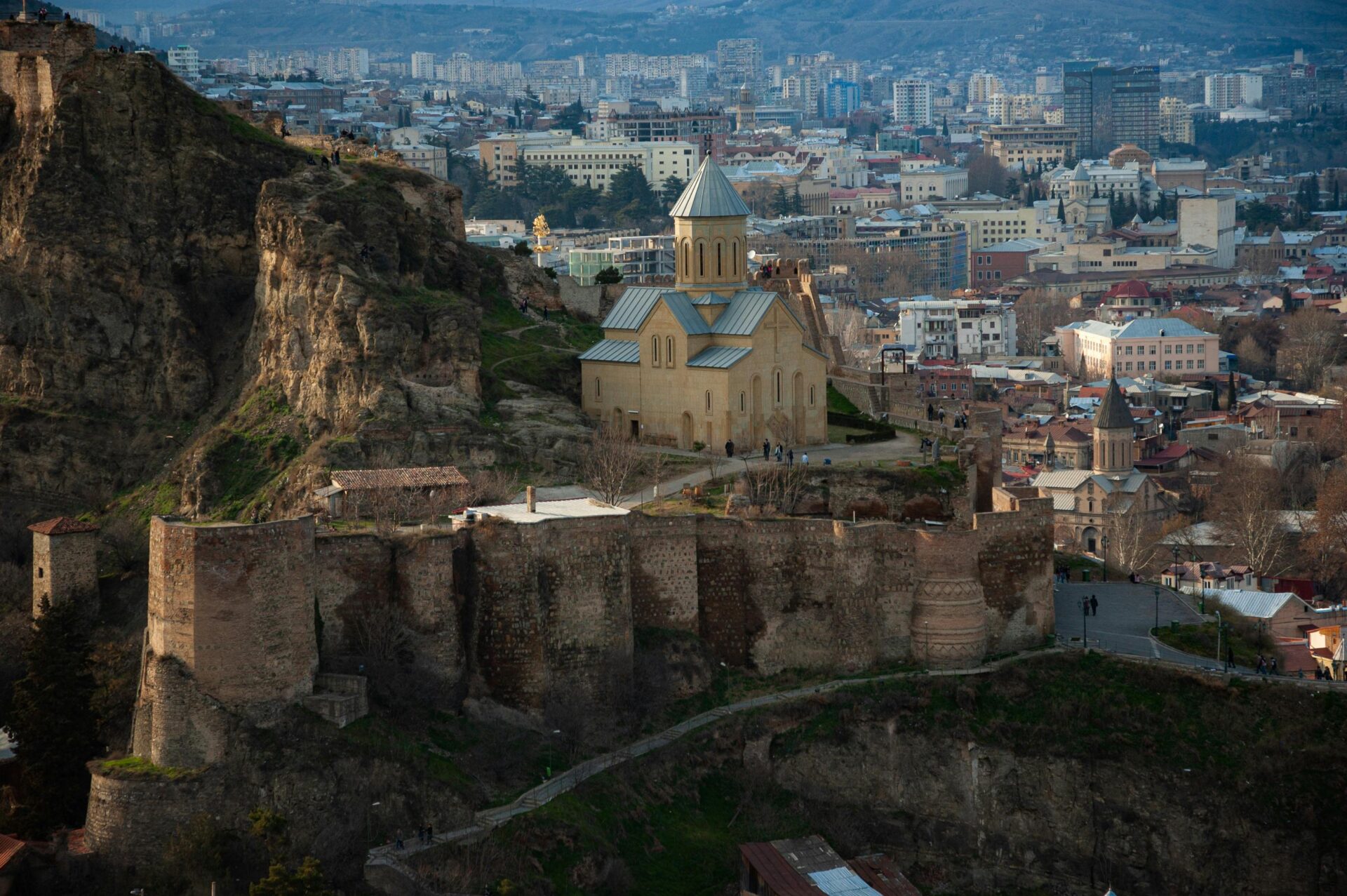
The evening walk: the wooden-balconied houses of the Abanotubani district (the sulphur bath neighbourhood — the domed bathhouses visible from the bridge, the carved wooden balconies of the 19th-century houses above them), the Metekhi Church (the cliff-edge church above the Kura River, the 13th-century building on the foundations of the 5th-century original), and the Narikala Fortress (accessible by the cable car from Rike Park — GEL 1 / £0.28 each way — or by the path from the Abanotubani).
Evening: First Supra
The supra (the Georgian feast — the table of shared dishes, the tamada toastmaster who leads the 12 traditional toasts, the wine poured continuously from the clay pitchers, the conversation that continues past midnight): at the Barbarestan (36 Davit Agmashenebeli Avenue — the restaurant cooking from a 19th-century Georgian cookbook, the most celebrated restaurant in Tbilisi, the fried churchkhela chicken with the pomegranate, the lobiani bread with the bean filling): book at barbarestan.ge. GEL 60-100 / £16.67-27.78 per person with wine.
DAY 2 — Tbilisi: Sulphur Baths, the Wine Bars, the Vernissage
8:00am — The Sulphur Baths
The Abanotubani sulphur baths (the natural geothermal sulphur springs that have supplied the Tbilisi bath culture since the 5th century — the sulphur springs that Vakhushti Bagrationi described as the reason King Vakhtang I Gorgasali founded the city at this location in 458 CE):
The Chreli Abano (the Blue Bathhouse — Abanos Kucha 40/42, the 19th-century domed bathhouse with the private rooms): the private room (the marble-floored room with the hot sulphur pool, the kisi scrub available from the bath attendant — the scrubbing mitt that removes the dead skin, the same function as the hamam kese in Turkey): GEL 40-80 / £11.11-22.22 per hour for the private room, GEL 20-30 / £5.56-8.33 for the kisi scrub.
The sulphur water at approximately 37-39°C. The smell of hydrogen sulphide (the specific egg-sulphur smell that fills the Abanotubani district) — noticeable for the first 10 minutes, then unremarkable. The specific Tbilisi instruction: the sulphur bath at 8am before the day begins, the kisi scrub, the cold plunge. The skin after the kisi is the specific Georgian bath reward.
10:30am — Dry Bridge Flea Market
The Dry Bridge Market (the flea market on the Dry Bridge over the Kura River — the market that has been operating since the early post-Soviet period when Georgians brought their household goods to sell in the economic collapse of the 1990s, now the most atmospheric antique market in the Caucasus):
The Soviet-era objects (the Leica-copy cameras, the Georgian silver jewellery, the Soviet military medals, the samovars, the books in Georgian, Russian, and Armenian), the paintings (the Georgian amateur oil paintings of the Caucasus landscape — reproducible, unoriginal, and curiously compelling at GEL 30-80 / £8.33-22.22 each), and the specific Tbilisi quality of a market where the seller and the objects have a genuine relationship.
1:00pm — Lunch: Shavi Lomi
The Shavi Lomi (Black Lion, 28 Mingreli Street, the Chugureti neighbourhood — the restaurant that the Tbilisi food press considers the most serious Georgian cooking in the city): the chakhokhbili (the chicken braised in the tomato and herbs — the Georgian national stew), the pkhali (the walnut-and-herb pastes in the vegetable rolls — the beet, the spinach, the green bean, each rolled and topped with a pomegranate seed), the badrijani nigvzit (the fried aubergine with the walnut paste, the garnish of pomegranate seeds). GEL 30-60 / £8.33-16.67 per person with wine.
3:00pm — The Vernissage and the National Museum
The Vernissage (the weekend craft market at the bottom of Rustaveli Avenue — the Georgian traditional textiles, the jewellery in the Georgian goldsmithing tradition, the enamel work, the paintings): the most accessible craft shopping in Tbilisi, the quality variable, the experience specific.
The Georgian National Museum (3 Shota Rustaveli Avenue — the national collection including the treasury of Georgian gold objects from the Bronze Age and the early medieval period, the finest gold collection in the Caucasus): entry GEL 15 / £4.17.
Evening: the Natural Wine Bar Circuit
Tbilisi’s natural wine scene is the one food and drink development in the city that UK travellers are most likely to connect to an existing reference point — the qvevri-made wines (the skin-contact, unfiltered, unfined wines made in the buried clay vessels) have become the cornerstone of the natural wine movement globally, and Tbilisi’s wine bars are the original source.
The circuit: the Vino Underground (10 Galaktion Tabidze Street — the pioneer natural wine bar, the selection of wines from the small Georgian producers, the plates of pkhali and the churchkhela alongside the wine): GEL 15-30 / £4.17-8.33 per glass.
The 8000 Vintages (48 Erekle II Street — the wine bar specialising in old vintages of the Georgian producers, the specific temporal dimension of the qvevri wine cellars accessible through the glass): GEL 20-40 / £5.56-11.11 per glass.
The G.Vino (next to the Fabrika complex — the wine bar that serves the Tbilisi creative class): the most atmospheric physical space of the three.
DAY 3 — Tbilisi: Mtskheta and the Old Town Depth
Morning: Mtskheta
Mtskheta (20km northwest of Tbilisi — the ancient capital of Georgia, the UNESCO-listed town at the confluence of the Kura and the Aragvi rivers): the taxi from Tbilisi (GEL 30-40 / £8.33-11.11) or the marshrutka from the Didube bus station.
The Svetitskhoveli Cathedral (the Living Pillar Cathedral — the 11th-century cathedral built on the site of the burial of the robe of Christ, according to Georgian tradition; the most important religious building in Georgia, the coronation church of Georgian kings since the 4th century): the interior with the frescoes, the elaborately carved exterior stone, the atmosphere of a building that has been the centre of Georgian religious life for 1,700 years. Entry: free (donation).
The Jvari Church (the 6th-century church on the cliff above the Mtskheta confluence, the view over the two rivers — the specific confluence visible from the Jvari terrace that Lermontov described in Mtsyri, the poem that is one of the founding works of Russian Romantic literature about Georgia): entry free.
Afternoon: Tbilisi Old Town Depth
The Tbilisi streets that the first two days’ walking passes but doesn’t enter: the Kala district (the historic Jewish quarter — the Sephardic synagogue, the 13th-century Sioni Cathedral), the Leghvtakhevi gorge (the canyon with the waterfall running through the middle of the Old Town, the wooden bridges, the most unexpected natural feature in a Caucasus capital city), and the carved wooden balconies of the Betlemi area (the neighbourhood above the Sioni Cathedral, the 19th-century wooden architecture at its most elaborate).
Evening: the Fabrika Complex
The Fabrika (8 Ninoshvili Street — the converted Soviet-era sewing factory, now the most concentrated evening venue in Tbilisi: the container bars, the Georgian restaurants, the craft beer from the Anderson Brewing Company, the design shops, the DJ nights from Thursday-Saturday): the Tbilisi creative economy visible in one location, the mix of Georgians and visitors at the outdoor tables from 6pm. GEL 15-25 / £4.17-6.94 per drink.
DAY 4 — Drive to Kazbegi
Morning: the Georgian Military Highway
The drive from Tbilisi to Kazbegi (147km, 2.5-3 hours by hire car on the Georgian Military Highway): the route north through the Mtskheta junction, the Ananuri Fortress (the 17th-century castle complex on the Zhinvali Reservoir, the turquoise water of the reservoir visible below the walls — a 30-minute stop: GEL 3 / £0.83 entry), the Gudauri ski resort (the Caucasus ski area visible from the road above), the Jvari Pass (2,395 metres, the viewpoint at the pass with the Caucasus extending in both directions), and the descent into the Kazbegi valley.
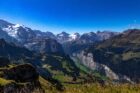
The Kazbegi valley appears after the pass: the Terek River in the valley below, the Gergeti Trinity Church visible on the hillside above the village, the Kazbeki peak (5,047 metres) above.
Afternoon: Kazbegi Village
Check in to the Kazbegi guesthouse. The Stepantsminda village (the renamed Kazbegi — the village renamed for the Stepan Tsminda, a local saint, although Kazbegi is the name most people use): the main square, the local market.
The 4pm instruction: do not drive immediately to the church. Walk the village first. The Kazbegi supermarket (the 24-hour Georgian supermarket — the Borjomi water, the churchkhela, the Chacha — the Georgian grape pomace spirit, the equivalent of Italian grappa, the spirit of choice in Kazbegi), the riverside path (the Terek River, the water emerald-green from the glacier melt), and the view of the Gergeti Trinity Church from the valley (the church visible on the hilltop, the correct perspective for understanding the engineering achievement — someone carried the stones up that hill in the 14th century).
Evening: Guesthouse Dinner
The Kazbegi guesthouse dinner (the guesthouse host cooks the Georgian dinner — the Kazbegi regional variation: the lamb khinkali, the mtsvadi — the pork skewers grilled over the grape-vine charcoal — and the Kazbegi spring water that comes from the tap at -1°C): GEL 30-50 / £8.33-13.89 per person with the Chacha to finish.
Where to stay in Kazbegi: The Rooms Hotel Kazbegi (the most celebrated hotel in the region, the infinity pool above the valley, the Gergeti Trinity Church visible from the balcony — R3,000-6,000 GEL / £833-1,667/night at the top end; the standard room from GEL 600-900 / £166.67-250 in shoulder season). The guesthouses (the rooms in the local homes — Nino’s Guesthouse and equivalents: GEL 60-100 / £16.67-27.78 per person with dinner and breakfast included — the most characterful option).
DAY 5 — The Gergeti Trinity Church and the Mountain Day
5:30am — Dawn Walk to Gergeti
The walk from the Stepantsminda village to the Gergeti Trinity Church (the path behind the village, 2.5-3 hours up at a steady pace, the elevation gain 850 metres from the village at 1,740m to the church at 2,170m):
At 5:30am departure, arriving at the church by 8:30am: the mist in the valley below (the specific Kazbegi dawn — the mist fills the valley to approximately 2,000 metres, the church appearing above the cloud level as you climb), the Kazbeki peak visible in the first morning light, and the church at 8:30am before the jeep taxis bring the groups up the 4WD track (the alternative to walking — GEL 60-100 / £16.67-27.78 per jeep, 30 minutes).
The Gergeti Trinity Church (built 14th century, the only church in the Caucasus at this altitude, the repository for the Georgian national treasures during the Mongol invasions — the cross of St. Nino, the original, was held here): the chapel interior (small, the frescoes fragmentary, the atmosphere of a building that has been at the centre of the community’s spiritual life for 700 years), the churchyard (the gravestones, the ancient Georgian inscriptions), and the view.
The view from the Gergeti churchyard at 8:30am: the Kazbeki summit at 5,047 metres directly above, the Terek valley below, the Georgian Military Highway visible as a thread through the landscape, Russia visible on the other side of the Caucasus ridge.
Afternoon: the Dariali Gorge
The Dariali Gorge (the canyon 15km north of Kazbegi, accessible by taxi — GEL 40-60 / £11.11-16.67 return): the gorge through which the Terek River cuts the Caucasus range, the walls 400 metres above the riverbed, the abandoned Russian military fortifications visible on the cliff faces. The border with Russia is visible at the gorge’s northern end — the customs post, the flags, the occasional lorry transit.
Evening: return to Tbilisi or stay in Kazbegi
If staying a second Kazbegi night: the Truso Valley excursion (the valley east of Kazbegi, the mineral springs that have created travertine formations in the riverbed — the water coloured orange and white from the mineral deposits, the abandoned Zemo Truso medieval village at the valley’s head): 4WD required, GEL 80-120 / £22.22-33.33 for the shared taxi.
DAY 6 — Kakheti Wine Region
Morning: Drive to Kakheti (2.5 hours from Tbilisi)
The Alazani Valley (the wine-producing valley of eastern Georgia — the Kakheti region that produces 70% of Georgian wine, the valley floor planted with vines between the Caucasus foothills to the north and the Gombori range to the south):
The wine region entry point: Telavi (the Kakheti capital) or Sighnaghi (the hilltop town above the valley, the most atmospheric base, the 18km of medieval city walls still intact).
Afternoon: Wine Estate Visits
The Kakheti wine estate circuit — the estates that receive visitors and provide the most complete understanding of the qvevri winemaking tradition:
The Pheasant’s Tears (Sighnaghi — the American-Georgian natural wine producer John Wurdeman’s estate, the most internationally accessible entry into Georgian natural wine): The guided cellar visit (the qvevri cellar, the buried clay vessels, the wine ageing in the amber light of the underground room — GEL 30-50 / £8.33-13.89 for the tasting).
Alaverdi Monastery and Wine Estate (near Akhmeta — the 11th-century cathedral at the site of the 6th-century monastery, the monastic wine cellar operating continuously since the medieval period, the monks who restored the monastery’s winemaking in the 1990s): The cellar tour (the monastic qvevri, the wine labelled by the vintage and the grape variety — the Rkatsiteli and the Kisi for the whites, the Saperavi for the red), the cathedral, and the medieval defensive tower: entry GEL 5 / £1.39.
Twins Old Cellar (Napareuli village — the family estate where the twin brothers Giorgi and Gela Natenadze produce wine from 200-year-old vines): The most intimate estate visit in Kakheti, the family home, the qvevri visible in the garden. GEL 20-40 / £5.56-11.11 for the tasting and the food.
Evening: Sighnaghi
The Sighnaghi sunset (the town on the ridge above the Alazani Valley, the valley visible below in the evening light, the Greater Caucasus range to the north, the Alazani River visible as a silver line through the vines):
Dinner at the Pheasant’s Tears restaurant (the restaurant attached to the winery, the Georgian dishes prepared with the same attention to traditional technique as the winemaking — the nettle pkhali, the chicken with the walnuts, the lobiani, the wine poured by the carafe). GEL 50-80 / £13.89-22.22 per person.
DAY 7 — Kakheti to Tbilisi, Return
Morning: the David Gareja Monastery (Optional)
The David Gareja monastery complex (the 6th-century cave monastery complex on the Kakheti-Azerbaijan border, 90km from Sighnaghi — the 15 monasteries carved into the cliff faces of the semi-desert, the frescoes preserved by the dry desert air): accessible by 4WD taxi from Sighnaghi (GEL 100-150 / £27.78-41.67 return). The most extraordinary single site in Kakheti and the most remote.
The return: Sighnaghi to Tbilisi (2 hours by marshrutka from the Sighnaghi bus station — the bus departs at 9am and at 2pm). Arrival in Tbilisi 2-3 hours before flight time — the Wizz Air Kutaisi departure requires 1 hour from Tbilisi.
What It Costs
| Category | Budget | Mid-Range |
|---|---|---|
| Return flights (UK-Kutaisi, Wizz Air) | £100-220 | £120-250 |
| 7 nights accommodation | £120-280 | £280-560 |
| Food and drink (7 days) | £70-140 | £180-350 |
| Transport (taxis, marshrutkas, hire car) | £60-120 | £100-200 |
| Activities and wine tastings | £40-80 | £60-120 |
| Total | £390-840 | £740-1,480 |
Georgia is one of the cheapest countries in Europe for UK travellers. The budget total is accurate — a week in Georgia at the budget level gives the full cultural experience without cutting any of the specific experiences in this guide.