


The Algarve that goes beyond the Albufeira strip, the Sintra day trip where the fairy-tale palaces and the forest are better than any theme park, the Lisbon trams that children will queue for voluntarily, the pastéis de nata that solve breakfast at every stop on the itinerary, and why Portugal is the BGGD answer to every parent who asks “where should we take the kids for their first Europe trip?”
Reading time: 11 minutes | Last updated: 2026
Portugal is the finest family destination in Southern Europe. The evidence:
The food is approachable (the custard tarts, the grilled chicken, the fresh fish, the bread — nothing that requires explanation to a 7-year-old). The weather is predictable (the Algarve averages 300 days of sunshine per year; the temperature in July is 28°C rather than the 38°C of Spain). The people are genuinely warm toward children — the Portuguese child-friendly culture is not performance, it is structural. The cost is significantly below Spain, France, or Italy for equivalent quality. And the destinations (the Algarve coast, Lisbon, Sintra, the Douro Valley) are genuinely interesting for adults rather than being children’s entertainment parks with a hotel attached.
This guide covers Portugal for families with children of 3-15 across three age ranges, with specific recommendations for each.
When to Go
April-June and September-October — the ideal family window. School holidays aside, these months give warm but not extreme temperatures (22-28°C), manageable crowds (40-60% of peak), and accommodation prices 20-30% below August.
July-August — peak season. The Algarve is at its most crowded. The prices are at their highest. The weather is the most reliable. If school holidays constrain the timing, the Algarve in August is still excellent — book accommodation 3-4 months ahead.
October half-term — the BGGD recommendation for school-age families. The Algarve sea temperature is still 22°C (warm enough for swimming for most children). The main sites are manageable. The accommodation prices have dropped. Flights are significantly cheaper than August.
Where to Go — The Three Zones
Zone 1: The Algarve (Best for Ages 3-12)
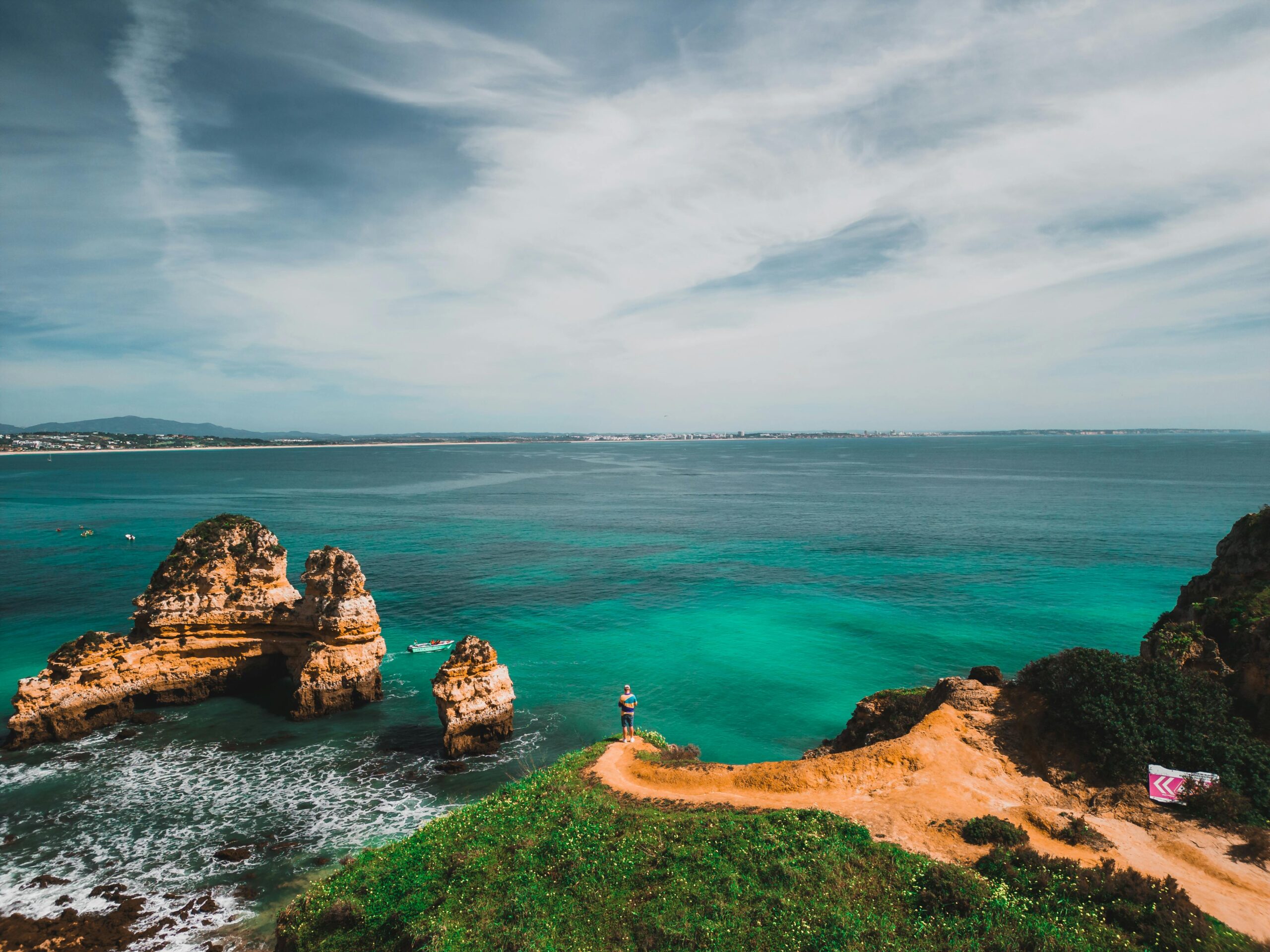
The Algarve coast (the southernmost region of Portugal, the 150km of beaches between Sagres in the west and Vila Real de Santo António at the Spanish border) — the most developed family beach destination in Portugal and the most family-oriented coastal region in Southern Europe.
The beaches for families:
Meia Praia (Lagos area): The long, flat, gently shelving beach with the shallow water ideal for young children. The full beach infrastructure (sunbed hire, lifeguard, the beach restaurant behind the dunes). The Lagos town (20 minutes from the beach): the old city walls, the market, the gelato.
Praia da Marinha (Lagoa area): The most beautiful beach in the Algarve — the ochre limestone rock arches and sea caves, the crystal water. Accessible only by steps from the cliff top (steep — manageable for children over 8, challenging for under-5s). Bring snorkels — the underwater visibility is the finest on the coast.
Manta Rota (eastern Algarve): The beach that the travel media hasn’t discovered at the same scale as the western Algarve — the flat, calm water (protected by the barrier island), the small fishing village behind, the prices 20-30% below the western equivalents.
Activities for children:
The Algarve dolphin watching (the dolphin and whale watching trips depart from Lagos, Portimão, and Albufeira from May to October — the common dolphin pods are present throughout the summer and the trips run with qualified marine biologists providing the commentary): from £20-30 / £20-30 per person.
The Zoomarine (the marine park near Albufeira — the dolphins, the sea lions, the water slides): entry from €23 / £19.83 per person.
The Benagil Cave (the sea cave with the hole in the roof accessible only by boat or by swimming — the boat trips depart from the Benagil beach): from €18 / £15.52 per person. Suitable for children who are confident in the water; the cave entrance requires swimming through the sea cave opening.
Where to stay in the Algarve:
Budget: The Albufeira Old Town (the older, more characterful part of the resort, the Rua Cândido dos Reis evening atmosphere): apartments from £80-130/night for a two-bedroom.
Mid-range: The Martinhal Sagres (the family resort at the western tip of the Algarve, the children’s club, the beach, the family apartments): from £160-280/night in July.
Self-catering: The rural quinta (the farmhouse conversion in the Algarve interior — the pool, the orange groves, the children’s play area): from £100-180/night for a whole property from Airbnb or Rural Retreats.
Zone 2: Lisbon and Sintra (Best for Ages 6-15)
Lisbon for families:
The Lisbon experience for children of 6+ is genuinely good — the city is compact, the trams and the funiculars are inherently exciting, and the specific Lisbon activities (the oceanarium, the cable car, the Belém pastry and monument circuit) are calibrated to the age range without being designed for it.
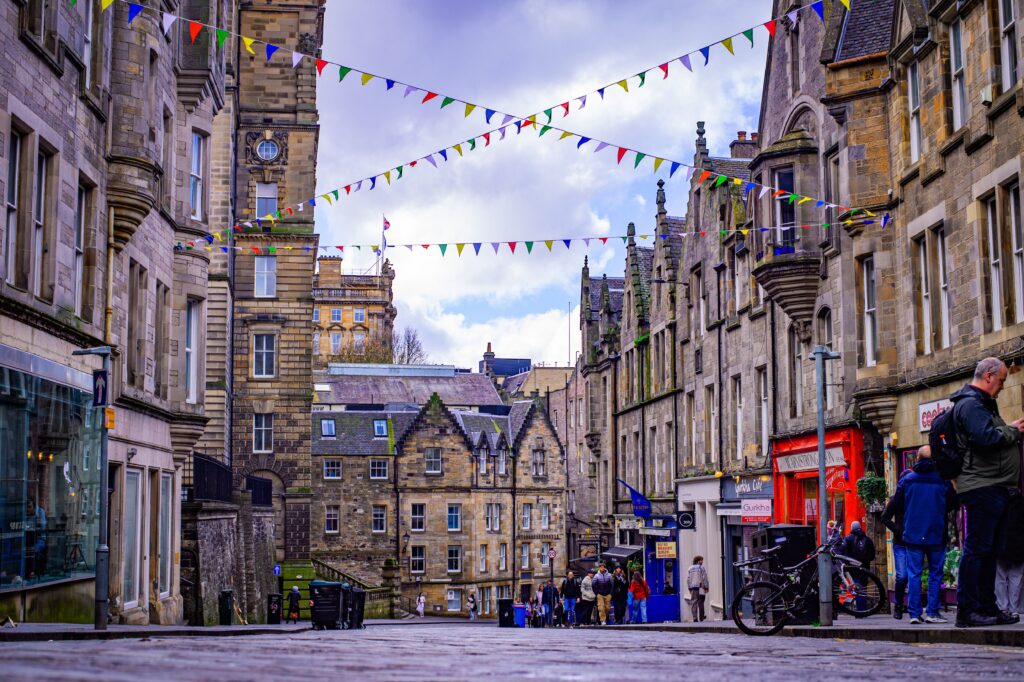
Tram 28: The ride that children will queue for voluntarily (the yellow vintage tram, the steep streets, the Alfama descent). The pickpocket warning applies equally with children — front pockets, bags held in front. The ride: 15 minutes each direction, €3 / £2.59 with the Viva Viagem card.
The Oceanário de Lisboa: The Lisbon Oceanarium (the Parque das Nações, Esplanada Dom Carlos I — the José Saramago-designed aquarium, the central tank visible from all four sides, the seahorse tank, the sea otter exhibition): the finest aquarium in Europe by most rankings. Entry: €25 / £21.55 adult, €15 / £12.93 child (under 3: free).
The Belém circuit: The Pastéis de Belém (the custard tarts — all ages, no qualification required), the Jerónimos Monastery (the carved stone that children find extraordinary when told it was carved by hand without power tools 500 years ago), and the Padrão dos Descobrimentos (the climbing to the top: €4 / £3.45, the view over the Tagus).
The LX Factory Sunday market: The covered market with the rides and the food vendors — the most child-friendly market in Lisbon, the bouncy castle, the vintage merry-go-round.
Sintra for families:
Sintra (40 minutes from Lisbon by train — the Sintra Line from Rossio Station, every 30 minutes, €2.25 / £1.94) is the day trip that children consistently rate as the highlight of a Portugal trip. The reasons are obvious to a child: the palaces look like fairy tales.
The Pena Palace: The 19th-century Romanticist palace on the hilltop above Sintra, the turrets, the drawbridge, the yellow and red painted towers, the views over the Atlantic — the exterior is the specific experience that children respond to immediately. The interior is impressive but less critical. Entry: €14 / £12.07. Book at parquesdesintra.pt.
The Quinta da Regaleira: The eccentric nobleman’s estate with the initiation wells (the spiral staircases descending 27 metres underground, the tunnels connecting the wells, the grottos) that are the most specifically dramatic elements of Sintra for children of 8+. Entry: €10 / £8.62.
The Moorish Castle: The 8th-9th century castle above Sintra, the walls walkable, the views over the palace and the village. Entry: €10 / £8.62. The combination with the Pena Palace gives the full historical scope of the site.
The practical Sintra note: Sintra in July-August between 10am-4pm is crowded. Arrive on the 9am train from Rossio. The Pena Palace at 9:30am: manageable. At noon: very crowded.
Zone 3: Porto and the Douro Valley (Best for Ages 8-15)
Porto is the most specific Portuguese city experience and the one that rewards slightly older children — the Livraria Lello (the bookshop that inspired Rowling), the Port wine lodges, the riverside Ribeira district, and the specific character of a city that took 600 years to build the São Bento railway station ceiling.
The Porto family circuit:
The Livraria Lello (Rua das Carmelitas, 144): The 1906 bookshop — the red spiral staircase, the painted glass ceiling, the atmosphere that the Harry Potter connection made famous but that exists independently of it. Entry: €5 / £4.31 (redeemable against a book purchase). Book the timed entry online at livrarialello.pt — the queue without a booking is 45-90 minutes in peak season.
The São Bento Station: The 20,000 azulejo tile panels depicting scenes from Portuguese history in the main hall — the most extraordinary railway station interior in Europe, and free to enter (just walk in).
The Douro River boat trip (the Six Bridges cruise): The 50-minute boat under the six bridges of Porto: from €17 / £14.66 adult, €9 / £7.76 child. Departs from the Ribeira waterfront.
The WOW — World of Wine (Vila Nova de Gaia, across the river): The new cultural complex covering the history of Port wine, fashion, and Portuguese culture — the family-friendly exhibition approach, the hands-on elements, the Port wine chocolate workshop (for adults) and the grape juice tasting (for children). Entry from €13 / £11.21 per person.
The Age-by-Age Guide
Ages 3-6 (the Toddler Trip)
Best destinations: The Algarve (the flat beaches with shallow water, the simple food options, the afternoon nap in the apartment), Lisbon (the trams, the Oceanarium, the pastéis de nata as a guaranteed success at every meal stop).
What works: The self-catering apartment or the villa with a pool (the afternoon pool is the toddler’s favourite activity — planning the itinerary around pool time at 2pm is the most reliable structure for this age group). The short cultural stop (the palace exterior, not the interior; the castle walls, not the dungeon) followed by ice cream.
What doesn’t: The full-day site visits. The overnight bus. The restaurant that requires waiting more than 20 minutes. The historical walking tour.
Practical note: Portuguese restaurants universally welcome children. Highchairs are available without requesting. The kitchen will produce plain pasta or grilled chicken without a children’s menu if asked. The “meia dose” (half portion) is available at most restaurants for a reduced price.
Ages 7-12 (the Primary School Trip)
Best destinations: Sintra (the palaces, the wells, the adventure element), the Algarve (the snorkelling, the dolphin watching, the cave boat trip), Lisbon (the Oceanarium, the castle, the tram), Porto (the Lello, the river boat, the bridge walks).
What works: The site with the story (the Pena Palace when told about the king who built it as a romantic fantasy; the Jerónimos Monastery when told about Vasco da Gama and the Age of Discovery). The beach day with the snorkel gear. The food market where the child can choose.
The food solution for fussy eaters: Portugal’s food is almost universally accessible for children — the grilled chicken (frango assado, the most popular dish in Portugal by volume), the chips (the batatas fritas, present on every menu), the pastéis de nata, the pizza (every Portuguese city has excellent pizza from the Italian immigrant tradition). The one food that may require management: the salt cod (the bacalhau) is present everywhere and is an acquired taste.
Ages 12-16 (the Teenage Trip)
Best destinations: Lisbon (the city culture, the music scene, the LX Factory, the natural wine bars for the parents while the teenagers eat the pastéis de nata and find the local equivalent of their own scene), Porto (the contemporary art at the Serralves Museum, the Foz do Douro beach at the mouth of the river), the Douro Valley (the driving circuit through the vineyards — old enough to appreciate the landscape, young enough to be impressed by the terraces).
What works for teenagers: Giving ownership. The teenager who chooses the restaurant (from a shortlist of three appropriate options) is more engaged than the one brought to the restaurant the parents chose. The teenager who has a camera and an assignment (photograph 20 things that surprised you) is more present than the one scrolling a phone.
What works for parents of teenagers: The Douro Valley self-drive (the N222 road through the Douro — voted the most scenic road in the world by National Geographic, genuinely extraordinary, the vineyards descending to the river in terraces: accessible as a day trip from Porto or as a 2-night stay with a quinta accommodation).
What It Costs — Family of Four (2 Adults, 2 Children)
| Category | Budget | Mid-Range |
|---|---|---|
| Return flights (UK-Faro, Lisbon, or Porto) | £300-500 | £450-700 |
| 7 nights accommodation | £420-700 | £700-1,400 |
| Food (7 days, mix of self-catering and restaurants) | £250-400 | £400-700 |
| Activities (dolphin watching, Oceanarium, Sintra palaces) | £150-250 | £200-350 |
| Transport (car hire or public transit) | £100-200 | £150-280 |
| Total (family of 4, 7 nights) | £1,220-2,050 | £1,900-3,430 |
Portugal is 20-30% cheaper than Spain and 30-40% cheaper than France for equivalent family holidays. The self-catering villa with a pool in the Algarve interior is the most cost-effective family accommodation format — the kitchen eliminates daily restaurant costs, the pool eliminates daily activity costs, and the space is significantly larger than a hotel room for a family of four.
The Practical Bits
Car hire: Essential for the Algarve interior and the Douro Valley. Not essential for Lisbon or Porto (the public transport and the taxis are sufficient). A diesel or hybrid family car (the Volkswagen Tiguan or the Ford Galaxy/S-MAX for larger families) from AutoEurope or Rentalcars.com: £35-60/day in off-peak, £60-100/day in August.
The driving on the right: Portugal drives on the right. For UK families unaccustomed to right-hand driving, the Algarve’s relatively quiet roads are a better introduction than the Porto ring road. The EN125 (the Algarve coastal road) is manageable for inexperienced right-hand drivers. The A22 (the Via do Infante motorway — the Algarve toll road): the tolls are paid electronically at the toll booth, no cash required.
Pushchairs: Lisbon’s Alfama and Bairro Alto neighbourhoods are cobbled and hilly — the pushchair requires the folded/carried approach for many of the historic streets. The beachside resorts of the Algarve are pushchair-friendly throughout. Porto’s Ribeira is largely flat and manageable.
Healthcare: The UK GHIC card (the Global Health Insurance Card, the post-Brexit replacement for the EHIC) provides access to Portuguese public healthcare at the same cost as Portuguese nationals. Apply at nhsbsa.nhs.uk before travel. European travel insurance is still recommended for private clinic access and repatriation cover.
The One Instruction
The pastel de nata at breakfast.
Every morning. Every town. Every age group.
The custard tart from the local pastelaria (the Portuguese bakery — one on every block in Lisbon, Porto, and the Algarve market towns, the price €1.20-1.80 / £1.03-1.55 each) is the most reliable family travel win in this guide. The child who has a custard tart at 8am from the bakery where the locals queue before work has had an experience. The experience costs under £2. It happens every morning.
No other destination in this guide offers the equivalent reliable daily cultural and culinary win at under £2 per person.
Portugal’s genius is in this specificity.