
The counter-clockwise route that gives the Westfjords puffin cliffs on Day 2 when energy is highest, the Jökulsárlón glacier lagoon on Day 5 after the full context of the country has built, and the South Coast waterfalls on Day 6 rather than Day 1 so they arrive as a culmination rather than an opening — and why the direction you drive the Ring Road changes the entire emotional arc of the trip.
Reading time: 11 minutes | Last updated: 2026
Iceland’s Ring Road (Route 1) is 1,322km. In 7 days you can cover it completely only if you drive 190km per day and stop nowhere. This guide doesn’t cover the full Ring Road in 7 days — it covers the Ring Road’s finest sections, with time at each one.
The route: Reykjavík → Snæfellsnes Peninsula → the Westfjords (3-day extension) → return to the Ring Road north coast → Mývatn → East Fjords → Jökulsárlón → South Coast → Reykjavík.
If the Westfjords extension feels ambitious, the base 7-day route without them still gives the most specific Iceland available in a week.
Before You Leave
Book in advance:
- The camper van (if choosing the camper van option): Happy Campers, Cozy Campers, or Campervan Iceland — book 2-4 months ahead for July-August, 4-6 weeks for May-June or September
- The Landmannalaugar highland bus (if adding the highlands as a Day 7 detour): at re.is — the summer-only service, booking essential
- The Jökulsárlón boat tour (optional): at icelagoon.is
- The Northern Lights forecast (if travelling September-April): download Veður.is app for the cloud cover and KP index forecasts
What to pack beyond the standard list:
- Rain jacket (the Iceland-specific waterproof, not a fashion mac)
- Layers (5-10°C temperature range even in July)
- Trekking poles (for the Landmannalaugar trails)
- For winter travel: thermal base layers, hand warmers, ice scraper for the hire car
The 7 Days
DAY 1 — Reykjavík and Departure West
Morning: Reykjavík Essentials
Arrive at Keflavík International Airport (45 minutes from Reykjavík by Flybus or hire car). Pick up the hire car at the airport — the hire car desks are in the arrivals hall.
Reykjavík morning: the Hallgrímskirkja (the tower: 1,500 ISK / £8.52 to the top, the Reykjavík panorama from 75 metres), the Harpa Concert Hall (the glass facade, the view over the harbour, free to enter and explore the interior atrium), and the hot dog from the Bæjarins Beztu Pylsur stand (the most celebrated single food item in Iceland: 590 ISK / £3.35, “eina með öllu” — one with everything).
Afternoon: Drive to Snæfellsnes (2 hours)
The Snæfellsnes Peninsula — the glacier that Jules Verne used as the entrance to the centre of the Earth, the coastline that the Icelandic sagas set some of their most significant scenes.
The drive from Reykjavík: Route 1 north then Route 54 onto the peninsula. The specific Snæfellsnes stopping points:
Ytri-Tunga Beach (Route 54, northern coast): The seal colony — the grey seals that haul out on the beach rocks, visible from the road.
Arnarstapi and Hellnar: The two coastal villages with the 3km coastal walk between them. The basalt rock arch at Gatklettur (the “hole cliff” — the arch through which the sea passes at high tide).
Djúpalónssandur (western end of the peninsula): The black pebble beach, the lifting stones, the Epine trawler wreck in the surf.
Evening: Spend Night on Snæfellsnes
Accommodation in Arnarstapi, Hellnar, or Stykkishólmur (the main town of the northern coast). Guesthouse rooms: ISK 15,000-25,000 / £85.23-142.05.
DAY 2 — Snæfellsnes to Westfjords (for 3-day Westfjords Extension)
Note: The Westfjords addition adds 1 day to the itinerary but is the specific BGGD recommendation for the first-time Iceland visitor who has more than 5 days. The puffins at Látrabjarg are the finest accessible puffin encounter in Europe. If omitting the Westfjords, proceed directly to Day 3 (North Iceland).
The Westfjords Route:
The Baldur ferry from Stykkishólmur to Brjánslækur (the western Westfjords — 2 hours, runs twice daily in summer, book at seatours.is: ISK 4,500 / £25.57). The ferry eliminates the 4-hour road detour and deposits you in the heart of the Westfjords.
Afternoon: Drive to Látrabjarg
The westernmost point of Iceland and the largest seabird cliff in Europe. 150km from Brjánslækur (2.5 hours on the gravel Westfjords roads — the roads are passable in 2WD but narrow and winding). Arrive late afternoon.
Evening: Látrabjarg at Dusk
The puffin colony at dusk (the puffins most active from 5pm-9pm): the burrows at the cliff top, the birds returning from the fishing, the specific Látrabjarg puffin experience (the birds habituated to human presence, approachable to within 50cm, the evening light on the cliff face). Free access.
Camp or stay at the Breiðavík Guesthouse (the guesthouse adjacent to the Látrabjarg cliff, the most atmospheric accommodation on the Westfjords western coast: ISK 18,000-28,000 / £102.27-159.09 per night).
DAY 3 — Westfjords to North Iceland
Morning: Rauðasandur Beach
The red-sand beach of the southern Westfjords (30km from the Látrabjarg Guesthouse): the specific beach whose sand is red from the shell fragments of the scallop beds in the bay — genuinely red sand in Iceland, genuinely unexpected. The beach at 8am: completely empty.
Drive North:
The return to the Ring Road via Ísafjörður (the main town of the Westfjords — the Norwegian-style wooden warehouses on the fjord tongue, the compact harbour, the ski resort visible on the mountain above the town) and the Westfjords coastal road east to the Ring Road.
Evening: Varmahlíð or Blönduós (North Iceland)
The drive from the Westfjords to the north coast of Iceland: 3.5-4 hours. The Ring Road east from the Westfjords junction at Borgarnes. The north coast accommodation (ISK 12,000-20,000 / £68.18-113.64).
DAY 4 — Mývatn and the Geothermal North
Morning: The Mývatn Area
The Mývatn lake and the surrounding geothermal landscape: the drive from Varmahlíð to Mývatn (2 hours east on Route 1).
Dimmuborgir: The lava formation field — the specific towers and arches of cooled lava tube collapse, 30 minutes walk through the formations (free).
Hverfjall: The tephra crater (the 2,500-year-old explosion crater, 140 metres deep, 1km across) — the 40-minute walk around the rim, the Mývatn lake visible to the west, the Krafla volcanic area to the east.
Námaskarð: The geothermal field — the sulphur-yellow and orange mud pools, the fumaroles, the specific smell that follows you to the car. Free access.
Afternoon: Mývatn Nature Baths
The Mývatn Nature Baths (the geothermal pool at 36-40°C, the view over the lake, the Blue Lagoon alternative at 30% of the price): 6,900 ISK / £39.20. Book at jardbodin.is. Allow 2 hours.
Evening: Akureyri (45 minutes west of Mývatn)
Akureyri — Iceland’s second city (20,000 people, the legitimate size of a village anywhere else, the legitimate size of a city in Iceland). The Akureyri Church (the red church above the town, the Hallgrímskirkja in miniature), the botanical garden (the most northerly botanical garden in the world), and the Rub23 restaurant (the sushi and Icelandic seafood combination that is the best restaurant north of Reykjavík). ISK 4,500-7,000 / £25.57-39.77 per person.
DAY 5 — East Fjords to Jökulsárlón
Morning: The East Fjords
The East Fjords (the eastern section of the Ring Road, the most consistently under-visited section of the circuit): the drive from Akureyri south and east to the East Fjord coast.
The East Fjords: the fishing villages of Djúpivogur (the town with the public sculpture garden, the 34 stone egg sculptures representing the bird species of the region, the artist Sigurður Guðmundsson) and Eskifjörður (the town in the deepest of the East Fjords, the East Iceland Maritime Museum: ISK 1,000 / £5.68).
The Seyðisfjörður detour (30km north of the Ring Road, the fjord town accessible by the mountain road over the Fjarðarheiði pass): the rainbow street (the painted road leading to the 1894 church, the most photographed single image in East Iceland), the ferry terminal (the Norræna ferry to Denmark departs from here — the most atmospheric approach to Iceland available, week-long voyage).
Afternoon: Drive to Jökulsárlón (2-3 hours south)
The Jökulsárlón glacier lagoon arrives suddenly after the drive through the Vatnajökull National Park — the icebergs visible from the road bridge before the car has stopped.
The lagoon at 5pm: the afternoon light on the ice, the seals on the floes, the glacier visible at the head of the lagoon. Walk the Diamond Beach (the black sand beach below the lagoon — the icebergs that have crossed the lagoon and beached in the surf).
The amphibious boat tour (1 hour, ISK 7,500 / £42.61): the lagoon at water level, the iceberg scale comprehensible only from water.
Evening: Spend the Night at the Lagoon
The guesthouses near Jökulsárlón (Fosshotel Glacier Lagoon, the Hali Country Hotel): ISK 25,000-40,000 / £142.05-227.27.
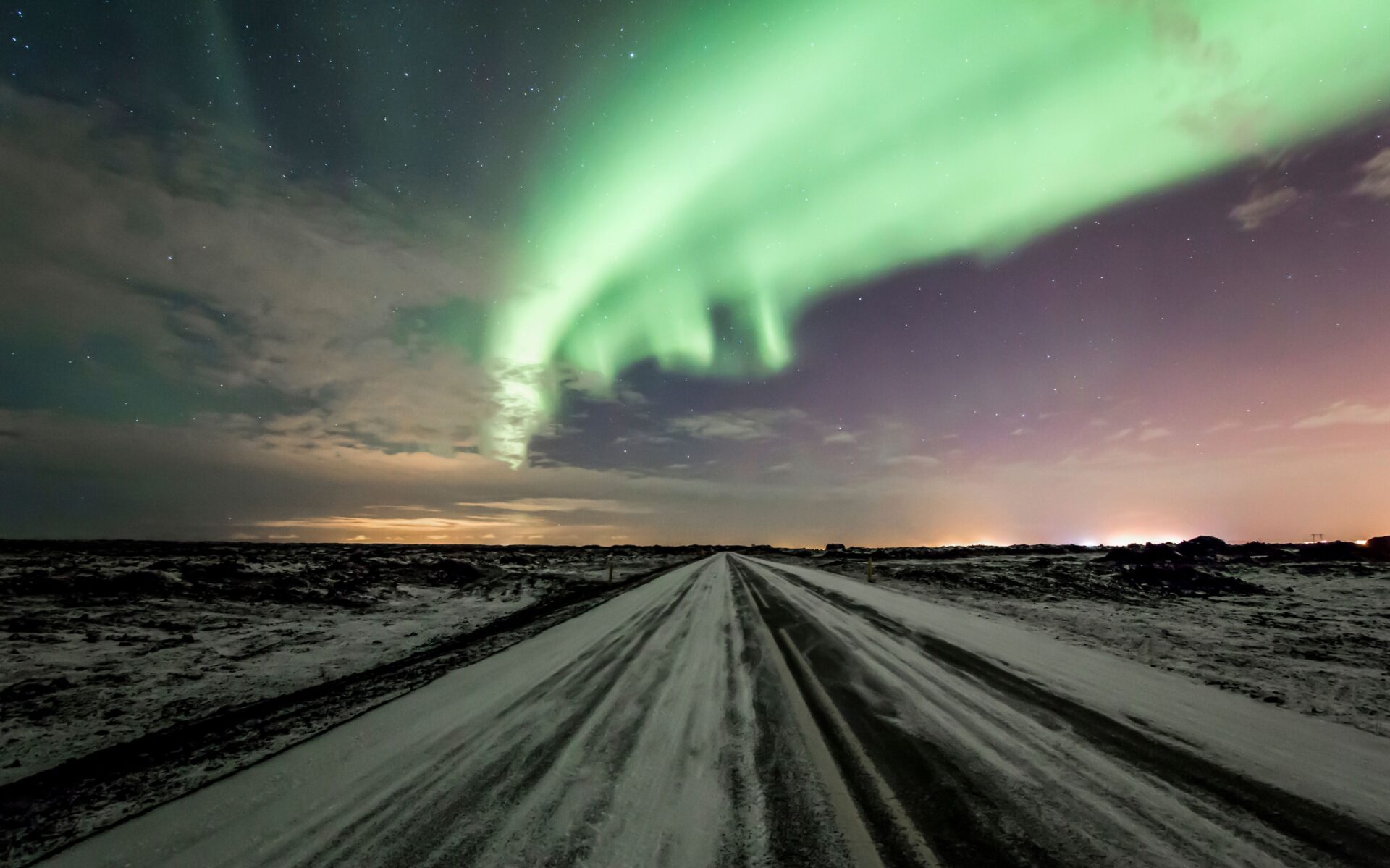
For Northern Lights hunters (September-April): The lagoon at midnight, the icebergs lit by the aurora. Set the Veður.is alarm for any night with a KP index 3+ and a clear sky forecast.
DAY 6 — The South Coast
Morning: Skaftafell and Svínafellsjökull
The Skaftafell area (within Vatnajökull National Park, 60km west of Jökulsárlón) — the glacier hiking base:
The Svartifoss waterfall (the waterfall surrounded by black hexagonal basalt columns, the 45-minute hike from the visitor centre, free): the most specifically geological waterfall in Iceland.
The glacier walk on Svínafellsjökull (the outlet glacier accessible from the Skaftafell visitor centre — guided tours with crampons required, 2-3 hour options: ISK 9,500-14,000 / £53.98-79.55). The correct glacier walk is with a guide — the crevasses are hidden under snow cover.
Afternoon: The South Coast Waterfalls
Skógafoss: The 25-metre wide, 60-metre tall waterfall — the rainbow in the spray visible from 10am (the sun angle required: east-facing waterfall, morning-early afternoon light). The 370-step staircase to the right: the view from the cliff above the falls.
Seljalandsfoss: The 60-metre waterfall walkable behind — the path around the rear of the waterfall (wet, waterproof required). At 6pm in the summer, the water backlit by the low western sun.
Evening: Vík
The southernmost village in Iceland — the Reynisfjara black sand beach (15 minutes from Vík), the Reynisdrangar sea stacks, the specific Iceland instruction: stay above the orange warning posts (the sneaker waves are documented and dangerous). The Halldórskaffi restaurant in Vík for the lamb soup. ISK 2,500-3,500 / £14.20-19.89.
DAY 7 — Return to Reykjavík via the Golden Circle
Morning: The Golden Circle
From Vík to Reykjavík via the Golden Circle (Route 1 west then Route 35 north — adds 1 hour to the return but covers the three most visited sites in Iceland):
Þingvellir National Park (UNESCO): The tectonic rift, the ancient parliament site. Allow 45 minutes.
Geysir: The Strokkur geyser, erupting every 4-10 minutes. Allow 20 minutes.
Gullfoss: The double waterfall descending into the canyon. Allow 30 minutes.
Afternoon: Reykjavík
Return to Reykjavík by 2pm. The Blue Lagoon (the geothermal pool near the airport, 45 minutes from the city — the tourist experience rather than the authentic Mývatn Nature Baths experience, but genuinely extraordinary in appearance): book at bluelagoon.com, ISK 14,900-25,000 / £84.66-142.05. The Blue Lagoon at 4pm on the return to the airport: the correct time to use it.
Evening: Keflavík Airport departure.
What It Costs
| Category | Camper Van | Hire Car + Guesthouses |
|---|---|---|
| Return flights | £80-200 | £80-200 |
| Vehicle hire (7 days) | £280-450 (van hire, 2 people) | £180-280 (compact 4WD) |
| Fuel | £120-180 | £100-160 |
| Accommodation | £150-250 (campsites) | £700-1,200 (guesthouses) |
| Food (7 days) | £140-220 (supermarket) | £280-490 (mix) |
| Activities (boat tour, glacier walk, Mývatn Baths) | £120-180 | £120-180 |
| Total (per person, 2 travelling) | £445-740 | £730-1,255 |
Iceland is significantly cheaper with two people sharing costs. The camper van for a couple is the most cost-effective Iceland option.
The One Decision That Changes Everything
Counterclockwise or clockwise?
This guide goes counterclockwise (Reykjavík → north → east → south). The specific reason: the South Coast (Seljalandsfoss, Skógafoss, Reynisfjara) is the most photogenic and the most visited section of the Ring Road. Arriving there on Day 6 with the context of the full circuit behind you — the puffins, the geothermal north, the glacier lagoon — gives the waterfalls a cumulative weight. Driving the South Coast on Day 1 (the clockwise approach) gives it without context and sets everything that follows as a potential anticlimax.
The counterclockwise approach is correct.