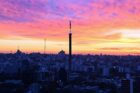

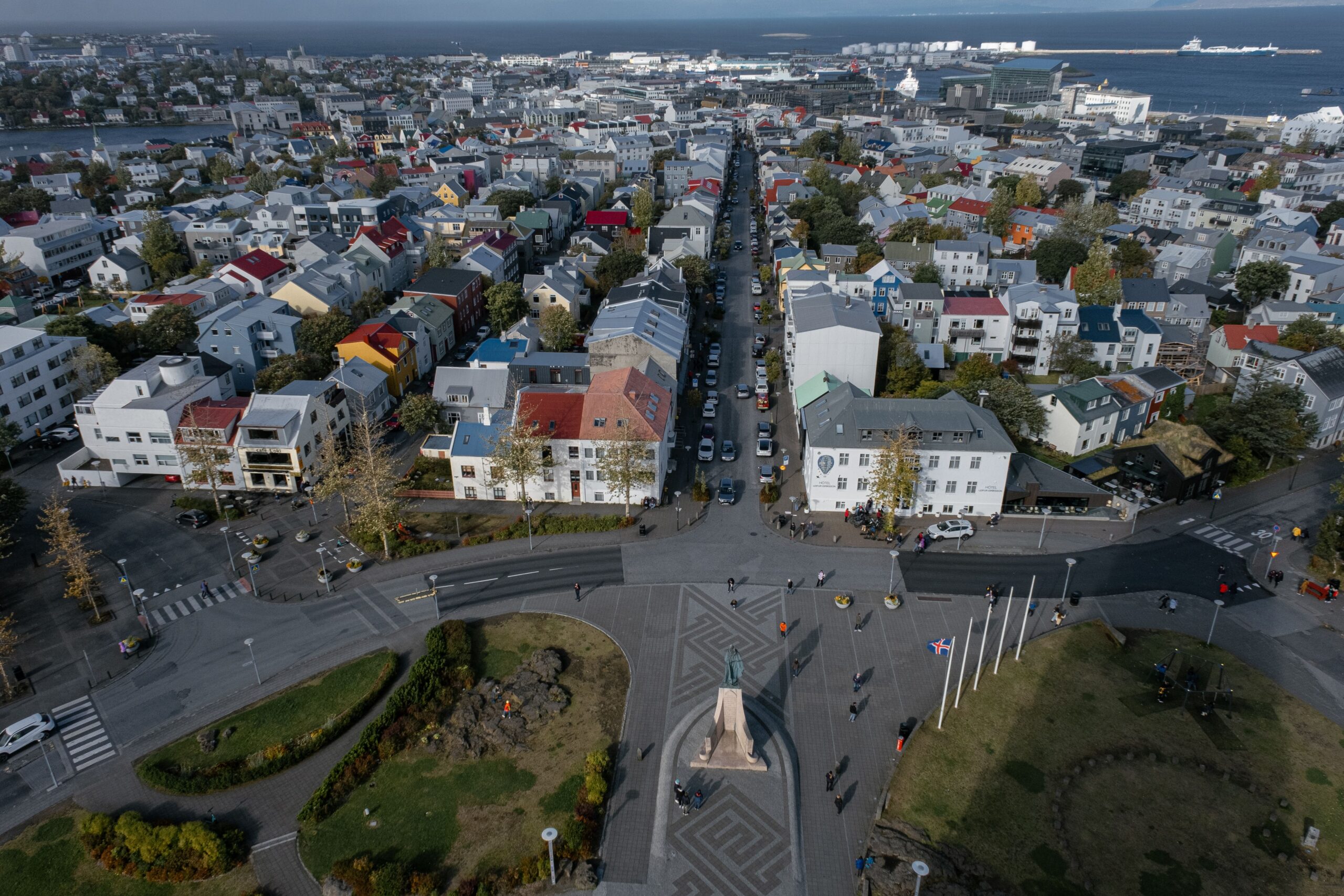
The Sundhöllin public swimming pool at 7am when the steam from the outdoor hot pots is visible in the winter air and the only people there are the Reykjavík residents who do this every morning before work, the Bæjarins Beztu Pylsur hot dog stand where Bill Clinton famously ordered one with everything and where the lamb-pork-beef sausage costs 590 ISK and is genuinely the finest hot dog in Europe, the Hallgrímskirkja at 9am opening when the tower gives the full Reykjavík panorama without the midday line, and why Reykjavík — the smallest capital city in the world at 130,000 people — is the correct entry point for the most extraordinary natural landscape accessible from the UK.
Reading time: 9 minutes | Last updated: 2026
Reykjavík is not a city you go to for the city. You go to it because it is the gateway to the country that contains the Northern Lights, the midnight sun, the glacier lagoon, the geysers, the puffin cliffs, and the most geologically active surface on earth. The city itself is compact (you can walk across it in 40 minutes), architecturally interesting in a specific Nordic way, and possessed of a food scene that has improved dramatically in the past decade.
But the city is also the place where you arrive jet-lagged, the place you return to before the flight home, and the place where — if you are spending 48 hours specifically in Reykjavík rather than passing through — you will discover that a city of 130,000 people in a country of 370,000 has a cultural density that its scale doesn’t prepare you for.
The 48 Hours
DAY ONE
7:00am — Sundhöllin Public Pool
The Sundhöllin (Barónsstígur 45a — the public swimming pool in the Hlemmur area, one of Reykjavík’s 17 public pools) at 7am: the most specifically Reykjavík experience available and the one that most visitors never have.
The Icelandic swimming pool culture is the social institution around which Reykjavík organises its public life. The pools are geothermally heated (the hot pots — the outdoor circular pools at 38-44°C — are fed by the same volcanic water system that supplies the city’s hot water taps). Every Reykjavík resident swims in the public pool. Not most residents — every resident. The pools are the community centre, the town hall, and the spa simultaneously.
The Sundhöllin protocol: the changing rooms (the lockers, the shower cubicles with the specific Icelandic shower requirement — wash thoroughly before entering the pool, this is enforced by the pool attendants and is non-negotiable), the outdoor hot pots (the circular pools arranged by temperature — the 38°C for conversation, the 42°C for the genuine heat, the 44°C for the specific Icelander who has been doing this for 60 years), and the 50-metre outdoor lane pool at approximately 28°C.
At 7am in February: the steam visible above the outdoor hot pots in the cold air, the regulars already in their usual positions, the conversation in Icelandic audible across the pool. Entry: 1,000 ISK / £5.68.
The specific morning instruction: the hot pot at 7am, then the cold plunge (the cold pool adjacent to the hot pots, approximately 12°C — voluntary, deeply effective), then the hot pot again. The contrast between the volcanic water heat and the Icelandic air cold produces a specific alertness that functions better than coffee.
9:00am — Hallgrímskirkja Tower
The Hallgrímskirkja (Skólavörðustígur — the Lutheran church designed by Guðjón Samúelsson, completed 1986 after 41 years of construction, the concrete basalt column facade inspired by the same geological formation as the Giant’s Causeway): the tower at 9am opening.
The tower lift (74 metres, 1,500 ISK / £8.52): the Reykjavík panorama from above — the coloured rooftops, the harbour, the Esja mountain across the bay, and the ocean in every other direction. The city’s smallness is most comprehensible from here: the full extent of Reykjavík visible in a single 360-degree view, the volcanic mountains surrounding it on three sides.
The statue outside the church: Leifur Eiríksson (Leif Erikson — the Norse explorer who reached North America in approximately 1000 CE, 500 years before Columbus). The statue was a gift from the United States for the 1,000th anniversary of the Icelandic parliament in 1930. The irony of an American gift celebrating the person who discovered America is Reykjavík’s most understated public joke.
10:30am — The Settlement Exhibition
The Landnámssýningin (Aðalstræti 16 — the underground museum built around the excavated remains of a Viking-age longhouse discovered during construction work in 2001): the most specific archaeological museum in Iceland.
The longhouse dates from approximately 871 CE (the date confirmed by the tephra layer from the Öræfajökull volcanic eruption of that year found below the floor structure — the volcanic ash as a precise archaeological calendar). The exhibition is built around the actual structure, the glass floor of the museum giving the view into the excavation.
Entry: 2,800 ISK / £15.91.
12:30pm — Lunch: Bæjarins Beztu Pylsur
The Bæjarins Beztu Pylsur hot dog stand (Tryggvagata 1 — the harbour-adjacent stand that has operated from the same location since 1937): the Icelandic hot dog.
The hot dog is a specific Icelandic product: the sausage made from a combination of lamb (the predominant protein), pork, and beef (the lamb from the Icelandic sheep that roam the highlands freely all summer, giving the meat a specific flavour). The bun is steamed. The toppings: the raw onion, the fried onion, the Icelandic remoulade, the brown mustard, and the ketchup. “Eina með öllu” — one with everything.
Bill Clinton ordered “one with the mustard” on his 2004 visit. The stand has a photograph. Clinton was incorrect in his ordering strategy — the everything version is better.
590 ISK / £3.35. The finest €3 food item in Northern Europe.
1:30pm — The Harpa Concert Hall
The Harpa Concert Hall (Austurbakki 2 — the glass honeycomb facade by Henning Larsen Architects with the Olafur Eliasson interior light design, the most significant piece of architecture in Reykjavík since the Hallgrímskirkja): the atrium accessible free of charge (the interior light installation — the hexagonal glass panels that shift colour with the daylight angle), the Café Harpa for the afternoon coffee, and the view over the harbour and the Faxaflói bay from the interior galleries.
The Harpa is controversial in Reykjavík — it was commissioned during the 2008 financial bubble and completed after the crash, its existence a reminder of the specific Icelandic relationship with financial ambition. The building itself is extraordinary.
Free to enter the public areas. Concert tickets (the Iceland Symphony Orchestra, the Reykjavík Big Band, the chamber music series) from 3,000-8,000 ISK / £17.04-45.45.
3:00pm — The Reykjavík Art Museum — Kjarvalsstaðir
The Kjarvalsstaðir (Flókagata 24 — the Reykjavík Art Museum’s main building, dedicated primarily to the work of the painter Jóhannes Sveinsson Kjarval, the most celebrated Icelandic painter): the collection of Kjarval’s paintings covering the full arc of his career — the early representational landscapes, the late-career lava and basalt paintings where the geological surface of Iceland becomes the subject rather than the backdrop.
Kjarval is the painter who looked at the Icelandic landscape and saw what it actually is — the lava formations, the moss, the specific quality of volcanic rock under the northern light — rather than what the romantic tradition expected of it. The paintings are extraordinary for a visitor who has already spent time in the landscape.
Entry: 1,800 ISK / £10.23.
6:00pm — The Laugavegur Evening
The Laugavegur (the main commercial street of Reykjavík — the shops, the restaurants, the bars, the gallery spaces, the specific compressed energy of a capital city’s high street in a city of 130,000 people): at 6pm in summer, the street in full activity. At 6pm in December, the street lit against the darkness of 4pm sunset.
The Icelandic wool shops (the Handknitting Association of Iceland at Skólavörðustígur 19 — the genuine handknitted Icelandic sweaters at the correct price: 18,000-30,000 ISK / £102.27-170.45 for the genuine handknit, significantly above the machine-knit tourist version. The difference is visible in the yarn thickness and the tension. Ask.) and the Aurum jewellery (Bankastræti 4 — the Icelandic designer jewellery using the volcanic stone and Icelandic silver, the only designer jewellery in Reykjavík that is specifically Icelandic in material and concept).
8:00pm — Dinner: Dill Restaurant
The Dill Restaurant (Hverfisgata 12 — the first Michelin-starred restaurant in Iceland, the Nordic cuisine approach applied to Icelandic ingredients, the menu changing with the season and the fishing): the most celebrated fine dining in Reykjavík. Book at dillrestaurant.is. Tasting menu from 19,900 ISK / £113.07.
The alternative for the budget-conscious: the Sægreifinn (Geirsgata 8 — the “Sea Baron” lobster soup restaurant, the lobster bisque at 1,950 ISK / £11.08 per bowl, the most satisfying single bowl of soup available in Reykjavík, the restaurant in the corrugated iron harbour warehouse): no reservation required, the queue manageable at 8pm on a weekday.
10:00pm (Summer) — The Midnight Sun Walk
In June and July, Reykjavík does not get dark. The sun sets briefly (or not at all) and the light remains — the specific golden quality of the midnight sun on the harbour, on the Hallgrímskirkja, on the Esja mountain across the bay.
The midnight sun walk: from the Harpa along the harbour path to the Grótta lighthouse (the lighthouse on the Seltjarnarnes peninsula, 4km from the city centre on the coastal path, the Reykjavík residents’ evening walk destination). At midnight in June: the light on the water, the lighthouse, the mountains. Free. 45 minutes each way.
10:00pm (Winter) — The Northern Lights Check
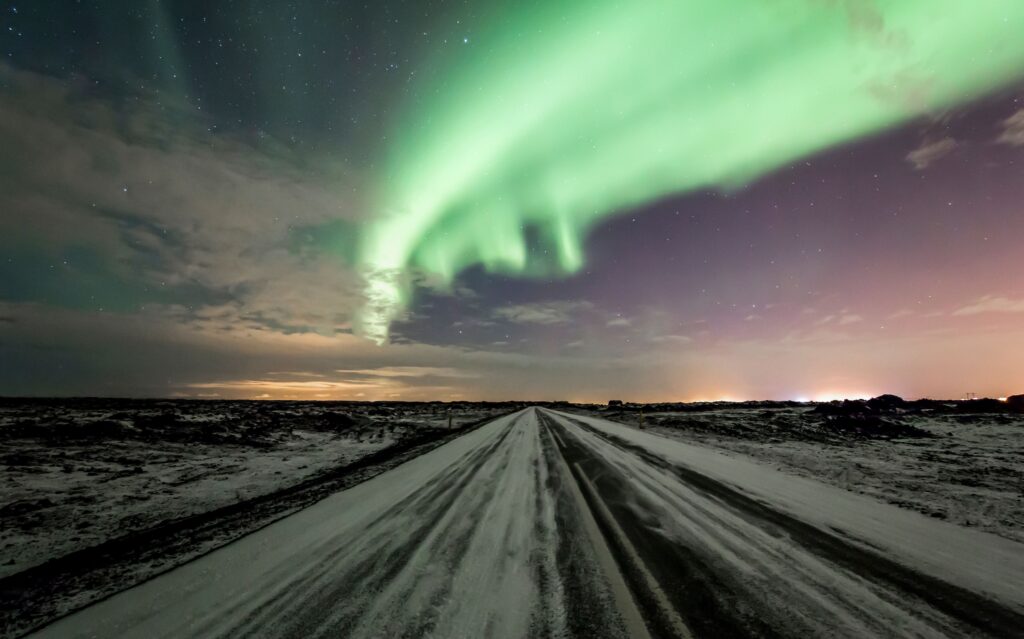
In September-April, check the aurora forecast at en.vedur.is (the Icelandic Met Office — the cloud cover map and the KP index forecast, the two factors that determine Northern Lights visibility). A clear sky with a KP index of 3+ gives good visibility from Reykjavík. Take the bus or taxi to the Grótta lighthouse (30 minutes) for the darkest accessible sky near the city.
The Northern Lights from Reykjavík are visible on approximately 1 in 3 nights from September-April. The best nights are the new moon in winter with a KP index of 4+. Do not plan a specific night — check nightly and go when the conditions align.
DAY TWO
8:00am — The Golden Circle (Day Trip)
The Golden Circle covers the three most visited sites in Iceland within 300km of Reykjavík, accessible as a full-day self-drive or organised tour:
Þingvellir National Park (UNESCO): The rift valley where the North American and Eurasian tectonic plates are visibly pulling apart (the gap increases by 2cm per year — measurable, ongoing, visible in the rock faces on either side of the Almannagjá gorge). The original Icelandic parliament (the Alþingi, founded 930 CE — the oldest parliament in the world, meeting at this site for 900 years) met in this gorge, the natural acoustics of the rift walls amplifying the speakers’ voices to the assembled crowd. Entry to the national park: free.
Geysir: The Great Geysir (the geyser that gave all geysers their name — currently inactive) and Strokkur (which erupts every 4-8 minutes to 15-30 metres). The geyser field at 10am: the steam, the silica-blue pools, the eruption cycle. Entry: free. The café at the Geysir Centre: the Icelandic lamb soup at 1,800 ISK / £10.23.
Gullfoss: The “Golden Waterfall” — the Hvítá river plunging into the canyon in two stages (the upper fall 11 metres, the lower 21 metres, the combined effect the most dramatic accessible waterfall in Iceland). The viewpoint platform at the upper level: the spray visible from 100 metres. Entry: free.
Self-drive timing: Reykjavík → Þingvellir (45 minutes) → Geysir (1 hour from Þingvellir) → Gullfoss (15 minutes from Geysir) → Reykjavík (2 hours). Full day: 7-8 hours.
Tour option: the organised Golden Circle bus tour from Reykjavík (multiple operators, BSÍ Bus Terminal): 9,000-12,000 ISK / £51.14-68.18, departs 9am, returns 6pm.
Evening: Final Dinner and the Geothermal Pool Again
The second Sundhöllin visit — the evening session (6-8pm), the hot pots with the after-work crowd, the sky above darkening or remaining light depending on the season.
Dinner at Messinn (Lækjargata 6b — the restaurant specialising in fresh Icelandic fish cooked in the cast-iron skillet, the Arctic char and the haddock and the plaice from Faxaflói bay): 4,500-6,500 ISK / £25.57-36.93 per main course.
The Essentials
Getting to Reykjavík from the UK: easyJet (Gatwick-Keflavík), Icelandair (Heathrow-Keflavík), Wizz Air (various UK airports-Keflavík). 2.75 hours. Return: £80-250. The Icelandair Stopover programme allows a free 1-7 day Reykjavík stopover on transatlantic flights — the most efficiently priced Iceland option for those flying to North America.
Airport to city: The Flybus (the shuttle from Keflavík to the BSÍ Bus Terminal in Reykjavík, 45 minutes, 3,499 ISK / £19.88 one way — book at re.is). The taxi: 15,000-20,000 ISK / £85.23-113.64 — only if sharing between 4 people.
The credit card reality: Iceland is essentially cashless. Every payment — including the Bæjarins Beztu hot dog stand — is by card. The contactless card that doesn’t charge foreign transaction fees (the Chase UK or the Starling) is the only preparation required.
Where to stay: The Canopy by Hilton Reykjavik City Centre (Smiðjustígur 4: £140-220/night), the Guesthouse Sunna (Þórsgata 26: £80-130/night), the Kex Hostel (Skúlagata 28, private rooms from £50-80/night — the best hostel in Reykjavík for the specific atmosphere).
The Closing Moment
I was in the hot pot at Sundhöllin at 7:22am in February. The water was 42°C. The air was -2°C. The steam was rising. The sky was still dark — the sun rises at 10:30am in Reykjavík in February.
A woman to my left was discussing something in Icelandic with the man beside her. The conversation was animated. They had been in the pool for at least 20 minutes before I arrived. They would, I suspect, be there for 20 minutes after I left.
This is the specific Reykjavík morning: the darkness, the volcanic water, the conversation that continues regardless of the season or the temperature because the pool is where the conversation happens. The Reykjavík residents have structured their public life around the geothermal pools the way other cities have structured it around the café or the pub.
The hot dog at noon. The tower at 9am. The aurora at midnight if the sky is clear.
But the pool at 7am is the instruction that overrides all the others. It is the one that shows you what Reykjavík actually is rather than what you came to photograph.