
The Lin Heung Tea House at 7:30am when the trolley carts navigate between the tables of the regular customers and the har gow arrives still steaming from the kitchen below, the Chi Lin Nunnery and Nan Lian Garden in the Diamond Hill that almost no visitor to Tsim Sha Tsui has been to despite being 25 minutes on the MTR, the Mong Kok neighbourhood at 10pm when the night market belongs to the city rather than the itinerary, and why Hong Kong — the city that the geopolitical changes of 2020 deterred many UK travellers from visiting — remains one of the most extraordinary 48-hour cities in Asia.
Reading time: 10 minutes | Last updated: 2026
Hong Kong is a Special Administrative Region of China with a population of 7.5 million people on 1,106 square kilometres — the vertical city, the city where the density (6,800 people per square kilometre) has produced an architecture and a street life and a food culture that cannot be replicated at lower density. The national security legislation of 2020 changed the political situation significantly and reduced the number of UK visitors. It did not change the dim sum, the harbour, or the Peak Tram.
This guide covers Hong Kong as a city worth visiting in 2025. The political context is real and worth knowing — the Foreign Office travel advice at gov.uk/foreign-travel-advice/hong-kong gives the current assessment. Within that context, the city’s extraordinary food, its architecture, its cultural density, and its position as the most efficient transit hub in Asia remain exactly as they were.
The 48 Hours
DAY ONE
7:00am — The Wet Market, Sheung Wan
The Sheung Wan wet market (the covered wet market on the western side of Hong Kong Island, the most atmospheric urban market in Hong Kong and the one that most visitors to Central miss entirely): at 7am, the fishmongers with the overnight catch (the garoupa, the sea bass, the live shrimp in the tanks, the specific Hong Kong seafood vocabulary that the restaurant menus translate imperfectly), the vegetable vendors with the Cantonese market greens (the choy sum, the kai lan, the morning glory), and the dried seafood street (Dried Seafood Street — the specific dried abalone, scallop, and fish maw shops that supply the luxury banquet kitchens of Hong Kong).
7:30am — The Lin Heung Tea House
The Lin Heung Tea House (160-164 Wellington Street, Central — the dim sum restaurant that has been operating since 1926, one of the last traditional pushcart dim sum restaurants in Hong Kong): arrive at 7:30am for the opening of the trolley service (the trolley carts pushed by the aunties from table to table, the bamboo steamers of har gow and siu mai opened on request, the order by pointing and nodding rather than from a menu — the traditional yum cha format before the iPad ordering systems replaced it).
The specific Lin Heung instruction: take a table (you will share with strangers — this is correct), pour your own tea from the pot on the table (the teapot will be refilled automatically), flag the trolley cart, and order anything that looks correct. The trolley carries: the har gow (shrimp dumpling), the siu mai (pork and shrimp dumpling), the cheung fun (rice noodle roll with various fillings), the lo mai gai (glutinous rice in lotus leaf), the char siu bao (barbecue pork bun), and the egg tart.
Cost: HKD 28-45 / £2.77-4.45 per basket (each basket contains 3-4 pieces). A full dim sum breakfast for two: HKD 180-280 / £17.82-27.72.
The Lin Heung tea house is a diminishing institution — the property developers and the shift to iPad ordering have closed most of its contemporaries. Go while it operates.
9:30am — The Peak Tram and Victoria Peak
The Peak Tram (the funicular from the Garden Road Lower Terminus to Victoria Peak — the 7-minute ride at a 27-degree incline, the city’s skyline rearranging itself as the car ascends): the most efficient single transport experience in Hong Kong. Buy the return ticket: HKD 88-108 / £8.71-10.69 return, book at thepeak.com.hk.
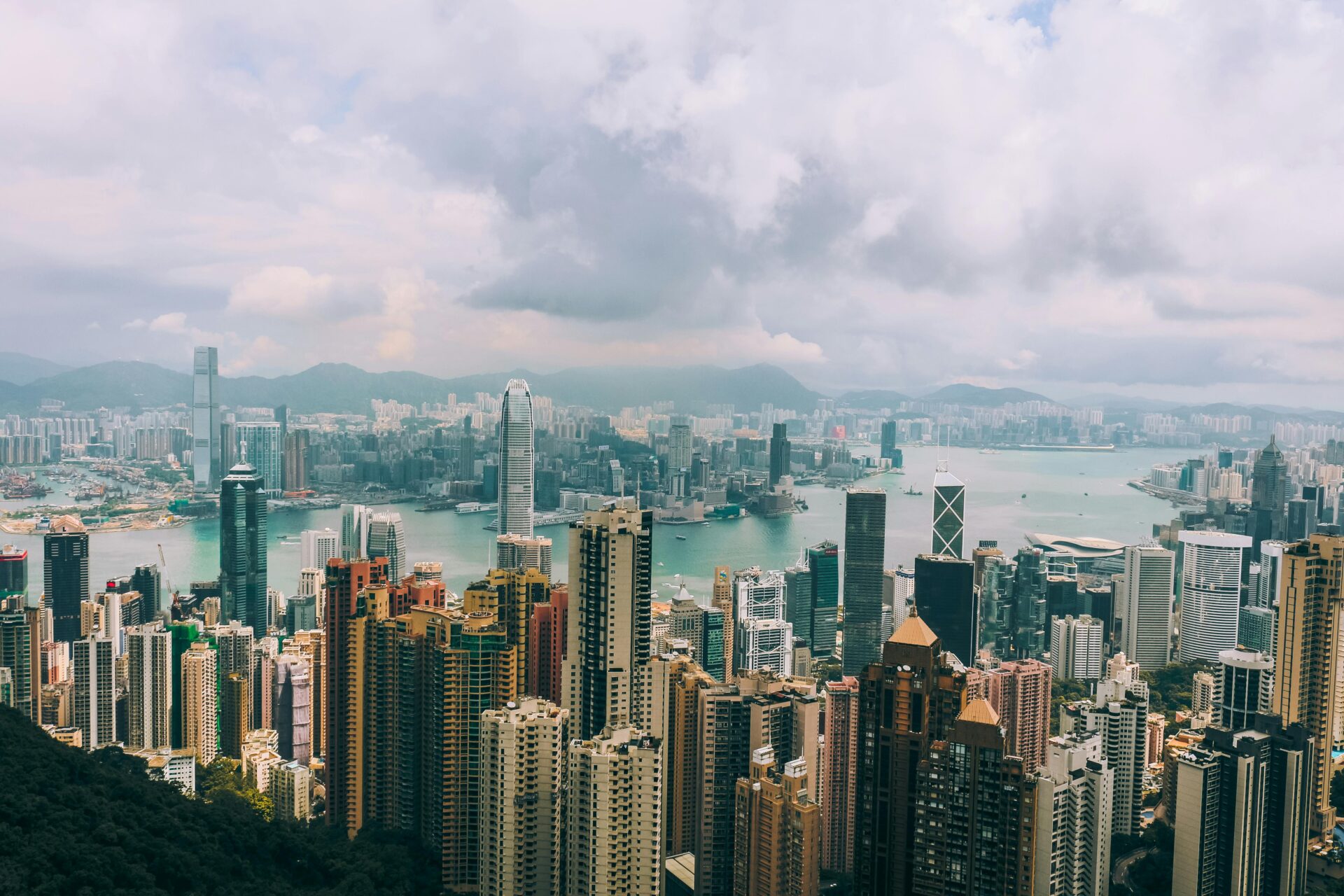
The Victoria Peak at 9:30am: the Lion’s Rock visible to the north, Kowloon visible across the harbour, the South China Sea visible to the south. At this hour on a clear day: the classic Hong Kong panorama that renders the city’s density comprehensible from above.
The specific Peak instruction: the Peak Tower observation deck is optional (HKD 42-52 / £4.16-5.15 additional). The outdoor viewing platform around the lower level of the Peak Tower is included with the tram ticket and gives the correct view. The Sky Terrace 428 (the highest outdoor viewing platform in Hong Kong at 428 metres) is worth it on an exceptionally clear day.
11:30am — Central and the Escalator
The Central-Mid-Levels Escalator (the outdoor escalator system connecting the Central business district to the Mid-Levels residential area — the longest outdoor covered escalator in the world at 800 metres, the system that goes downhill in the morning commute direction and uphill from 10:20am): the street-level view from the escalator, the specific Hong Kong urban texture visible from above street level — the wet markets on the street below, the neon signs at face height, the compressed street life of Central visible as the escalator moves through it.
The Soho and Hollywood Road neighbourhood along the escalator: the Hollywood Road antique shops (the Chinese furniture, the Qing Dynasty ceramics, the early Republican-period silver), the Man Mo Temple (the 1847 Taoist temple dedicated to the Gods of Literature and War, the interior permanently hazed with incense smoke, the massive incense coils hanging from the ceiling — each coil burning for 2-3 weeks: entry free), and the Possession Street (the street where the Union Jack was planted in 1841 when Hong Kong was ceded to Britain — now a completely unremarkable street, the historical marker easy to miss).
1:00pm — Lunch: City Hall Maxim’s Palace
The Maxim’s Palace (Edinburgh Place, Central — the Hong Kong City Hall’s ground floor, the most celebrated traditional dim sum restaurant in Hong Kong for the specifically theatrical trolley-cart experience at lunch): the lunch service (noon-3pm) at the full-scale Cantonese restaurant. The pushing aunties. The bamboo steamers. The tables of 12 sharing the turnstile.
HKD 50-80 / £4.95-7.92 per basket. Lunch for two: HKD 250-400 / £24.75-39.60.
3:00pm — The Star Ferry and Kowloon
The Star Ferry (from Central Pier 7 to Tsim Sha Tsui, the 10-minute harbour crossing — the most historically resonant public transport journey in Asia, the ferry operating since 1888, the HKD 2.50-3.40 / £0.25-0.34 lower deck fare the most efficient transport expenditure in Hong Kong): the harbour crossing on the lower deck, the skyline visible above the railing, the specific Hong Kong harbour experience available for the price of a text message.
Kowloon at 3pm: the Avenue of Stars (the promenade along the Tsim Sha Tsui waterfront, the bronze handprints of Hong Kong film stars, the view back across the harbour to the Hong Kong Island skyline — the most consistently photographed single view in Hong Kong), the Museum of History (the Hong Kong Museum of History at 100 Chatham Road South, the complete narrative of Hong Kong from prehistory to the 1997 handover: entry HKD 10 / £0.99).
6:30pm — The Diamond Hill Detour
The Chi Lin Nunnery and Nan Lian Garden (the Tang Dynasty-style wooden temple complex and the classical Chinese garden in the Diamond Hill district): MTR to Diamond Hill station (20 minutes from Tsim Sha Tsui), 5 minutes walk.
The Chi Lin Nunnery (the Buddhist nunnery built in the 1990s using traditional Tang Dynasty joinery techniques — no nails, the timber structure held together entirely by the wooden joinery system): the main hall, the lotus pond, the temple bells at 6pm.
The Nan Lian Garden (the adjacent classical garden, the pavilions, the bonsai trees, the bridge over the carp pond): free entry. The garden at sunset — the light on the wooden pavilions, the city visible behind the garden wall.
This 90-minute detour gives the most specifically Chinese cultural experience available in Hong Kong and is visited by approximately 2% of visitors to Tsim Sha Tsui despite being 25 minutes away on the MTR.
8:30pm — Dinner: One Dim Sum (Prince Edward)
The One Dim Sum (15 Playing Field Road, Prince Edward — the Michelin Bib Gourmand dim sum restaurant that serves the evening dim sum that most of Hong Kong’s contemporaries stopped offering in the 1980s): the evening dim sum service (6pm-midnight), the har gow and the cheung fun at Michelin-recommended quality at the prices of a neighbourhood restaurant.
HKD 40-70 / £3.96-6.93 per basket. Dinner for two: HKD 300-450 / £29.70-44.55.
10:00pm — Mong Kok Night
The Mong Kok district (the most densely populated urban area in the world by some measures — 130,000 people per square kilometre on some blocks): at 10pm, the night market in full operation.
The Ladies’ Market (Tung Choi Street, Mong Kok — the covered market stalls selling the clothing, the accessories, the tourist goods at negotiated prices): 10pm, the stalls still operating, the negotiation accepted and expected.
The Flower Market (Flower Market Road, Mong Kok): at 10pm, the flower stalls still open, the specific night flower market smell.
The Snack Street (the streets around the Langham Place area — the egg waffle vendors, the fishball skewers, the stinky tofu, the mango dessert shops): the late-night street food of Mong Kok.
DAY TWO
8:00am — The Sham Shui Po District
The Sham Shui Po (the working-class neighbourhood west of Mong Kok — the electronics market, the fabric market, the most characterful old-Kowloon streetscape remaining in Hong Kong after the urban redevelopment of the past 30 years):
The Apliu Street flea market (the electronics flea market — the second-hand cameras, the vintage audio equipment, the phone accessories, the 1990s computers): 8am, the market in morning operation, the dealers setting up the displays.
The fabric market (Ki Lung Street and the surrounding blocks — the fabric vendors supplying the Hong Kong garment industry, the specific fabric market that preceded and supplied the Kowloon tailors): the cashmere, the silk, the technical fabrics, the buttons and the trimmings in the specific density that a working trade market rather than a retail market provides.
10:30am — The Hong Kong Museum of Art
The Hong Kong Museum of Art (10 Salisbury Road, Tsim Sha Tsui — recently renovated and expanded, the collection covering Chinese art history from the Han Dynasty to contemporary Hong Kong): the specific collections:
The Chinese antiquities (the bronze vessels, the Tang and Song ceramics, the specific craft traditions that connect Hong Kong’s museum to the mainland collection in a way that Shanghai and Beijing’s museums approach from the other direction).
The contemporary Hong Kong art (the local artists working with the specific Hong Kong identity — the colonial legacy, the 1997 handover, the 2020 legislation — in the medium of contemporary painting and installation): the most specific museum for understanding what Hong Kong means to the people living through its current moment.
Entry: HKD 20 / £1.98.
1:00pm — Lunch: Tim Ho Wan
The Tim Ho Wan (multiple Hong Kong locations — the Michelin-starred dim sum chain that began as a single shopfront in Sham Shui Po in 2009 and that maintains Michelin star quality at the original Olympian City location): the char siu bao (the barbecue pork bun with the baked pastry topping — the signature dish, the crispy sugar glaze on the soft bun, the pork filling with the specific Tim Ho Wan char siu preparation): HKD 22-28 / £2.18-2.77 for four.
Full lunch for two: HKD 180-260 / £17.82-25.74.
3:00pm — Lantau Island and the Big Buddha (Optional)
The Ngong Ping 360 cable car from Tung Chung (the MTR Tung Chung line from Tsim Sha Tsui): the cable car over the Lantau hills to the Ngong Ping plateau, the Tian Tan Buddha (the 34-metre bronze Buddha on the hilltop — the largest sitting outdoor bronze Buddha in the world at the time of its completion in 1993), and the Po Lin Monastery.
Cable car return: HKD 235-335 / £23.27-33.17. Journey: 25 minutes each way. Allow 3 hours for the full Lantau visit.
6:00pm — The Symphony of Lights and the Harbour
The Symphony of Lights (the nightly light and laser show performed from the Kowloon waterfront at 8pm, the buildings of the Hong Kong Island skyline illuminated and animated by lasers synchronized to music — officially the world’s largest permanent light and sound show by Guinness certification): viewed from the Tsim Sha Tsui waterfront promenade or from the Star Ferry mid-crossing.
The crossing on the Star Ferry at 7:50pm (the 10-minute crossing that passes through the harbour at exactly the moment the show begins) is the correct viewing position.
8:30pm — Final Dinner: Typhoon Shelter Cooking
The Aberdeen Typhoon Shelter (the floating restaurant area on the southern side of Hong Kong Island — the Jumbo Kingdom has sunk, but the Aberdeen seafood restaurants remain): the typhoon shelter cooking (the wok-fried crab in the garlic and chilli, the specific cooking style developed in the typhoon shelter fishing community, the dish served on the boats in the floating village before it was codified into the restaurant tradition).
The Jumbo Seafood Restaurant alternatives in Aberdeen: HKD 500-800 / £49.50-79.20 per person. Worth booking ahead.
The Essentials
Getting to Hong Kong: Cathay Pacific direct from Heathrow (12 hours), British Airways direct, Virgin Atlantic. Return: £550-900. Hong Kong International Airport (HKX) is one of the finest airports in the world and is the primary reason the Hong Kong layover is worth planning around.
Airport to city: The Airport Express (HKX to Hong Kong Station in 24 minutes — HKD 100-115 / £9.90-11.39 one way, the Octopus card accepted). The most efficient airport-to-city connection in Asia.
The Octopus Card: The contactless transit card covering the MTR, buses, trams, the Star Ferry, and most retail and food purchases in Hong Kong. Buy at any MTR station (HKD 150 / £14.85 includes HKD 100 deposit and HKD 50 initial credit). The single most useful object for navigating Hong Kong.
The political context: The National Security Law of 2020 has changed the political environment. Certain political activities and expressions that were previously normal in Hong Kong may now carry legal risk. The Foreign Office travel advice at gov.uk/foreign-travel-advice/hong-kong provides the current UK government assessment. As a tourist, the overwhelming likelihood is that the 48 hours described in this guide will proceed without any contact with the political situation.
Where to stay: The Peninsula Hong Kong (Salisbury Road, Tsim Sha Tsui — the finest hotel in Asia by many assessments: £280-500/night), the Tuve Hotel (16 Tsing Fung Street, Tin Hau — the most design-forward mid-range hotel in Hong Kong: £100-180/night), the YHA Mei Ho House (70 Berwick Street, Sham Shui Po — the heritage hostel in a restored 1950s public housing block: private rooms from £50-80/night).
The Closing Moment
I was on the Star Ferry at 8:02pm. The Symphony of Lights had just begun on the Hong Kong Island skyline — the HSBC tower, the Bank of China, the ICC in Kowloon, all simultaneously illuminated and laser-traced against the dark.
The crossing takes 10 minutes. The symphony takes 15. The ferry reaches Kowloon before it ends.
On the lower deck, a family of four was positioned at the front rail. The children were perhaps 7 and 10. The 7-year-old was watching the lights. The 10-year-old was photographing with a phone. The parents were watching the children rather than the skyline.
This is the correct position. The Star Ferry at dusk, the harbour crossing, the skyline lit: the most efficiently assembled single experience in any 48-hour guide I have written. Ten minutes. HKD 3.40 / £0.34. The most famous harbour view in Asia.
The ferry docked. The family filed off. The lasers continued on the other side of the harbour.