


The Livraria Lello at 9:30am opening when the Art Nouveau staircase is in the morning light and the eight other visitors in the room have not yet been replaced by the 400 who arrive at 11am, the Francesinha at the Café Santiago at noon — the Porto sandwich that bears no resemblance to anything in the Portuguese culinary vocabulary and that is the most specific single meal in this guide — and why Porto, smaller and quieter and cheaper than Lisbon by 30-40% on every metric, gives the traveller the version of Portugal that Lisbon presents and then covers over with its own success.
Reading time: 8 minutes | Last updated: 2026
Porto is Portugal’s second city — 240,000 in the municipality, the city on the Douro River estuary 3km from the Atlantic Ocean. Porto gave Portugal its name (Portus Cale, the Roman port) and gave the world Port wine (the wine that the British merchants who settled in Porto in the 17th century began fortifying with grape spirit to survive the ocean crossing to England, the specific Porto wine trade that produced the specific Porto architectural and cultural relationship with Britain visible in the Factory House, the British cemetery, and the names above the Port wine lodge doors across the river in Vila Nova de Gaia).
The city is more honest than Lisbon in the specific sense that Lisbon has been polished by its tourism success in a way that Porto has not yet been. The azulejo tiles are still falling off the buildings in Porto. The streets in the Bonfim neighbourhood are still occupied by the residents rather than the restaurants. And the Douro is still the Douro — the working river, the salmon returning, the wine barges on the water.
The 48 Hours
DAY ONE
8:00am — The Bolhão Market
The Mercado do Bolhão (Rua Formosa — the 1914 iron and granite covered market, renovated and reopened 2022): at 8am, the fish vendors receiving the morning catch from the Atlantic coast (the percebes — the barnacles scraped from the rocks of the Minho coast, the specific northwest Iberian shellfish that tastes of the ocean at the immediate base), the vegetable vendors with the Minho produce, and the market café at the ground floor corner serving the galão (the Portuguese milky coffee, the correct Porto morning drink).
The specific Bolhão instruction: the cheese vendor in the northeast corner selling the queijo da Serra da Estrela (the sheep’s milk cheese from the mountain range 200km inland — the soft, slightly runny cheese at room temperature, the best Portuguese cheese by a significant margin and the one most UK visitors never encounter because the export version is firmer and different): buy 200g and eat it in the market.
9:30am — The Livraria Lello
The Livraria Lello (Rua das Carmelitas 144 — the 1906 bookshop, the carved red Art Nouveau spiral staircase, the painted glass ceiling): entry €5 / £4.31 (redeemable against a purchase). Book at livrarialello.pt — the advance booking recommended for peak season, the 9:30am slot the first of the day.
At 9:30am: eight to fifteen visitors in the building. At 11am: two hundred. The staircase at 9:30am is a staircase. At 11am it is a photography queue.
The specific Lello instruction: look at the staircase from the ground floor first (the full profile of the Art Nouveau curve visible from below), then walk to the upper level (the view of the ground floor from above, the painted glass ceiling at eye level), then look down the staircase (the most dramatic single view in the building). The bookshop is a working bookshop — buy something. The travel section has Portuguese-language travel literature that the tourist shops on the Rua de Santa Catarina do not.
11:00am — The Clérigos Tower
The Torre dos Clérigos (Rua São Filipe de Nery — the 76-metre Baroque tower, 240 steps, the most complete panoramic view of Porto available from any tower): entry €6 / £5.17. The specific Clérigos view: the Douro to the south, the Atlantic visible to the west on clear days, the Dom Luís I Bridge visible on the river curve.
1:00pm — The Francesinha at Café Santiago
The Café Santiago (Rua de Passos Manuel 226 — the Porto restaurant that has been serving the Francesinha since 1959, the most consistently cited for the correct version of the dish by the Porto residents):
The Francesinha (the Porto sandwich — the bread layers containing the cured ham, the linguiça sausage, the fresh sausage, and the steak, covered with melted cheese and then the specific spiced tomato-beer sauce poured hot over the construction, a fried egg on top): the most specifically Porto single dish, invented in Porto in the 1950s by Daniel Silva inspired by the French croque monsieur, now specific to Porto and unavailable in recognisable form in Lisbon or anywhere else.
The Francesinha sauce (the secret of each restaurant — the combination of beer, white wine, tomato, bay leaf, piri piri, and the restaurant’s specific additions, simmered for hours): the Café Santiago sauce is the reference, the reddish-orange colour and the specific spice balance the quality indicator.
€13-15 / £11.21-12.93. A complete meal. Nothing else required or possible immediately after.
3:00pm — The São Bento Station and the Ribeira
The São Bento Station (the central railway station — the 20,000 azulejo tile panels by Jorge Colaço depicting Portuguese historical scenes in blue and white, installed between 1905 and 1916): accessible free of charge from the main concourse at any time — the station is a working station, the tiles visible to anyone passing through.
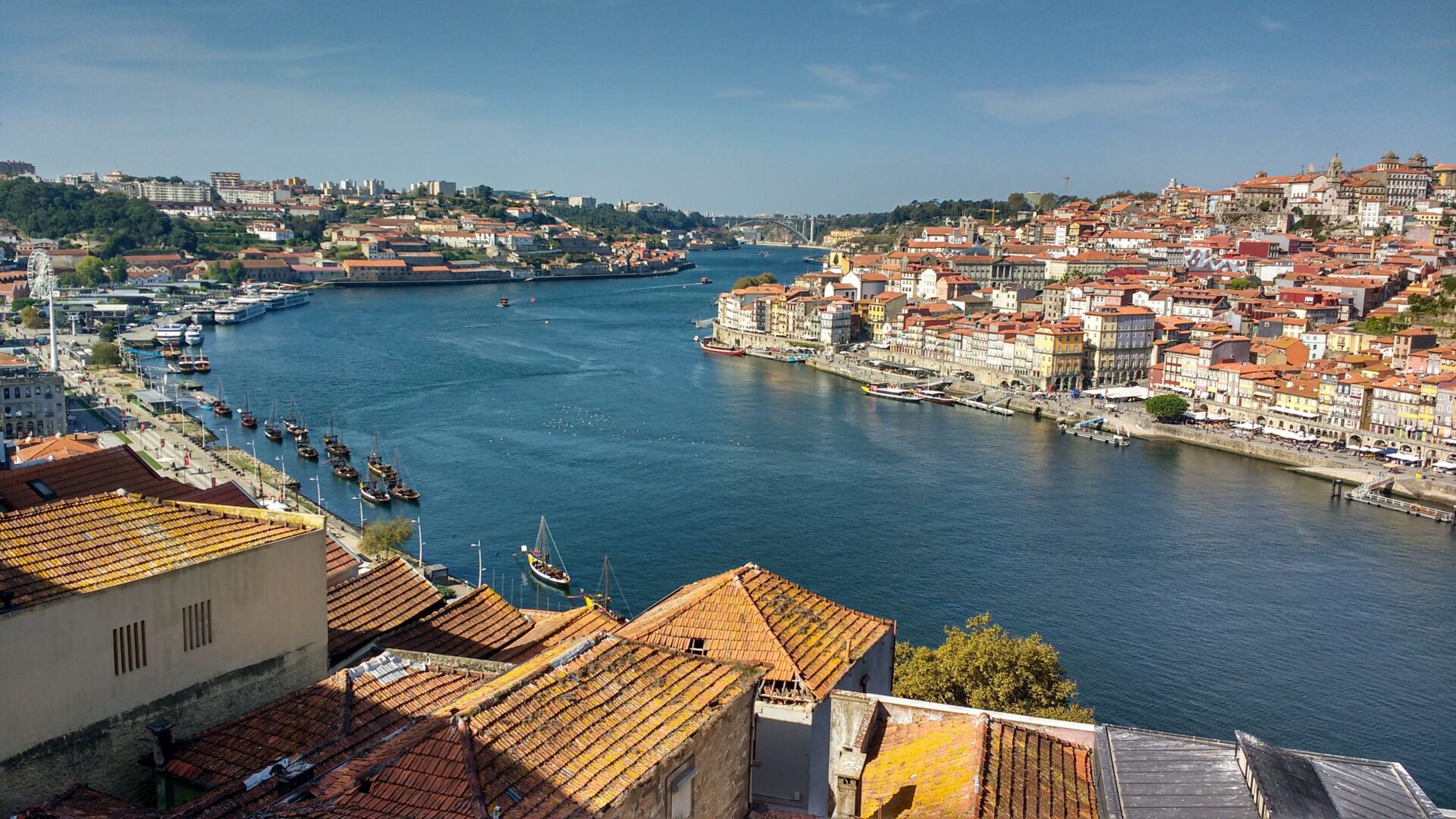
The Ribeira (the riverfront district — the coloured buildings on the north bank of the Douro visible from every Porto elevation, the UNESCO-listed historic centre): the afternoon in the Ribeira, the specific Porto river quality visible at the bank level.
5:00pm — The Dom Luís I Bridge Walk
The Dom Luís I Bridge (the 1886 double-deck iron bridge over the Douro, the lower deck carrying the trams and the pedestrians, the upper deck carrying the Metro Line D): walk the upper deck (the most atmospheric single urban pedestrian experience in Porto — the city on both banks visible simultaneously, the Douro below, the Port wine lodges of Vila Nova de Gaia on the south bank): free.
7:00pm — Vila Nova de Gaia: The Quinta do Crasto Tasting
The Port wine lodges of Vila Nova de Gaia (the south bank of the Douro where the Port wine matures in the lodges — the cool, humid lodge cellars at constant temperature, the barrels stacked to the ceiling visible through the gates): the Quinta do Crasto tasting room (the most atmospheric lodge tasting in Gaia, the view over the Douro from the terrace):
The Port wine flight (the white Port — the crisp, slightly sweet aperitif, served cold; the ruby — the young red, the fresh fruit character; the tawny — the oxidised amber, the nutty complexity of the wood-aged Port; and the vintage colheita — the single-vintage tawny, the specific year’s harvest aged in cask for 10+ years): €15-25 / £12.93-21.55 for the flight. Book at quintadocrasto.pt.
9:00pm — Dinner: the Foz
The Foz do Douro (the mouth of the Douro, 5km from the Ribeira by taxi — the Atlantic-facing neighbourhood, the most atmospheric Porto dinner destination): the Boa Nova Tea House (the Álvaro Siza Vieira-designed restaurant on the Atlantic rocks, the Michelin star, the seafood from the ocean 30 metres away): book at restaurantebaonova.pt. Tasting menu from €150 / £129.31.
The accessible Foz alternative: the Cantinho do Avillez (Rua de Mouzinho da Silveira 166 — the José Avillez brasserie, the modern Portuguese, the petisco menu): €35-50 / £30.17-43.10 per person.
DAY TWO
9:00am — The Serralves Museum
The Museu de Arte Contemporânea de Serralves (Rua D. João de Castro 210 — the 1999 Álvaro Siza Vieira museum building, the permanent collection of contemporary art from 1960 to the present, and the Serralves Villa and garden): the building as the object — the Siza Vieira architecture, the relationship between the interior light and the exterior park, the specific museum quality where the building is inseparable from the collection it houses. Entry: €20 / £17.24.
The Serralves garden (the Art Deco garden surrounding the 1930s Villa Serralves and the 1999 museum, the most pleasantly walked garden in Porto): open to visitors with the museum ticket.
1:00pm — Lunch: the Mercado Bom Sucesso
The Mercado Bom Sucesso (the Praça Bom Sucesso — the Art Deco market converted to a food hall, the Porto food vendors in the renovated 1952 building): the bacalhau à brás (the salted cod shredded with the scrambled eggs and the thin potato sticks — the most specifically Portuguese single dish, the one that appears in all 365 of the claimed traditional bacalhau preparations of Portugal): €14-18 / £12.07-15.52.
3:00pm — Matosinhos and the Fish Market
Matosinhos (the Atlantic fishing town immediately north of Porto, 20 minutes by Metro Line A from the Trindade station — the working fishing port, the wholesale fish market, and the most concentrated restaurant district for fresh grilled fish in the Porto area): the lota (the fish auction — visible from the public gallery above the auction floor, the auction of the morning catch, the restaurants bidding in the specific Portuguese fish market rhythm): free.
The restaurant row (the Rua Heróis de França in Matosinhos — the grilled fish restaurants that have been cooking the morning’s catch over charcoal since 6pm): the robalo (the sea bass, whole, grilled, the Portuguese lemon and the olive oil on the plate): €18-28 / £15.52-24.14 at the market-facing restaurants.
The Essentials
Getting to Porto: easyJet, Ryanair, TAP direct from UK airports. 2 hours. Return: £40-100.
Getting around: The Andante Card (the Porto transit card — €0.60 / £0.52 per journey on the Metro, the bus, the tram, the funicular. The Z4 24-hour card: €7.60 / £6.55 for unlimited travel including the Metro to the airport). The Porto walk is the primary transport — the Ribeira to the Serralves is 3km, the Dom Luís to the Clerigos is 600m.
The Douro Valley day trip: The Douro Valley wine country is 1.5-2 hours from Porto by train (the Douro line from São Bento to Régua — the most scenic train journey in Portugal). The wine estate visits at Régua or Pinhão add a third day to the Porto circuit.
Where to stay: The Yeatman (the Port wine hotel above Gaia with the Douro view: £150-300/night), the Torel 1884 (the boutique hotel in the Bonfim: £80-150/night), the Gallery Hostel (Rua Miguel Bombarda 222, Bonfim: private rooms from £30-55/night).
The Closing Moment
I was at the Café Santiago at 1:03pm. The Francesinha arrived in approximately 6 minutes from the order — the bread visible below the cheese and the sauce, the egg on top, the dish in the specific condition that no photograph accurately represents because the sauce steams and the cheese melts and the whole construction is approximately 2°C from impossible.
The man at the table to my left was eating his second Francesinha of the week. I know this because he told me, unprompted, in Portuguese with the occasional English word. He ate at Café Santiago twice a week. He had been doing this for eleven years.
The Francesinha is not a tourist dish. It is a Porto dish. The eleven-year customer to the left is the evidence.
The sauce was the correct sauce. The egg was cooked correctly. The bread held the structure to the end.
Porto is the city where the specific thing is more important than the general thing, and the Francesinha is the most specific single thing available in the city.