
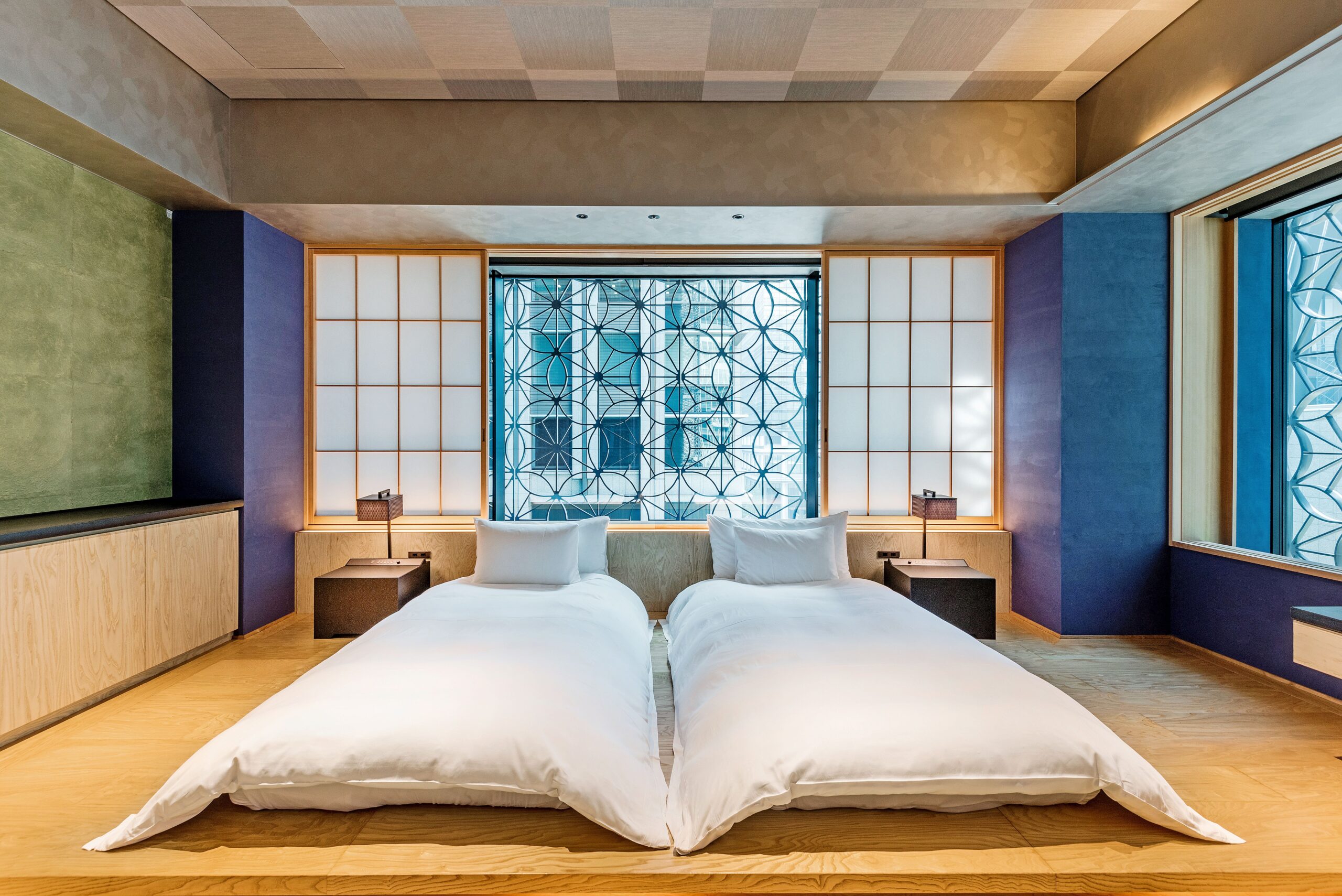
The specific ryokan question: which of the 80,000 registered ryokan in Japan give the experience that justifies the price, and which give the experience of sleeping on a futon in a tatami room and eating food you cannot identify in a hotel that charges the luxury rate because it has been in business since 1688 and that’s worth something to someone. The answer is not what most Japan travel writing suggests — the most expensive ryokans are not always the correct ryokans, and some of the most specific ryokan experiences available in Japan cost less than the Kyoto price. This guide names the specific properties.
Reading time: 8 minutes | Last updated: 2026
The ryokan (the Japanese inn — the tatami mat flooring, the futon laid by the attendant each evening, the yukata robe for the dinner and the morning, the kaiseki dinner of 8-12 courses served in the room or the dining hall, the onsen — the natural hot spring bath — as the central amenity) is the most specifically Japanese accommodation experience available to the foreign visitor and the one that most ryokan guides present without sufficient specificity.
The specific ryokan questions that this guide answers: which onsen water is the correct temperature and mineral composition for the bath that the body needs after the Kyoto temple circuit? Which kaiseki kitchen uses the seasonal produce from the prefecture and which uses the seasonal produce from the supplier? And which ryokan attendant (nakai) will understand that the foreign guest needs a pillow in addition to the futon bolster?
The Properties
1. Tawaraya (Kyoto) — The Reference
Tawaraya (Fuyacho Aneyakoji-agaru, Nakagyo-ku, Kyoto — the ryokan that has been in continuous operation since 1705, the 18 rooms, the garden that the rooms look onto, the koto music audible from the garden in the evening): the most cited ryokan in Japan by the international travel press and the one that earns the citation.
Why it’s first: The Tawaraya gives the kaiseki from the specific Kyoto culinary tradition (the seasonal produce from the Kyoto farmers, the dashi made from the specific kombu from Hokkaido and the Kyoto katsuobushi, the Kyoto vegetable — the kyo yasai — that is the most specific regional vegetable cuisine in Japan), the garden (the inner garden visible from the room, the privacy given by the garden walls, the garden that is the room’s outdoor extension), and the nakai (the room attendant, the same nakai for each guest throughout the stay — the continuity of service that the large hotel cannot give).
What it costs: ¥80,000-200,000 / £424.08-1,060.20 per person per night including dinner and breakfast. Book at tawaraya-kyoto.com — the hotel is frequently full 3-6 months ahead for the peak seasons.
Who has stayed: Steve Jobs, Bill Clinton, the Rockefellers. The Tawaraya guest list is not a reason to choose the property. The garden and the kitchen are.
2. Beniya Mukayu (Kaga, Ishikawa Prefecture) — The Onsen
Beniya Mukayu (the Yamanaka Onsen district, Ishikawa Prefecture — 3 hours from Kyoto by shinkansen to Kanazawa and then local rail, the inn at the gorge edge, the Kakusenkei Gorge visible from the riverside rooms):
Why it’s second: The Yamanaka Onsen (the specific mineral composition of the hot spring — the sodium bicarbonate and the calcium chloride, the water that the skin absorbs rather than sitting in) gives the most specifically therapeutic bath in Japan by the assessment of the Japanese spa community. The Beniya Mukayu’s rotenburo (the outdoor hot spring bath on the gorge edge, the Kakusenkei River audible below) is the most specific outdoor bath-in-nature experience available at a luxury ryokan.
The kaiseki kitchen at Beniya Mukayu uses the Noto Peninsula seafood (the crab, the yellowtail, the abalone from the Sea of Japan) and the Kaga vegetables (the Kaga region’s specific root vegetables, the burdock and the lotus root and the Kaga carrot, the larger and sweeter Kaga variety) in the seasonal menu that reflects the Kanazawa food tradition rather than the Kyoto one.
What it costs: ¥50,000-120,000 / £265.05-635.95 per person per night including dinner and breakfast. Book at mukayu.com — significantly more accessible than the Tawaraya by price and by availability.
3. Gora Kadan (Hakone) — The Accessibility
Gora Kadan (Gora, Hakone — the former imperial villa converted to a ryokan, the 38 rooms, the Mount Fuji view on clear days, the Hakone hot spring water from the volcanic geothermal system):
Why it’s third: The Gora Kadan is the most accessible of the first-tier ryokans from Tokyo — the 90-minute journey from Shinjuku by the Odakyu Romancecar gives the ryokan experience the same day as arrival from the UK. The Hakone hot spring (the volcanic water, the specific sulphur content that gives the Hakone waters the reputation as the most effective curative onsen in the Kanto region) is the specific reason to choose Hakone over Kyoto for the ryokan night.
What it costs: ¥40,000-100,000 / £212.04-530.10 per person per night. Book at gorakadan.com.
4. Asaba Ryokan (Shuzenji, Izu Peninsula) — The Discovery
Asaba (Shuzenji, Izu Peninsula — 2 hours from Tokyo, the inn on the Katsura River, the noh stage in the garden, the specific Shuzenji onsen town):
Why it’s fourth: The Asaba is the ryokan that the Japanese luxury travel community considers the finest in the Kanto region and that the international press has not yet fully discovered — the Asaba is consistently cited in the Michelin accommodation guide and the Japanese travel media and infrequently in the English-language equivalent. This means availability that the Tawaraya cannot match.
The noh stage (the noh theatre performance held in the garden stage on certain evenings — the most specific single cultural experience available at any Japanese ryokan, the ancient Japanese theatrical tradition performed in the garden of the inn in the evening after the kaiseki dinner): book the noh performance evening when making the reservation.
What it costs: ¥40,000-90,000 / £212.04-477.09 per person per night. Book at asaba.jp — the English booking available by email.
5. Zaborin (Hokkaido, Niseko) — The Winter Ryokan
Zaborin (Hanazono, Niseko, Hokkaido — the winter skiing destination, the ryokan at the foot of the Hanazono ski area, the outdoor onsen in the snow):
Why it’s fifth: The Niseko ski season gives Hokkaido’s powdered snow from mid-December to mid-March — the deepest powder snow in Japan, the ski in/ski out access from the most international ski resort in Asia. The Zaborin gives the ryokan format with the ski access: the futon and the kaiseki and the onsen in the snow, and the morning shinkansen sprint to the Hanazono Gondola.
The outdoor rotenburo in winter: the bath at 40°C while the Hokkaido winter snow falls on the face — the specific Japan winter experience available only in the snow country onsen.
What it costs: ¥80,000-180,000 / £424.08-954.18 per person per night in peak ski season (January-February). Book at zaborin.com.
The Ryokan Protocol
What to expect that most guides don’t explain:
The shoes at the door: Remove shoes at the entrance foyer (the genkan). The slippers provided take you to the room. The tatami mat room requires bare feet or the tatami socks (provided) — the outdoor slippers remain in the corridor.
The yukata: The yukata (the lightweight cotton robe) is provided in the room. Wear it for the dinner, for the onsen, for the breakfast. The correct yukata wrap: the left side over the right (the right over the left is the funeral dress — the nakai will correct you kindly if needed).
The futon: The futon is laid by the nakai while the guest is at dinner. The mattress is on the tatami floor. This is lower than a Western bed. The specific physical adjustment: the floor-level sleeping is good for the back but unfamiliar. The Japanese pillow (the firmer, more cylindrical pillow) is also available in a softer Western-style variant — request it at arrival.
The kaiseki dinner sequence: The kaiseki is served in sequence — the sake, the sakizuke (the amuse-bouche), the owan (the soup), the sashimi, the yakimono (the grilled course), and so on to the dessert. Do not rush the sequence. The nakai times the service by observation — if the plate is ready to be removed, the next course arrives. If the plate is not finished, the next course waits.
The onsen etiquette: Wash thoroughly before entering the communal bath. Do not enter the bath with the towel. The small towel is for modesty in transit and drying; it stays outside the bath. Do not allow the towel to contact the bath water.