



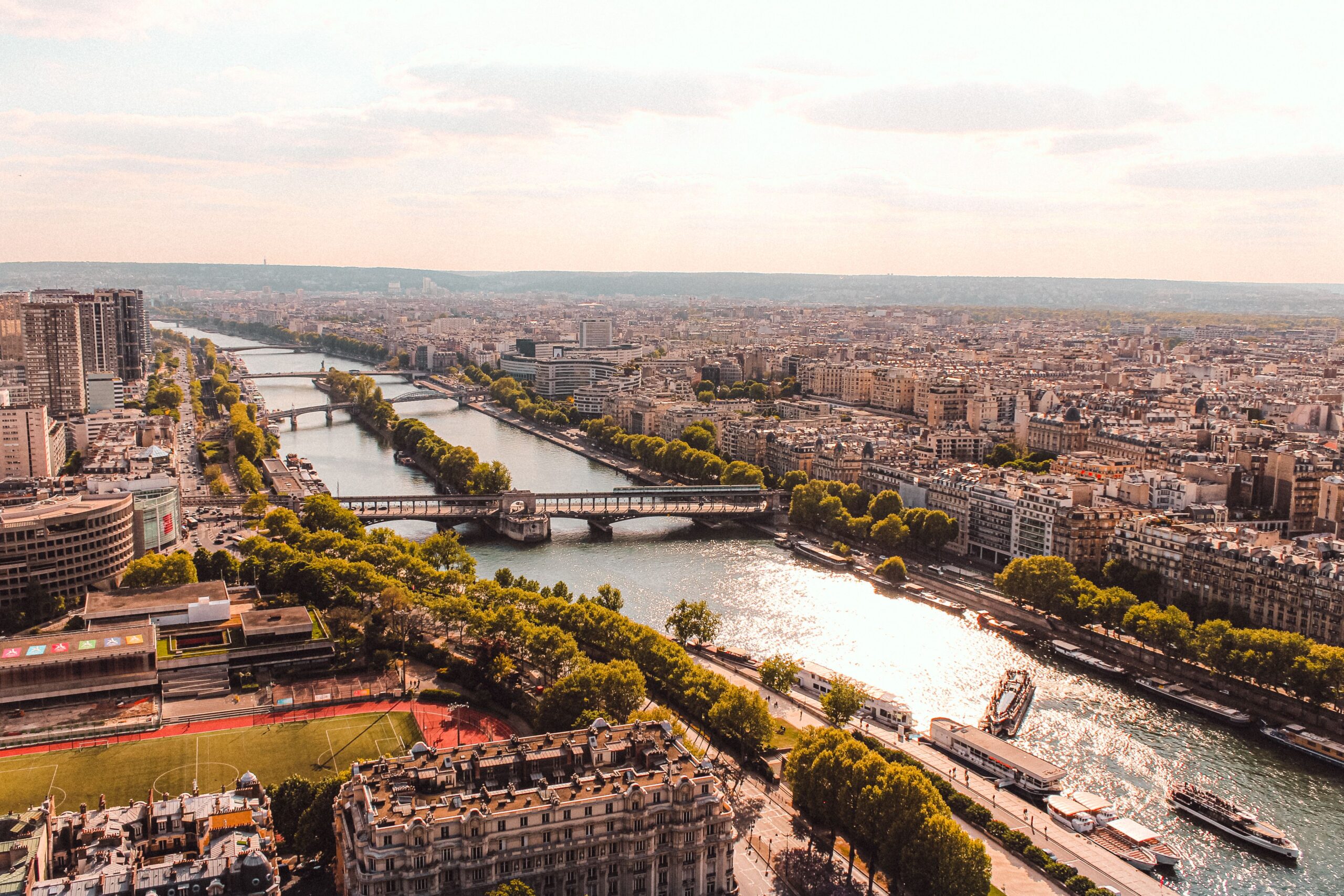
The specific France with kids problem: the French restaurant that the parents want to eat at serves the menu at 7:30pm, the children need to eat at 6pm, and the compromise (the brasserie that serves all day) is fine but not the reason you came to France. The solution: the market-and-picnic approach that the French themselves use with children, the boulangerie breakfast that resolves the morning, and the specific Loire château circuit that gives children the moat and the drawbridge and the dungeon before giving adults the Renaissance architecture — and why France with children rewards the specific preparation that the guidebook doesn’t give you and the local family does.
Reading time: 10 minutes | Last updated: 2026
France is the correct European family destination for the family that has been to Spain and wants the next level of cultural engagement — the history is deeper (the Roman amphitheatre at Nîmes is older than the Colosseum, the Loire châteaux are the finest concentration of Renaissance architecture outside Italy, and the prehistoric cave paintings of the Dordogne are 20,000 years older than Stonehenge), the food is the foundation of everything the UK food culture aspires to, and the specific French relationship with children at the table (the children’s plate, the half portion on request, the service that understands that a 7-year-old may need the food in 8 minutes rather than 25) is more practically child-welcoming than the UK food culture gives France credit for.
When to Go
May-June: The correct family France window. The school holiday intersection (the UK half-term in late May coincides with a French holiday period), the weather warming (Normandy at 18-22°C, Provence at 24-28°C, Paris at 20-24°C), and the lavender not yet at peak (the Provence lavender peaks in July — good) but the sunflowers in the Loire and the Dordogne beginning. The crowds 40-60% of August peak.
July-August: The French school holiday (grandes vacances) peak — the accommodation books out in Provence and the Loire 3-4 months ahead, the autoroutes operate at the specific August speed of the family MPV convoy. Manageable with 6-month advance booking. Hot (Provence 35-38°C, the Dordogne 30-35°C).
September-October: The best family France window after May-June. The children who can travel outside the UK school holiday (the October half-term) find France significantly quieter and cheaper. The vendange (the grape harvest) visible in Burgundy and the Loire.
The Family France Circuit Options
Option 1: Paris + the Loire Valley
The correct Paris for children:
The specific Paris child engagement: The Musée d’Orsay (the Impressionist collection — the Van Gogh self-portrait, the Monet water lilies, the Renoir — at the correct age for the child who has been given the context (ages 9+): the paintings that appear in UK school art rooms are in this museum). The Sainte-Chapelle (the Gothic chapel on the Île de la Cité — the 1,113 stained glass panels covering 75% of the wall area, the light through the coloured glass at 11am the specific Paris morning experience that no art book accurately represents: entry €13 / £11.21, the queue typically 15-30 minutes). The Pompidou Centre (the inside-out building — the escalators in the tubes on the outside of the building giving the Paris roofscape as the ascent occurs: entry €15 / £12.93, the exterior escalator free).
The Louvre for families (the honest assessment): The Louvre with children under 12 requires specific strategy — the Winged Victory of Samothrace (the headless Nike, the dramatic staircase, the child-comprehensible scale), the Venus de Milo (the famous armless statue, the immediate recognition, the specific conversation about why the arms are missing: nobody knows), and the Egyptian Antiquities (the mummies — the universally child-engaging exhibit in any museum that has them). The Mona Lisa (the 77cm × 53cm painting behind the barrier, the crowd, the phone cameras): spend 5 minutes, move on.
The Loire Valley:
The Château de Chambord (the most child-appropriate château on the Loire — the double-helix spiral staircase designed by Leonardo da Vinci, the two staircases in one that allow two people to ascend and descend simultaneously without meeting, the specific Leonardo engineering visible in the physical staircase rather than in the drawing): entry €15 / £12.93.
The Château de Villandry (the formal garden château — the three levels of Renaissance garden (the water garden, the ornamental garden, the kitchen garden) give the château experience at the outdoor rather than indoor level, the correct château for children under 7 who need the exterior space): entry €14 / £12.07.
The Troglodyte dwellings at Saumur (the houses cut into the tufa rock face — the specific Loire Valley geology visible in the inhabited rock houses, the guided tour of the troglodyte village: entry €7 / £6.03): the Loire experience that most parents miss and that children find immediately comprehensible (people lived in caves and called them houses).
Option 2: Normandy and the D-Day Beaches
The D-Day sites for families (ages 10+):
The American Cemetery at Colleville-sur-Mer (the Normandy American Cemetery above the Omaha Beach — the 9,387 white marble crosses and Stars of David visible from the cemetery entrance, the specific scale of the cemetery (the rows extending to the tree line in every direction) giving a visual argument about the scale of the landings that no statistic can give: free entry).
The D-Day Museum at Arromanches (the circular cinema giving the 360-degree film of the D-Day landings — the simultaneous footage from multiple cameras giving the landing in full panorama: entry €8 / £6.90 per adult, children under 10 free).
The Pointe du Hoc (the cliff face that the American Rangers scaled on June 6, 1944 — the craters from the naval bombardment still visible in the ground 80 years later, the German bunkers accessible, the specific physical geography of the landing visible at the ground level): free.
The Bayeux Tapestry (the 70-metre embroidered cloth depicting the Norman Conquest of England in 1066 — the specific Bayeux instruction for children: “the people sewing this cloth were telling the same story from a different point of view than the one taught in English schools”): entry €17 / £14.66, children under 10 free.
Option 3: Provence and the Dordogne
The Dordogne Prehistoric Circuit (ages 8+):
The Grotte de Font-de-Gaume (the cave with the last accessible original Cro-Magnon paintings in France — the bison, the mammoths, the horses painted 12,000-17,000 years ago): entry €14 / £12.07, children under 18 free. Book at solutreen.fr months ahead — the maximum 200 visitors per day sells out 3+ months ahead in peak season.
The Lascaux IV (the full-scale digital reproduction of the Lascaux Cave, closed to visitors since 1963 — the replica gives the same scale and the same images with the added interpretive context): entry €23 / £19.84, children €14 / £12.07.
The specific Dordogne instruction for children: “the people who painted these animals were the same species as you, with the same brain capacity, living in this exact valley 17,000 years ago. They painted in the dark with torches. Nobody has been able to explain the purpose.”
The Périgord Noir (the Black Périgord):
The bastide towns (the medieval planned towns of the Périgord Noir — the Domme on the cliff above the Dordogne River, the Monpazier on the plain, the specific medieval grid plan visible from above): free access.
The Château des Milandes (the château of Josephine Baker — the American-born French singer and dancer who adopted 12 children from 12 different countries and nationalities in the 1950s to demonstrate that the rainbow family was possible): entry €12 / £10.35. The château gives the Josephine Baker story — the most compelling single French château narrative for a family that has done enough castle architecture.
The Family France Food Problem Solved
The picnic approach:
The French market (the marché — the weekly outdoor market in every French town, the stallholders from the surrounding farms selling direct) gives the family picnic components: the charcuterie (the pâté, the saucisson, the jambon blanc), the cheese (the Brie from the Seine-et-Marne, the Comté from the Jura, the fresh chèvre from the Loire goat farms), the baguette, the tomatoes, the fruit.
The picnic eaten on the château lawn, the riverbank, or the village square is the correct French family meal — it is what the French families do, it costs 40% of the brasserie equivalent, and the children who select their own components from the market have an engagement with French food culture that the restaurant menu doesn’t give.
The boulangerie breakfast:
Every French town has a boulangerie open by 7am. The croissant (the correct French croissant — the laminated dough, the butter layering visible in the cross-section, the specific crunch of the exterior and the stretch of the interior — nothing like the UK supermarket equivalent), the pain au chocolat (the universal child-winning decision at the boulangerie counter), and the jus d’orange pressé (the fresh-pressed orange juice at the bar counter): €5-8 / £4.31-6.90 for the full family boulangerie breakfast.
The children’s menu:
French restaurants universally offer the menu enfant (children’s menu) — the steak haché (the minced beef steak), the pâtes (the pasta), the poulet rôti (the roast chicken), and the fries. The price: €10-14 / £8.62-12.07 including the dessert. The French children’s menu is not a failure of ambition — it is the food that French children eat at home and that the restaurant replicates.
The Age-by-Age France Guide
Ages 3-6
What works: The boulangerie (the daily pastry selection, the child’s choice). The market (the strawberry from the Périgord, the fraise des bois — the wild strawberry, available only in France in season and unlike any strawberry the child has eaten). The beach (Normandy beaches, the Atlantic coast beaches of the Vendée, the Mediterranean of the Côte d’Azur). The château moat (the Château de Brézé in the Loire has the deepest dry moat in France — visible from the drawbridge and immediately comprehensible).
Ages 7-12
What works: Everything in the 3-6 list plus: the D-Day beaches (the scale-comprehension that the cemetery gives), the Dordogne caves (the prehistoric art — ages 8+), the Loire château circuit (Chambord’s staircase at ages 7+), and the baguette-at-the-boulangerie daily ritual.
Ages 12-16
The specific teenage France:
The Louvre at midnight (the Friday and Saturday late opening until 10pm — the collection after the tour groups have left, the Winged Victory visible from the end of the Denon Wing corridor at 9pm with nobody else in the corridor): entry standard price but the experience is different. The outdoor cinema in July-August (the cinéma en plein air at the Parc de la Villette in Paris, the films under the stars on the inflatable seats on the lawn): entry €6 / £5.17 per person.
What It Costs — Family of Four
| Category | Budget | Mid-Range |
|---|---|---|
| Return flights/Eurostar (UK-Paris or UK-Lyon) | £400-700 | £600-1,000 |
| Car hire (7 days) | £200-350 | £280-500 |
| 7 nights accommodation | £560-980 | £980-1,960 |
| Food (7 days, picnics + restaurants) | £250-400 | £400-700 |
| Site entries (châteaux, museums, caves) | £100-200 | £120-250 |
| Total (7 nights, family of 4) | £1,510-2,630 | £2,380-4,410 |