
The specific freediving ranking: not the most dramatic underwater landscape (that is the scuba diving ranking) but the combination of the specific water conditions that freediving requires (the calm surface, the thermocline visible at depth, the 20+ metre visibility that allows the freediver to see the full descent from below), the instructor quality that determines whether the first breath-hold dive at 10 metres teaches the correct relaxation or the incorrect panic management, and the specific marine encounter that motivates the specific freediver — the sperm whale at Dominica, the thresher shark at the Malapascua dawn dive, the whale shark in the Donsol corridor. Freediving gives the encounter without the bubble noise that the scuba diver creates and without the 20-minute decompression stop that ends the dive. The price of these advantages: the breath.
Reading time: 8 minutes | Last updated: 2026
Freediving (breath-hold diving — the diver descending on a single breath rather than using the compressed air of the scuba tank) is the oldest form of underwater exploration and the most recently professionalised. The competitive freediving records (the no-limits discipline, the world record at 253 metres on a single breath) exist at the extreme end of a spectrum whose accessible end is the beginner freediver descending to 10-15 metres on a relaxed breath-hold at an Ibiza bay or a Koh Tao coral reef.
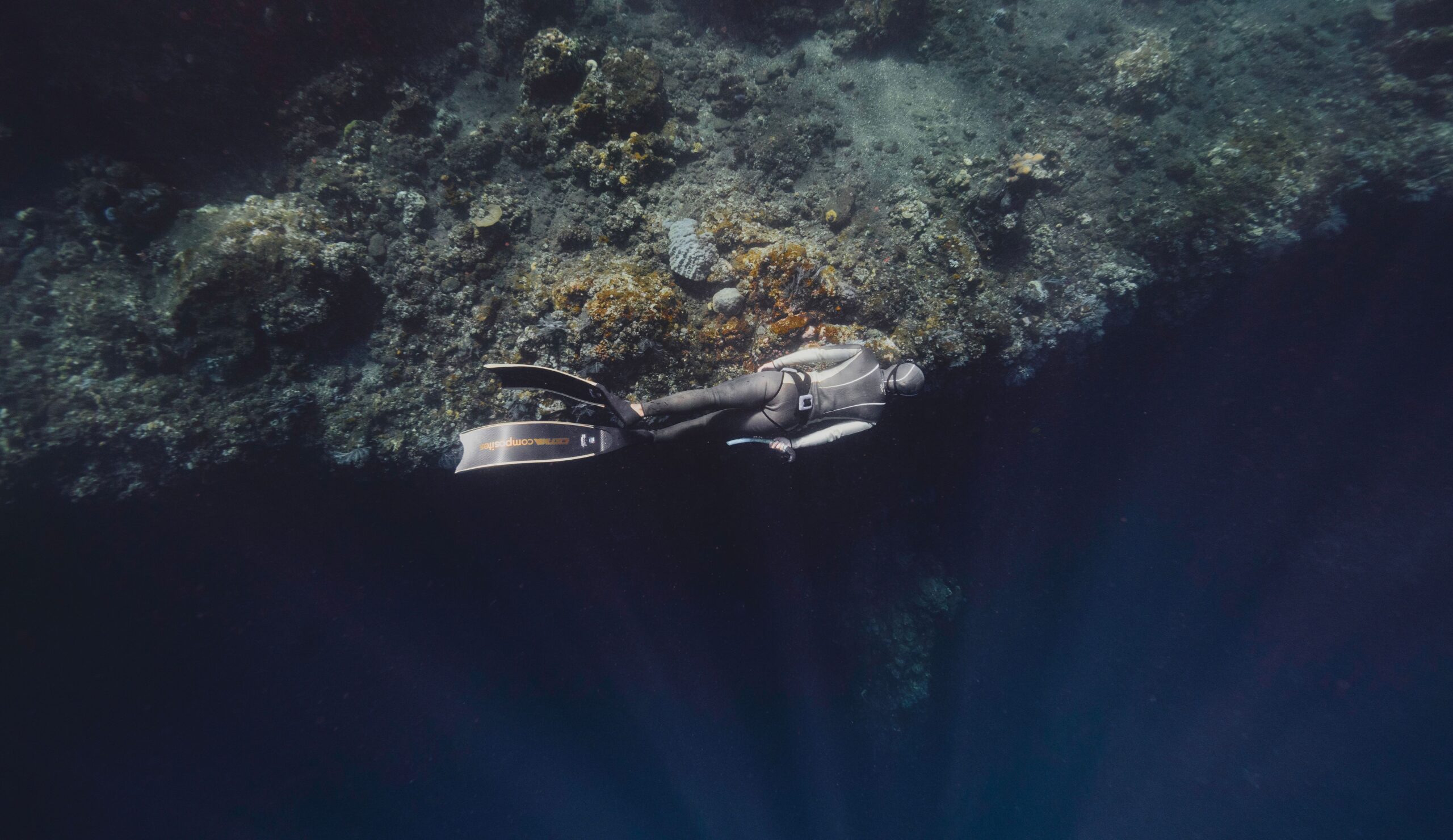
The beginner freediver does not need to reach 20 metres to have the specific freediving experience — the silence underwater, the neutrally buoyant suspension at depth, the marine animal encounter without the bubble disturbance. These are available at 10 metres to anyone who has completed a beginner freediving course.
The Ranking
1. Dahab, Egypt — The Learning Capital
Why it’s first: Dahab (the Red Sea resort town on the Sinai Peninsula’s eastern coast) is the most established freediving learning destination in the world — the concentration of freediving schools (the Apnea Academy, the AIDA-certified schools, the private instructors who have trained multiple world record holders from Dahab’s shores) and the specific conditions (the Blue Hole freediving site — the 100-metre sinkhole accessible from the beach, the protected lagoon on the town’s southern end giving the flat water and the visibility that beginner freedivers need) make it the correct destination for the first freediving course.
The Blue Hole: The Blue Hole at Dahab is the most famous freediving site in the world — a 100-metre deep circular sinkhole accessible from the shore, the entry from the surface giving immediate deep water. The Blue Hole is also responsible for a significant number of freediving fatalities — the “arch” at 52-56 metres that connects the sinkhole to the open sea has been attempted by under-certified freedivers with fatal results. The Blue Hole entrance and the descent to 30 metres (well within certification range for intermediate freedivers) are safe with proper training. The arch is for the advanced technical freediver only.
The course: The AIDA2 (the level 2 international freediving certification — the 20-metre depth, the static breath-hold, the duck-dive technique): 2 days, typically completed in Dahab in the calm lagoon waters. Approximately £180-280 / £180-280 from any AIDA-certified Dahab school.
The conditions: The Red Sea water at Dahab: 24-28°C (October-May), calm surface, 20-30 metre visibility, no current at the lagoon.
2. Malapascua, Philippines — The Thresher Shark at Dawn
Why it’s second: Malapascua (the small island off the northern tip of Cebu in the Philippines) is the only place in the world where the pelagic thresher shark (Alopias pelagicus) can be reliably seen at a cleaning station at a predictable depth on a predictable schedule. The thresher sharks (the sharks with the elongated upper tail fin, equal in length to the body, used to stun prey) arrive at the Monad Shoal cleaning station at dawn (5am-7am) from the deep water where they feed overnight. The freediver who is in the water at the cleaning station at 5:30am at 20-25 metres depth sees the thresher sharks below them as the sharks ascend from the deep.
The specific freediving advantage over scuba at Malapascua: The scuba diver who approaches the cleaning station at 5:30am on compressed air descends with the sound of the breathing system audible at distance — the sharks are sensitive to the disturbance. The freediver descends silently, equalises without noise, and suspends at depth without the bubble interruption. The thresher shark encounter for the freediver is consistently more extended and at closer range than the scuba equivalent.
The course: AIDA3 minimum recommended (the 30-metre certification) for the Monad Shoal dawn dive. The Malapascua freediving school (the Sea Explorers base on Malapascua) offers the AIDA courses in the calm waters on the island’s sheltered side.
Where to stay: The Malapascua Garden (the PADI resort with the freediving facilities: £40-80/night), the Maldito Dive Resort (the most atmosphere-specific Malapascua accommodation: £30-60/night).
3. Dominica — The Sperm Whale
Why it’s third: Dominica (the “Nature Isle” of the Caribbean — the island between Guadeloupe and Martinique, the resident sperm whale population that uses the deep water off Dominica’s west coast year-round) gives the rarest encounter available in freediving: the sperm whale (Physeter macrocephalus, the largest toothed predator in the world at 16-18 metres and 50 tonnes) underwater, at close range, on a single breath.
The encounter: The sperm whale dives to 1,000+ metres for its squid prey and returns to the surface for 10-15 minutes of breathing before diving again. The freediver who has located a resting or socialising pod and positioned themselves correctly can descend to 10-15 metres and encounter the whale at close range — the eye of the whale at the same level as the freediver’s mask, the specific exchange that the scuba diver cannot have (the compressed air noise disturbs the whale’s acoustic environment).
The operator: The Dominica Dive and Snorkelling Syndicate and the organisations permitted by the Dominica government to operate whale-freediving encounters (the permits are controlled, the maximum 4 swimmers per whale, the no-touching rule enforced): from USD 180-250 / £141.73-196.85 per person per encounter.
The minimum certification: AIDA2 minimum for the whale freediving permits (the 20-metre depth not required for the whale encounter but the water confidence and the breath-hold control are).
4. Nusa Penida, Bali — The Mola Mola
Why it’s fourth: Nusa Penida (the island southeast of Bali) is the site of the oceanic sunfish (Mola mola) cleaning station between July and October — the Mola Mola (the world’s heaviest bony fish at 1,000kg, the 3-metre diameter disc shape, the fish that spends most of its life in the deep ocean and surfaces in the warm water for the cleaning wrasses to remove parasites) at 10-30 metres depth, visible to the freediver who waits at the correct depth on the outgoing breath.
The specific freediving advantage: The Mola Mola is a solitary animal that the bubble stream of the scuba diver disturbs more reliably than the silent freediver. The freediving encounter (the static suspension at 15 metres, the Mola Mola approaching the cleaning station from below) gives the full behavioural encounter rather than the tail view as the fish descends away from the approaching scuba group.
The course: The Apnea Bali school (the most established freediving school in Bali, AIDA certification available): AIDA2 in 2 days from approximately USD 280 / £220.47.
The Course Options in Summary
| Level | Depth target | Duration | Cost | Where |
|---|---|---|---|---|
| AIDA1 (beginner) | 10m | 1 day | £80-150 | Anywhere calm |
| AIDA2 (recreational) | 20m | 2 days | £180-280 | Dahab, Bali, Koh Tao |
| AIDA3 (intermediate) | 30m | 3-4 days | £300-450 | Dahab, Malapascua |
| AIDA4 (advanced) | 40m | 5-7 days | £450-700 | Dahab, with specialist instructor |