
The specific proposition: the best ski resorts in Europe and North America have been optimised for the ski experience but contain, within that optimisation, a set of complementary experiences (the sauna, the mountain restaurant at 2,400 metres accessible by the lift, the snowshoe walk through the larch forest, the spa circuit, the cheese fondue at the specific altitude at which the wine and the cheese and the cold air combine into something the valley cannot replicate) that are available to the non-skier at 50-70% of the cost of the ski holiday and at 30-40% of the planning complexity. This guide names the resorts where the non-skier gets the most and the ones where they get the least.
Reading time: 9 minutes | Last updated: 2026
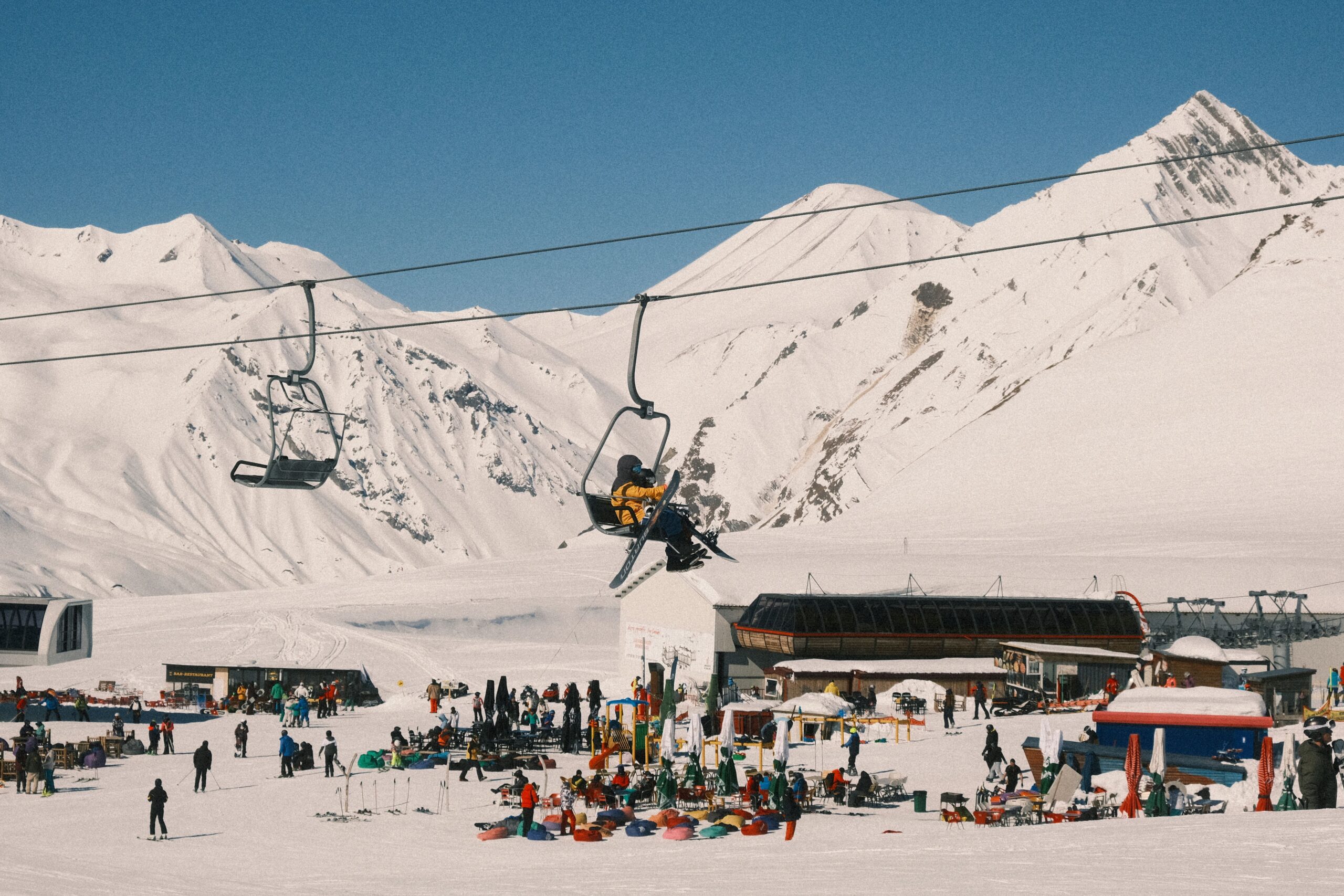
The ski resort is built around the slope. The gondola, the lift system, the mountain restaurants, the village architecture — all of it is infrastructure designed to get the skier up the mountain and back down again. The non-skier inherits this infrastructure: the gondola gives the mountain view, the mountain restaurant gives the lunch at altitude, the lift system gives access to the snowshoe trails, and the village gives the après-ski economy (the fondue, the glühwein, the spa) that operates independent of whether you have been on the snow.
The ranking below assesses the non-skier value by how much of the resort’s infrastructure the non-skier can access and how specific the non-ski experience is.
The Ranking
1. Zermatt, Switzerland — The Mountain That Earns Its Own Visit
The non-skier case: The Matterhorn. The 4,478-metre pyramid of the Alps that the resort of Zermatt exists in the shadow of is the specific visual experience that requires no skis — the view from the Sunnegga Express (the funicular from the village to 2,288 metres, accessible by the resort lift system without a ski pass: CHF 35 / £30.90 return), the view from the Gornergrat Railway (the cog railway from the Zermatt village to the 3,089-metre summit, the Matterhorn and the Monte Rosa massif visible from the summit platform, the highest point in Europe accessible by a public railway: CHF 65-87 / £57.39-76.84 return), and the view from the Klein Matterhorn cable car (the 3,883-metre summit, the highest cable car station in Europe, the glacier visible from the platform — a light down jacket required in August, a heavy one in February): the Klein Matterhorn in the full ski resort ticket but accessible separately on the non-ski guest card.
The specific Zermatt non-ski activities:
The Gorner Gorge (the glacial gorge below the Gornergletscher — the path through the ice-carved rock, the suspended bridges visible from the river level, the specific alpine geology visible at the gorge walls): the summer activity, closed in ski season.
The snowshoe walk from the Sunnegga funicular (the trail through the larch forest above 2,000 metres — the rental from any ski shop in the village, CHF 25-35 / £22.09-30.90 per day, the 2-hour circuit returning to the Sunnegga base for the funicular return).
The Zermatt spa (the Hüus Matteo and the CERVO Hotel spa complex — the thermal pool with the Matterhorn visible from the outdoor section, the specific alpine spa experience that Zermatt’s luxury hotel infrastructure provides): from CHF 50-90 / £44.17-79.50 per person.
The fondue at altitude:
The mountain restaurant at 2,288 metres (the Sunnegga restaurant — the raclette, the rösti, the fondue at altitude, the specific alpine lunch that the valley restaurant cannot replicate because the altitude, the cold air, and the view are inseparable from the dish): CHF 25-40 / £22.09-35.34 per main.
Cost: The non-ski Zermatt is significantly cheaper than the ski Zermatt — the multi-day ski pass (CHF 350-500 / £309.12-441.60 for 6 days) is replaced by the individual lift and transport tickets (CHF 65-100 / £57.39-88.32 per day for the non-ski lift access). The village accommodation is the same price regardless.
2. Chamonix, France — The Alpine Capital
The non-skier case: The Aiguille du Midi (the cable car from Chamonix to the 3,842-metre summit — the highest cable car in Europe, the view of Mont Blanc (4,808 metres) from the summit platform at the same altitude as the Himalayan foothills, the specific European alpine atmosphere at the summit: the temperatures at -15°C in February at the summit, the thin air at 3,842 metres noticeable): €60-85 / £51.72-73.28 return.
The Panoramic Mont Blanc (the cable car from the Aiguille du Midi across the Italian border to the Pointe Helbronner above Courmayeur in Italy — the cable car over the Vallée Blanche, the glacier visible below through the cabin floor, the specific alpine experience of crossing an international border by cable car at 3,500 metres): an additional €30-50 / £25.87-43.10.
The specific Chamonix non-ski activities:
The Mer de Glace (the glacier accessible by the Montenvers mountain railway from Chamonix — the cog railway to 1,913 metres, the glacier visible from the railway terminus, the specific glacier recession visible in the painted markers on the rock face showing the glacier surface in successive years from 1820 to the present — the most specific single climate change document accessible to the casual visitor): €30-35 / £25.87-30.17 return.
The Chamonix alpine museum (the specific Chamonix mountaineering history — the first Mont Blanc ascent in 1786 by Jacques Balmat and Michel Paccard, the development of alpinism as a sport, the equipment evolution): free.
The cost: The Chamonix lift tickets are among the most expensive in France (the Aiguille du Midi at €70-85 / £60.34-73.28 for the return) but the non-ski Chamonix is significantly less expensive than the ski Chamonix (the 6-day ski pass at €350-420 / £301.72-361.98).
3. Méribel, France (The Three Valleys) — The Social Ski Resort
The non-skier case: The Three Valleys (the interconnected ski domain covering Courchevel, Méribel, and Val Thorens — the largest ski area in the world) gives the non-skier the après-ski culture at its most concentrated. The specific Méribel non-ski activities are limited — the mountain access by gondola (the Méribel-Mottaret gondola to 2,400 metres, the view over the Belleville Valley, the mountain restaurant: €25-35 / £21.55-30.17 return) and the snowshoe trails are the primary non-ski access.
The specific Méribel advantage for the non-skier: The après-ski. The Folie Douce (the mountain-top bar and concert venue above Méribel at 2,100 metres — the daily outdoor concert from 3pm, the live performance visible from the terrace, the crowd of skiers in their kit and the non-skiers who arrive by gondola equally on the terrace): gondola access €12-18 / £10.34-15.52 one way. The non-skier who wants the ski resort social experience without skiing goes to Méribel.
The cost advantage: The Three Valleys non-ski visitor pays for the gondola access rather than the full lift pass — the saving is significant (the 6-day Three Valleys pass: €380-450 / £327.59-387.93; the daily gondola access: €25-45 / £21.55-38.79 per day).
4. Whistler, Canada — The Non-Ski Paradise
The non-skier case: Whistler (the resort 2 hours north of Vancouver by the Sea-to-Sky Highway) has invested more in non-ski winter infrastructure than any resort on this list — the Peak 2 Peak Gondola (the gondola connecting Whistler Mountain and Blackcomb Mountain at 436 metres above the valley floor, the longest unsupported span of any gondola in the world: CAD 59-69 / £32.97-38.55 return), the Lost Lake Nordic Centre (the cross-country ski and snowshoe trail network, the rental available from the Lost Lake Park, the trail system covering 32km), the Vallea Lumina (the light installation in the forest outside Whistler — the night walk through the illuminated temperate rainforest in winter: CAD 49-65 / £27.37-36.31 per person), and the Spa at Nita Lake Lodge (the most celebrated spa in the Whistler resort, the outdoor heated pool adjacent to the frozen lake):
The specific Whistler non-ski instruction: the Peak 2 Peak Gondola at sunset (the sun setting over the Coast Mountains to the west, the Whistler and Blackcomb peaks visible, the valley 436 metres below): the most specific single Whistler experience available without skis.
The cost: The Whistler Blackcomb ski pass (the 7-day Epic Pass access: CAD 700-900 / £390.92-502.76 for the international day pass rate) versus the non-ski daily cost (the gondola access: CAD 60-70 / £33.52-39.10, the spa, the snowshoe rental): the non-ski Whistler costs approximately 30-40% of the ski Whistler per day.
5. Niseko, Japan — The Powder Snow and the Onsen
The non-skier case: The Niseko resort (the Hokkaido ski destination — the lightest powder snow in Japan, the ski area that the international ski community has discovered and that the Japanese onsen town culture gives the non-ski alternative): the specific Niseko non-ski combination is the onsen circuit (the natural volcanic hot spring baths, the indoor and outdoor pools, the specific Japanese winter onsen experience of the outdoor bath in the snow) and the gondola access (the Niseko Grand Hirafu gondola to 1,000 metres, the view of the Yotei volcano across the valley).
Full guide in Luxury Japan — The Ryokans Worth the Price (the Zaborin section): the ryokan at Niseko gives the onsen-in-the-snow experience that is the most specific non-ski Niseko activity.
The specific Niseko non-ski cost: the ryokan with the outdoor hot spring (¥50,000-80,000 / £265.05-424.08 per person per night in peak ski season — the most expensive item on the Niseko non-ski itinerary and the specific reason the non-skier goes to Niseko rather than a European resort).
The Resorts Where the Non-Skier Gets the Least
Val d’Isère, France: The purpose-built ski resort with minimal village character outside the ski infrastructure — the non-skier who cannot ski has the shopping, the bars, and the expensive hotels. The mountain access requires the ski-area ticket. The non-ski recommendation: go to Chamonix instead.
Verbier, Switzerland: The high-altitude resort where the village infrastructure is focused on the ski economy to the near-exclusion of non-ski activities. The Verbier night-skiing and après-ski culture is among the finest in Europe; the Verbier non-ski culture is limited. The non-ski recommendation: go to Zermatt instead (1.5 hours away by road).