
The architecture travel guide built on the premise that the specific building is the most concentrated single expression of the human impulse to make something permanent and meaningful — that the Hagia Sophia (the sixth-century dome that engineers still study), the Sagrada Família (the building that has been under construction for 143 years and counting), and the Fallingwater (the cantilevered house above the waterfall in the Pennsylvania forest) give the specific encounter with the human creative achievement at the scale that the museum reproduction and the architecture textbook photograph cannot. Twenty buildings in fourteen countries that justify the specific trip made to see them specifically — not incidentally on the way to somewhere else, but as the reason to go.
Reading time: 9 minutes | Last updated: 2026
The Buildings
1. The Hagia Sophia — Istanbul, Turkey (537 CE)
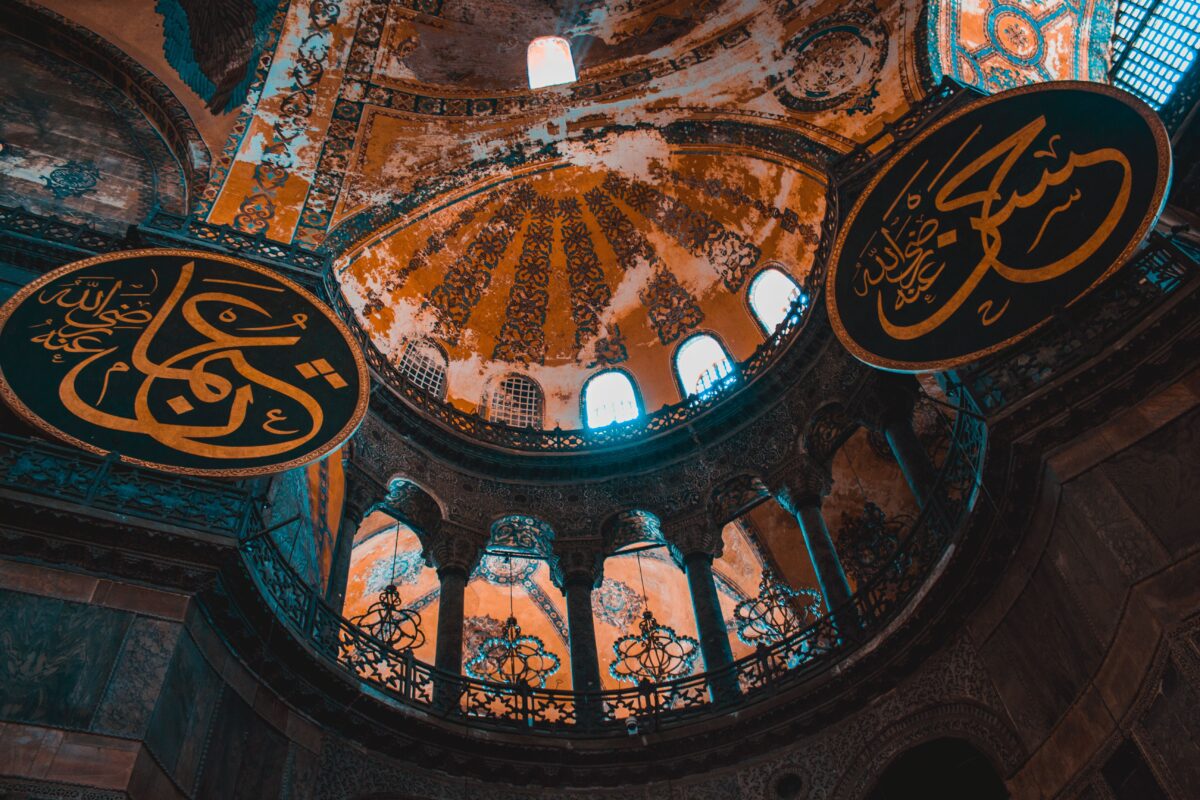
The 55.6-metre dome (the largest dome in the world for 1,000 years after its completion), the pendentives (the curved triangular sections that transfer the dome’s weight to the four piers below — the specific engineering innovation that every domed building since has used), and the specific Istanbul layering: the Christian mosaics of the Byzantine cathedral, the Islamic calligraphy of the Ottoman mosque, the two traditions visible simultaneously in the same building.
The architectural moment: standing at the nave centre and looking up. The dome appears to float — the 40 windows at the dome’s base flood the interior with light that eliminates the visible support, the specific Hagia Sophia optical illusion that the Byzantine architects designed deliberately.
2. The Sagrada Família — Barcelona, Spain (1882–present)
The building that has been under construction for 143 years as of 2025 (Gaudí’s Expiatory Temple of the Holy Family, begun 1882, projected completion 2026 — the specific completion date the Foundation has given and revised multiple times) and that has never stopped being the most specific single building in the world for the thing it is attempting: the Gothic cathedral rebuilt in the specific natural-form language that Gaudí developed from the study of trees, bone, and the catenary arch.
The specific visit instruction: the Nativity Façade (the east façade — the completed original Gaudí surface, the stone carved to the depth that no Gothic cathedral achieves because Gothic carving is the applied decoration and Gaudí’s carving is the structural surface). The Passion Façade (the west façade by Josep Maria Subirachs — the modern interpretation that divides architectural opinion and that is worth the division because both positions reveal something about what architecture is for).
Entry: €26-36 / £22.41-31.03 depending on the tower access option. Book at sagradafamilia.org — same-day tickets do not exist in peak season.
3. The Guggenheim Museum Bilbao — Bilbao, Spain (Frank Gehry, 1997)
The titanium-clad building on the Nervión River that single-handedly changed the economic trajectory of the Basque city it was built in (the “Bilbao Effect” — the term that urban planners use for the transformative economic impact of the signature cultural building) and that is simultaneously the most debated and the most visited building completed in the last thirty years of the 20th century.
The specific Gehry instruction: walk around the entire exterior before entering. The building reads differently from each approach angle — the titanium scales visible from the river, the flower sculpture by Jeff Koons (Puppy, 1992) at the main entrance, the specific composition visible from the Puente de la Salve bridge above the building.
Entry: €16-19 / £13.79-16.38.
4. The Pantheon — Rome, Italy (125 CE)
The 43.3-metre unreinforced concrete dome (the largest unreinforced concrete dome in the world — still, 1,900 years after its construction). The oculus (the 8.8-metre circular opening at the dome’s apex — the specific Pantheon lighting effect, the beam of sunlight visible travelling across the interior during the day, the rain falling directly to the drainage holes in the stone floor during wet weather). The specific engineering note: the dome is made from lightweight pumice concrete at the crown and heavier aggregate at the base — the density gradient that distributes the structural load without the dome’s weight becoming unmanageable.
Entry: €5 / £4.31. Free on the first Sunday of the month.
5. Fallingwater — Mill Run, Pennsylvania, USA (Frank Lloyd Wright, 1935)
The cantilevered house above the Bear Run waterfall in the Pennsylvania forest — the specific building that Wright designed for the Kaufmann family as the most concentrated expression of his “organic architecture” philosophy (the building that grows from the site rather than sitting on it). The specific Fallingwater quality: the interior is the exterior viewed from inside — the site continues into the living room through the same horizontal stone layers that the rock visible at the stream below consists of.
Getting there: 90 minutes south of Pittsburgh by car. The Western Pennsylvania Conservancy operates the site. Entry: USD 30-45 / £23.62-35.43 depending on the tour type.
6. The Louvre Abu Dhabi — Abu Dhabi, UAE (Jean Nouvel, 2017)
The 180-metre perforated aluminium dome over the island museum — the rain of light effect (the 7,850 individual stars in the dome geometry producing the dappled light pattern on the water below at noon when the sun passes through the openings at the angles the dome was designed for). The building as the Islamic architectural tradition updated for the contemporary museum programme: the dome as the souk canopy, the islands below as the medina quarters.
Entry: AED 63 / £13.
7–20: The Quick Reference
| Building | Architect | Location | Why Go |
|---|---|---|---|
| The Sydney Opera House | Jørn Utzon, 1973 | Sydney, Australia | The shells visible from Circular Quay at dusk — the specific harbour building |
| La Pedrera (Casa Milà) | Gaudí, 1912 | Barcelona, Spain | The rooftop warriors (the chimney sculpted figures) at dusk |
| The Tempodrom | Various, rebuilt 2001 | Berlin, Germany | The tent-structure concert hall — architecture as the permanent temporary |
| Nakagin Capsule Tower | Kisho Kurokawa, 1972 | Tokyo, Japan (partially demolished 2022) | The metabolist experiment in prefab living; visit what remains |
| The Burj Khalifa | SOM, 2010 | Dubai, UAE | The 828-metre tower at night from the base — the full scale only visible from street level |
| Biblioteca Vasconcelos | Alberto Kalach, 2006 | Mexico City, Mexico | The suspended bookstack interior — the books visible from below as the ceiling |
| The Beijing National Stadium | Herzog & de Meuron, 2008 | Beijing, China | The Bird’s Nest — the lattice steel structure at ground level |
| Casa Batlló | Gaudí, 1906 | Barcelona, Spain | The scaled façade at night (the illuminated programme) and the bone-balcony interior |
| The Centre Pompidou | Renzo Piano & Richard Rogers, 1977 | Paris, France | The inside-out building — the structure and the services on the exterior |
| Château Frontenac | Bruce Price, 1893 | Quebec City, Canada | The specific turreted castle hotel visible from the Lower Town — the most photographed hotel in the world |
| The Colosseum | Various, 80 CE | Rome, Italy | The 50,000-seat amphitheatre — the specific engineering of the vaulted arch visible in the section |
| St Basil’s Cathedral | Postnik Yakovlev (attr.), 1561 | Moscow, Russia | The nine chapels as one building — the onion domes of different heights in the specific Red Square position |
| Hagia Sophia | Various, 537 CE | Istanbul, Turkey | Already listed — worth the second mention |