
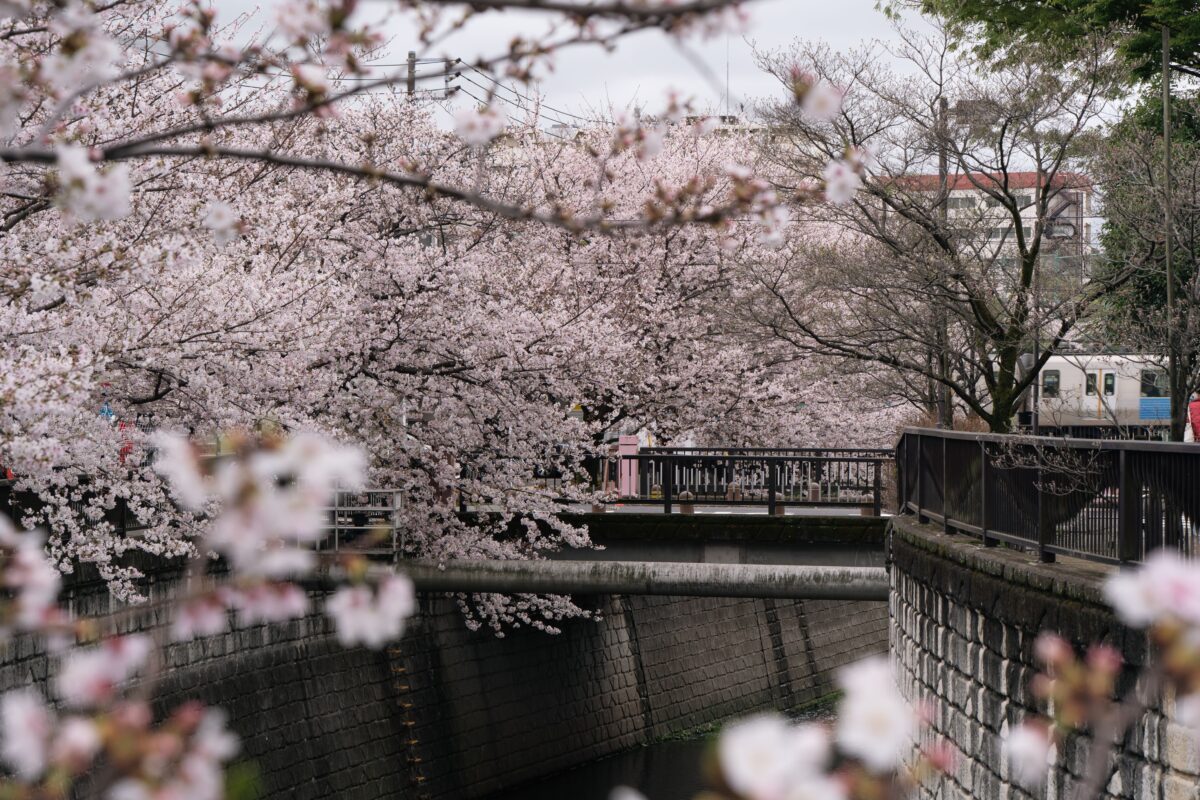
The cherry blossom guide that gives the specific information the “Japan in spring” article omits: the sakura forecast is not “late March to mid-April” — it is the moving 10-14-day window that the Japan Meteorological Corporation models from January onward based on the winter temperature data, the window that moves from the subtropical south (Okinawa in late January) to the subarctic north (Hokkaido in early May) along the sakura zensen (the cherry blossom front, the line of first bloom moving north at approximately 20km per day), and that the specific year’s temperature determines to within a week of accuracy 6-8 weeks ahead of the bloom date. The visitor who books the Kyoto hotel for the first week of April “because that’s when cherry blossom season is” is booking for the correct cultural assumption and the specific year’s incorrect date approximately 60% of the time.
Reading time: 8 minutes | Last updated: 2026
The Forecast System
How to track the sakura forecast:
The Japan Meteorological Corporation (Nihon Kishō Corporation) publishes the official sakura zensen forecast from January, updated weekly as the bloom approaches. The specific tracking resources:
japan-guide.com/sakura — the most accessible English-language forecast aggregator, updated from the JMC data, with the prefectural bloom dates and the viewing status (bud, 20%, 50%, 80%, full bloom, falling).
The WeatherNews cherry blossom app (Japanese language) — the same data source used by the Japanese public, the most granular per-city forecast available.
The specific booking instruction: Do not book the Japan spring accommodation without checking the forecast first. The forecast is available and specific enough (within 5-7 days of the actual bloom) by February-March to guide the booking. Booking in December for a fixed April 1-7 window is the wrong approach. Booking flexibly and confirming dates in February is the correct approach — which requires either flexible fare flights or the willingness to pay the change fee.
The Bloom Sequence (Typical Year)
| Region | Typical peak bloom | Notes |
|---|---|---|
| Okinawa | Late January-February | Kanhizakura (the Okinawa species, the deep pink — distinct from the pale Tokyo Somei Yoshino) |
| Kyushu (Fukuoka, Nagasaki) | Late March | Typically 1-2 weeks before Tokyo |
| Tokyo / Osaka / Kyoto | Late March-early April | The national peak, the most crowded window |
| Tohoku (Sendai, Hirosaki) | Mid-April | The Hirosaki Castle moat — the specific sakura-on-water that the Tokyo equivalent cannot give |
| Hokkaido (Sapporo) | Late April-early May | The northern bloom at the lowest density of visitors |
The Crowds — Honest Assessment
The Ueno Park (Tokyo): At full bloom on a Saturday afternoon in Tokyo: 50,000-80,000 visitors visible in the park simultaneously. The hanami (the blossom viewing picnic) culture requires the plastic sheet staked on the ground from 6am for the afternoon gathering. The specific Tokyo cherry blossom experience is the crowd as much as the blossom — the specific Japanese communal joy visible at the hanami is worth the crowd if the crowd is what you came for.
The Maruyama Park (Kyoto) at 6am: The weeping cherry (shidare-zakura) at the centre of the park visible in the first light with 12 other people rather than the 12,000 visible at 11am. The specific Kyoto instruction: the early morning is the correct cherry blossom window for the solitary encounter. The park from 6am to 8am.
The Philosopher’s Path (Higashiyama, Kyoto): The canal-side path with the cherry trees (the Somei Yoshino overhanging the canal, the petals visible on the water in the specific Kyoto image): at 6:30am (before the rental kimono crowd arrives from 9am). The light on the canal at 6:30am is the correct Philosopher’s Path light.
The Places to See It Without the Crowd
Hirosaki Castle, Aomori (mid-April):
The Hirosaki Castle cherry blossom (the castle moat surrounded by 2,600 cherry trees — the petals falling into the moat and visible as the specific hanagasumi (the flower mist) on the water surface, the castle visible through the blossom above the moat): the most specifically beautiful single cherry blossom location in Japan that the international visitor doesn’t yet go to in the numbers that Kyoto receives.
At the visitor peak: 200,000 visitors over the festival week (Hirosaki Cherry Blossom Festival, late April). At the Ueno Park equivalent: 80,000 in a single afternoon. The arithmetic gives the correct comparison.
Getting there: Shinkansen from Tokyo to Shin-Aomori (3 hours), then local train to Hirosaki (30 minutes).
Yoshino Mountain, Nara Prefecture:
The Yoshino (the mountain with 30,000 cherry trees in the four sections — the shimo senbon (the lower thousand), the naka senbon (the middle thousand), the kami senbon (the upper thousand), and the oku senbon (the inner thousand) — each section blooming at slightly different times as the altitude increases):
At the oku senbon (the innermost section, accessible by a 2-hour hike from the cable car or a 1.5-hour hike from the kami senbon): the blossom without the festival crowd that the lower sections give. The oku senbon at the cherry blossom peak in the afternoon light is the specific Yoshino that the photograph cannot give because the photograph doesn’t have the 2-hour walk.
Matsumoto Castle, Nagano:
The black castle (the Matsumoto-jō — the 16th-century castle, the black-lacquered exterior unusual among Japan’s castles) with the cherry trees in the castle grounds: the specific castle-and-blossom composition visible from the north moat position (the Joyama Park) at the bloom peak. Matsumoto in April receives 10% of the Kyoto visitor volume with 80% of the visual quality.