


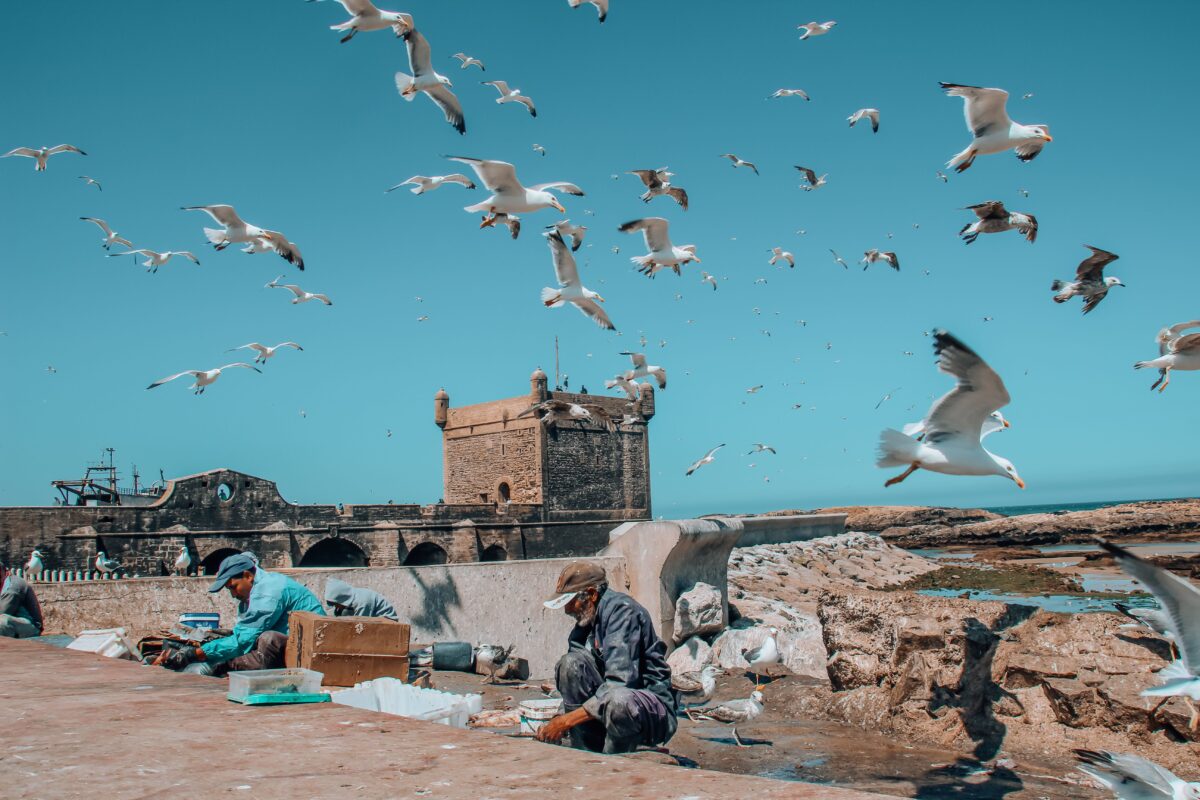
Both cities sit within a three-hour drive of each other, both deliver a genuine Morocco medina experience, and both work for a 48-hour trip from the UK. The difference comes down to pace: Marrakech is intense, colourful, and occasionally exhausting, while Essaouira is the wind-cooled coastal reset most people don’t know they need until they’ve already booked Marrakech.
Quick answer: choose Marrakech for souks, palaces, and nightlife density in a compact 48 hours. Choose Essaouira for a slower coastal pace, seafood, and noticeably fewer hard-sell hassle interactions in the medina. Combining both, two nights each, works well for a longer trip but stretches a genuine 48-hour window too thin for either.
Head-to-Head Comparison
| Factor | Marrakech | Essaouira |
|---|---|---|
| Flight time from London | 3h 30m direct | No direct flights; 3h to Marrakech + 2.5h transfer |
| Medina intensity | High, frequent hassle from vendors | Low, noticeably calmer pace |
| Average July temperature | 38°C | 24°C (coastal wind cools consistently) |
| Best for | Souks, palaces, day-trip base | Beaches, seafood, art galleries |
| Budget hotel (per night) | £25-£45 | £20-£35 |
| Standout food | Tagines, Jemaa el-Fnaa street food | Fresh grilled fish at the port |
48 Hours in Marrakech
Day 1: Medina & Souks
Start early at Jemaa el-Fnaa, the main square, before the heat and crowds build. By 8am it’s genuinely walkable; by midday it’s a different, far busier place. From there, work into the souks gradually rather than diving straight into the deepest alleys, since the layout rewards a loose orientation loop before committing to specific purchases.
- Bahia Palace: 70 MAD (£4.50), one of the better-preserved 19th-century palaces, worth the entry for the tilework alone
- Jardin Majorelle: 150 MAD (£9.50), Yves Saint Laurent’s restored garden, genuinely worth the premium entry price and best visited at opening (8am) before tour groups arrive
- Lunch: a full tagine meal in the souks runs 60-90 MAD (£3.80-£5.70) at family-run spots away from the main square’s tourist-priced restaurants
- Accommodation: a riad (traditional courtyard guesthouse) inside the medina from £25-£45/night
The 6am principle matters most at Jardin Majorelle and Bahia Palace. Both fill with tour buses from mid-morning, and the difference between an 8am visit and an 11am visit is the difference between quiet contemplation and a genuine queue.
The Souk Navigation Problem
Marrakech’s souks are deliberately maze-like, a legacy of medieval urban planning designed to disorient outsiders and protect merchants from being easily bypassed. Getting lost is expected, not a failure of navigation. Most first-time visitors find the experience far less stressful once they stop trying to follow a map and instead pick a general direction (toward a specific gate or landmark) and let the alleys guide the route. Persistent offers of “free” guidance from unofficial guides are best declined with a firm but polite no; genuine emergencies aside, anyone offering unsolicited directions in the souks is working toward a commission from a shop, not doing a favour.
Day 2: Day Trip or Deeper Medina
Options split here depending on pace preference. A half-day Atlas Mountains trip to Imlil (roughly 90 minutes each way) delivers a genuine change of scenery, while staying in the city allows a deeper dive into the tanneries and spice souks with less time pressure.
- Atlas Mountains half-day (shared taxi or organised trip): 150-250 MAD (£9.50-£16) per person
- Evening at Jemaa el-Fnaa: the square transforms after sunset into food stalls and performers; a full dinner from the food stalls runs 50-80 MAD (£3.20-£5.10)
48 Hours in Essaouira
Day 1: The Medina & The Port
Essaouira’s UNESCO-listed medina is roughly a fifth the size of Marrakech’s, meaning a full loop takes an afternoon rather than requiring a multi-day strategy. The port itself is the highlight, with the daily fish auction and grilled seafood stalls operating right on the harbour front.
- Skala de la Ville (sea bastion walls): free to walk, best at sunset when the light hits the ramparts and fishing boats below
- Fresh grilled fish lunch at the port stalls: a full plate with bread and salad runs 40-60 MAD (£2.50-£3.80), among the best-value meals in Morocco
- Art galleries in the medina: Essaouira has a genuine contemporary art scene, with several small galleries worth a browse, most free to enter
- Accommodation: a riad within the medina walls from £20-£35/night
Day 2: Beach & Wind Culture
Essaouira’s near-constant coastal wind, locally called the “Alizée,” has made it one of North Africa’s best windsurfing and kitesurfing spots. Even without trying either sport, the beach itself offers a genuinely different Morocco experience from Marrakech’s landlocked heat.
- Beach time: free, with sunbed hire from 30-50 MAD (£1.90-£3.20) at the more organised stretches near town
- Windsurfing/kitesurfing lesson: 300-450 MAD (£19-£29) for a beginner session with equipment included
- Dinner: a full seafood tagine dinner runs 70-100 MAD (£4.50-£6.30) per person at medina restaurants
Essaouira’s Ramparts at Sunset
The Skala du Port, the smaller fortified section overlooking the fishing harbour rather than the open sea, is often overlooked in favour of the more famous Skala de la Ville, but it offers a closer view of the daily catch being unloaded and mended nets laid out along the stone walls. Both ramparts featured in Game of Thrones as the Astapor cityscape, a detail that draws a modest but steady trickle of fans without ever reaching Dubrovnik or Split levels of filming-location tourism.
What 48 Hours Actually Costs
| Category | Marrakech (2 days, per person) | Essaouira (2 days, per person) |
|---|---|---|
| Accommodation (1 night, split two ways) | £13-£23 | £10-£18 |
| Food (full board) | £15-£22 | £13-£20 |
| Activities/entry fees | £14-£26 | £5-£30 (depending on watersports) |
| Local transport | £5-£10 | £3-£8 |
| Total | £47-£81 | £31-£76 |
Essaouira’s lower baseline cost comes largely from the absence of Marrakech’s tour-group-priced attractions like Jardin Majorelle. Adding a watersports lesson closes most of the gap.
Step-by-Step: Deciding Between Them
- Check your flight budget first. Marrakech has direct London flights from £70 return; Essaouira requires either flying into Marrakech and transferring by grand taxi (roughly 250-350 MAD/£16-£22 shared) or the newer Essaouira-Mogador airport, which has far fewer UK connections.
- Consider the season. July and August in Marrakech regularly exceed 38°C, making extended walking genuinely uncomfortable. Essaouira’s coastal wind keeps temperatures 10-14°C cooler year-round.
- Match the destination to your travel style. Marrakech rewards travellers who enjoy sensory intensity and don’t mind persistent vendor attention. Essaouira suits those who want the Morocco medina experience with noticeably less hassle.
- If combining both, allocate more time to Marrakech. Two full days each works better as a 4-5 day trip than a genuine 48-hour window, since the Marrakech-Essaouira transfer alone eats a half-day.
Frequently Asked Questions
Is Essaouira worth visiting if you’ve already done Marrakech?
Yes. The two cities offer distinctly different experiences, with Essaouira’s coastal calm working well as a deliberate contrast to Marrakech’s intensity rather than a repeat of the same medina formula.
How do you get from Marrakech to Essaouira?
Shared grand taxis, private transfers, and CTM/Supratours buses all run the route, taking roughly 2.5-3 hours. Shared taxis are the cheapest option at 70-100 MAD (£4.50-£6.30) per person, though private transfers (400-600 MAD/£25-£38 total) offer more comfort and flexibility.
Is Marrakech safe for solo female travellers?
Marrakech is generally safe for solo travellers, including women, though the medina’s persistent vendor attention can feel more intense for solo women than for couples or groups. Essaouira’s calmer pace is often cited as more comfortable for solo female travellers specifically.
Which city has better food, Marrakech or Essaouira?
Both are strong but different. Marrakech excels at tagines and the Jemaa el-Fnaa food stall experience, while Essaouira’s port-side grilled seafood is genuinely some of the best-value fresh fish in Morocco.
Do UK citizens need a visa for Morocco?
No. UK passport holders can enter Morocco visa-free for tourism stays of up to 90 days, with no advance paperwork required beyond a passport valid for the duration of the trip.
Can you visit both cities in one trip without rushing?
Yes, but it needs closer to five days than a strict 48-hour window each. Two nights in Marrakech, one travel day, and two nights in Essaouira works well as a 5-day trip, giving each city enough time to breathe rather than compressing both into a single rushed weekend.
The Bottom Line
Marrakech wins for anyone wanting the classic, intense Morocco medina experience in a genuine 48 hours. Essaouira wins for anyone who’s done that before, or who wants a coastal reset without sacrificing the medina atmosphere entirely. Neither is the wrong choice, but trying to do both properly needs closer to five days than two.