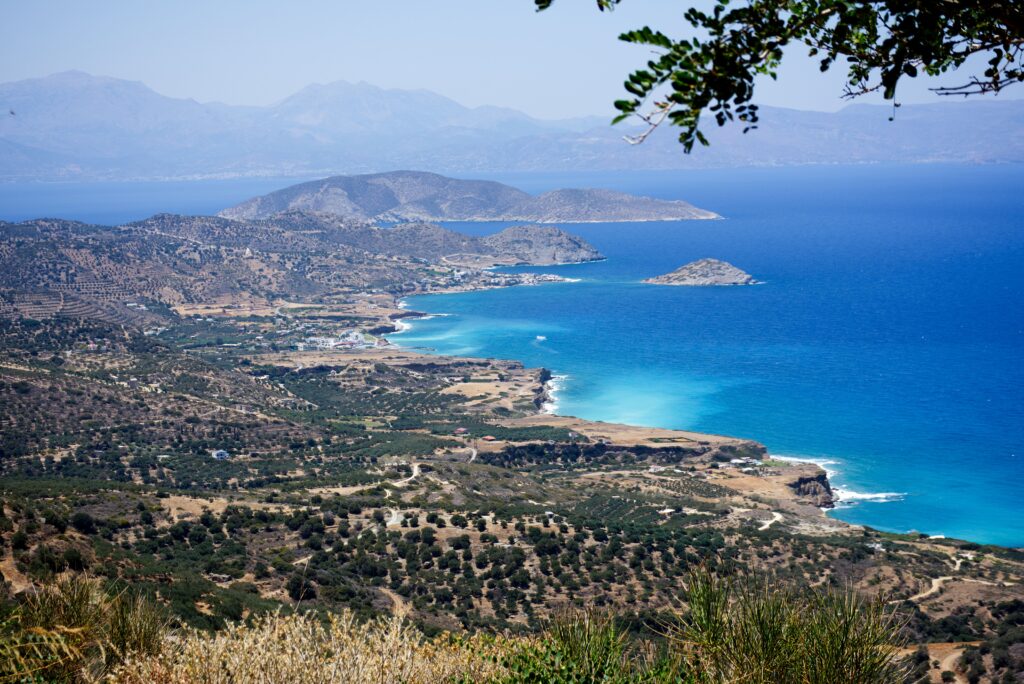


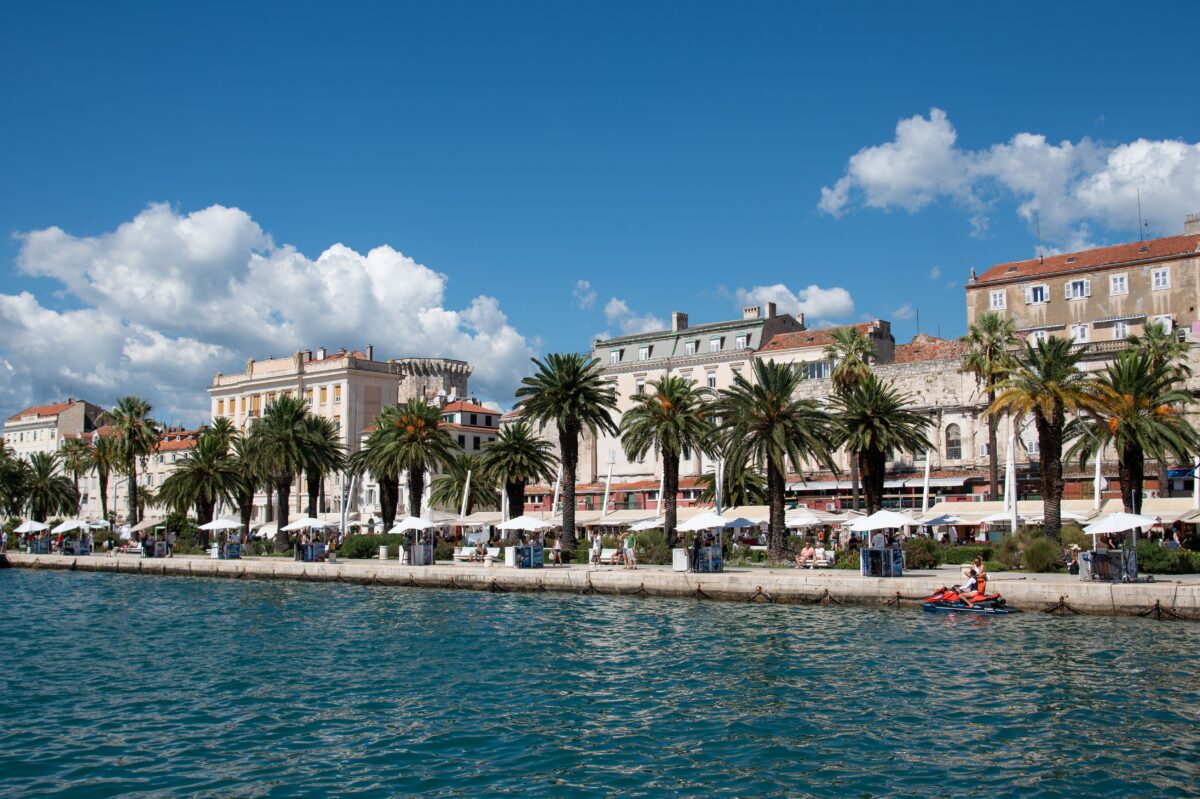
Split’s position, roughly midway along the Dalmatian coast with a genuinely well-connected ferry terminal, makes it the strongest single base for exploring Croatia’s islands and coastal towns without the constant repacking a moving itinerary demands.
Quick answer: basing in Split for 7 days and day-tripping across the Dalmatian coast costs roughly £440-£550 per person excluding flights, based on a mid-range old-town hotel, three meals a day, and a mix of ferry tickets and occasional car hire. Direct flights from the UK run 2.5-3 hours to Split Airport.
Why Split Works as a Single Base
Split’s Diocletian’s Palace, a genuinely lived-in 1,700-year-old Roman palace complex still functioning as the city’s old town, anchors a base with direct ferry connections to Hvar, Brač, and Vis, alongside straightforward road access to Trogir and the Krka waterfalls. No other Dalmatian coast base offers this same density of ferry and road connections from a single point, making Split the logistically strongest choice for an island-and-mainland mixed itinerary.
Day-by-Day: What to Do From Split
Day 1: Split Old Town
Diocletian’s Palace isn’t a ruin behind glass, it’s a functioning neighbourhood, with shops, restaurants, and homes built directly into and around the Roman-era structure.
- Diocletian’s Palace and cathedral bell tower: free to walk the grounds, €7 (£6) to climb the bell tower for panoramic views over the old town and harbour
- Riva waterfront promenade: free, the natural evening gathering spot lined with cafes
- Dinner: a full seafood meal at an old town konoba (traditional tavern) runs 200-320 HRK equivalent, roughly €27-€43 (£23-£37) for two, given Croatia’s 2023 transition to the Euro this is now priced directly in EUR at €13-€21 per person
Day 2: Hvar Island
The ferry from Split to Hvar Town takes roughly 1 hour by fast catamaran, reaching one of the Adriatic’s most fashionable island destinations.
- Ferry (return, fast catamaran): €25-€35 (£21.35-£30) per person
- Hvar Fortress (Fortica): €7 (£6), offering the island’s best panoramic viewpoint over the town and harbour
- Lavender fields: if visiting in June-July, Hvar’s interior lavender fields are genuinely striking, reachable by rented scooter or organised tour from the main town
- Dinner: a full meal at a harbour restaurant runs €20-€32 (£17.10-£27.35) per person, reflecting Hvar’s more upscale positioning relative to other Dalmatian islands
The 6am principle applies at Hvar Fortress specifically. Cruise-day crowds build significantly by mid-morning, and an early climb offers genuinely quieter photos over the harbour.
Day 3: Brač Island (Zlatni Rat Beach)
The ferry from Split to Supetar (Brač’s main port) takes around 50 minutes, connecting to Bol and the famous Zlatni Rat beach by a further short bus or taxi ride.
- Ferry (return): €10-€15 (£8.55-£12.80) per person
- Zlatni Rat beach: free access, a genuinely striking pebble beach whose shape shifts with the currents, considered one of the best beaches in Croatia
- Windsurfing: the beach’s consistent afternoon winds make it a genuine windsurfing destination, with lessons available from €40-€60 (£34.20-£51.30)
Day 4: Krka National Park
A road trip rather than a ferry day, Krka’s waterfalls sit roughly 1 hour from Split by car or organised bus tour.
- Entry fee: €20-€30 (£17.10-£25.70) depending on season, covering the walking trails around the Skradinski Buk waterfall system
- Swimming: previously popular directly beneath the main waterfall, though swimming access has been restricted in recent years to protect the ecosystem; check current rules before visiting with swimming specifically in mind
- Lunch: a full meal at the park’s on-site restaurant or in nearby Skradin runs €12-€20 (£10.25-£17.10) per person
Day 5: Trogir
A short 30-minute drive or bus ride from Split, Trogir’s UNESCO-listed old town is compact enough for a genuinely relaxed half-day visit.
- Trogir Cathedral: €5 (£4.30), a striking Romanesque-Gothic structure at the heart of the old town
- Kamerlengo Fortress: €3 (£2.55), offering views over the harbour and surrounding islands
- Lunch: a full meal runs €10-€18 (£8.55-£15.40) per person, generally cheaper than Split’s own old town restaurants given lower tourist density
Days 6-7: Vis Island or Buffer Days
Vis, the furthest and least developed of the major Dalmatian islands, requires a longer ferry crossing (roughly 2.5 hours) but rewards with the genuinely dramatic Blue Cave and a noticeably quieter atmosphere than Hvar.
- Ferry (return): €30-€40 (£25.70-£34.20) per person
- Blue Cave boat trip (from Vis or a combined tour from Split): €30-€50 (£25.70-£42.75), a genuinely striking sea cave illuminated by refracted sunlight
Marjan Hill: A Free Half-Day Within Split Itself
For a lower-key alternative on any day the schedule allows a lighter pace, Marjan Hill sits directly above Split’s old town, a forested park with walking and cycling trails offering genuinely excellent views back over the Diocletian’s Palace complex and the harbour. Free to access and reachable on foot from the old town in roughly 20 minutes, it’s a strong option for an evening walk or a shorter morning activity between more demanding ferry days.
What £440-£550 Actually Covers
| Category | Total for 7 Days (GBP, per person) |
|---|---|
| Accommodation (6 nights, split two ways) | £160-£250 |
| Food (three meals daily) | £115-£165 |
| Ferries (Hvar, Brač, Trogir transport) | £55-£90 |
| Activities/entry fees | £70-£110 |
| Total | £400-£615 |
Step-by-Step: Booking This Trip
- Book fast catamaran ferry tickets a day or two ahead during peak summer, since the most popular Hvar and Brač routes can sell out on the busiest days.
- Rent a car specifically for the Krka and Trogir days, since these mainland destinations aren’t as efficiently reached by public transport as the ferry-served islands.
- Base within or immediately adjacent to Diocletian’s Palace for the strongest combination of atmosphere and walking access to the ferry terminal.
- Check current Krka swimming restrictions before the visit, since rules around access to the main waterfall pools have changed in recent years.
- Consider skipping Vis if time is genuinely tight, given its longer ferry crossing, and using the freed day for a more relaxed pace across the closer islands instead.
Frequently Asked Questions
Do UK citizens need a visa for Croatia?
No. Croatia is part of the Schengen Area, allowing UK passport holders to visit visa-free for stays up to 90 days within any 180-day period.
Is a rental car necessary for this base camp approach?
Partially. The islands (Hvar, Brač, Vis) are reached by ferry regardless of car ownership, but Krka National Park and, to a lesser extent, Trogir are more efficiently reached by car than public transport.
Which island is best for a single-day trip if choosing only one?
Hvar offers the strongest overall combination of scenery, dining, and atmosphere for a single day, though Brač’s Zlatni Rat beach is the stronger choice for anyone prioritising beach time specifically over old town exploration.
What is the best time of year for this itinerary?
June and September offer the strongest combination of warm sea temperatures and manageable crowds, with July-August bringing peak heat and significantly higher ferry and accommodation demand across all the islands covered.
Is it cheaper to book ferry tickets online in advance or buy them on the day?
Online advance booking is generally recommended during peak summer for both guaranteed availability and marginally better pricing on some routes, though the difference is less dramatic than airline pricing patterns; the bigger risk of not booking ahead is a sold-out sailing rather than a significantly higher fare.
The Bottom Line
Split delivers the strongest single-base position on the entire Dalmatian coast, with direct ferry access to three major islands and straightforward road connections to Krka and Trogir, all without needing to repack a single bag across a full week. The trade-off is a genuinely busy schedule if attempting to cover every destination in this guide, making the flexible final days worth protecting for whichever leg needs more time or got rained out.