
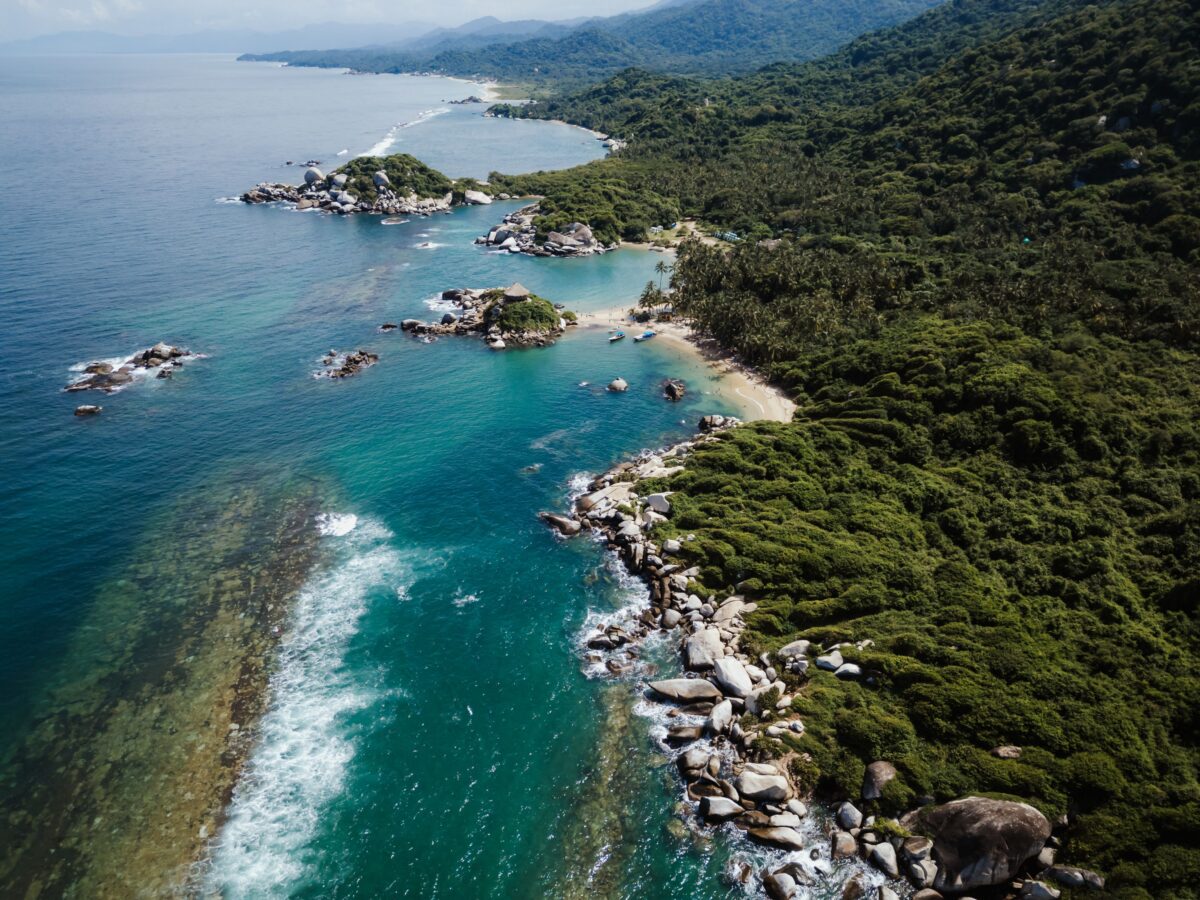
Costa Rica’s decades-long positioning as Central America’s premier eco-tourism destination has driven genuine demand and correspondingly steep pricing, particularly for the country’s most famous cloud forest and beach destinations. Colombia’s Minca and Tayrona National Park, both in the Sierra Nevada de Santa Marta region, offer genuinely comparable cloud forest and Caribbean coastline scenery at meaningfully lower cost.
Quick answer: swap Costa Rica for Minca and Tayrona if the priority is genuine cloud forest ecology and Caribbean coastline combined within a single, more affordable region. Keep Costa Rica on the itinerary if its specific, highly developed eco-tourism infrastructure and established wildlife-viewing industry are the non-negotiable draw, since Colombia’s more independent travel style doesn’t replicate that particular convenience.
Costa Rica vs Minca & Tayrona: Head-to-Head
| Factor | Costa Rica | Minca & Tayrona |
|---|---|---|
| Accommodation (mid-range, per night) | $80-$180 (£62-£140) | $30-$70 (£23-£54) |
| Eco-tourism infrastructure | Extensive, highly developed | Growing, considerably less commercialised |
| Signature landscape | Cloud forest (Monteverde), volcanic activity | Cloud forest (Minca) plus Caribbean coast (Tayrona) |
| Coffee culture | Strong, established tourism | Genuinely significant, less internationally marketed |
| Flight time from UK | 11-13+ hours via connections | 11-13+ hours via connections |
What Minca & Tayrona Actually Offer
Minca, a small mountain town in the Sierra Nevada de Santa Marta, offers genuine cloud forest ecology comparable to Costa Rica’s famous Monteverde region, while nearby Tayrona National Park delivers dramatic Caribbean coastline within the same broader area, a combination Costa Rica’s more geographically spread destinations don’t offer within such easy reach of each other.
- Minca’s cloud forest: genuine birdwatching (including numerous hummingbird species) and waterfall hikes, offering an ecology and atmosphere comparable to Monteverde at a fraction of the visitor volume and cost
- Minca coffee farms: the region produces genuinely well-regarded coffee, with several farms offering tours and tastings considerably less commercialised than Costa Rica’s more internationally marketed coffee tourism circuit
- Tayrona National Park: dramatic Caribbean coastline combining pristine beaches with dense jungle backdrop, offering genuinely striking scenery within a short drive of Minca’s mountain setting
- Lost City trek (Ciudad Perdida): a multi-day hike through the Sierra Nevada to pre-Columbian ruins predating Machu Picchu, offering a genuinely significant archaeological and adventure experience unavailable in Costa Rica
Why Costa Rica Still Wins for Specific Things
Costa Rica’s decades of eco-tourism development have built genuinely extensive, well-organised wildlife viewing infrastructure, canopy tours, established national park systems, and a mature tourism industry that Colombia’s more independent, less commercially developed Sierra Nevada region doesn’t match. For travellers specifically wanting that particular level of organised eco-tourism convenience, that requires Costa Rica itself.
The honest verdict: if Costa Rica’s specific highly developed eco-tourism infrastructure is the trip’s purpose, that requires accepting the higher costs. For travellers wanting genuinely comparable cloud forest and coastal ecology within a more affordable, less commercialised region, Minca and Tayrona deliver considerably more value alongside a distinctly Colombian cultural dimension.
What a Week Actually Costs
| Category | Costa Rica (per person) | Minca & Tayrona (per person) |
|---|---|---|
| Accommodation (6 nights, split two ways) | £186-£420 | £69-£162 |
| Food | £150-£250 | £90-£150 |
| Activities/tours | £120-£220 | £60-£120 |
| Total (excluding flights) | £456-£890 | £219-£432 |
Minca and Tayrona run at roughly half the cost of Costa Rica, reflecting both lower accommodation demand and Colombia’s overall lower cost of living relative to Costa Rica’s more established tourism pricing.
Step-by-Step: Planning a Minca & Tayrona Trip
- Fly into Santa Marta, the nearest gateway city, with UK connections typically routing through Bogotá.
- Base in Minca for 2-3 days to properly explore the cloud forest, waterfalls, and coffee farms before continuing to the coast.
- Book Tayrona National Park entry in advance during peak season, since the park limits daily visitor numbers and demand has grown significantly in recent years.
- Consider the Lost City trek if time allows (typically 4-5 days), a genuinely significant addition unavailable as an equivalent experience anywhere in Costa Rica.
- Check current FCDO travel advice for the specific region before booking, given Colombia’s varied security situation by area, though the Santa Marta, Minca, and Tayrona corridor remains a well-established, heavily visited tourist route.
Frequently Asked Questions
Is the Sierra Nevada region safe for tourists?
The Minca and Tayrona corridor is a well-established, heavily visited tourist route considered generally safe for travellers, though checking current FCDO advice for the specific region before travel remains sensible.
Do UK citizens need a visa for Colombia?
No, UK passport holders can enter Colombia visa-free for tourist stays of up to 90 days.
Is Minca as ecologically rich as Costa Rica’s Monteverde?
Genuinely comparable, with strong birdwatching and cloud forest ecology, though Costa Rica’s more established tourism infrastructure offers a somewhat wider range of organised wildlife-viewing activities and canopy tours.
What is the best time of year to visit Minca and Tayrona?
December through March offers the driest weather for both regions, avoiding Colombia’s wetter season, which can affect hiking conditions particularly in the mountainous Minca area.
Palomino: A Genuine Beach Extension Worth Adding
Beyond Tayrona itself, the nearby beach town of Palomino offers a further, genuinely relaxed coastal option, with a distinctive combination of Caribbean beach and river tubing through the surrounding jungle. This adds a worthwhile extension for travellers with a few extra days, offering a different pace from Tayrona’s more structured national park visiting hours and a genuinely laid-back beach town atmosphere increasingly popular with independent travellers.
The Indigenous Kogi Communities
The Sierra Nevada de Santa Marta remains home to indigenous Kogi communities, who maintain a genuinely distinct traditional way of life connected closely to the mountain range’s ecology. While respectful, responsible engagement with these communities requires working through established, community-approved tour operators rather than independent visits, this cultural dimension offers a depth of indigenous heritage engagement Costa Rica’s own tourism model doesn’t provide in quite the same accessible way.
The Bottom Line
Minca and Tayrona deliver genuine cloud forest ecology, Caribbean coastline, and significant coffee culture, all within a single accessible region and at roughly half the cost of Costa Rica. The trade-off is losing Costa Rica’s specific highly developed, decades-established eco-tourism infrastructure, genuinely valuable for travellers prioritising organised convenience over independent exploration.