



Penang is widely regarded as Malaysia’s genuine food capital, and George Town’s night markets specifically deliver a full evening of exceptional, multicultural street food, Malay, Chinese, and Indian influences all represented, for a genuinely tight £12 budget.
£12 covers a full evening of George Town night market eating, from a starter snack through a main course and dessert, sampling across the Malay, Chinese, and Indian food traditions that define Penang’s genuinely distinctive street food culture.
The Evening Eating Timeline
| Time | What to Eat | Cost (MYR) | Cost (GBP) |
|---|---|---|---|
| 6pm | Rojak (fruit and vegetable salad with a spicy-sweet sauce) | 6-8 | £1.05-£1.40 |
| 6:30pm | Char kway teow (stir-fried flat noodles) | 8-12 | £1.40-£2.10 |
| 7:30pm | Assam laksa (Penang’s signature sour fish-based noodle soup) | 8-12 | £1.40-£2.10 |
| 8:30pm | Cendol (shaved ice dessert) | 4-6 | £0.70-£1.05 |
| 9pm | Char siu or satay skewers | 10-15 | £1.75-£2.65 |
| 9:30pm | Fresh sugarcane juice | 3-5 | £0.55-£0.90 |
| Total | 39-58 MYR | £6.85-£10.20 |
Where to Actually Go
George Town’s night market scene rotates across several locations depending on the night of the week, making it worth checking the current schedule rather than assuming a single fixed venue.
- Gurney Drive Hawker Centre: a permanent, large-scale hawker centre rather than a rotating night market, genuinely one of the most reliable and extensive food options in the city, open nightly
- New Lane Hawker Centre: a genuinely local, less tourist-oriented option with strong Chinese-Malaysian food specifically
- Rotating pasar malam (night markets): these move between different neighbourhoods on a weekly schedule, worth checking current listings, offering a more spontaneous, community-market atmosphere than the fixed hawker centres
Getting Around George Town Between Stops
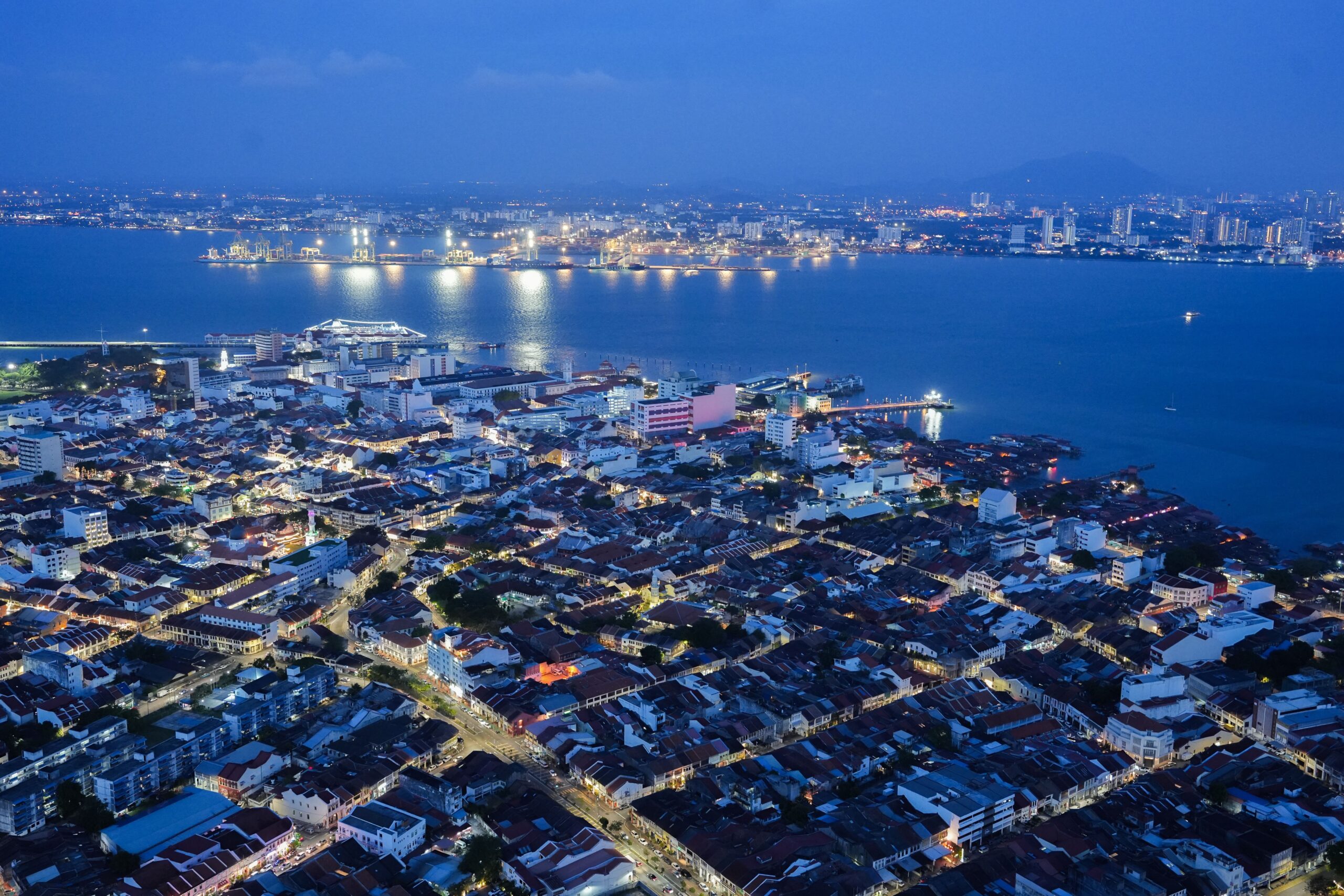
George Town’s UNESCO-listed old core is genuinely walkable, meaning a night of hawker centre and market hopping rarely requires transport beyond a comfortable pair of shoes. For destinations slightly further out, like Gurney Drive specifically, Grab (Southeast Asia’s dominant ride-hailing app) offers cheap, reliable transport, typically under 10 MYR (£1.75) for most journeys within the city.
Assam Laksa: Penang’s Essential Dish
Assam laksa, a sour, fish-based noodle soup distinct from the coconut-based laksa found elsewhere in Malaysia, is considered Penang’s single most essential dish, and George Town’s version is widely regarded as the definitive standard against which all others are measured.
- What makes it distinctive: the tamarind-based sour broth, combined with mackerel, mint, and a distinctive shrimp paste condiment (hae ko) stirred in at the table
- Where to find the best versions: several stalls across George Town claim the definitive version; genuinely good assam laksa is widely available rather than concentrated at a single “must-visit” stall
The Multicultural Food Layers Worth Understanding
Penang’s food culture reflects genuine historical layering: indigenous Malay cooking, Chinese immigrant communities (particularly Hokkien and Teochew influences), Indian Muslim (Mamak) food culture, and the distinctive Peranakan (Straits Chinese) fusion cuisine that emerged from intermarriage between Chinese settlers and local Malay communities.
- Char kway teow: Chinese-influenced, typically the single most recommended dish for first-time visitors
- Nasi kandar: Indian Muslim-influenced rice dish with a wide range of curry accompaniments, genuinely substantial and filling
- Peranakan dishes (Nyonya cuisine): a distinctive fusion tradition, worth seeking out specifically for dishes unavailable in either purely Malay or purely Chinese food traditions
Step-by-Step: Making the £12 Challenge Work
- Check the current pasar malam rotation schedule before planning a specific evening, since the rotating night markets move locations weekly and aren’t always active in the same spot.
- Pace portions deliberately, since six separate stops genuinely adds up if each is treated as a full meal rather than a tasting portion.
- Carry small denomination ringgit, since hawker stalls generally expect close to exact change and can’t always break large notes.
- Ask stall vendors or nearby diners for their personal favourite dish, since locals genuinely enjoy sharing recommendations and this often surfaces better options than a fixed guidebook list.
- Try at least one dish from each of Penang’s main food traditions (Malay, Chinese, Indian) rather than defaulting entirely to the most internationally famous dishes alone.
What This Actually Costs Compared to Restaurant Dining
| Category | Night Market (per evening) | Restaurant Dining (per evening) |
|---|---|---|
| Starter/snack | £1.05-£1.40 | £4-£6 |
| Main course | £1.40-£2.10 | £8-£14 |
| Second dish/soup | £1.40-£2.10 | Not typically ordered separately |
| Dessert | £0.70-£1.05 | £3-£5 |
| Drink | £0.55-£0.90 | £2-£4 |
| Total | £5.10-£7.55 | £17-£29 |
Frequently Asked Questions
Is George Town street food safe for travellers unfamiliar with local hygiene standards?
Generally yes, provided standard sensible precautions apply, choosing stalls with high turnover and visible fresh preparation, since Penang’s hawker culture is deeply embedded in daily local life rather than existing primarily for tourists.
Do UK citizens need a visa for Malaysia?
No, UK passport holders can enter Malaysia visa-free for tourist stays of up to 90 days.
Is George Town’s food scene halal-friendly given Malaysia’s Muslim-majority population?
Yes, extensively, with a significant proportion of stalls certified halal, though the mixed Malay, Chinese, and Indian food culture means non-halal options (particularly at Chinese-run stalls serving pork dishes) are also widely available, worth checking specific stall signage if this matters for your dietary requirements.
What is the best time of year to visit George Town for food specifically?
Year-round works well given Penang’s consistent tropical climate, though the George Town Festival (typically August) adds cultural programming alongside the food scene for travellers wanting to combine both.
Is it possible to find good vegetarian options at George Town’s night markets?
Yes, genuinely well-represented, particularly through the Indian and Chinese Buddhist vegetarian food traditions both present in Penang’s food culture, with several stalls specifically dedicated to vegetarian versions of popular dishes.
How does George Town’s food scene compare to Kuala Lumpur’s?
Both offer strong multicultural food scenes, though George Town, as a smaller, UNESCO-listed heritage city, is generally considered to have a more concentrated, walkable street food culture, while Kuala Lumpur’s larger scale spreads its equally strong food scene across a wider geographic area.
The Bottom Line
George Town’s night markets deliver a genuinely exceptional evening of multicultural street food, Malay, Chinese, and Indian traditions all represented, for a fraction of restaurant dining costs, reflecting Penang’s deep-rooted hawker food culture rather than a tourist-oriented spectacle. The honest recommendation is treating the night market crawl as the primary way to experience Penang’s genuinely deserved reputation as Malaysia’s food capital.