

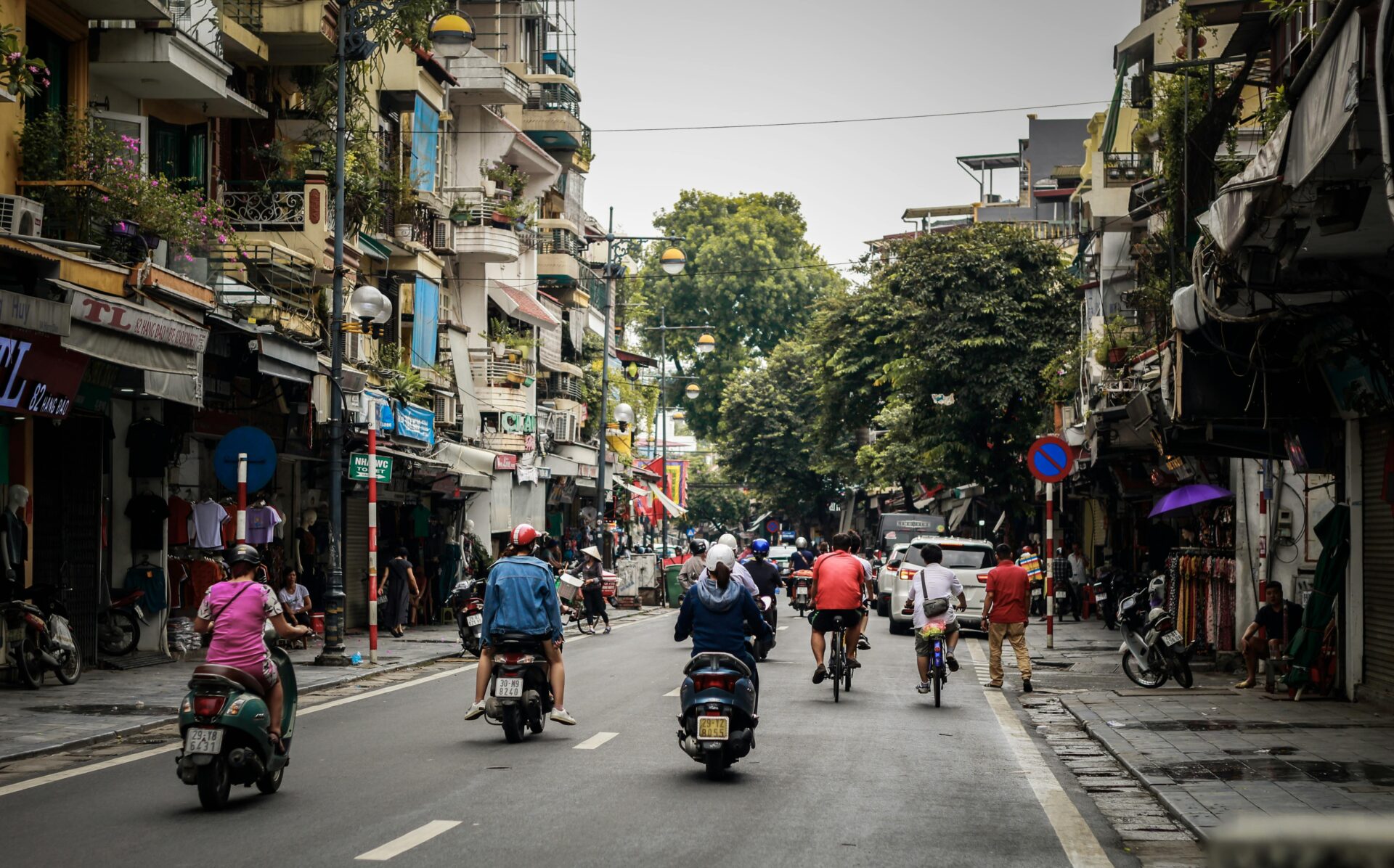
The Pho Gia Truyen stall at 49 Bat Dan Street where the queue forms before 7am and where the bowl of pho that arrives has been simmering since 3am, the Hoan Kiem Lake at dawn when the red bridge and the temple on the island are reflected in the water before the city wakes around them, the Train Street before it was closed and what replaced it as the correct Hanoi urban experience, and why Hanoi — the capital that Vietnam uses rather than performs — is the finest introduction to Southeast Asia for the traveller who has not yet been.
Reading time: 9 minutes | Last updated: 2026
Hanoi is the capital of Vietnam, a city of 8 million people on the Red River, and the city that contains the most concentrated expression of Vietnamese urban culture accessible to a visitor in a single 48-hour window. It is not Ho Chi Minh City (the economic capital, the faster, more commercial, more internationally oriented city). It is the city where the French colonial architecture is still occupied as it was built to be occupied, where the 36 streets of the Old Quarter still sell the products their names promised 500 years ago (Hang Bac — Silver Street, Hang Vai — Fabric Street), and where the pho is the finest in Vietnam by the specific assessment of Vietnamese people from the south who make the journey north specifically to eat it.
The 48 Hours
DAY ONE
6:00am — Hoan Kiem Lake at Dawn
The Hoan Kiem Lake (the Lake of the Restored Sword — the lake at the centre of Hanoi’s Old Quarter, named for the legend of Emperor Le Loi returning the magic sword given him by the Golden Turtle God to the lake in 1428): at 6am, the lake in the mist, the Ngoc Son Temple on the island visible across the water.
The Huc Bridge (the red wooden bridge connecting the shore to the Ngoc Son Temple island): the bridge on the northern side of the lake, the red lacquer visible against the mist. The temple: entry 30,000 VND / £0.94 (opens at 8am — the 6am visit gives the bridge and the exterior only, which is the correct 6am visit anyway).
The lake at 6am: the elderly Hanoians doing their morning exercises (the group tai chi on the southern shore, the badminton played without a net in the northern plaza, the women walking the perimeter for the 45-minute circuit). These are not performances for visitors. This is Tuesday morning in Hanoi.
Walk the full perimeter of the lake (1.7km, 25 minutes): the Turtle Tower visible on the small island at the lake’s centre, the trees overhanging the path, the city waking in stages around the water.
7:00am — Pho at Pho Gia Truyen
49 Bat Dan Street (the Old Quarter — the pho stall that has been running from this address since the 1960s, the family recipe that has not changed, the queue that forms before 7am and that by 7:30am extends past the next shopfront): the bowl of pho that justifies the queue.
The Hanoi pho (the pho bac — the northern-style pho that differs from the southern Ho Chi Minh City version in specific ways: the clearer broth, the less sweet stock, the wider noodle, the condiments served on the side rather than in the bowl): the broth has been simmering since 3am. The beef (the raw-sliced beef that cooks in the broth when the bowl is assembled, the tendon, the brisket depending on your order). The condiments served alongside: the lime, the chilli, the ngò gai (sawtooth coriander), the ginger. The pho is eaten without additional condiments in the northern tradition — no hoisin sauce, no plum sauce — that comes from the south.
Price: 50,000-65,000 VND / £1.57-2.04 per bowl.
The correct order: pho bo (beef pho). The chicken pho (pho ga) is also excellent at this stall. Do not order pho bac and add hoisin. This will be noticed.
9:00am — The Old Quarter
The Hanoi Old Quarter (the 36 streets — the medieval trading quarter that has been continuously operating since the 13th century, each street historically dedicated to a specific trade, the trade names preserved even where the products have changed): at 9am, the morning commerce beginning.
The specific Old Quarter streets worth walking:
Hang Bong (Cotton Street): The fabric shops now supplemented by the tourist embroidery, the original cotton trading visible in the shop structures (the long, narrow tube houses — the nhà ống, typically 3-5 metres wide and 40-60 metres deep — the traditional Vietnamese commercial building that minimised street frontage to reduce taxation).
Hang Buom (Sail Street): The preserved colonial-era facades, the wholesale grocery commerce visible in the early morning delivery carts.
Cha Ca Street: The single block named for a single dish — the cha ca (the turmeric-marinated grilled fish, served at the table with the herbs and the noodles, the street named for the Cha Ca La Vong restaurant that invented it in the 1870s and that still serves only this dish at No. 14): the most specific restaurant experience in Hanoi. Dinner here.
11:00am — The Temple of Literature
The Van Mieu (Temple of Literature — the Confucian temple founded in 1070, the first university of Vietnam, the 82 stone stelae in the courtyard listing the names and home villages of 1,307 doctoral graduates from 1442-1779 — the stone doctoral registers that give 300 years of Vietnamese academic history): the specific quality of the Temple of Literature is its coexistence of the ceremonial (the ceremonial gate, the Well of Heavenly Clarity, the formal garden structure) and the civic (the stelae representing individual achievement in a specific historical context). Entry: 30,000 VND / £0.94.
The Temple at 11am: the students photographing at the stelae (the Vietnamese tradition of bringing new graduates to photograph at the stelae of the historical doctoral graduates — the living continuation of the temple’s original purpose).
1:00pm — Lunch: Bun Cha
The bun cha (the Hanoi-specific noodle dish — the pork meatballs and the pork belly grilled over charcoal, served in the sweet-savoury fish sauce broth with the rice vermicelli noodles and the fresh herbs): the dish that Barack Obama and Anthony Bourdain ate together at Bun Cha Huong Lien (24 Le Van Huu, Hai Ba Trung) in 2016, the photograph of the two men at the plastic table with the beers that went viral.
The Bun Cha Huong Lien now has a preserved booth (the actual seat where Obama sat, the menu item named after the occasion). It is still an excellent bun cha. 40,000-60,000 VND / £1.25-1.88 per portion.
Alternative: the Dac Kim (1 Hang Manh, Old Quarter) — the bun cha that pre-dates the Obama visit by several decades and that many Hanoians prefer. 45,000 VND / £1.41.
3:00pm — The Vietnam Museum of Ethnology
The Vietnam Museum of Ethnology (Nguyen Van Huyen Road, Cau Giay — 5km from the Old Quarter, accessible by taxi in 15 minutes or by the No. 14 bus): the finest museum in Hanoi and the least visited by visitors who stay in the Old Quarter.
The collection covering the 54 officially recognised ethnic groups of Vietnam — the material culture (the clothing, the tools, the boats, the religious objects), the reconstructed traditional houses of each group in the outdoor garden (the Bahnar communal house, the Tay stilt house, the water puppet theatre, the Vietnamese tube house): the museum that gives the cultural context for the country that the Old Quarter’s silk and lacquer shops present as surface.
Entry: 40,000 VND / £1.25.
6:00pm — Hoan Kiem Lake at Dusk
Return to the lake at 6pm — the specific dusk light on the Ngoc Son Temple and the bridge, the city reflected in the still water, the promenade filling with the evening walkers.
The Ngoc Son Temple at dusk (entry 30,000 VND / £0.94, open until 6pm): the small temple on the island, the preserved giant softshell turtle (Rafetus swinhoei) in the display case — the specimen that died in 2016, the last confirmed Hoan Kiem Lake turtle of the species (the living turtle believed to be the incarnation of the Golden Turtle God was last seen in 2016, its fate unknown). One of the most critically endangered turtles in the world, with fewer than five remaining globally.
8:00pm — Dinner: Cha Ca La Vong
The Cha Ca La Vong (14 Cha Ca Street — the restaurant that invented the dish in the 1870s, the restaurant that has served only this dish since and which gave the street its name): the cha ca (the turmeric and galangal marinated snakehead fish, grilled on the charcoal at the table, served with the dill and the spring onion wilted in the oil beside the fish, the rice vermicelli, the ground peanuts, the shrimp paste, the fish sauce).
The meal requires assembly at the table — the specific instruction is given by the staff. The dill is not garnish, it is a cooking ingredient added to the oil in the pan to wilt. The fish is served in portions, cooked continuously throughout the meal.
380,000-420,000 VND / £11.93-13.19 per person including rice and accompaniments.
10:00pm — Bia Hoi Corner
The Bia Hoi Corner (Dinh Liet and Ta Hien Streets, Old Quarter — the intersection that is the most concentrated beer drinking location in the Old Quarter): the bia hoi (the fresh-brewed draught beer, the Vietnamese microbrewery tradition, the beer brewed daily and sold from the plastic keg until it runs out — 5,000-10,000 VND / £0.16-0.31 per glass). The plastic stools on the pavement, the street food from the adjacent vendors, the specific Hanoi evening.
DAY TWO
7:30am — The Ho Chi Minh Mausoleum Area
The Ho Chi Minh Mausoleum (2 Hung Vuong, Ba Dinh Square — the granite mausoleum where Ho Chi Minh’s embalmed body is displayed, modelled on Lenin’s Mausoleum in Moscow): the mausoleum opens at 8am (Tuesday-Thursday and Saturday-Sunday, closed Monday and Friday). The queue: the Vietnamese visitors come in organised groups, the foreign visitors individually, the wait typically 20-40 minutes. The interior: 3-4 minutes of moving past the glass enclosure at a regulated pace. No photography inside. Required: long trousers and covered shoulders.
The adjacent Ho Chi Minh Museum (the most comprehensive collection of Ho Chi Minh’s personal objects and political documents in Vietnam): entry 40,000 VND / £1.25.
The One Pillar Pagoda (the Dien Huu Pagoda, adjacent to the mausoleum — the 11th-century pagoda built on a single stone pillar rising from a lotus pond, the pagoda symbolising the lotus rising from the water, the original destroyed by French forces in 1954 and reconstructed): entry free.
10:00am — The Vietnam Fine Arts Museum
The Vietnam Fine Arts Museum (66 Nguyen Thai Hoc, Ba Dinh — the national fine arts collection in the French colonial building): the Vietnamese lacquer paintings (the sơn mài technique — the lacquer applied in 20-30 layers over months, each layer sanded before the next, the final painting embedded in the lacquer surface), the traditional silk paintings, and the sculpture collection covering the Cham and Khmer traditions of central and southern Vietnam.
The specific room worth time: the room of propaganda posters from the American War period (the term Vietnamese use for the Vietnam War) — the graphic design of the wartime posters, the specific aesthetic combining Soviet social realism with Vietnamese decorative tradition. Entry: 40,000 VND / £1.25.
12:30pm — Lunch: Banh Mi at 25 Hang Ca
Banh Mi 25 (25 Hang Ca, Old Quarter — the banh mi stall that the food press has cited as the reference banh mi in Hanoi): the Vietnamese baguette (the French colonial inheritance — the baguette adapted to Vietnamese ingredients and smaller than the French original, the crust thinner and crispier) with the combination fillings (the pâté, the pork roll, the cha lua sausage, the cucumber, the pickled daikon and carrot, the fresh chilli, the coriander, the soy or fish sauce).
25,000-35,000 VND / £0.78-1.10 per sandwich. The finest lunch available in Hanoi at this price.
2:30pm — The Hoa Lo Prison (Hanoi Hilton)
The Hoa Lo Prison (1 Hoa Lo Street — the prison built by the French colonial administration in 1896 to hold Vietnamese political prisoners, subsequently used by the North Vietnamese government to hold American POWs during the war): the specific dual history of the building — the French colonial use (the guillotine still displayed, the conditions of the Vietnamese prisoners documented) and the American War use (the Vietnamese government’s documentation of American POW treatment, the contrast with the American POW accounts presenting the conditions differently).
The museum presents the material from the Vietnamese perspective — which is the perspective that is harder to find in English-language sources. Entry: 30,000 VND / £0.94.
4:30pm — The West Lake (Ho Tay)
The West Lake (the largest lake in Hanoi, the lake northwest of the Old Quarter, the 17km perimeter walkable or cycleable): the Tran Quoc Pagoda (the oldest Buddhist pagoda in Hanoi, founded in the 6th century CE, on the small island connected to the western shore, the 15-storey tower visible from the West Lake road): entry free.
The West Lake at 5pm: the Hanoians cycling the perimeter, the floating restaurants visible on the water, the specific early evening quality of a large urban lake in Southeast Asia.
7:30pm — Final Dinner: the Hanoi Social Club Area
The Ngu Xa Street (the street of the brass casting village, now the most characterful restaurant street in the city centre): the Quan An Ngon (18 Phan Boi Chau — the Vietnamese food court restaurant that presents the regional street foods of Vietnam under one roof, the food stalls arranged around the courtyard, each stall specialising in one regional dish): 100,000-180,000 VND / £3.14-5.65 per dish. The comprehensive Hanoi introduction to the full range of Vietnamese regional cooking.
The Essentials
Getting to Hanoi from the UK: No direct flight from the UK. Connections via Doha (Qatar Airways, 13-14 hours total), Dubai (Emirates, 14 hours total), Singapore (Singapore Airlines), Bangkok (Thai Airways), or Hong Kong. Return: £500-800. The Qatar Airways connection via Doha is typically the fastest and most consistent.
Getting from Noi Bai Airport: The Vietnam Airlines Minibus to the Hoan Kiem area (45 minutes, 40,000 VND / £1.25). The Uber/Grab (the Grab app is the standard in Vietnam — the metered ride-hailing service): approximately 250,000-350,000 VND / £7.84-10.99 to the Old Quarter.
Getting around: Grab for anything over 1km. Walking for the Old Quarter and the Hoan Kiem area (compact, 20-minute maximum walk between most Old Quarter destinations). The xe om (the motorbike taxi, the traditional Hanoi transport): 20,000-50,000 VND / £0.63-1.57 for short journeys — negotiate the price before getting on.
The heat: Hanoi in June-August reaches 38-40°C with 80%+ humidity. The November-March period is the most comfortable (18-25°C, low humidity). The rainy season (May-October) brings afternoon downpours that typically pass in 30-45 minutes — not a reason to avoid Hanoi, a reason to carry an umbrella.
Where to stay: The Hotel de l’Opera Hanoi — MGallery (29 Trang Tien Street, the opera house district: £80-140/night), the La Siesta Classic Ma May (94 Ma May, Old Quarter: £45-75/night), the Hanoi La Siesta Hotel & Spa (94 Ma May: private rooms from £35-65/night).
The Closing Moment
I was in the queue at Pho Gia Truyen at 6:58am. The street was dim — the Old Quarter shopfronts still shuttered on either side, the electricity from the single bulb above the stall giving the only light at the address.
The bowl arrived in approximately 90 seconds from the order. The broth was clear. The steam was considerable. The sawtooth coriander was already in the bowl.
I ate it standing — there were no seats available and I had not arrived early enough to secure one. This is the correct way to eat pho at 6:58am in Hanoi, as it turned out. The standing-at-the-counter version is the one that the people who do this every morning do.
The broth had been simmering since 3am. You can tell.
Hanoi is the city where the food justifies the journey before the second bowl is finished.