

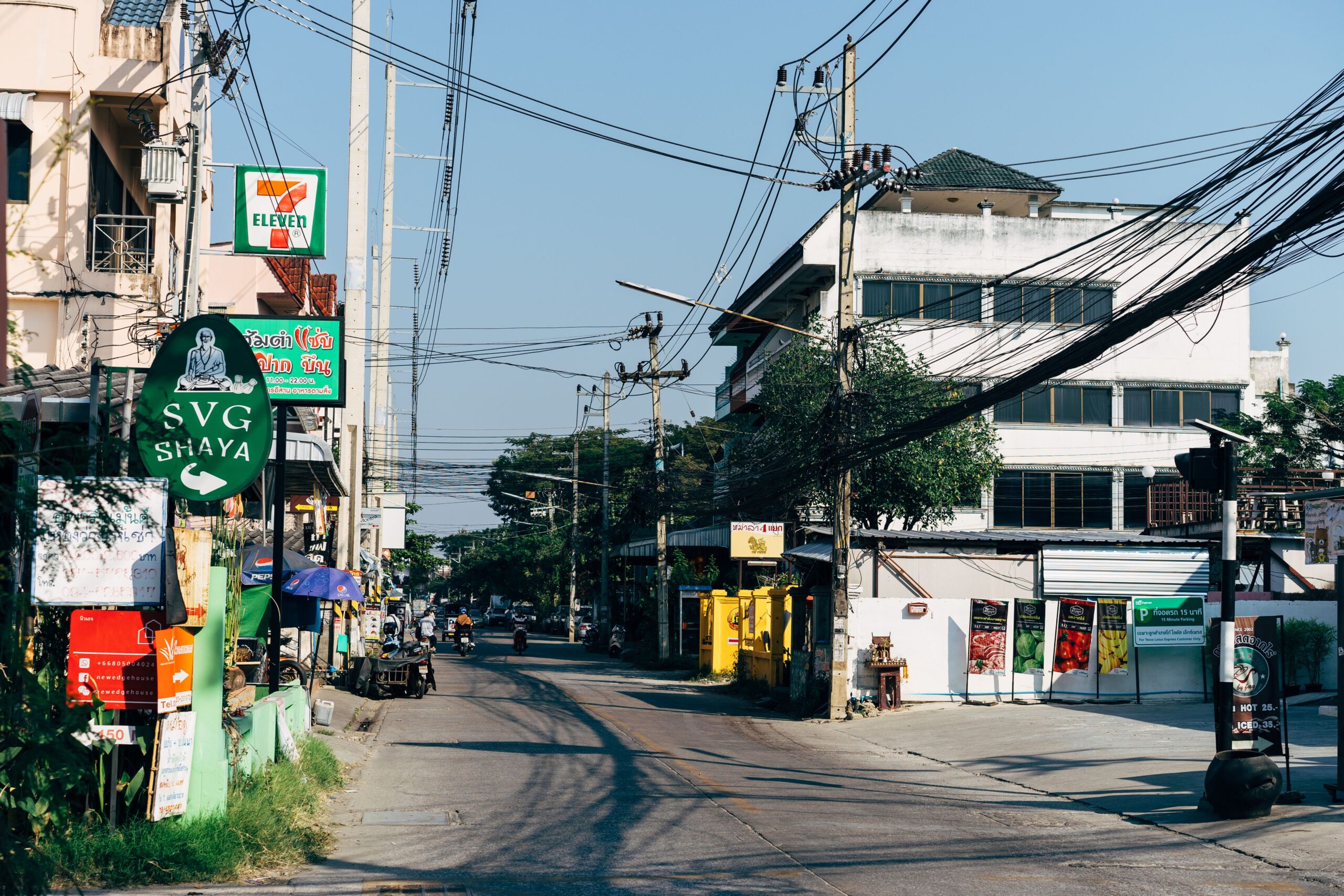
The honest answer: yes. But not for the same reasons as 2018, not in the same neighbourhood as 2018, and not if what you’re seeking is the Chiang Mai that the first wave of nomads described. The Nimman strip has gentrified past affordability by local standards. The digital nomad coworking infrastructure is mature but oversaturated. The coffee shops are excellent and too numerous. And the khao soi is still £1.76 from Khao Soi Khun Yai at 8am and that remains the finest reason to be here.
Reading time: 10 minutes | Last updated: 2026
Chiang Mai was the nomad city that most nomad cities tried to replicate. The combination — the affordability (£600-900 per month all-in was genuinely achievable in 2016-2019), the weather (the cool season November-February in a mountain city at 300 metres is some of the finest weather in Southeast Asia), the food (the northern Thai culinary tradition), the community (the NomadList ranking that placed Chiang Mai first consistently through most of the 2010s), and the internet (the fast fibre in the coffee shops of Nimman) — made it the prototype for every “best city for digital nomads” list for a decade.
In 2026, the honest assessment is more specific.
What Changed
The costs:
The Nimman neighbourhood (the former affordable creative district immediately west of the old city moat, the neighbourhood that the nomad community built its infrastructure around) has gentrified significantly since 2020. The co-living spaces that charged £300/month in 2018 charge £500-700/month in 2026. The coffee shops where the flat white cost 80 THB / £1.77 in 2018 now charge 120-160 THB / £2.65-3.53. The boutique guesthouses that were 600-800 THB / £13.24-17.66/night in 2019 are 1,200-1,800 THB / £26.49-39.73/night.
The Chiang Mai that costs £600/month all-in still exists — it’s just not in Nimman anymore.
The visa situation:
Thailand’s Destination Thailand Visa (DTV) launched in 2024 — the 5-year multiple-entry visa for remote workers and digital nomads, allowing stays of up to 180 days per entry: 10,000 THB / £220.75 application fee, available to UK citizens. This replaced the previous system of visa runs (crossing a border every 30 or 60 days to reset the tourist visa) and represents a significant improvement in the legal framework for working in Thailand.
The internet:
Still excellent. The average Nimman coffee shop has 100-200 Mbps download. The co-working spaces (the MANA, the Yellow, the CAMP at Maya Mall) have the stable high-speed connections required for video calls, large file transfers, and cloud-based work. This has not changed.
The Current Monthly Budget
| Category | Nimman (Mid) | Santitham (Budget) | Outside City (Value) |
|---|---|---|---|
| Accommodation | THB 12,000-18,000 / £265-397 | THB 6,000-10,000 / £132-221 | THB 4,000-8,000 / £88-177 |
| Food (local restaurants + coffee shops) | THB 9,000-15,000 / £199-331 | THB 6,000-10,000 / £132-221 | THB 5,000-8,000 / £110-177 |
| Transport (motorbike hire) | THB 2,500-3,500 / £55-77 | THB 2,500-3,500 / £55-77 | THB 2,500-3,500 / £55-77 |
| Coworking space (optional) | THB 2,000-4,000 / £44-88 | THB 2,000-4,000 / £44-88 | THB 2,000-4,000 / £44-88 |
| Miscellaneous | THB 3,000-5,000 / £66-110 | THB 2,000-3,000 / £44-66 | THB 2,000-3,000 / £44-66 |
| Monthly total | THB 28,500-45,500 / £629-1,004 | THB 18,500-30,500 / £408-673 | THB 15,500-26,500 / £342-585 |
The budget range outside the Nimman-centric narrative: Santitham (the residential neighbourhood immediately north of the old city moat, the neighbourhood where the Chiang Mai university community lives, the coffee shops at 70% of Nimman prices, the guesthouses at 50-60% of Nimman prices) and the neighbourhoods east of the moat (the Charoen Prathet area, the Warorot Market district) give the Chiang Mai daily budget that the 2015-2018 nomad experience described.
Where to Work
The CAMP at Maya Mall
The most established nomad workspace in Chiang Mai — open 24 hours, no time limit, strong wifi
The CAMP (Maya Lifestyle Shopping Center, 3rd floor, Nimman Road) — the Chiang Mai coffee shop that has been the nomad workspace of choice since it opened in 2011. The 24-hour operation, the No Time Limit policy (purchase one drink and work for as long as required), and the consistently fast wifi (100-150 Mbps) make it the reference workspace.
The specific CAMP instruction: the seats along the window wall on the mall-facing side give the external light that matters for sustained work without eye fatigue. The seats at the back have the most acoustic isolation.
Coffee: 120-160 THB / £2.65-3.53. No membership required.
MANA Coworking
The most professional dedicated coworking space, the meeting rooms, the reliable power
The MANA (Nimmanhaemin Road Soi 7) — the dedicated coworking space rather than the coffee shop with laptops. The private desks, the meeting rooms (essential for client calls requiring acoustic privacy), the printer, and the staff who manage the space actively.
Day pass: 350 THB / £7.73. Monthly hot desk: 3,500 THB / £77.27. Monthly dedicated desk: 5,500 THB / £121.42.
The MANA is the correct workspace for the nomad doing client video calls — the acoustic isolation of the dedicated workspace versus the coffee shop background noise is the practical distinction.
The Yellow Coworking
The community-focused space, the events, the other nomads
The Yellow (Nimman Soi 7) — the coworking that hosts nomad community events (the weekly networking, the skill-share sessions, the occasional social events) alongside the standard desk rentals.
Day pass: 300 THB / £6.62. Monthly: 3,000 THB / £66.21.
The Yellow is the correct workspace for the nomad who is new to Chiang Mai and wants the community connection alongside the desk. The events calendar is the practical differentiator.
Where to Live
Nimman (Premium, Best Infrastructure)
Who it’s for: The nomad with a mid-to-high monthly budget who prioritises walkability to coffee shops, restaurants, and coworking without motorbike dependency.
Apartment options:
The Nimman One serviced apartment (the most requested Nimman address, the gym, the pool, the studio apartments at THB 18,000-25,000 / £397-552/month), the Hillside 4 (the established Nimman complex, the studio apartments from THB 12,000-18,000 / £265-397/month).
What you get: Walking distance to the MANA, the CAMP, the Nimman restaurants. The price differential versus Santitham: approximately 40-60% premium for the same apartment size.
Santitham (The Correct Budget Alternative)
Who it’s for: The nomad who has been to Chiang Mai before, is comfortable on a motorbike, and wants the Chiang Mai daily budget at the lower end of the current range.
The Santitham neighbourhood (north of the moat, east of the Chang Phuak Gate) has the residential guesthouses and the apartment buildings that were the nomad accommodation of choice before the Nimman gentrification. The coffee shops are 70-80% of Nimman prices, the food is more specifically northern Thai (the Khao Soi Khun Yai at Santitham is the specific justification for this neighbourhood), and the atmosphere is residential rather than nomad-performative.
Apartment options: The unfurnished monthly apartment rental via the local Facebook groups (the Chiang Mai Digital Nomads group, 85,000+ members — the most reliable source for current rental listings): THB 6,000-10,000 / £132-221/month for a studio with air conditioning.
The Specific Advantages in 2026
The DTV visa: The 5-year multiple-entry Destination Thailand Visa makes Chiang Mai the only city in this guide with a specifically legal nomad visa available to UK citizens at a manageable application cost.
The food: The khao soi at 8am from Khao Soi Khun Yai (the northern Thai curry noodle soup, the most specific northern Thai dish, available in Chiang Mai and not reliably replicated anywhere in the UK or in Bangkok) at 55-65 THB / £1.21-1.43 per bowl is still the most cost-effective extraordinary meal in Southeast Asia. This has not changed.
The community: The NomadList Chiang Mai Slack and the Chiang Mai Digital Nomads Facebook group are the largest English-speaking nomad community networks in Southeast Asia. The weekly Tuesday meetup at the Punspace Nimman or the MANA is the in-person manifestation. The community is established, functional, and welcoming of newcomers without the performative quality that some newer nomad destinations have.
The motorbike: The motorbike hire at 200 THB / £4.41 per day (the Honda Click, the standard Chiang Mai city bike) gives the mobility that Chiang Mai’s spread requires. The Nimman-centric nomad bubble can be broken in 10 minutes on a motorbike — the Warorot Market for the 7am northern Thai breakfast, the Chiang Mai Gate market for the evening street food circuit, the Doi Suthep road for the weekend mountain drive.
The Honest Assessment
Chiang Mai is still worth it in 2026. But:
The nomad who arrives expecting 2017 prices will find 2026 prices (30-50% higher in the Nimman area). The nomad who adjusts the neighbourhood choice accordingly (Santitham, the area east of the moat) will find the affordable Chiang Mai is still accessible.
The infrastructure (the coworking, the visa, the community, the food) is the best in Southeast Asia for the nomad experience. No city in the region has the combination of DTV visa + mature coworking network + established community + extraordinary local food culture that Chiang Mai maintains.
The specific instruction: don’t live in Nimman because it was the 2018 nomad neighbourhood. Explore Santitham, find the khao soi at 8am, get the motorbike, join the Tuesday meetup.
The city is still the best in Southeast Asia for this purpose. The best bit has just moved slightly north of where the guidebook says it should be.