


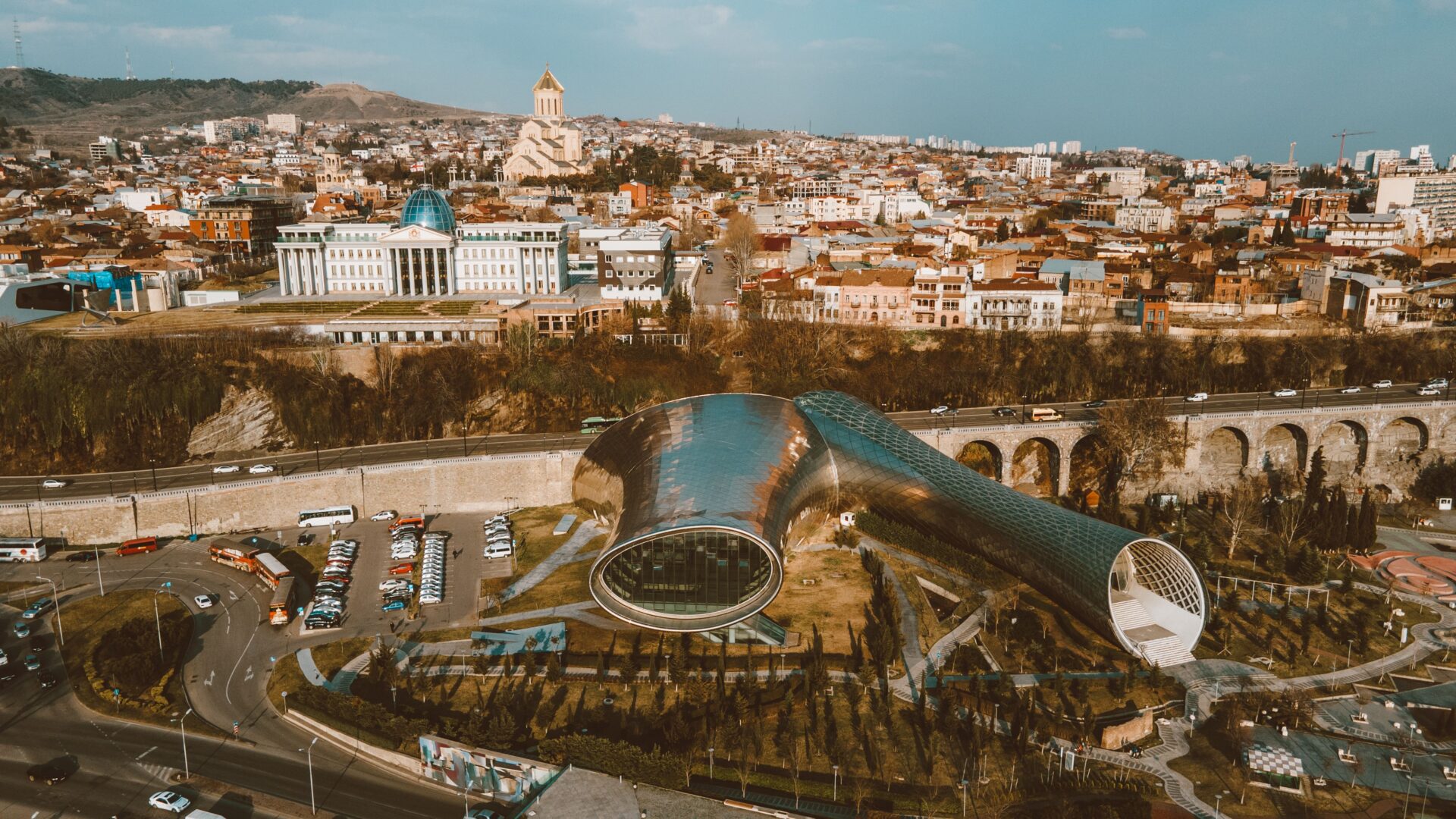
The honest Tbilisi nomad assessment: the most undervalued city in the European nomad circuit, the combination of Wizz Air direct from Gatwick for £100-220 return, monthly rent for a two-bedroom apartment in the old city at £300-550, the sulphur bath that costs £2.80 for an hour, the natural wine at £3.50 per glass from the producer, and a 365-day visa-free stay for UK citizens that requires no paperwork at all. The question is not whether Tbilisi works — it works — but whether the infrastructure has reached the level that enables serious remote work. This guide gives the honest answer.
Reading time: 9 minutes | Last updated: 2026
Tbilisi entered the nomad consciousness slowly and then all at once — the NomadList ranking placing it in the top 10 European cities in 2022-2023, the Caucasus relocation wave that brought tens of thousands of Russians to Georgia after the 2022 invasion of Ukraine (raising rents significantly in 2022-2023 but stabilising since), and the food and wine and sulphur bath word-of-mouth that the nomad community has been sharing consistently since.
In 2026, the honest Tbilisi nomad assessment is: excellent for the nomad who has been to Southeast Asia and wants a European base at comparable cost, challenging for the nomad who expects the co-working infrastructure of Lisbon or the community density of Chiang Mai.
The Current Monthly Budget
| Category | Vera/Vake (Mid) | Old Town/Mtatsminda (Character) | Didube (Budget) |
|---|---|---|---|
| Accommodation (1-bed) | GEL 1,500-2,500 / £300-500 | GEL 1,200-2,000 / £240-400 | GEL 700-1,200 / £140-240 |
| Food (cooking + eating out) | GEL 500-900 / £100-180 | GEL 500-900 / £100-180 | GEL 400-700 / £80-140 |
| Transport (Metro + taxi) | GEL 80-150 / £16-30 | GEL 80-150 / £16-30 | GEL 60-120 / £12-24 |
| Co-working (if used) | GEL 150-400 / £30-80 | GEL 150-400 / £30-80 | GEL 150-400 / £30-80 |
| Activities, social, wine | GEL 300-600 / £60-120 | GEL 300-600 / £60-120 | GEL 200-400 / £40-80 |
| Monthly total | GEL 2,530-4,550 / £506-910 | GEL 2,230-4,050 / £446-810 | GEL 1,510-2,820 / £302-564 |
The comparison with Chiang Mai (£400-700/month) and Lisbon (£1,500-2,300/month): Tbilisi sits in the middle — significantly cheaper than Lisbon, comparable to Chiang Mai at the budget end, more expensive at the mid-range where the old city character premium applies.
The Russian relocation wave of 2022-2023 raised rents by 40-60% in the most desirable areas. They have since stabilised at 20-30% above pre-2022 levels. The Tbilisi that cost £200/month in 2020 costs £350-500/month for the equivalent apartment in 2025.
The Visa Reality
UK citizens: 365-day visa-free stay in Georgia, renewable by exiting and re-entering.
This is the most generous visa-free stay offered to UK citizens anywhere in the world. The specific mechanics: enter Georgia, stay up to 365 days, exit (the border with Turkey at Sarpi, the border with Armenia at Bavra, the flight to anywhere) and immediately re-enter for a further 365 days. The “visa run” is a day trip across the Turkish border and back.
No paperwork. No income proof. No registration requirement for stays under 30 days in any accommodation (over 30 days, registration with the Civil Registry Agency is technically required — in practice, the Airbnb and the guesthouse registration is standard and covers this).
The tax situation: Georgia operates a territorial tax system — income earned from sources outside Georgia is not taxed in Georgia for individuals who are not Georgian tax residents. UK nationals who maintain UK tax residency (the UK’s 183-day rule applying) pay UK taxes on their income regardless of where they live. Consult a UK tax adviser before assuming the Georgia tax advantage applies.
Where to Work
Fabrika Tbilisi (the Central Nomad Hub)
The Fabrika (8 Ninoshvili Street — the converted Soviet sewing factory, the most concentrated evening and co-working venue in Tbilisi): the ground floor co-working space (Fabrika Co-working): the hot desks, the wifi (50-80 Mbps), the café, the outdoor space with the container bars visible beyond.
Monthly hot desk: GEL 400-600 / £80-120. Day pass: GEL 50-80 / £10-16.
The Fabrika is the nomad hub in the specific sense that the other Tbilisi co-working spaces aren’t — the community events (the weekly networking, the startup pitch nights, the skill-share sessions) happen here. The physical co-working space is functional rather than excellent; the community is the reason.
Impact Hub Tbilisi
The Impact Hub (4 Merab Kostava Street — the social enterprise co-working space, the most professionally organised co-working in Tbilisi): the dedicated desks, the private offices, the meeting rooms, the 24-hour access for members.
Monthly hot desk: GEL 350-500 / £70-100. Dedicated desk: GEL 600-900 / £120-180.
The Impact Hub community skews toward the Georgian startup and the international NGO worker rather than the lifestyle nomad — the correct space for the nomad whose work has a social impact orientation or who needs a quieter workspace than the Fabrika.
The Coffee Shop Circuit
Tbilisi’s specialty coffee scene has developed significantly since 2020 — the third-wave cafés with fast wifi and laptop-welcome culture are now concentrated in the Vera, Vake, and old city areas.
Colab Tbilisi (Kostava Street): The most consistently recommended nomad coffee shop in Tbilisi — the wifi reliable at 80-100 Mbps, the specialty coffee from Georgian and Ethiopian sources, the standing desk section alongside the standard café seating.
Entree Coffee (multiple locations): The Georgian specialty coffee chain — the wifi consistently fast, the environment quieter than the independent cafés on the Rustaveli.
Stamba Coffee (Merab Kostava 14): The coffee bar at the Stamba Hotel complex — the high ceilings, the natural light, the quietest work environment in the central Tbilisi café circuit.
The Specific Tbilisi Advantages
The wine:
The qvevri wine culture is the most specific advantage Tbilisi offers over every other city in this series. The Vino Underground or the 8000 Vintages wine bars (GEL 15-30 / £3-6 per glass for the natural wine from the small Georgian producers) give the wine that UK natural wine bars charge £15-20 per glass for — the same wine, made in the same qvevri, at a fraction of the price.
The wine education: one month in Tbilisi gives the visitor more wine education than a year of reading about natural wine from the UK. The wine is not an activity in Georgia. It is a cultural institution.
The sulphur baths:
The Abanotubani sulphur baths (the natural geothermal springs that have been the Tbilisi bath culture since the 5th century): GEL 15-40 / £3-8 per hour for the public sections, GEL 50-100 / £10-20 for the private rooms. The daily sulphur bath is the Tbilisi nomad’s answer to the Bali sunrise meditation — the specific morning reset that the city provides at a price that makes daily use rational.
The food:
The khinkali at GEL 1.50-2 / £0.30-0.40 per dumpling. The khachapuri at GEL 8-15 / £1.60-3 per bread boat. The mtsvadi (the Georgian pork skewer over vine charcoal) at GEL 20-35 / £4-7 per portion. The daily food budget in Tbilisi at the local restaurant level: £8-15/day for three meals including the wine.
The location:
Tbilisi is 4.5 hours from London Gatwick (Wizz Air direct). Turkey is 4 hours by car. Armenia is 3 hours. The Caucasus Mountain resort of Kazbegi is 3 hours. The wine region of Kakheti is 2 hours. The geographic position gives the nomad based in Tbilisi the most interesting regional day-trip radius of any European base.
The Specific Challenges
The internet:
Tbilisi’s internet infrastructure is generally good in the modern city (the Vera, the Vake, the Rustaveli corridor) and inconsistent in the old city (the Mtatsminda, the Sololaki, the Abanotubani). The specific old city challenge: the Soviet-era wiring in the older buildings, the wifi that works in the building’s lobby and not in the apartment. Test before signing.
The solution: the Georgian SIM (the Geocell or Magticom SIM, available at the airport: GEL 10-15 / £2-3 for the SIM, GEL 20-30 / £4-6 per month for the 20-30GB data plan) as the hotspot backup for the apartment wifi failures.
The language:
Georgian is the only language in the Mkhedruli script — the 33-letter alphabet that looks like nothing else in the written world. Street signs in Tbilisi’s tourist areas are bilingual (Georgian and English). Outside the tourist circuit: the older generation speaks Russian, the younger generation English. The Google Translate Georgian offline pack is the non-negotiable phone installation before arrival.
The seasons:
Tbilisi’s summer (June-August) is hot (33-37°C, dry). The winter (December-February) is cold (2-8°C, occasional snow). The spring and autumn (March-May, September-November) are the optimal Tbilisi nomad seasons — the temperature mild, the wine harvest visible in October, the spring blossom in April.
Who Tbilisi Is For
The Tbilisi nomad fit: the UK or European remote worker who wants an Eastern European base at Southeast Asian price points, who is interested in the wine and food culture as a daily engagement rather than a weekend activity, and who is comfortable with a city that is developing its nomad infrastructure rather than one that has already completed it.
The Tbilisi nomad mis-fit: the nomad who needs the Lisbon level of co-working infrastructure, the nomad who requires a large English-speaking social scene, or the nomad who is sensitive to the cultural complexity of a post-Soviet city in active geopolitical negotiation with its neighbours.
The bottom line: the combination of Wizz Air from Gatwick at £100-220 return, the 365-day visa-free stay, the £300-500/month rent for a characterful apartment, the £3 natural wine at the bar around the corner, and the sulphur bath at £5 in the morning — this combination does not exist anywhere else in the European nomad circuit. Tbilisi earns the visit.