
The route that most East Africa visitors don’t take because it requires two flights: two days in Rwanda for the gorilla trek and the Kigali genocide memorial that gives the conservation context its full moral weight, five days in Tanzania for the Serengeti migration and the Ngorongoro Crater and the specific dawn game drive where the lion is visible on the plains before the tour buses from Arusha arrive — and why the Rwanda-Tanzania combination gives East Africa in a depth that the Kenya-Tanzania circuit, for all its logistical convenience, cannot replicate.
Reading time: 11 minutes | Last updated: 2026
East Africa has two gravitational centres for the UK traveller: Kenya (the established safari infrastructure, the Masai Mara, the Nairobi direct flight) and Tanzania (the Serengeti, the Ngorongoro, the Kilimanjaro, the most biodiverse safari destination in Africa). Rwanda is the third element that most itineraries omit because it requires a separate flight and a separate visa and a USD 1,500 gorilla permit that gives one hour with one habituated group.
This itinerary makes the case for Rwanda. The gorilla permit is expensive. The trek is among the most affecting wildlife experiences available on Earth. And the Kigali Genocide Memorial — the most important single museum in Africa for understanding the specific context of the conservation work that follows — changes the Rwanda safari from wildlife tourism into something more complex and more worthwhile.
Before You Leave
The Rwanda visa: UK citizens receive a visa on arrival or can apply online at irembo.gov.rw. Cost: USD 50 / £39.37. The eVisa is recommended.
The gorilla permit: USD 1,500 / £1,181.10 per person per trek. The single most expensive wildlife activity in Africa. Book at rwandatourism.com at least 3-4 months ahead — the permits sell out for the peak season (June-September, December-January). The peak season permit is more expensive (USD 1,500) than the off-peak (USD 1,500 — the price was unified in 2020).
The Tanzania visa: UK citizens require a visa. Apply for the Tanzania e-Visa online at eservices.immigration.go.tz. Cost: USD 50 / £39.37.
The internal routing: Fly UK-Kigali (direct on RwandAir or via Nairobi on Kenya Airways/British Airways — approximately 10-11 hours total). Then Kigali-Kilimanjaro or Kigali-Dar es Salaam (RwandAir or Kenyan Airways, 1-2 hours). Then internal Tanzania bush plane to the Serengeti.
The safari operator: For the Tanzania section, the quality of the guide determines the quality of the safari. Book through a Tanzanian registered operator (the Tanzania Association of Tour Operators, tato.or.tz) rather than the international booking platforms that take commission without local accountability.
The Route
Kigali, Rwanda (2 nights) → Serengeti, Tanzania (3 nights, bush plane from Kilimanjaro) → Ngorongoro Crater (1 night) → Arusha, fly home (1 night)
The 7 Days
DAYS 1-2 — Rwanda
Day 1: The Kigali Genocide Memorial
The Kigali Genocide Memorial (Gasabo district — the memorial built over one of the mass burial sites of the 1994 genocide, the graves of 250,000 victims visible from the memorial garden): the most important museum in Africa.
The genocide against the Tutsi (April 7 to July 15, 1994 — the 100 days in which approximately 800,000 Tutsi and moderate Hutu were murdered by Hutu extremists, the scale equivalent to the murder of every resident of Birmingham in 100 days): the memorial’s exhibition gives the specific historical context (the colonial Belgian administration of the ethnic identity cards, the Habyarimana plane crash that triggered the killing, the radio station RTLM that broadcast the names of people to be killed), the specific personal stories (the photographs and the testimonies of individuals who died and of the survivors), and the children’s memorial (the individual children, named, photographed, their favourite food and their last words recorded in the exhibit cases — the most affecting single room in any African museum).
The memorial garden (the terraced garden above the mass graves, the roses):
The specific instruction for the context of the Rwanda safari: the gorilla permits fund the protection that makes the mountain gorilla population’s recovery possible. The same conservation infrastructure that employs the anti-poaching rangers employs the community guards who prevent the encroachment on the gorilla habitat. The murder of 800,000 people in 1994 was followed by the specific political decision to rebuild Rwanda around conservation and tourism — the direct connection between the genocide memorial and the gorilla permit is the Rwanda story that the wildlife brochure does not tell.
Entry: free.
Day 2: The Volcanoes National Park Gorilla Trek
The gorilla trek begins at the Kinigi park headquarters (the trailhead, 3 hours from Kigali by road): the 4:30am departure from Kigali (the road journey is 3 hours to the park HQ, the briefing at 7am, the trek begins at 7:30am).
The trek (the tracked habituated gorilla family — the distance from the park boundary to the group varying from 45 minutes to 4 hours depending on the overnight movement of the group): the ranger ahead, the porters with the bamboo poles, the forest closing around the path, the tracker communicating via radio with the lead trackers who have been following the group since dawn.
The encounter (the one-hour maximum with the habituated group — the silverback visible first, the juveniles in the branches above, the mothers with the infants, the group in the forest clearing in approximately the posture they have occupied since the trackers located them at 5am):
The specific mountain gorilla encounter instruction: remain 7 metres from the group (the regulation enforced by the rangers — the distance that prevents disease transmission to the immunologically vulnerable great ape). Speak only in whispers if at all. Do not make direct eye contact with the silverback. Do not run if a gorilla approaches. Stand still, look slightly to the side, make yourself small.
The hour ends when the ranger says it ends.
Where to stay: The Singita Kwitonda Lodge (adjacent to the park boundary, the most cited luxury gorilla lodge: USD 1,500-2,500 / £1,181-1,969 per person per night), the One&Only Gorilla’s Nest (the One&Only property in the forest: USD 1,200-2,000 / £944.88-1,574.80), the Mountain Gorilla View Lodge (the mid-range option: USD 250-450 / £196.85-354.33 per person per night all-inclusive).
DAYS 3-5 — The Serengeti
Fly Kigali-Kilimanjaro (Day 3 morning), bush plane to the Serengeti:
RwandAir or Kenya Airways from Kigali to Kilimanjaro International Airport (KIA): 1.5 hours. Then the bush plane from KIA to the Serengeti airstrip (the small charter aircraft, Coastal Aviation or Air Excel, the 45-minute flight over the Masai steppe to the Seronera or the Grumeti airstrip): USD 200-400 / £157.48-315 one way.
The Serengeti in Full:
The full Serengeti guide in 7 Days in Kenya and Safari Packing Guide. The specific Tanzania distinction from the Kenya Masai Mara:
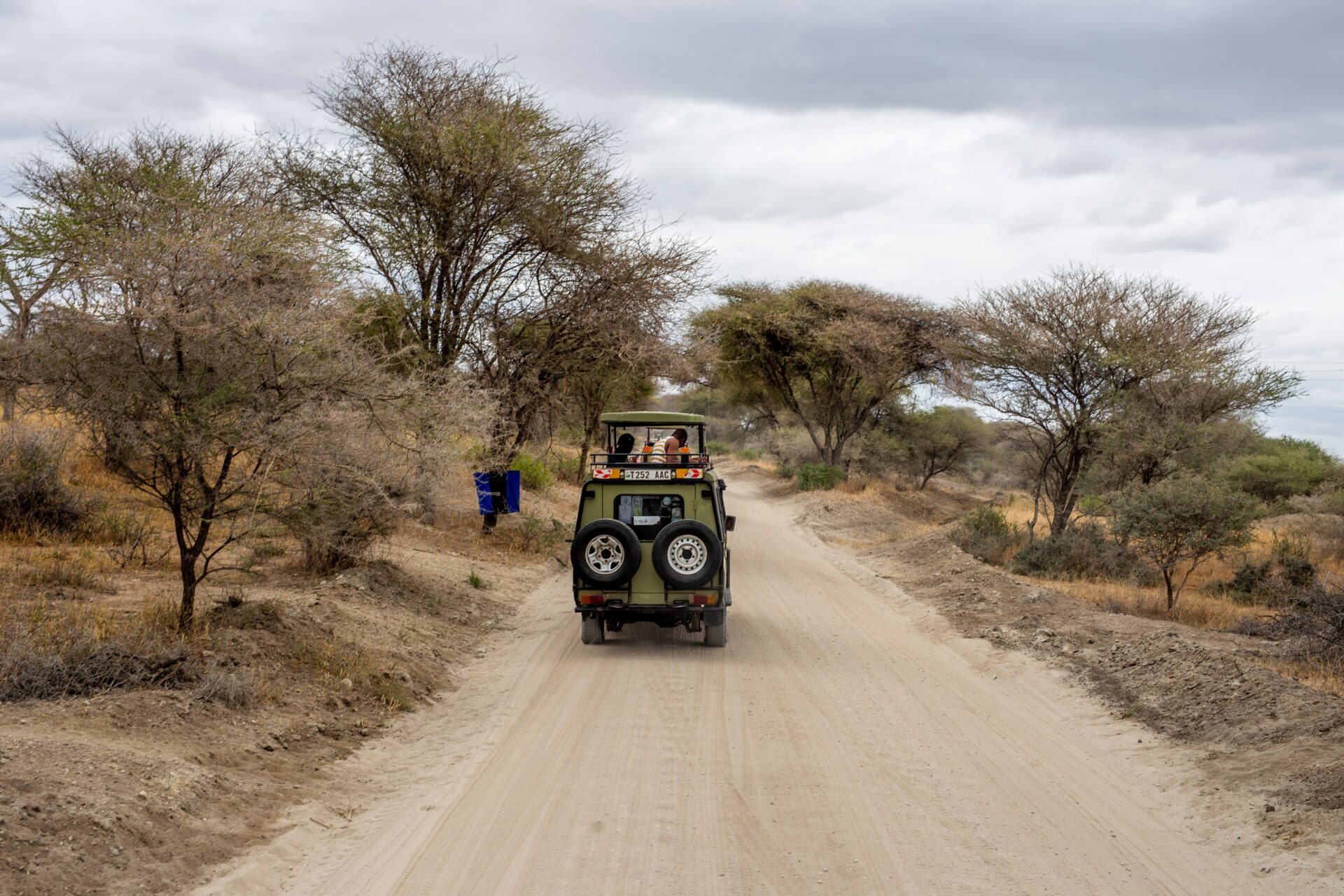
Tanzania’s Serengeti National Park covers 14,763 square kilometres — eight times the size of the Masai Mara. The visitor density in the Serengeti is lower than the Mara (the Mara receives more day visitors from Nairobi; the Serengeti requires the specific commitment of the internal flight or the long road journey from Arusha). The central Serengeti (the Seronera area) sees the highest tourist density; the northern Serengeti (the Lobo area) and the western Serengeti (the Grumeti conservancy) give the lower density experience.
The migration timing:
- December-March: The calving season in the southern Serengeti (the Ndutu area, the Ngorongoro Conservation Area). The predator density highest as the lions and the cheetah and the wild dog follow the wildebeest.
- April-May: The short rains, the migration moving northwest.
- June-July: The western Serengeti, the Grumeti River crossing (the smaller crossings).
- August-October: The northern Serengeti, the Mara River crossings (the Tanzania side).
- November: The migration moving south.
The dawn game drive (5:30am-10am):
The instruction: the 5:30am departure is the one time when the Serengeti game drives exceed the Masai Mara equivalent. The specific Tanzania dawn — the acacia silhouettes against the orange sky, the lion visible on the kopje (the granite outcrop) before the vehicle reaches it, the wildebeest in the thousands across the valley — is the Serengeti at its most specific.
DAY 6 — Ngorongoro Crater
The Ngorongoro Crater:
The Ngorongoro Crater (the 20km-wide volcanic caldera, the 600-metre walls surrounding the crater floor, the self-contained ecosystem with 25,000 animals on the 264 square kilometre floor — the highest concentration of large mammals in any enclosed space on Earth):
The descent at dawn (the crater rim at 6am — the mist in the crater below, the floor invisible, the walls visible; the descent road switchbacks to the floor over 20 minutes): arrive at the crater floor at 6:30am.
The specific Ngorongoro wildlife: the black rhinoceros (the remnant population of the critically endangered black rhino — approximately 20-30 individuals on the crater floor, the highest density of black rhino in Tanzania), the lion pride (the crater lion population is genetically distinct — the closed crater population has been inbreeding since the 1960s-70s due to the crater walls limiting gene flow, a conservation concern that is the subject of active management), and the flamingo on the Magadi soda lake (the alkaline lake at the crater’s southern end visible from the road as a pink line from the flamingo density).
Entry: USD 890 / £700.79 per vehicle per day for the crater descent (the highest national park fee in Africa, the fee reflecting the carrying capacity management that limits the vehicle numbers).
DAY 7 — Arusha and Departure
The Arusha morning:
The Arusha National Park (the park immediately adjacent to the town, the Momella Lakes with the flamingo and the hippo, the Mount Meru visible above the forest): the half-day game drive (USD 45 / £35.43 per person) or the Colobus Monkey walk in the park forest.
The Arusha coffee:
Tanzania is one of the world’s finest coffee origins (the Kilimanjaro and the Arusha arabica grown at 1,400-2,000 metres on the volcanic slopes) — the coffee from the Arusha producers (the Burka estate, the Mondul estate) at the source price before the export premium: TZS 5,000-10,000 / £1.41-2.83 per cup at the Arusha town coffee shops.
Fly home from Kilimanjaro International Airport (JRO).
What It Costs
| Category | Budget | Mid-Range | Premium |
|---|---|---|---|
| Return flights (UK-Kigali, Arusha-UK) | £700-1,000 | £900-1,400 | £1,200-2,000 |
| Internal flights (Kigali-KIA, KIA-Serengeti) | £300-500 | £350-600 | £400-700 |
| Rwanda gorilla permit | £1,181 | £1,181 | £1,181 |
| Rwanda accommodation (2 nights) | £200-400 | £500-900 | £1,500-4,000 |
| Tanzania safari camp (4 nights, all-inclusive) | £600-1,000 | £1,200-2,400 | £2,400-6,000+ |
| Park fees (Serengeti, Ngorongoro) | £400-600 | £400-600 | £400-600 |
| Total per person | £3,381-4,681 | £4,531-7,081 | £7,081-14,481+ |
The gorilla permit (£1,181) is the non-negotiable fixed cost that makes the Rwanda-Tanzania circuit more expensive than the Kenya-only circuit. The specific question: does the gorilla encounter justify £1,181? The answer of everyone who has done it: yes, by a significant margin.