
The circuit that gives Latin America in its most varied two-week argument: three days in Medellín for the transformation story and the cable car and the Saturday night that lasts until 5am, three days in Ecuador for the Quito colonial centre and the Quilotoa crater lake and the night bus to the Amazon border, and eight days in Peru for the Lima ceviche and the Sacred Valley and the Inca Trail arrival at the Sun Gate at dawn — and why the Colombia-Ecuador-Peru combination gives the continent in its full cultural, ecological, and historical range in fourteen days without the backtracking that the Lima-Cusco-Lima-return circuit forces on the one-country visitor.
Reading time: 11 minutes | Last updated: 2026
Latin America’s Pacific corridor from Colombia to Peru covers the most compressed cultural, ecological, and historical diversity accessible in any two-week long-haul trip from the UK. The three countries share the Andean spine but differ in everything else — the Caribbean-influenced Colombia (the salsa, the aguardiente, the bandeja paisa), the indigenous-Kichwa Ecuador (the volcanoes, the Galápagos, the Otavalo weavers), and the Inca-Spanish Peru (the ceviche, the Cusco, the Machu Picchu).
Before You Leave
Visas: Colombia (UK citizens: 90 days visa-free), Ecuador (UK citizens: 90 days visa-free), Peru (UK citizens: 90 days visa-free). No advance visas required.
The Inca Trail permit: Book 6 months ahead for the peak season (June-August). The permit sells out — this is the single booking that determines whether the circuit works as planned. If the Inca Trail permit is unavailable, the Salkantay Trek alternative (no permit required, booked through any operator with 4 weeks notice) gives the mountain approach.
The open-jaw flight: Fly London-Medellín (via Bogotá on Avianca or via Madrid on Iberia), fly Cusco-Lima-London (LATAM or Avianca). The open-jaw typically costs the same as a return to any single city and eliminates the backtracking.
The altitude sequencing: The circuit moves from sea-level Medellín (1,495 metres) to the Quito-Cotopaxi altitude (2,850-4,800 metres) to the Cusco-Inca Trail altitude (3,400-4,215 metres). The altitude exposure increases progressively — the correct sequencing for altitude acclimatisation.
The Route
Medellín, Colombia (3 nights) → Quito, Ecuador (2 nights) → Cotopaxi/Quilotoa circuit (1 night) → Cusco, Peru (3 nights, fly Quito-Lima-Cusco) → Inca Trail (3 nights) → Lima (1 night)
The 14 Days
DAYS 1-3 — Medellín, Colombia
The cable car and the comunas:
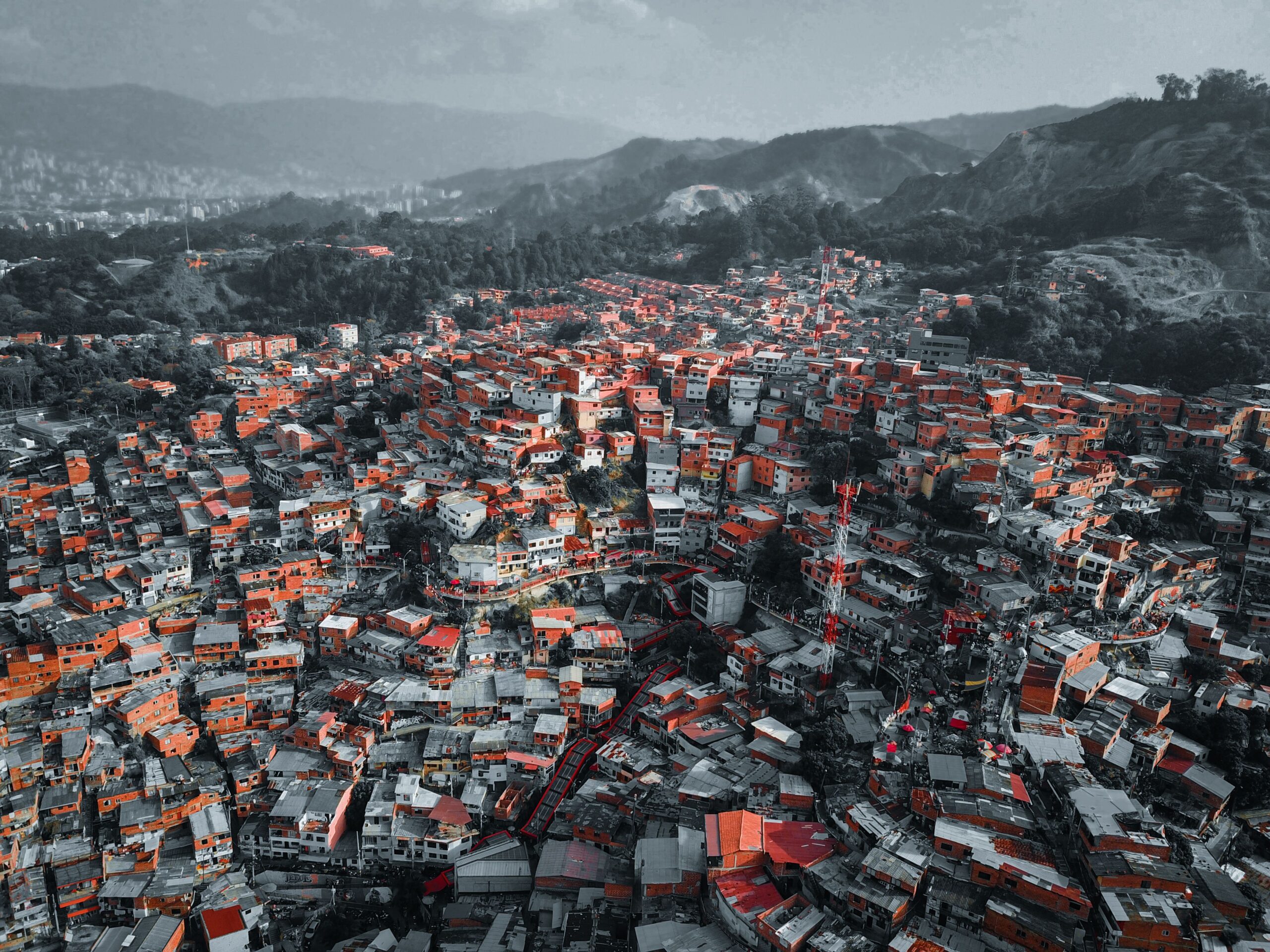
The Medellín Metro Cable (the cable car from the Acevedo Metro station to the Santo Domingo and Arví Park stations — the cable car that the city built to connect the hillside comunas to the formal economy, full guide in Medellín for Digital Nomads): the cable car gives the most efficient single view of the Medellín transformation — the informal settlements on the hillside below, the cable car infrastructure above them, the city modernisation visible from the cabin.
The Comunas 1 and 2 (the hillside neighbourhoods above the cable car terminal — the neighbourhood where the Pablo Escobar era was most concentrated and where the post-conflict community development has been most dramatic): the Escaleras Eléctricas (the outdoor escalator system connecting 12 levels of the hillside — the longest outdoor escalator in the world at 384 metres, the community infrastructure as public art): free.
The Parque Arví:
The Arví Park (the community park above the Comunas, accessible by the cable car extension from the Santo Domingo station — the forest above the city, the organic food market on weekends, the picnic area used by the Medellín families on Saturday): the specific Medellín contrast — the city below, the forest above, the cable car connecting them.
The Laureles evening:
The Laureles neighbourhood (the most locally-oriented dining neighbourhood in Medellín — the bandeja paisa at the neighbourhood restaurant (the full plate of beans, rice, ground beef, chorizo, pork cracklings, avocado, plantain, and fried egg, the most caloric single meal in Colombia: COP 15,000-25,000 / £2.73-4.55), the aguardiente at the bar from 6pm, and the specific Medellín Saturday night that the El Poblado tourist infrastructure cannot replicate).
The Saturday night in Laureles (the Avenida El Poblado in Laureles — not the El Poblado district, the different street name): the bars that the Medellín residents use rather than the visitors, the cumbia and the vallenato audible from the street, the night that ends when the light begins rather than when the venue closes: COP 20,000-50,000 / £3.64-9.09 entry to the better bars.
DAYS 4-5 — Quito, Ecuador
Full guide in 7 Days in Ecuador. The specific 2-day Quito circuit:
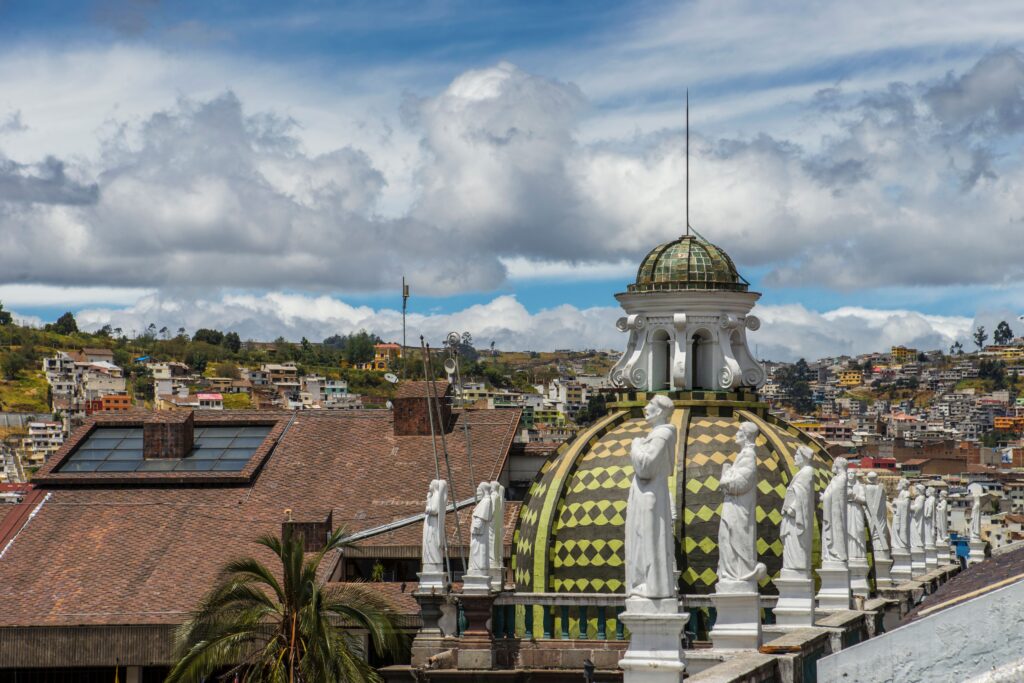
Day 4: The Centro Histórico (the Plaza Grande, the Compañía de Jesús, the Mitad del Mundo monument), the Cotopaxi viewpoint from the Panecillo Hill (the Panecillo — the hill above the old city with the winged Virgin of Quito statue, the view over the entire colonial centre and the volcanoes beyond): free.
Day 5: The El Ejido Park morning (the city park adjacent to the Mariscal district — the Saturday art market, the local painters selling the Ecuadorian landscape art at the prices that reflect the local rather than the tourist economy), the Guayasamín Museum (the collection of Oswaldo Guayasamín — the most celebrated Ecuadorian painter of the 20th century, the expressionist paintings of the indigenous suffering under the colonial and post-colonial systems, the most politically significant single collection in Ecuador): entry USD 8 / £6.30.
DAY 6 — The Quilotoa Day Trip
The Quilotoa crater lake circuit from Quito (the day trip or the overnight to Latacunga for the morning visit): full guide in 7 Days in Ecuador. The Quilotoa at 7am before the day tour buses arrive from Quito: the crater visible in the morning mist, the path descent to the lake, the kayak on the crater lake surface.
DAYS 7-9 — Cusco, Peru
Fly Quito-Lima-Cusco (the morning connection):
The Quito-Lima flight (LATAM or Avianca, 3.5 hours), the Lima connection (1.5-3 hour layover), the Lima-Cusco flight (LATAM or Avianca, 1.5 hours). Arrive Cusco by afternoon. Drink the coca tea. Sleep.
Days 8-9: The Cusco acclimatisation and Sacred Valley circuit — full guide in 7 Days in Peru. The specific 2-day additions: the Pisac Market (on Day 8 if it falls on a Sunday) and the Ollantaytambo Fortress (Day 9 afternoon, before the Inca Trail begins).
DAYS 10-13 — The Inca Trail
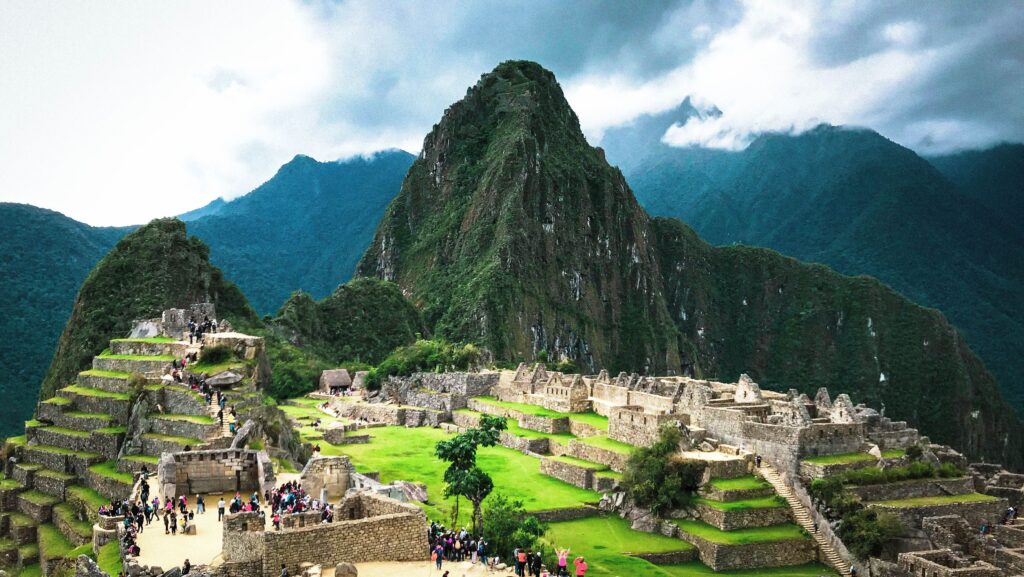
Four days, three nights — full guide in 7 Days in Peru. The Sun Gate at dawn on Day 13. The bus to Aguas Calientes. The Vistadome train to Cusco in the evening.
DAY 14 — Lima and Departure
The LATAM flight from Cusco to Lima (1.5 hours, early morning departure). Lima: the Miraflores afternoon.
The Lima afternoon:
The Huaca Pucllana (the pre-Inca pyramid in the middle of the Miraflores suburb — the 500 CE Wari pyramid, the excavation visible from the viewing platform, the pyramid surrounded by the 21st-century apartment buildings of Miraflores in the most surreal archaeological setting in Latin America): entry PEN 15 / £2.97.
The ceviche at La Mar (the Gastón Acurio restaurant in Miraflores — the high-end ceviche that gives the Lima fine dining version of the Mercado de Surquillo market version — the specific comparison that makes both versions better understood): PEN 65-90 / £12.87-17.83 per main. Book at lamarcebicheria.com.
Fly Lima home.
What It Costs
| Category | Budget | Mid-Range |
|---|---|---|
| Return flights (London-Medellín, Lima-London, open jaw) | £700-1,000 | £900-1,400 |
| Internal flights (Quito-Lima-Cusco, Cusco-Lima) | £200-400 | £300-600 |
| Inca Trail permit + operator | £472-630 | £500-700 |
| 14 nights accommodation | £200-420 | £420-840 |
| Food (14 days) | £150-300 | £300-600 |
| Activities (cable car, crater, park fees, Galápagos day trips) | £100-220 | £150-350 |
| Total | £1,822-2,970 | £2,570-4,490 |