



The Indian street food argument: India has the most varied street food vocabulary in the world — not the most photogenic, not the most consistent, but the most varied, the regional variation so extreme that the pani puri of Mumbai (the crispy hollow sphere filled with the spiced tamarind water and the chickpeas, eaten in a single bite) is unrecognisable to the pani puri vendor in Delhi (the gol gappa, the same concept, the different water, the different filling, the different crunch) who has never called it by the Mumbai name. This guide covers the 12 essential dishes, the cities where each is at its best, and the street instruction that distinguishes the excellent from the mediocre before the money changes hands.
Reading time: 9 minutes | Last updated: 2026
The 12 Essential Dishes
1. Pani Puri / Gol Gappa / Puchka
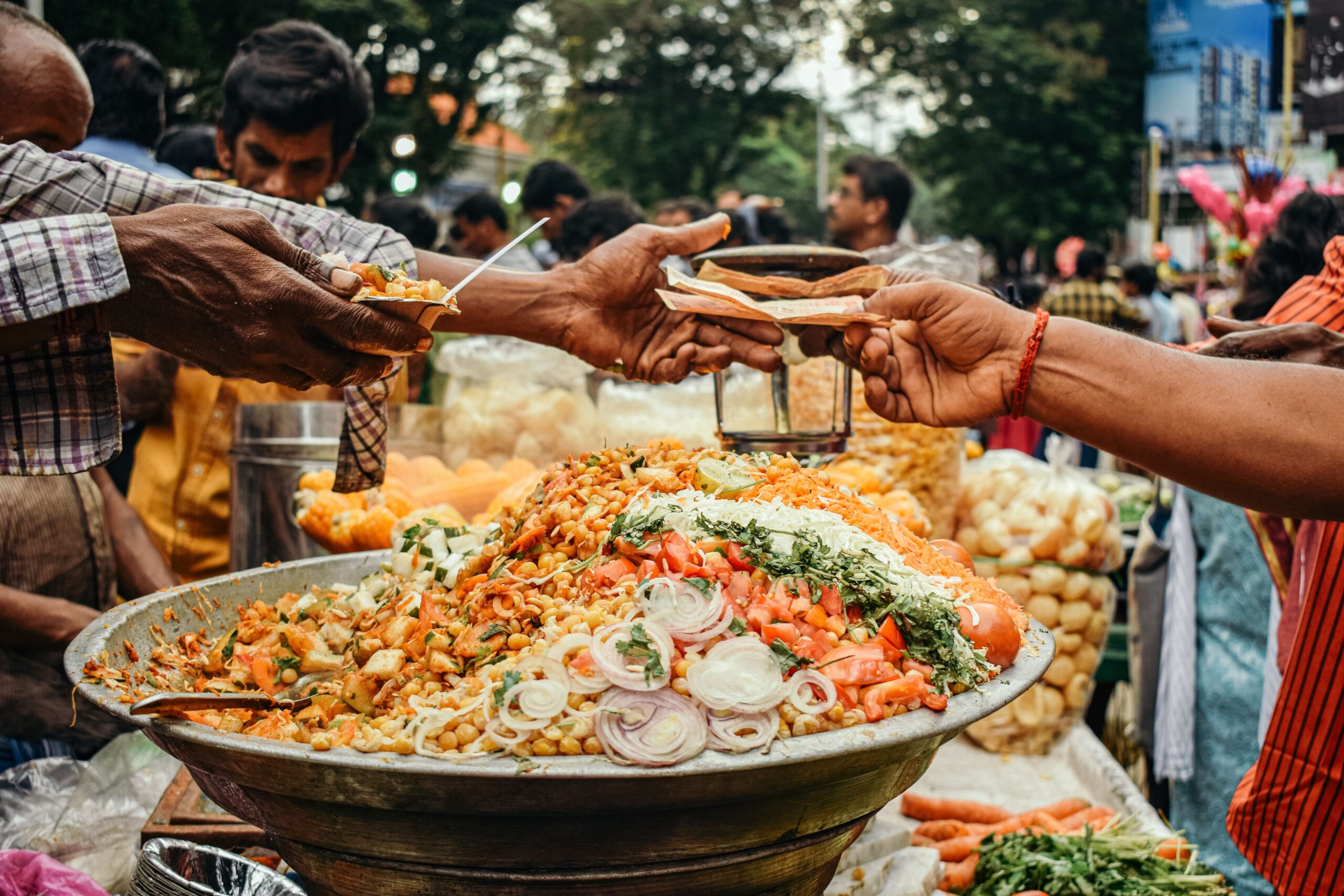
What it is: The crispy semolina sphere, hollow inside, filled with the spiced tamarind-mint water, the chickpea, the potato, the chutney — the entire thing placed in the mouth whole and eaten in a single bite. The flavour explosion (the sour, the sweet, the spicy, the cold, the hot from the crispy shell) is the most complex single bite available in Indian street food.
Where it’s best: The Mumbai pani puri at the Juhu Beach vendors (the tamarind water giving the specific Mumbai sourness, the coriander and the mint giving the herbal base), the Kolkata puchka (the atta dough rather than the semolina, the filling of the mashed potato with the mustard oil — the most specifically Bengali version), and the Delhi gol gappa (the mint-heavy water, the moong sprout filling).
The quality indicator: The sphere must be freshly fried — the puri that has been sitting for more than 2 hours loses the crunch that the bite requires. Watch the vendor frying the puris before the stall visit.
Price: ₹15-40 / £0.13-0.36 for 6 pieces.
2. Vada Pav — Mumbai
What it is: The Mumbai street food — the spiced potato fritter (vada) in the soft bread roll (pav), the two chutneys (the dry garlic chutney, the green coriander chutney), the sliced green chilli. The vada pav is the Mumbai worker’s lunch — the 2-minute meal eaten at the stall with no plate or cutlery required.
The origin: The vada pav was invented at the Dadar railway station stall in 1966 by Ashok Vaidya who needed to feed the mill workers of the Girangaon district — the potato fritter in the bread roll was the fastest, cheapest, most filling single food item he could produce. The Mumbai economy ran on the vada pav for 40 years.
Where it’s best: The Shree Krishna Vada Pav at Vile Parle (the stall that the Mumbai food press considers the reference). The Anand Stall near the Mithibai College. Every railway station in Mumbai serves vada pav; the quality is consistent because the format is forgiving — the correct potato filling, the correct chutney, the correct pav.
Price: ₹20-40 / £0.18-0.36.
3. Chole Bhature — Delhi
What it is: The Delhi breakfast-that-is-lunch — the spiced chickpea curry (chole, the black chickpea from the Delhi Punjabi tradition, the fat stewed in the ghee with the tomato and the onion and the cumin and the amchur, the tamarind giving the sourness that the Delhi version specifically requires) with the deep-fried puffed bread (bhatura, the leavened dough dropped into the hot oil and inflating immediately to a balloon of crispy dough):
The eating instruction: The bhatura inflates on contact with the oil and arrives at the table as a puffed sphere. Tear it at the top to release the steam, dip the torn piece into the chole, eat. The bhatura that has been sitting for 5 minutes has deflated and lost the steam-puff quality.
Where it’s best: The Sita Ram Diwan Chand (the Paharganj area Delhi — the chole bhature stall that has been operating since 1944, the queue forming at 8am). The Kake Da Hotel (the Connaught Place area — the institution).
Price: ₹80-150 / £0.72-1.35 per portion.
4. Dosa — South India
What it is: The fermented rice and black lentil batter crêpe (dosa) — the batter fermented for 8-12 hours, spread on the iron tawa, the masala dosa filled with the spiced potato, served with the sambar (the tamarind and lentil soup) and the coconut chutney:
The regional variation: The Karnataka dosa (the Bengaluru MTR restaurant — the thin, crispy, the potato filling using the Bengaluru onion-heavy preparation), the Tamil Nadu dosa (the Chennai street stall — the more elastic batter, the filling using the South Indian coconut oil), and the Kerala appam (the rice and coconut milk pancake with the raised edges, the thick centre, the egg cracked into the centre while cooking — the specific Kerala version that the rest of the subcontinent hasn’t adequately replicated).
Where it’s best: The MTR restaurant in Bengaluru (the Mavalli Tiffin Rooms — the 1924 restaurant that the Karnataka dosa is benchmarked against), the Ratna Café in Chennai, and the Saravana Bhavan chain (the international South Indian chain that has successfully exported the Tamil Nadu dosa to 17 countries while maintaining the quality).
Price: ₹50-120 / £0.45-1.08.
5. Biryani — Hyderabad
What it is: The rice and meat preparation — the basmati rice cooked with the meat (the mutton, the chicken, the vegetable), the dum method (the sealed pot, the steam cooking, the rice and the meat cooked together in the pot without the direct contact with the flame, the flavour compounds exchanging in the sealed pressure), the saffron giving the specific colour, the fried onion (birista) on top:
The Hyderabad distinction: The Hyderabad biryani (the kacchi method — the raw marinated meat placed under the raw rice in the pot and cooked together in the sealed dum, the method that gives the specific Hyderabadi flavour that the fried-meat-added-to-cooked-rice Lucknawi method does not) is the reference for the Indian biryani conversation.
Where it’s best: The Paradise Biryani (the Secunderabad, Hyderabad — the restaurant chain that the Hyderabad food community uses as the reference), the Shah Ghouse Café (Old Hyderabad), and the Bawarchi (RTC X Roads, the specific Hyderabad biryani restaurant that the hotel recommendations miss).
Price: ₹150-350 / £1.35-3.15 per portion.
6. Kathi Roll — Kolkata
What it is: The Kolkata wrap — the paratha (the layered flatbread cooked on the tawa) wrapped around the filling (the egg, the chicken tikka, the paneer), the raw onion, the green chilli, the kasundi (the Bengali mustard), the specific roll that the Nizam’s restaurant in New Market invented in 1932 for the British executives who needed lunch without cutlery:
Where it’s best: The Nizam’s (17 Hogg Street, Kolkata — the original kathi roll restaurant, the 1932 claim, the beef kathi available at the original Nizam’s location), the Kusum Rolls (Park Street — the most cited contemporary Kolkata roll), and the Hot Kathi Roll (the chain that has taken the Kolkata format to Delhi and Mumbai).
Price: ₹80-200 / £0.72-1.80.
7-12 — The Essential Others
Pav Bhaji (Mumbai): The mashed vegetable curry on the buttered pav — the street food that was created to feed the mill workers of the textile industry. ₹80-150 / £0.72-1.35.
Aloo Tikki Chaat (Delhi): The potato cake with the chole, the tamarind chutney, the yoghurt, the pomegranate — the most complex chaat preparation. ₹60-120 / £0.54-1.08.
Dhokla (Gujarat/Mumbai): The steamed fermented chickpea flour cake — the lightest street food in this guide, the mustard seed tempering, the green chilli and the coriander on top. ₹40-80 / £0.36-0.72.
Bhel Puri (Mumbai): The puffed rice, the sev (the thin chickpea noodle), the chopped onion, the tomato, the tamarind chutney — assembled to order on the Chowpatty Beach by the vendor who mixes the components in the specific Bhel Puri assembly that takes 60 seconds. ₹40-80 / £0.36-0.72.
Jalebi (nationwide): The fermented batter fried in the concentric spiral and dipped immediately in sugar syrup — the Indian sweet that is simultaneously the breakfast and the festival food. ₹30-60 / £0.27-0.54 for 4 pieces.
Masala Chai (everywhere): The tea with the ginger, the cardamom, the clove, the milk, the sugar — the tea that the subcontinent drinks in the clay cup (kulhad) that is smashed on the ground after use and that provides the biodegradable vessel the Indian chai tradition invented. ₹10-30 / £0.09-0.27.
The Street Food Navigation
The queue as the quality indicator: In India as in Asia generally, the queue is the primary quality signal. The vendor with 20 people waiting at 8am is the vendor the neighbourhood trusts.
The hygiene instruction: The cooked-to-order street food (the freshly fried vada pav, the dosa cooked on the hot tawa, the pani puri assembled at the moment of eating) is the safer street food category than the pre-prepared food sitting in the open. The freshly prepared food is also the better food — the double incentive for the queue rather than the empty stall.
The water: The pani puri water (the pani — the flavoured water that fills the sphere) uses local water in its preparation. The traveller whose stomach has not adjusted to the local water should start with the dry chaat (the bhel puri, the aloo tikki chaat without the tamarind water, the dosa) before the pani puri.