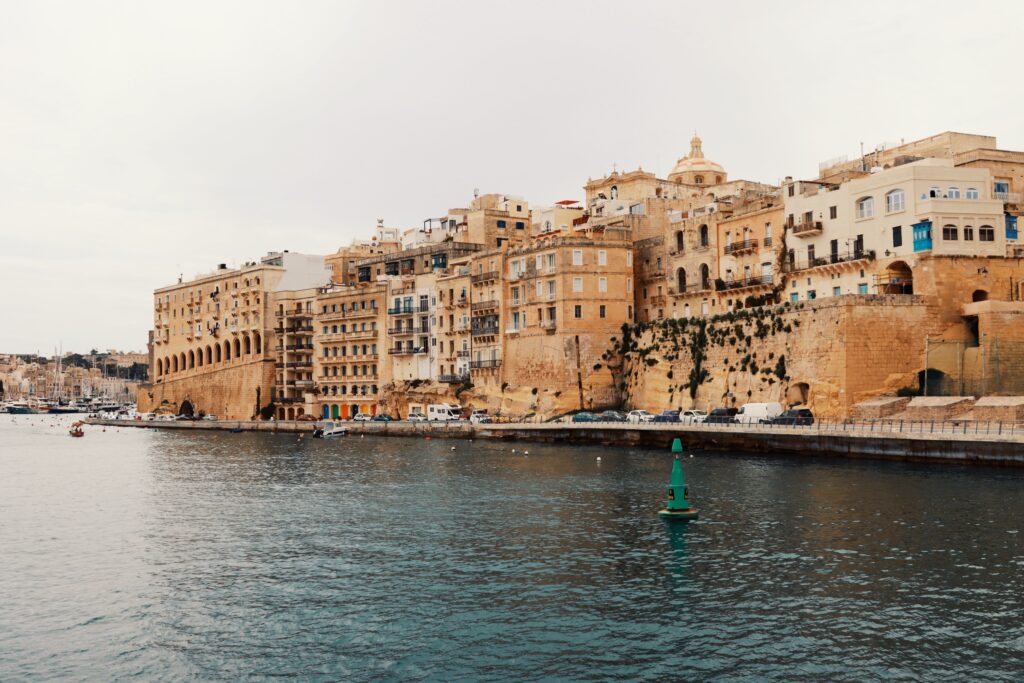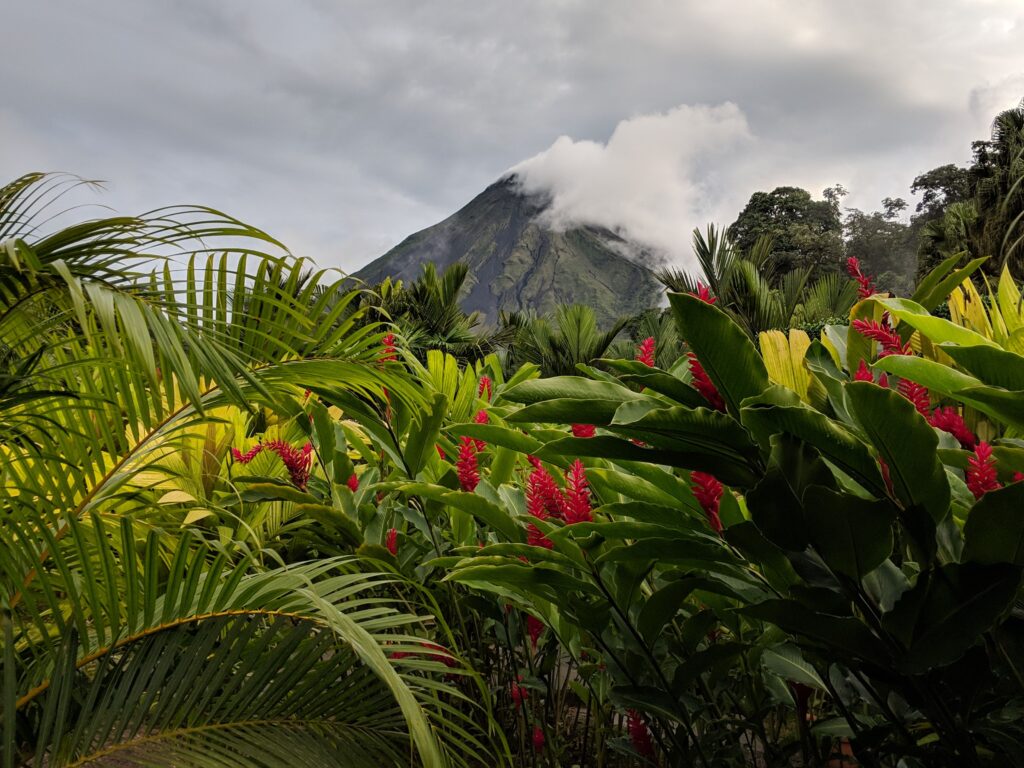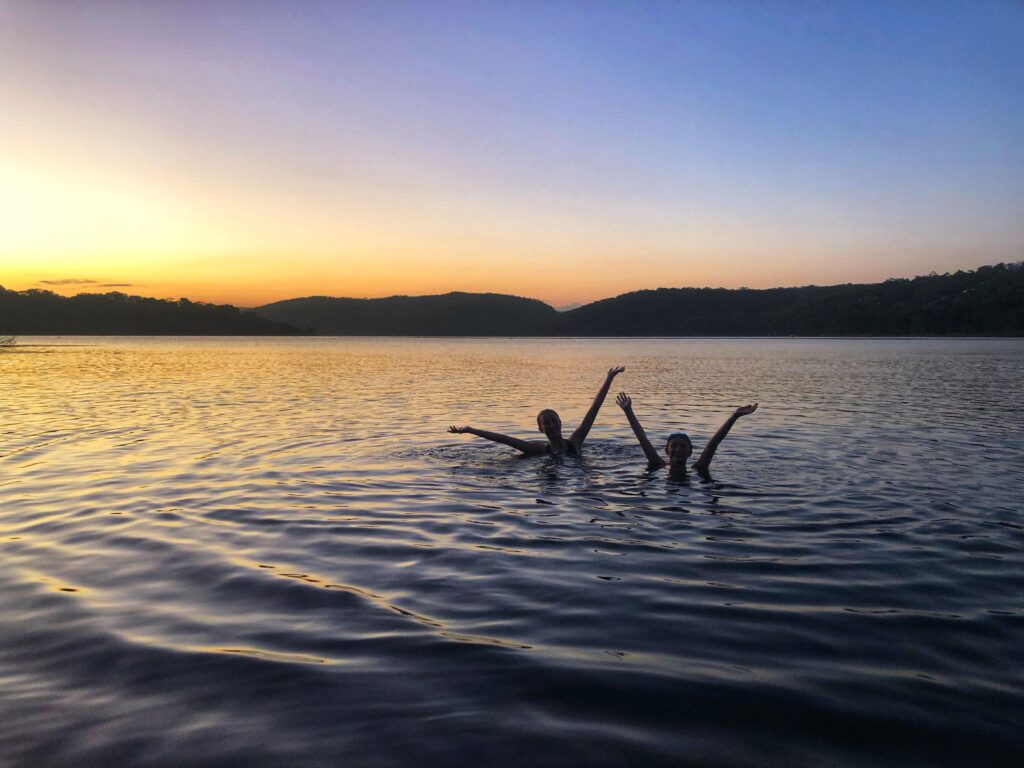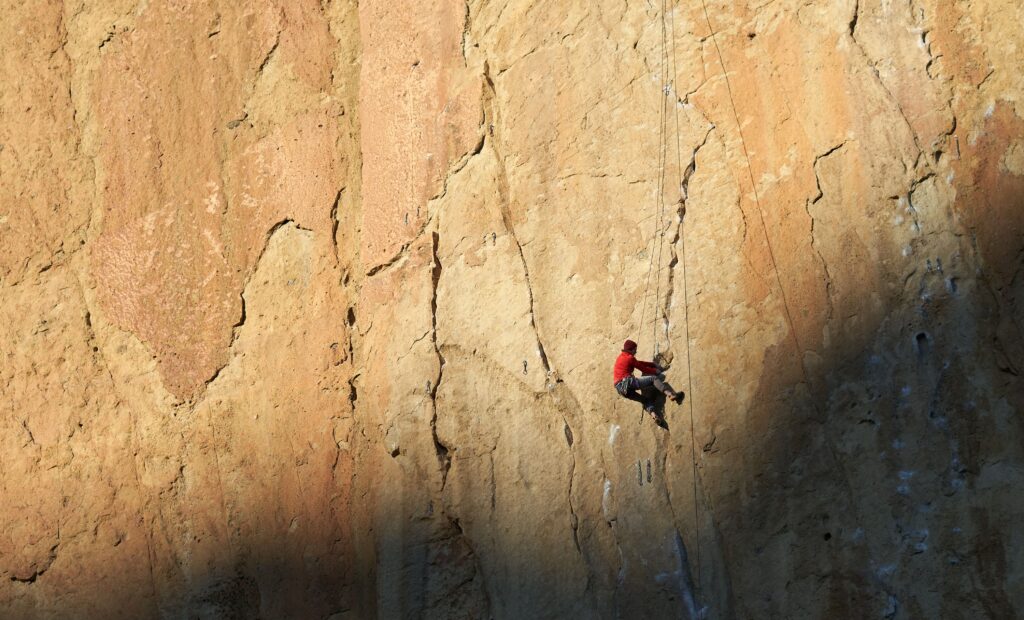

The circuit that gives Central America its full ecological and cultural argument: four days in Guatemala for the colonial Antigua and the Lake Atitlán at dawn when the three volcanoes are reflected in the still water and the Mayan market at Chichicastenango on Thursday where the Q’eqchi’ and K’iche’ textile sellers have been trading since the pre-Columbian market and where the copal incense from the church steps has been burning since the Spanish grafted the Catholic onto the Maya without fully replacing either, three days in Belize for the Great Blue Hole from the air and the Actun Tunichil Muknal cave with the Maya crystal skulls still in situ on the cave floor, and seven days in Costa Rica for the circuit described in 7 Days in Costa Rica Extended at the full depth that seven days gives. The specific Central America that the cruise port Caribbean omits entirely.
Reading time: 12 minutes | Last updated: 2026
Central America is the land bridge — the 522,760 square kilometres of territory connecting North America to South America, the seven countries spanning the Caribbean and the Pacific, the Maya civilisation heartland and the Spanish colonial architecture and the cloud forest and the reef and the specific biological corridor that gives Central America 8% of the world’s biodiversity in 0.5% of the world’s land area.
Guatemala, Belize, and Costa Rica give Central America its full range: the indigenous Maya culture (Guatemala), the English-speaking Caribbean reef nation (Belize), and the ecological reserve economy (Costa Rica). Three weeks covers all three. Two weeks gives Guatemala and Belize at full depth and Costa Rica at the circuit depth.
Before You Leave
Visas: Guatemala (UK: visa-free 90 days), Belize (UK: visa-free 30 days, extendable), Costa Rica (UK: visa-free 90 days). The CA-4 agreement (Guatemala, El Salvador, Honduras, Nicaragua) treats the four countries as a single territory — the 90-day allowance applies across all four.
The routing: Fly London-Guatemala City (via Miami, Houston, or Atlanta — no direct UK-Guatemala route), travel overland Antigua-Chichicastenango-Lake Atitlán-Flores (the Tikal base), fly Flores-Belize City (Tropic Air, 40 minutes, USD 100-150 / £78.74-118.11 one way), travel Belize-San Ignacio-the cayes, fly Belize City-San José Costa Rica (Copa Airlines via Panama, or LATAM via Lima — 3-4 hours with connection), Costa Rica circuit, fly San José-London.
The Route
Guatemala City → Antigua (2 nights) → Chichicastenango market (day trip) → Lake Atitlán (1 night) → Flores/Tikal (1 night) → fly Flores-Belize City → San Ignacio/Actun Tunichil Muknal (1 night) → Caye Caulker (2 nights) → fly Belize-San José → Arenal (2 nights) → Osa Peninsula (2 nights) → Manuel Antonio (1 night) → fly home
DAYS 1-4 — Guatemala
Day 1-2: Antigua
The Antigua morning:
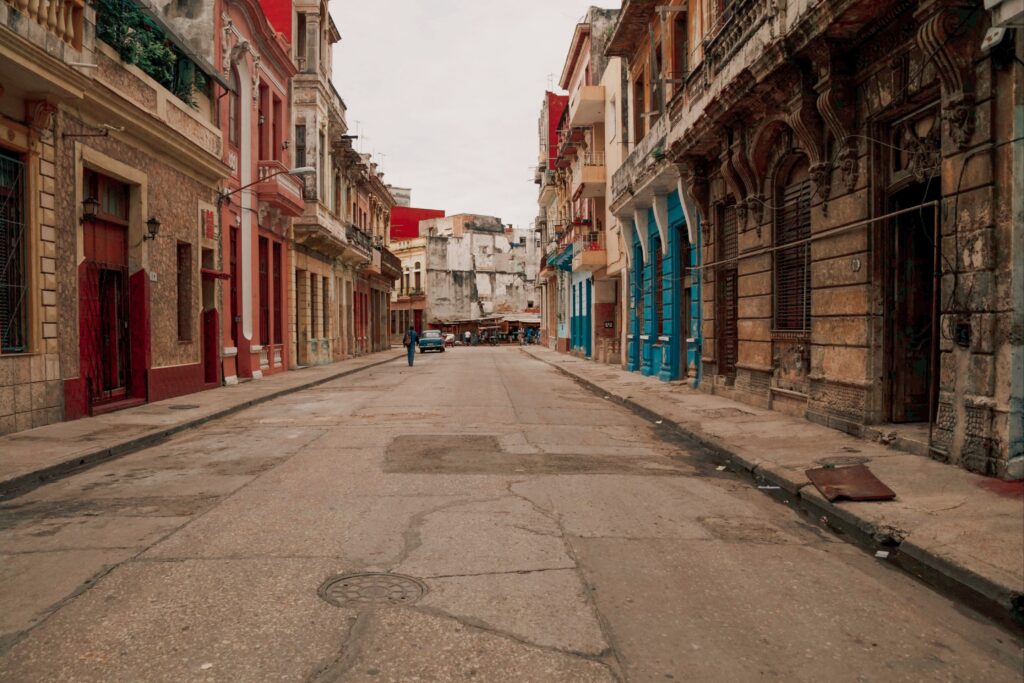
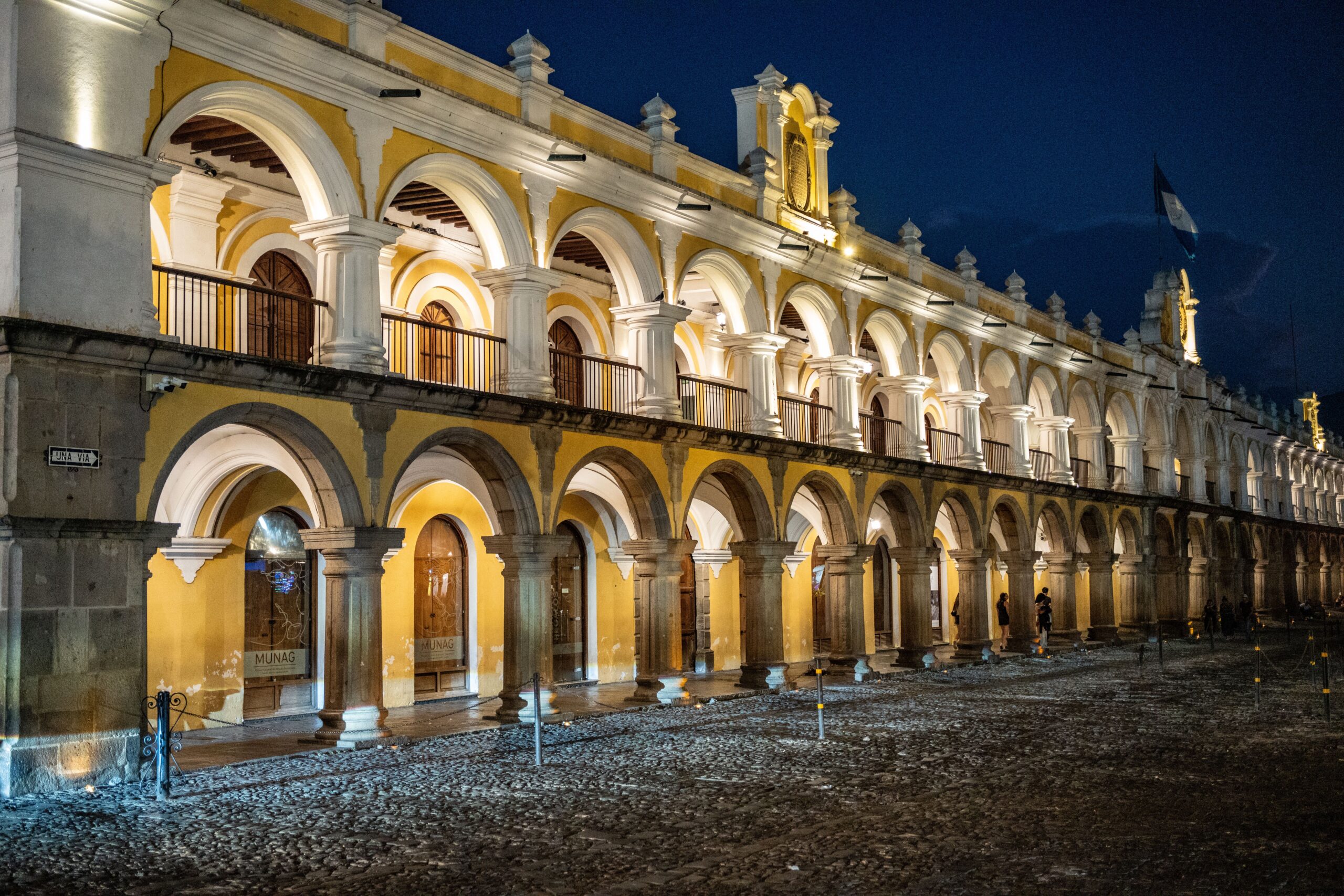
La Antigua Guatemala (the UNESCO colonial city — the volcanic eruption-damaged Baroque architecture preserved in the ruins, the Iglesia de La Merced (the 18th-century church, the façade in the colonial yellow visible from the Parque Central), the Arco de Santa Catalina (the yellow arch spanning the street, the Volcán de Agua visible through the arch at the end of the Alameda Santa Lucía)):
The rooftop coffee at 7am (the Café No Sé rooftop, the Volcán de Agua visible above the colonial rooftine in the morning light before the cloud builds): Q 30-60 / £2.89-5.79.
The volcano hike (Volcán Pacaya):
The Volcán Pacaya (the active volcano 25km south of Antigua — the summit hike (4 hours return), the active lava flow visible at the crater edge, the specific Central America geological encounter): USD 20-30 / £15.75-23.62 for the guided hike including the transport from Antigua.
The lava field: the guide who hands the marshmallow for roasting on the lava flow has done so approximately 2,000 times. This is not a diminishment. The marshmallow roasted on active lava is the specific Pacaya experience and is correctly absurd.
Day 3: The Chichicastenango Market
The Chichicastenango Thursday market (the highland Maya market in the K’iche’ Mayan town 145km north of Antigua — the market operating on Thursday and Sunday, the textile sellers visible at the permanent stalls and the temporary pitches extending into the surrounding streets, the Santo Tomás church steps where the ajq’ij (the Maya spiritual guides) burn the copal incense and the flower petals for the costumbre (the traditional Maya ceremony that the Spanish church absorbed rather than replaced)):
The market at 7am (before the tourist buses from Antigua arrive at 9:30am): the wholesale flower trade, the produce vendors receiving the morning deliveries, the textile stalls assembling the displays.
The huipil (the traditional Maya blouse — the handwoven fabric, the specific community pattern that identifies the wearer’s village of origin, the textile tradition that each highland Guatemala community maintains in a distinct pattern): Q 200-800 / £19.28-77.13 depending on the complexity and the provenance.
Day 4: Lake Atitlán
The Lago de Atitlán (the caldera lake at 1,562 metres — the three volcanoes (Atitlán, Tolimán, and San Pedro) visible from the lake shore, the Maya Tzutujil and Kaqchikel communities on the lake’s shoreline, the specific Guatemala lake that Aldous Huxley called “the most beautiful lake in the world” in 1934 and that the traveller community has used as the reference ever since):
The lake at dawn (the Panajachel dock at 6am — the lake still, the volcanoes reflecting in the water, the fishing boats visible at the surface): the most specifically beautiful 30 minutes available in Central America.
The San Juan La Laguna village (the lake village with the women’s weaving cooperative — the natural dye weaving using the plants from the surrounding hillsides, the specific Maya Tz’utujil textile tradition visible in production): the cooperative open from 9am, the tour free.
DAYS 5-7 — Belize
The Actun Tunichil Muknal Cave (San Ignacio):
The Actun Tunichil Muknal (the “Cave of the Crystal Maiden” — the Maya ceremonial cave accessible only with a certified guide, the 1km swim-and-wade into the cave, the Maya pottery and the skeletal remains visible on the cave floor where the Maya left them 1,100 years ago, the “Crystal Maiden” skeleton (the young woman’s bones calcified by the cave mineral deposits giving the crystal appearance) visible at the cave’s inner chamber):
Entry: BZD 100 / £35.97 per person, the certified guide mandatory. No photography permitted inside — the policy introduced after a tourist dropped a camera on a skull. The specific ATM cave instruction: the artefacts are in situ on the cave floor. The visitor walks between them. The guide identifies each ceramic and explains the ritual context. This is not a museum — it is the specific Maya ceremonial deposit available nowhere else.
The Great Blue Hole (aerial):
The Great Blue Hole (the 300-metre diameter marine sinkhole 70km offshore from Belize City — the UNESCO World Heritage Site, the concentric rings of Caribbean blue visible from the aircraft window as the most specific overhead view in the western hemisphere):
The flyover (the Tropic Air or Maya Island Air scenic flight from San Pedro or Belize City — the 30-minute circuit over the Blue Hole and the Lighthouse Reef): USD 150-250 / £118.11-196.85 per person.
The snorkel from the boat at the Blue Hole edge (the day trip from San Pedro — the boat visible in the Blue Hole from the water surface, the reef sharks visible in the water below the boat): USD 200-350 / £157.48-275.59 per person for the full-day boat trip.
Caye Caulker:
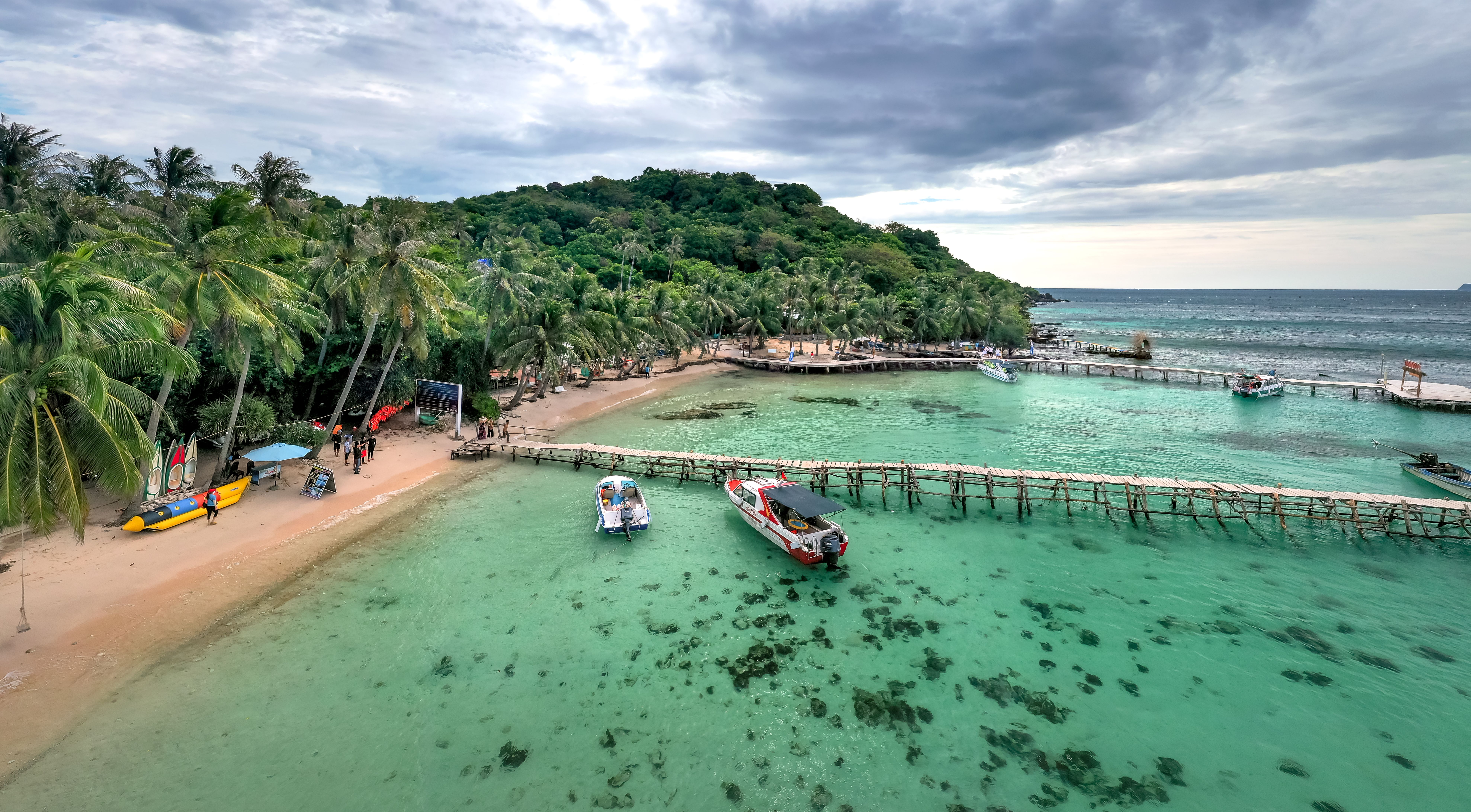
The Caye Caulker (the car-free island 45 minutes north of Belize City by water taxi — “Go Slow” the island motto, the motto accurate, the golf cart and the bicycle the island transport, the manatee visible in the channel between the two caye sections (the split), the specific Caribbean island quality of the island that has not built the resort infrastructure):
The snorkel at the Shark Ray Alley (the nurse shark and the ray aggregation at the Hol Chan Marine Reserve — the guide entering the water first and the animals approaching immediately because this has been performed daily for 30 years): BZD 100-150 / £35.97-53.95 per person.
DAYS 8-14 — Costa Rica
Full circuit: 7 Days in Costa Rica Extended. The Arenal, the Osa Peninsula (the Corcovado, the scarlet macaw), and the Manuel Antonio give the Costa Rica week at the full ecological depth.
What It Costs
| Category | Budget | Mid-Range |
|---|---|---|
| Return flights (UK-Guatemala City, San José-UK) | £550-900 | £750-1,200 |
| Internal flights (Flores-Belize, Belize-San José) | £120-220 | £160-300 |
| 14 nights accommodation | £280-630 | £630-1,400 |
| Food (14 days) | £100-250 | £250-500 |
| Activities (cave, Blue Hole, Pacaya, reef) | £130-280 | £200-400 |
| Transport (buses, water taxis) | £60-120 | £80-160 |
| Total | £1,240-2,400 | £2,070-3,960 |