



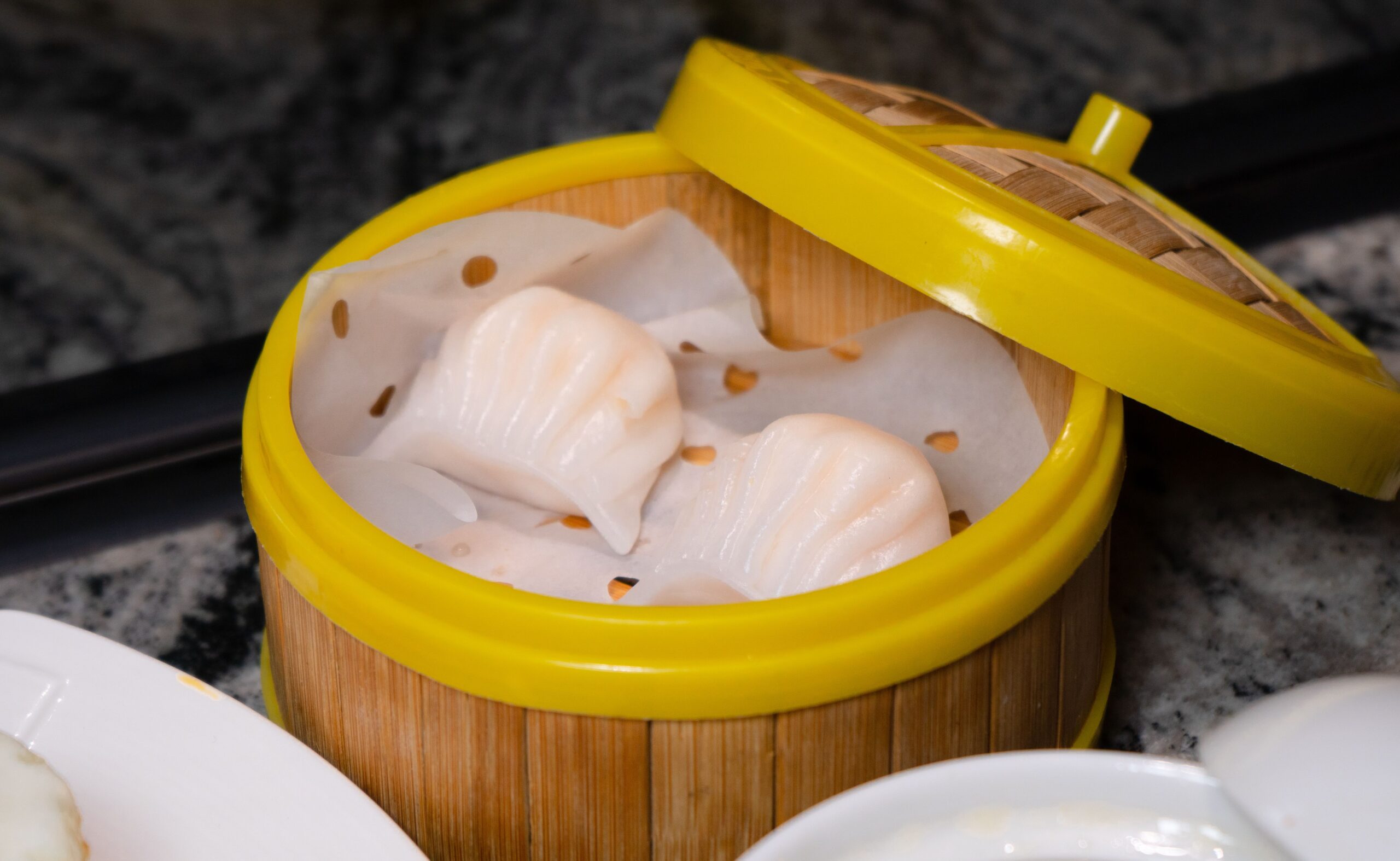
The dim sum guide that treats the Hong Kong yum cha (the morning tea-and-small-plate ritual) as the specific cultural institution it is rather than the specific meal it also is: the trolley (the dim sum cart pushed by the cha siu auntie through the restaurant, the plates revealed by lifting the bamboo steamer lid before pointing, the communication requiring no shared language because the dumpling is visible and the nod is universal), the ordering sheet (the contemporary alternative to the trolley — the checkboxes on the paper form, the kitchen tracking the table’s order, the specific efficiency that the Tsim Sha Tsui tea house uses because the Saturday crowd requires it), and the specific Hong Kong dim sum at its best (the har gow (the shrimp dumpling whose wrapper must be translucent, the shrimp visible through the skin, the specific quality indicator that the Guangzhou restaurant taught the world).
Reading time: 8 minutes | Last updated: 2026
The Ritual Before the Food
Dim sum (diǎn xīn in Mandarin, dim sam in Cantonese — “touch the heart”) is not a menu category. It is the yum cha ritual (literally “drink tea”) — the Cantonese tradition of taking tea with the small plates, the morning and midday activity that the Hong Kong population conducts with the family on Sunday from 8am, the tables booked 3 weeks ahead at the reference restaurants.
The tea arrives first. The order follows the tea. The specific yum cha tea: the pu-erh (the fermented aged tea from Yunnan, the tea that cuts through the pork fat of the siu mai), the oolong (the roasted, the floral depending on the variety), or the chrysanthemum (the pale yellow floral tea, the tea that the grandmother orders). Tell the waiter which tea at the beginning of the seating.
The tapping (the gung chaa — the finger tapping on the table when someone pours your tea, the gesture acknowledging the service without interrupting the conversation): the two-finger tap (the index and the middle finger, bent at the knuckle, tapped twice on the table surface) is the Cantonese acknowledgement. The story behind it: the Qing Emperor Qianlong disguised himself as a commoner and travelled incognito. When he poured tea for his companions, they could not bow (which would reveal his identity) and so they tapped the fingers as a symbolic bow. Use it. The waiter will notice.
The Essential Dishes
The har gow (蝦餃): The shrimp dumpling — the translucent rice flour wrapper (the wrapper must be thin enough that the pink of the shrimp is visible through the skin), the whole shrimp inside (not the minced shrimp paste), the pleating at the top (the reference har gow has 7-10 pleats). The quality indicator: lift the har gow with the chopsticks — the skin must not tear. The overcrowded restaurant har gow tears because the skin was not rested correctly.
The siu mai (燒賣): The open-faced pork and shrimp dumpling — the wonton wrapper cup (the yellow tinge from the egg in the dough), the pork and shrimp filling visible at the top, the flying fish roe or the dried shrimp visible on the surface at the reference restaurant.
The char siu bao (叉燒包): The barbecue pork bun — two versions: the baked (the golden pastry, the characteristic cross-shaped split on the top from the oven expansion, the sweet roast pork inside) and the steamed (the white flour bun, the soft exterior, the same filling). The baked version is the Cantonese bakery reference; the steamed is the dim sum restaurant standard.
The cheung fun (腸粉): The rice noodle roll — the fresh rice batter poured onto the bamboo mat, the filling placed, the noodle rolled, the soy sauce applied at the table. The shrimp (har), the char siu, or the plain with the sesame. The specific Guangzhou cheung fun (the the pulled from the stone flat pan at the roadside stall) gives the rice noodle at its most specific.
The egg tart (蛋撻): The Cantonese custard tart — the short pastry shell (the Hong Kong egg tart) or the flaky layered pastry shell (the Macau egg tart): the silky custard filling, the tart served warm from the oven at the reference restaurants.
Where to Go
Hong Kong
Tim Ho Wan (multiple locations, the original at Mong Kok): The world’s cheapest Michelin-starred restaurant — the three-Michelin-star char siu bao (the baked BBQ pork bun, the specific Tim Ho Wan preparation that earned the Michelin designation) at HKD 26 / £2.56 for 3 pieces.
Lin Heung Tea House (Wellington Street, Central): The last traditional Hong Kong trolley dim sum house in the Central district — the trolley cart system (the aunties with the bamboo steamer towers), the tile floor, the 1960s interior unaltered, the specific dim sum that the tourist infrastructure has not found because the Lin Heung does not do English menus.
One Dim Sum (Tai Po Road, Sham Shui Po): The Michelin-starred restaurant in the Sham Shui Po district (the fabric market neighbourhood, the least tourist-facing of the Hong Kong districts) — the har gow and the siu mai at the Michelin quality at the neighbourhood price (HKD 25-50 / £2.46-4.93 per basket).
Guangzhou
Guangzhou Restaurant (Wenchang South Road, Guangzhou): The reference dim sum restaurant in the city that invented it — the 1935 founding, the 5,000-seat capacity, the Sunday morning booking essential 3 weeks ahead.
Tao Tao Ju (Dishifu Road, Guangzhou): The 1879 founding, the most historically significant dim sum restaurant in Guangzhou, the specific Cantonese tradition visible in the morning tea service.
London Chinatown
Yauatcha (Broadwick Street, Soho): The Michelin-starred London dim sum — the har gow at £8.50 for 4 (the quality justifying the price), the champagne service available, the specific London dim sum that the Cantonese reference would recognise.
Dim T (Charlotte Street): The accessible London dim sum — the ordering sheet (the tick-box system), the price at 60-70% of the Yauatcha equivalent, the quality at 80% of the reference.
The Criterion (multiple Chinatown locations): The trolley cart service on Sunday morning — the nearest London equivalent to the Hong Kong yum cha experience.