

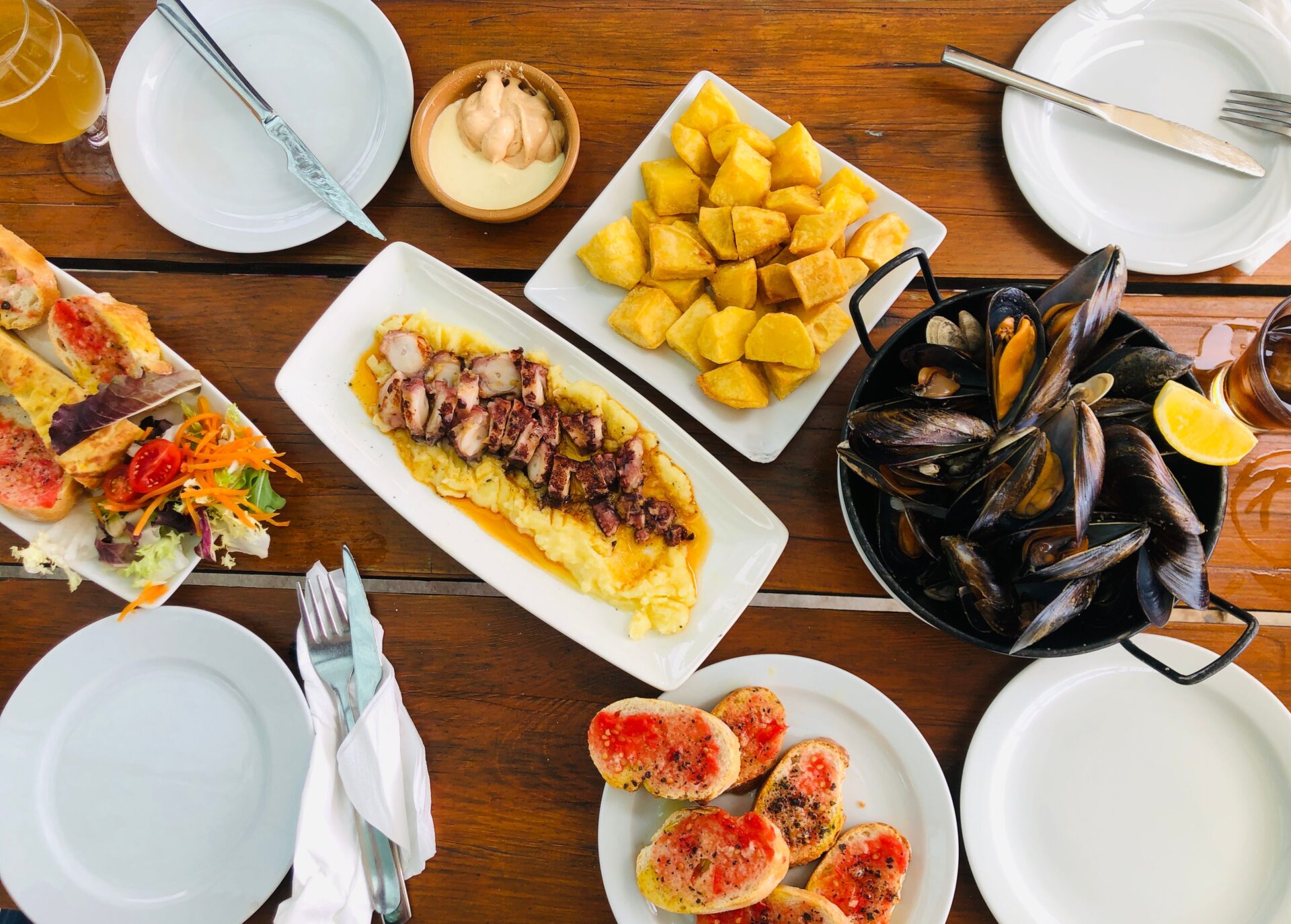
The tapas bar ranking that separates the bar with the laminated menu and the colour photographs from the bar with no menu and the waiter who tells you what’s available today because the chef bought the gambas this morning and the berenjenas are from the allotment behind the restaurant: the Bar Pinotxo at the Boqueria in Barcelona (the 7am breakfast, the botifarra and the beans, the counter at which the Boqueria stallholders eat before the market opens), the El Rinconcillo in Seville (the oldest bar in Spain at 1670, the chalk-on-slate tapas board, the oloroso sherry in the clay cup that the bar has been serving since the Habsburgs were on the Spanish throne), and the La Viña in San Sebastián (the pintxos at the counter, the Basque cider from the txotx, and the specific San Sebastián quality of the bar where the chef’s grandmother’s recipe is the most important document in the kitchen).
Reading time: 7 minutes | Last updated: 2026
The Bars
1. Bar Pinotxo — Boqueria, Barcelona
What it is: The corner bar at the Boqueria Market entrance (the bar to the right as you enter from Las Ramblas — the counter visible from the market entrance, the owner Juanito Bayen visible at the counter in the white coat from 6am):
What to eat:
The botifarra amb mongetes (the Catalan sausage with the white beans — the botifarra cooked on the plancha, the beans soft from the long cook, the specific Catalan breakfast that the Pinotxo serves from 7am):
The cigales (the cigala — the langoustine, grilled on the plancha with the sea salt, the specific crustacean that the Boqueria receives from the Mediterranean fishermen at 5am and that the Pinotxo cooks to order):
The best time: 7am-9am (the market workers eat; the tourist bar stools fill from 10am).
Price: €4-12 / £3.45-10.34 per tapa.
2. El Rinconcillo — Seville
What it is: The oldest bar in Spain (founded 1670 — the founding date carved above the bar entrance, the specific Seville institution visible in the ceramic tile interior, the hand-hewn oak bar top worn smooth by 355 years of elbow):
The tab system: the El Rinconcillo charges the tab with the chalk on the bar top — the specific old Seville tradition of the chalk running total visible throughout the visit, the settlement at departure. The most specifically archaic tap bar payment system in Europe.
What to eat:
The espinacas con garbanzos (the spinach with chickpeas — the specific Seville tapa, the recipe unchanged in the El Rinconcillo kitchen since the 19th century):
The berenjenas con miel (the aubergine with the honey and the cane sugar syrup — the specific Seville preparation of the aubergine, the Moorish influence visible in the honey-and-vegetable combination):
The jamón ibérico de bellota (the acorn-fed Iberian ham — the Rinconcillo sources from the Huelva dehesa (the cork oak parkland where the pigs graze), the ham at the bar at €8-15 / £6.90-12.93 per plate):
3. La Viña — San Sebastián
What it is: The pintxos bar on Calle 31 de Agosto in the San Sebastián Parte Vieja (the Old Town — the bar that the Basque food community cites as the reference for the tarta de queso (the Basque burnt cheesecake that the international pastry world discovered in 2019 and that the La Viña kitchen has been making since 1959)):
What to eat:
The tarta de queso (the Basque burnt cheesecake — the unbaked centre, the caramelised exterior, the specific La Viña recipe that the pastry world has been attempting to replicate): €4.50 / £3.88 per slice.
The pintxos de barra (the counter pintxos — the bread slices topped with the cured tuna, the anchoa (the Cantabrian anchovy), the txangurro (the spider crab), the Idiazabal cheese):
The txakoli (the Basque white wine — the slightly sparkling, high-acid wine poured from height to aerate, the specific Basque wine service that the La Viña performs with the precision of the tradition it represents):
4. Bodega La Ardosa — Madrid
What it is: The 1892 vermouth and tapas bar on Calle Colón in the Malasaña neighbourhood — the wooden barrels behind the bar (the vermouth drawn directly from the barrel, the traditional Madrid vermut service), the cold cuts hanging from the ceiling, the specific old Madrid bar that the Malasaña gentrification has surrounded without altering:
What to eat:
The vermouth de barril (the barrel vermouth — the Martini Rosso or the Noilly Prat drawn directly from the barrel into the glass, the olive alongside): €2.50-4 / £2.16-3.45.
The gilda (the Basque pintxo: the olive, the guindilla pepper, the anchovy on the toothpick — the most famous single pintxo in Spain, served at La Ardosa as the bar snack): €2 / £1.73.
The tortilla de patatas (the Madrid potato omelette — the La Ardosa version served con or sin (with or without) cebolla (the onion — the oldest and most heated debate in Spanish gastronomy, the Ardosa serves it with, as God intended)): €3-5 / £2.59-4.31 per portion.
5. Casa Manteca — Cádiz
What it is: The tapas bar in the Barrio de la Viña in Cádiz (the neighbourhood that the annual Carnaval uses as its base, the bar that the Cádiz fishing community has used since 1953):
What to eat:
The retinto (the Retinta beef from the Cádiz province — the local breed, the specific Cádiz beef that the Casa Manteca serves sliced thin on the oiled brown paper, the paper wrapping that gives the tapas its specific serving format):
The chicharrones (the cured pork fat — the specific Cádiz preserved pork tradition, the manteca colorá (the red lard with the pimentón) spread on the toast).