
The route that gives Jordan its full argument: two days in Amman for the Roman theatre and the Citadel above the city and the Hashem restaurant at 7am where the hummus is made fresh and costs 80 pence and where the king has been photographed eating it, two days at Petra for the Treasury at dawn when the canyon is yours and the horses haven’t started and the specific rose-red sandstone gives the light that the afternoon eliminates, and three days in Wadi Rum for the Bedouin camp and the jeep safari and the specific Jordan desert that the film industry uses as the Mars location because the sandstone arches and the red sand dunes and the absence of any visible life give the planetary landscape that the sci-fi production requires — and why Jordan, at four hours from Heathrow, gives the Middle East without the visa anxiety and the archaeological depth that Egypt charges four times more for.
Reading time: 11 minutes | Last updated: 2026
Jordan is the Middle East country that the UK traveller can visit without the complication that the neighbouring countries introduce. The Hashemite Kingdom’s relationship with the UK (the special forces training programmes, the Commonwealth-adjacent diplomatic position, the Aqaba-to-Edinburgh flight corridor that British Airways has operated since 2006) and with the Levant’s tourists gives Jordan its specific accessibility at the price that makes the Jordan visit the correct introduction to the Arab world for the UK visitor who has not been.
Before You Leave
The visa: UK citizens receive a visa on arrival at Amman’s Queen Alia International Airport — free for the first entry if arriving on a return ticket, or the Jordan Pass (jordanpass.jo — the combined visa and attraction entry pass at JOD 70-80 / £76.09-86.96 including the Petra 2-day entry): the Jordan Pass is the correct purchase for the visitor planning 3+ nights in Jordan, as the Petra entry alone (JOD 50 / £54.35) nearly covers the pass cost.
The currency: Jordanian Dinar (JOD). 1 JOD ≈ £1.09 at 2025 rates — one of the higher-value currencies in the region. ATMs widespread in Amman and Aqaba; cash preferred in Petra and Wadi Rum.
The car: A hire car is the correct format for the Amman-Petra-Wadi Rum circuit (the Desert Highway from Amman to Petra: 250km, 3 hours; Petra to Wadi Rum: 100km, 1.5 hours). International driving licence required; the hire car companies at Queen Alia Airport give the full range from compact to 4WD.
The Route
Amman (2 nights) → Petra (2 nights) → Wadi Rum (2 nights) → Aqaba, fly home or return Amman
DAYS 1-2 — Amman
Day 1: The Citadel and the Roman Theatre
8:00am — The Amman Citadel:
The Jebel al-Qal’a (the Citadel hill above the modern city — the Roman Temple of Hercules (the 2nd-century CE temple, the hand of the colossal statue visible at the temple base), the Byzantine Church (the 5th-6th century mosaic floor), and the Umayyad Palace (the 8th-century Islamic palace, the dome reconstruction visible against the Amman skyline)):
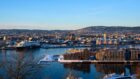
From the Citadel at 8am: the seven hills of Amman visible in every direction, the morning call to prayer audible from the mosques below, the specific Amman geography comprehensible from the hill as it is not from the street.
Entry: JOD 3 / £3.26.
The Roman Theatre:
The Amman Roman Theatre (the 2nd-century CE theatre seating 6,000 — the theatre at the base of the Jebel al-Qal’a, the stage visible from the top row, the city skyline visible above the upper seating): entry JOD 2 / £2.17.
The Hashem Restaurant:
The Hashem (between the Roman Theatre and the Gold Souk — the falafel and hummus restaurant that has been operating since 1952, the restaurant that the late King Hussein visited, the restaurant that the current king photographs himself visiting, the restaurant where the hummus is JOD 0.75 / £0.82 and is made fresh every morning):
The Hashem at 7am: the restaurant full before 8am, the falafel coming from the fryer, the flatbread from the oven. The correct Amman breakfast. The specific Jordan restaurant that no guide omits.
Day 2: The Dead Sea and the Baptism Site
The Baptism Site (Bethany Beyond the Jordan):
The Al-Maghtas (the UNESCO World Heritage Site — the site identified as the location of the baptism of Jesus by John the Baptist, the Jordan River visible at the site’s edge, the Byzantine and early Christian churches excavated at the site, the Greek Orthodox and the Roman Catholic and the Anglican churches visible at the water):
Entry: JOD 12 / £13.04. The specific Bethany instruction: the Jordan River at this point is approximately 30 metres wide and 1-2 metres deep. Israel is visible on the opposite bank. The Israeli military post is visible at the opposite bank. This is the most specific Middle East geography available from a civilian viewpoint.
The Dead Sea:
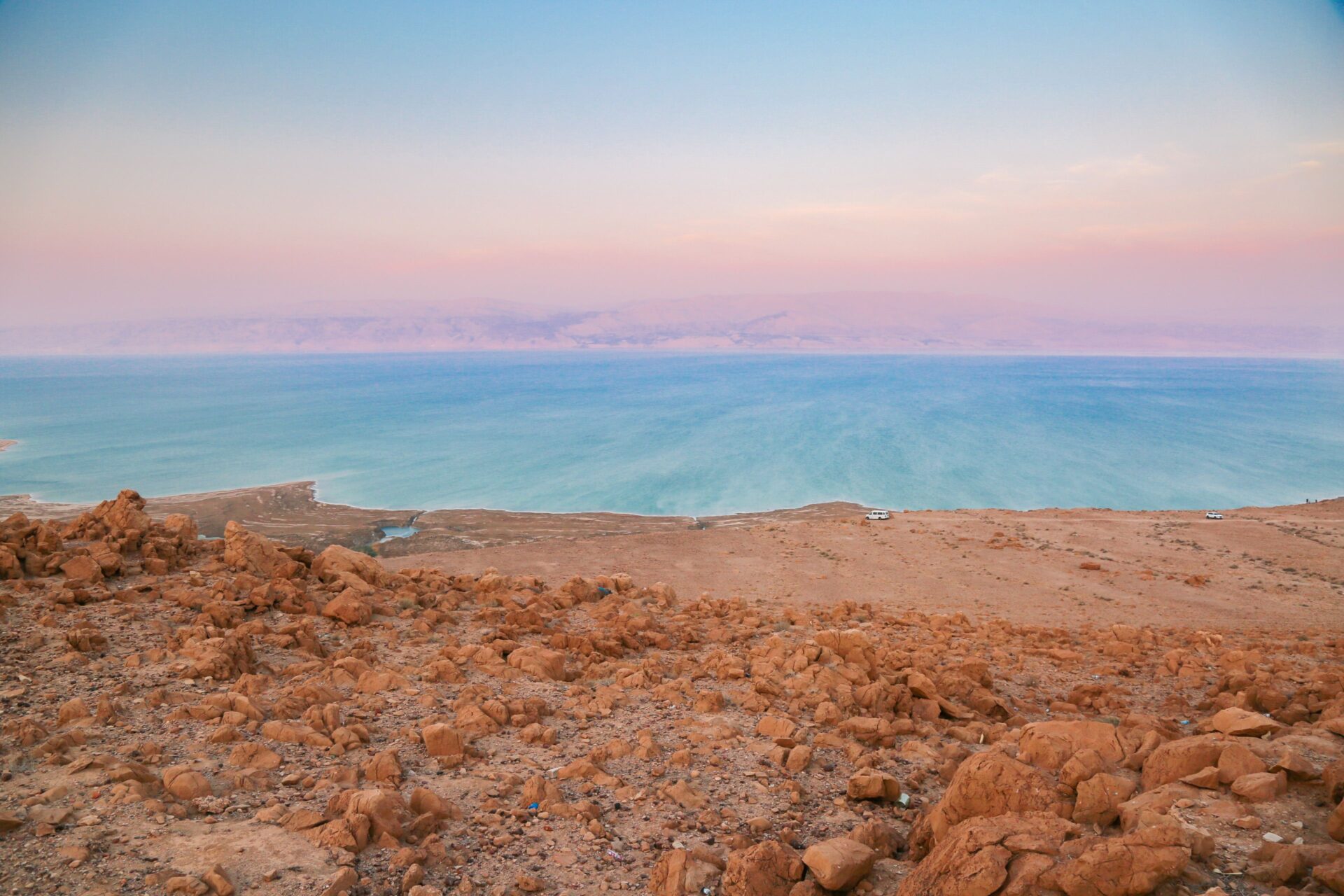
The Dead Sea (the saltwater lake at 430 metres below sea level — the lowest point on the Earth’s surface, the salt concentration at 34% (the ocean averages 3.5%), the specific buoyancy that makes swimming impossible and floating involuntary): the public beach access at the Dead Sea Panorama Complex or the hotel beach (the resorts along the Dead Sea shore): JOD 10-20 / £10.87-21.74 for the beach and the facilities.
The Dead Sea mud: the black mineral mud visible at the shoreline, applied to the skin and left to dry, the specific Dead Sea skin treatment visible in every travel photograph from the location. The mud is free. The exaggeration of its therapeutic value is also free.
DAYS 3-4 — Petra
Day 3: The Treasury at Dawn
6:00am — The Siq:
The Petra Visitor Centre opens at 6am (Jordan summer) / 6:30am (winter). The Siq (the 1.2km canyon approach to the Treasury — the narrows between 80-200 metre sandstone cliffs, the Nabataean water channel carved into the cliff face, the specific geological gift that hides the Treasury until the final curve):
The Siq at 6am: the canyon in the pre-dawn light, the sandstone walls turning from grey to pink to orange as the sun enters from above, the footsteps on the stone path the only sound.
The Treasury at 6am: the Khazneh (the 30-metre carved facade, the most photographed single view in the Middle East, visible at the end of the Siq at the final turn): at 6am, the Treasury in the morning shadow, the light hitting the upper facade, the canyon empty. By 9am: the horse carriages, the guides, the selfie poles.
Entry (without Jordan Pass): JOD 50 / £54.35 for 1 day, JOD 55 / £59.78 for 2 days.
The Royal Tombs:
The Urn Tomb, the Silk Tomb, the Corinthian Tomb, and the Palace Tomb (the four Royal Tombs carved into the rock face east of the Treasury — the colour striations visible in the sandstone (the brown, the grey, the pink, the white, the specific Nabataean geological palette that gives Petra its name — rose-red city)):
The Urn Tomb at 3pm: the afternoon light entering the tomb interior from the west, the colour of the sandstone visible in the direct light.
Day 4: The Monastery (Al-Deir)
The Monastery:
The Al-Deir (the 2nd-century CE Nabataean temple — larger than the Treasury at 50 metres wide and 45 metres high, the 850-step ascent from the Treasury (2 hours), the monastery visible at the path’s end on the high plateau):
The Al-Deir at 8am: the 850 steps climbed in the cool morning before the 10am heat, the plateau visible at the top (the high plateau above Petra, the Jordanian desert visible in three directions, the Wadi Rum visible in the south on clear days).
The donkey hire (the alternative to the stairs — the donkey station at the 400-step mark, the experienced Petra donkeys who have navigated the stairs carrying tourists for 30 years): JOD 10-15 / £10.87-16.30 per person.
DAYS 5-6 — Wadi Rum
The jeep safari:
Wadi Rum (the protected area — the 74,000 hectare desert of sandstone and granite, the red sand and the arches and the jebel (the flat-topped mountain) visible in every direction from the camp):
The jeep safari (the half-day or full-day 4WD circuit through the Rum protected area — the Lawrence’s Spring (the water spring where T.E. Lawrence reportedly rested during the Arab Revolt), the Khazali Canyon (the Nabataean and Thamudic rock carvings visible at the canyon base), and the Um Fruth Rock Bridge (the natural sandstone arch, the 15-metre climb to the arch top)):
Half-day: JOD 35-50 / £38.04-54.35 per person (shared jeep). Full day: JOD 60-80 / £65.22-86.96 per person.
The Bedouin camp:
The Rum Stars Camp or the Captain’s Desert Camp (the Bedouin-run camps in the desert — the tent accommodation, the dinner cooked in the zarb (the underground oven — the meat and the vegetables buried in the sand above the coals, the specific Bedouin cooking method), the desert at night):
The Wadi Rum night sky (the darkness in the protected area gives the star density that the Jordan Valley’s light pollution removes — the Milky Way visible to the naked eye, the specific desert astronomy):
Camp rate: JOD 30-60 / £32.61-65.22 per person for the dinner, accommodation, and breakfast.
What It Costs
| Category | Budget | Mid-Range |
|---|---|---|
| Return flights (UK-Amman) | £80-200 | £120-300 |
| Jordan Pass (visa + Petra entry) | £87 | £87 |
| Car hire (5 days) | £80-160 | £120-240 |
| 7 nights accommodation | £70-175 | £175-420 |
| Food (7 days) | £30-80 | £80-180 |
| Dead Sea + Baptism Site entry | £24 | £24 |
| Wadi Rum camp + jeep | £65-130 | £110-200 |
| Total | £436-856 | £716-1,451 |
Jordan is the most affordable 7-day itinerary in this guide with a UNESCO World Heritage Site as its centrepiece. The Jordan Pass at £87 covers the visa and the Petra entry — the combined value that makes the Jordan visit cheaper than the comparable European city break for the flight-and-attraction budget.