

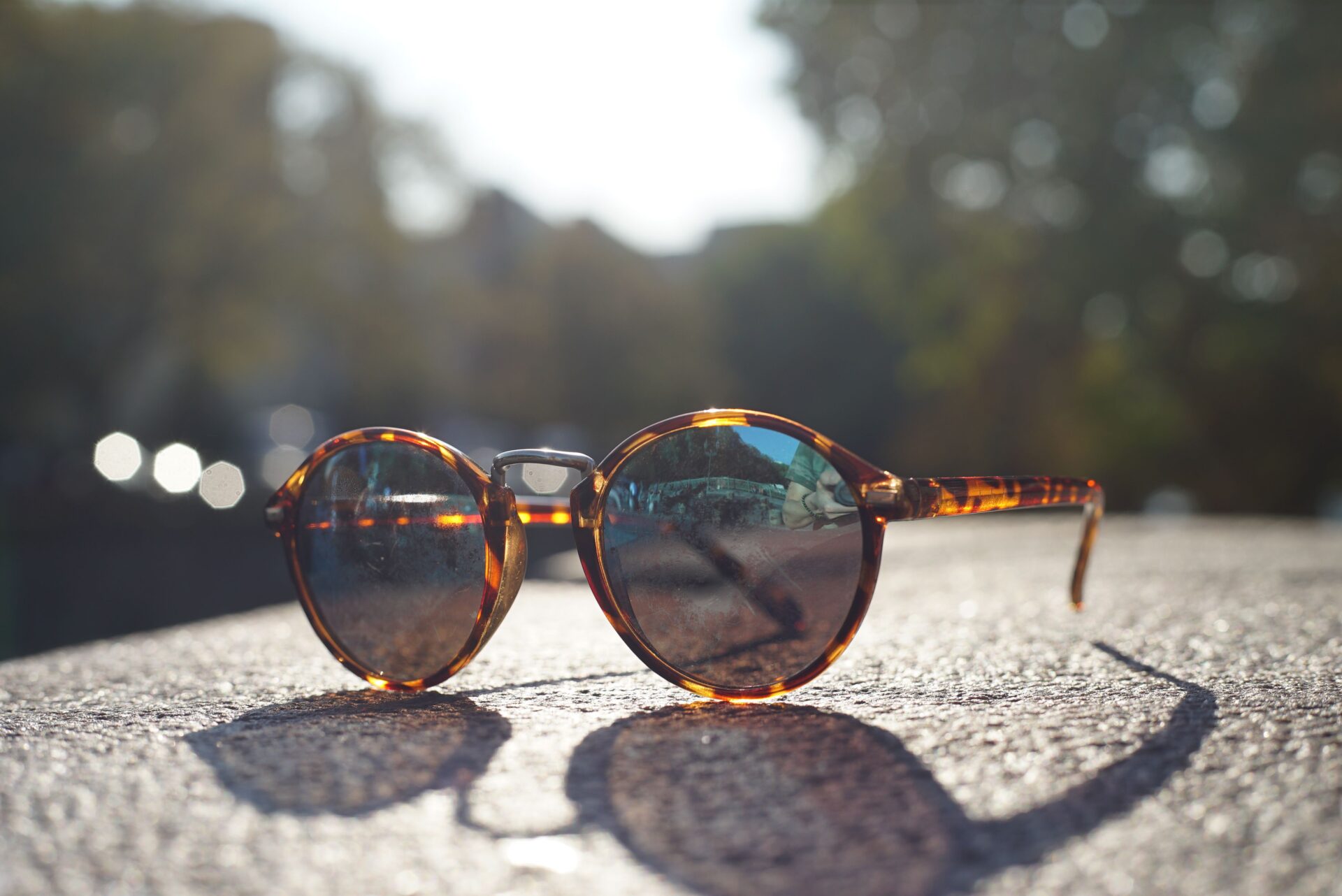
The travel sunglasses review for the traveller who loses or breaks the £150 pair on the first beach day: the UV protection is the function (the UV400 rating — the lens that blocks 100% of UVA and UVB below 400nm — is the minimum required for the genuine sun protection, and it is available from the £15 pair and the £300 pair alike), the polarisation is the upgrade (the polarised lens that eliminates the reflective glare from water and snow and wet roads, the specific upgrade for the boat trip and the ski slope and the driving), and the frame durability is the variable that the price most accurately predicts. Three frames at three price points, all UV400, all polarised where noted.
Reading time: 5 minutes | Last updated: 2026
The UV Protection Reality
UV400 is the standard, not the premium. The ISO 12312-2 international standard for sunglasses UV protection requires that UV400 lenses block 99-100% of UVA and UVB. The £15 pair from the seaside market and the £300 pair from the optician can both achieve UV400 — and the authenticity of the UV protection is verifiable with the UV tester available at any optician for free.
The lenses that do NOT protect: The dark tinted lens without the UV filter (the lens that is cosmetically dark but optically unprotected — the pupil dilates behind the dark lens, exposing the retina to more UV than the bare eye). The counterfeit luxury brand sunglasses (available everywhere from Phuket to Portobello Road, the UV protection unverifiable without the tester).
The polarisation test: Hold the sunglasses at arm’s length and rotate them 90 degrees while looking through them at a reflective surface (the car windscreen, the wet road, the laptop screen at 45 degrees). If the reflection disappears or significantly reduces at one angle, the lens is polarised. If the reflection is consistent at all angles, the lens is not polarised.
The Three Frames
1. Goodr Sunglasses — The £20-25 Correct Option
What they are: The Goodr (the US sports sunglass brand designed for the running market — the lightweight polycarbonate lens, the no-slip rubber nose pads and temple tips, the polarised lens included as standard at the £20-25 price):
The specific travel advantage: The Goodr weighs 24g (the lightest frame in this guide), fits in the shirt pocket, and costs £20-25. The traveller who loses or breaks the Goodr on the first beach day replaces them for £20-25 at the next Goodr stockist (Cult Sport, Amazon, Decathlon).
The UV protection: UV400, confirmed.
The polarisation: Yes — included as standard.
The limitation: The fixed nose piece (no adjustment) fits the average face geometry and may not fit the narrow or wide face.
Price: £20-25.
2. Oakley Holbrook — The Mid-Range Reference
What they are: The Oakley Holbrook (the square-lens frame that Oakley has manufactured since 2012 — the O-Matter lightweight frame, the Prizm or standard polarised lens, the three-point fit system giving the pressure-free fit):
The specific travel advantage: The Oakley Holbrook is the most widely replicated sunglass design in the £15-50 market — the frame that airport shops, beach vendors, and travel shops produce at the imitation price. The original gives the Prizm lens (the contrast-enhancing optical technology that the imitation’s tinted lens does not replicate) and the warranty. The imitation gives the shape.
The UV protection: UV400, confirmed.
The polarisation: Available as the Polarised variant (add £30-40 to the standard frame price).
The replacement policy: Oakley’s warranty covers manufacturing defects; the lens replacement available for scratched Prizm lenses at £30-50.
Price: £100-160 for the standard; £130-200 for the polarised variant.
3. Native Eyewear Dash XP — The Outdoor Specialist
What they are: The Native Eyewear Dash XP (the US outdoor sunglass brand — the Rhyno-Tuff frame (the grilamid frame, the material used in high-performance ski goggles for its cold-temperature flexibility and its impact resistance), the Sightmaster polarised lens (the 8-layer anti-reflective coating, the colour-neutral polarisation)):
The specific travel advantage: The cold-temperature flexibility of the Rhyno-Tuff frame (the frame that does not crack at the Salar de Uyuni at -10°C at dawn or at the Poon Hill summit at -5°C) gives the outdoor adventure travel sunglass that the standard acetate and polycarbonate frames do not guarantee at the temperature extremes.
Price: £80-130.
The Packing Position
Travel sunglasses: the hard case (the rigid shell protecting the lens from the backpack’s internal pressure — the same backpack that contains the laptop, the GaN charger, the packing cube, and the water bottle will destroy the unprotected lens within 2 days of compression). Every pair of travel sunglasses requires the hard case.