

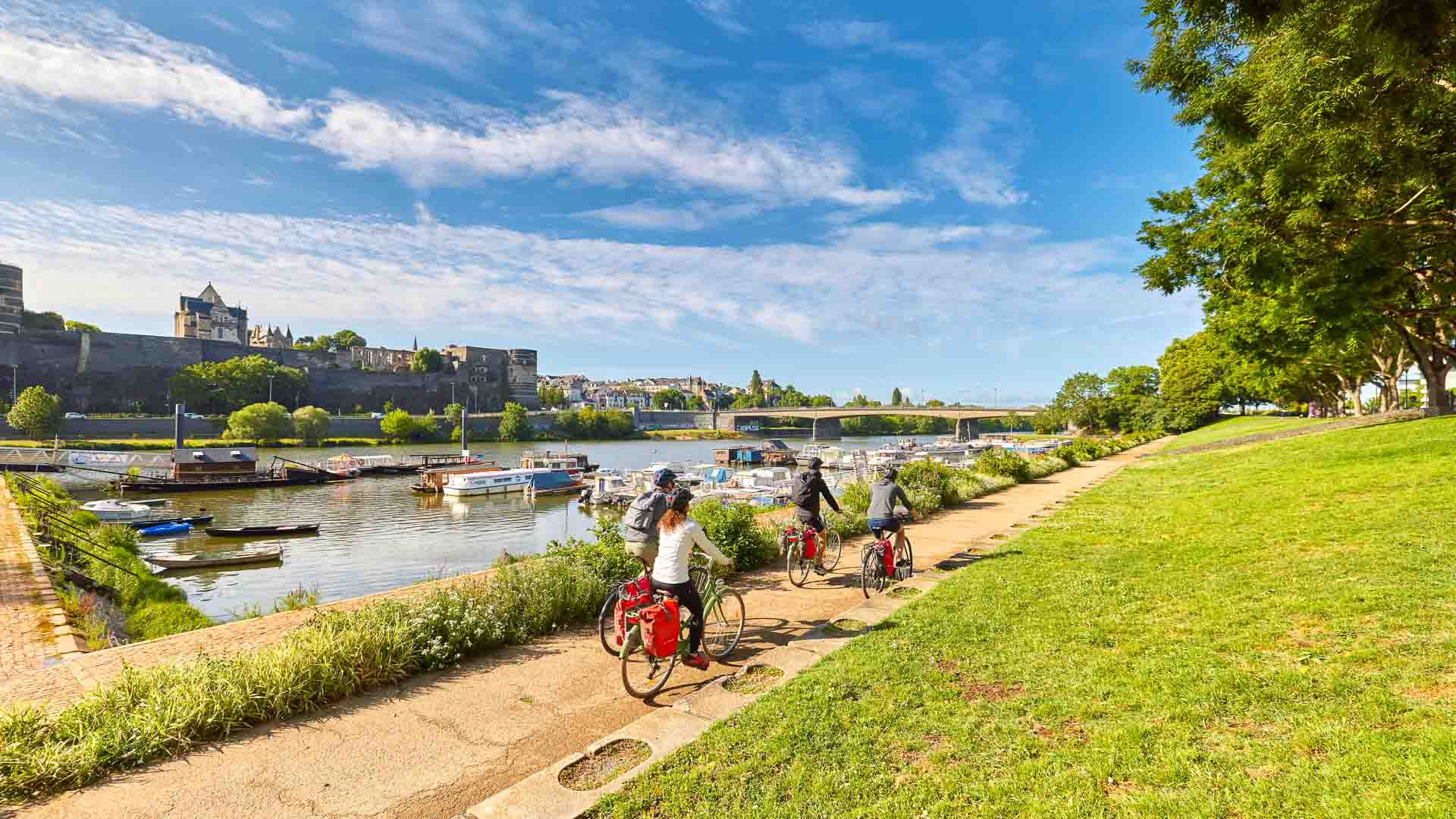
The cycling destinations guide for the traveller who wants the country at the pace between the walk and the car: the Dutch cycling infrastructure (the 35,000km of dedicated cycle path, the route from Amsterdam to Utrecht that the motorway parallels and that the bicycle gives at the correct speed for the polder landscape and the canal and the windmill to be comprehensible rather than blurred), the Loire Valley (the La Loire à Vélo route from Blois to the Atlantic — the 800km river cycling trail that gives the château circuit at the correct pace, one château per day, the château garden visible from the bicycle seat rather than the car window), and the Via Rhôna (the 815km Rhône route from Geneva to the Mediterranean — the route that gives the Alps and then the Provençal landscape and then the Camargue and then the sea in a single south-facing arc).
Reading time: 7 minutes | Last updated: 2026
The Routes
1. La Loire à Vélo — France (800km, 12-14 days)
The route: The cycling trail along the Loire River from the source (the Haute-Loire department) to the Atlantic Ocean at Saint-Nazaire — the dedicated and signed cycling route, the 800km covered at 60-80km per day in the relaxed format (12-14 days) or at 40-50km per day in the comprehensive format (18-20 days).
The specific section (Blois to Saumur, 150km, 3-4 days): The most castle-dense section of the Loire Valley — the Château de Blois (the 9th-15th century château, the Leonardo da Vinci’s former residence adjacent), the Château de Chaumont-sur-Loire (the International Garden Festival), the Château d’Amboise (the Leonardo da Vinci Museum, the Leonardo buried in the chapel), and the Château de Saumur (the mushroom cave tour, the Saumur wine, the Loire white):
The La Loire à Vélo instruction: the châteaux are more comprehensible from the bicycle than from the tour bus. The scale of the Loire Valley (the flatness, the width of the river, the distance between the châteaux) is a geography that the car crosses at the speed that makes it invisible and the bicycle crosses at the speed that makes it the landscape.
The bike hire: Available at every major Loire Valley town — the standard bicycle at €15-20 / £12.93-17.24/day, the e-bike at €30-40 / £25.87-34.48/day. The luggage transfer service (the transport de bagages — the van that moves the luggage between the overnight stops): €8-12 / £6.90-10.34 per bag per day.
2. Netherlands Cycling — Amsterdam to the Coast (varies)
The infrastructure: The Netherlands has the most developed cycling infrastructure in the world — the 35,000km of dedicated cycle path, the LF (Landelijke Fietsroutes) numbered long-distance routes, and the specific Dutch urban cycling infrastructure that gives Amsterdam the ability to move 800,000 cyclists per day without the conflict that the mixed cycling-and-traffic infrastructure produces in other countries.
The specific route (Amsterdam-Delft-Rotterdam, 130km, 2-3 days):
The national cycle route (LF14 — the route from Amsterdam south through the polder landscape, the Haarlem cheese market visible from the cycle path on Tuesday and Saturday, the windmills of Kinderdijk visible from the Kinderdijk cycle path (the UNESCO windmill cluster, the 19 windmills in the Alblasserwaard polder, free access from the cycle path)):
The specific Dutch cycling instruction: The cycle path in the Netherlands is not shared with the pedestrian — the pedestrian who walks on the Dutch cycle path is in the equivalent of the pedestrian who walks in the road. The red surface is the cycle path. The grey surface is the pavement. Stay on the red surface.
3. Dalmatian Coast Cycling — Croatia (Split to Dubrovnik, 350km)
The route: The coastal cycling route from Split along the Dalmatian coast to Dubrovnik — the route using the coastal road (the D8 — the Adriatic Highway, shared with traffic but with the cycling lane on the majority of the modern sections) and the island ferries (the Hvar and the Korčula accessible by ferry from the coast, the cycling onto the ferry and off onto the island giving the specific Dalmatian island cycling):
The Split-Hvar ferry (the Jadrolinija ferry from the Split harbour to the Stari Grad on Hvar Island, 2 hours, HRK 25-50 / £2.60-5.20 per passenger plus HRK 40-80 / £4.16-8.32 per bicycle): the bicycle on the ferry deck, the Hvar limestone visible from the deck, the lavender visible from the road as the ferry approaches.
The best cycling month: May and September — the Dalmatian coast in July-August is the car-tourist peak, the road busy, the accommodation expensive. The May cycling (the spring wildflowers on the hillsides, the sea at 20-22°C for the evening swim, the accommodation available without the July premium) gives the coast at the correct pace.
4. Via Rhôna — Switzerland to the Mediterranean (815km, 15-20 days)
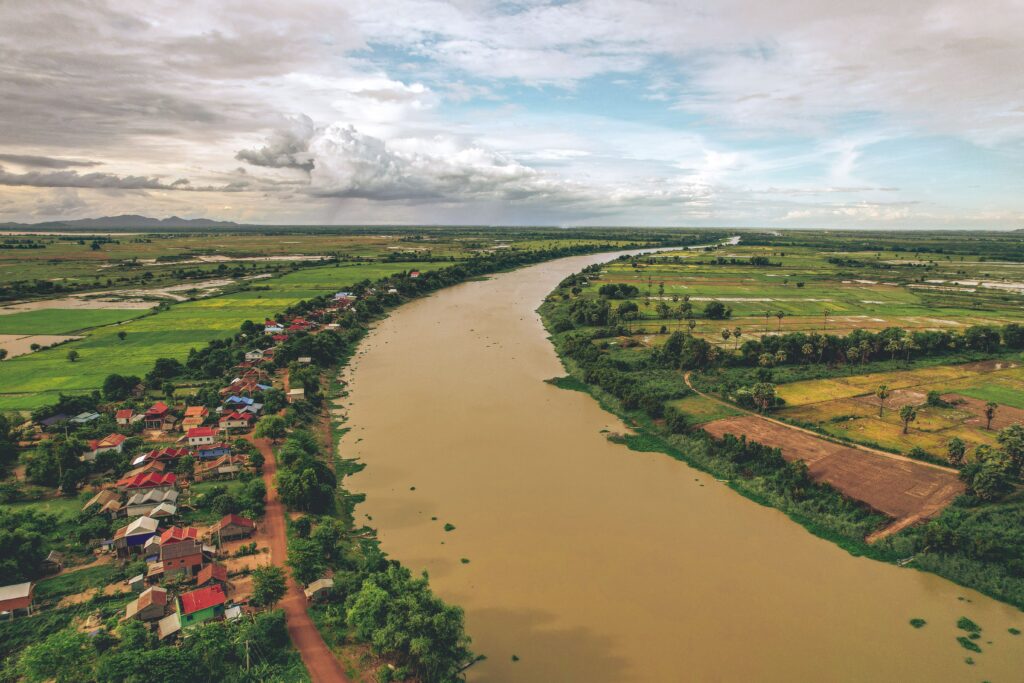
The route: The Rhône cycling route from Geneva (Lake Geneva, the Alps visible to the south) to Port-Saint-Louis-du-Rhône (the Camargue, the Mediterranean horizon visible from the delta): the 815km route through the Rhône Valley, the Burgundy vineyards, the Provençal landscape, and the Camargue wetland.
The Camargue section (Arles to the sea, 60km): The Camargue (the delta wetland — the Camargue white horse, the Camargue black bull, the greater flamingo visible in the étang (the salt lagoon) from the cycle path elevation): the specific Via Rhôna section where the Mediterranean begins to assert its geography — the salt, the heat, the light — and where the flamingo visible from the bicycle at 50 metres gives the cycling destination its specific endpoint.